Does Rain Clean Solar Panels and How to Maximize Natural Cleaning
Rain can help wash away loose dust on your solar panels, but it won’t remove stubborn dirt like bird droppings, pollen, or oily films. While rain provides some natural cleaning, it’s not enough to keep your panels spotless and working efficiently all the time.
To maximize natural cleaning, angle your panels steeply for better runoff. Also, trim nearby trees to reduce debris buildup. Consider hydrophobic coatings—they help water carry dirt away more effectively.
Regular checks and occasional manual cleaning keep your panels at peak efficiency. Keep exploring to discover simple ways to boost your panels’ natural cleanliness and performance.
It’s easier than you think to keep your solar panels shining and saving energy!
Key Takeaways
- Rain naturally washes away loose dirt and dust but can’t remove stubborn stuff like bird droppings or oily films on solar panels.
- Its cleaning effect is only temporary and just not enough for a deep clean. So, you still need to clean your panels manually to keep them working their best.
- Having panels at steeper angles and trimming nearby plants helps rainwater run off better and keeps debris from building up on the surface.
- Using hydrophobic coatings makes water bead up nicely, which helps rain carry away dirt more effectively.
- It’s also a good idea to check your panels regularly and gently clean them with soft brushes or mild soap. This way, they stay efficient even though rain can only do so much cleaning.
What Rain Can (And Can’t) Do For Your Solar Panels
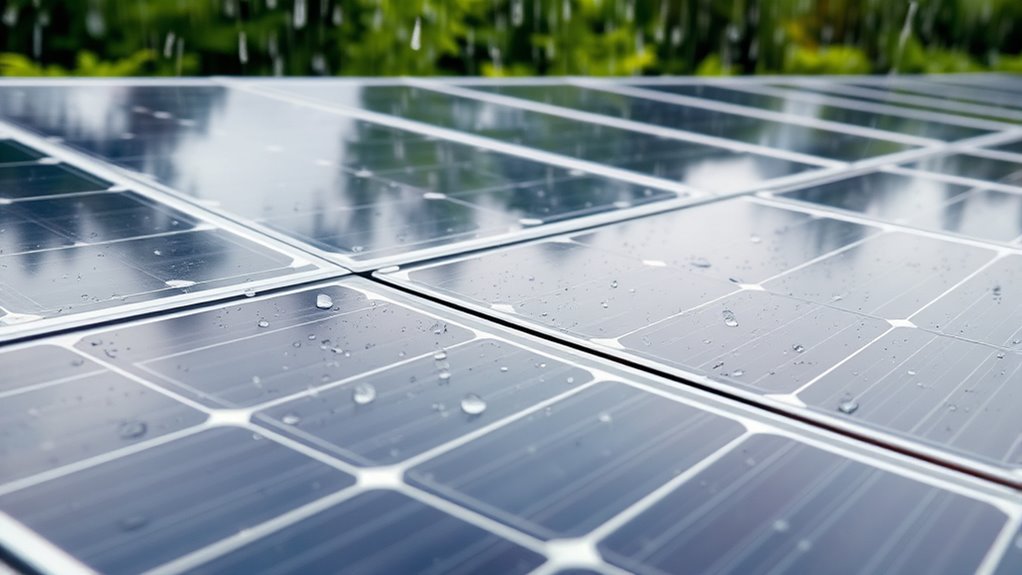
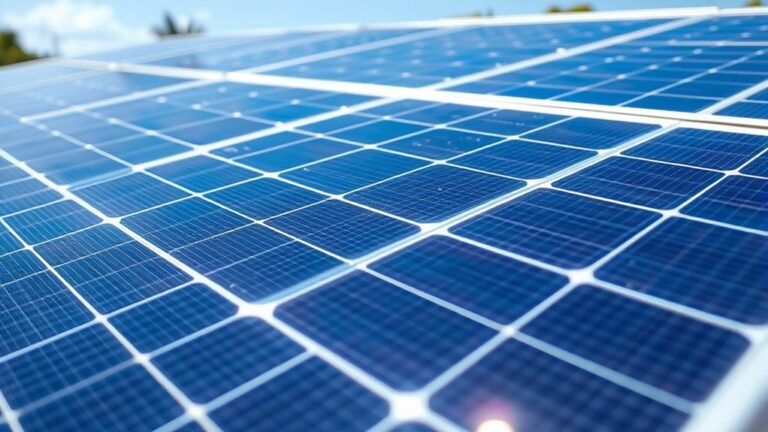
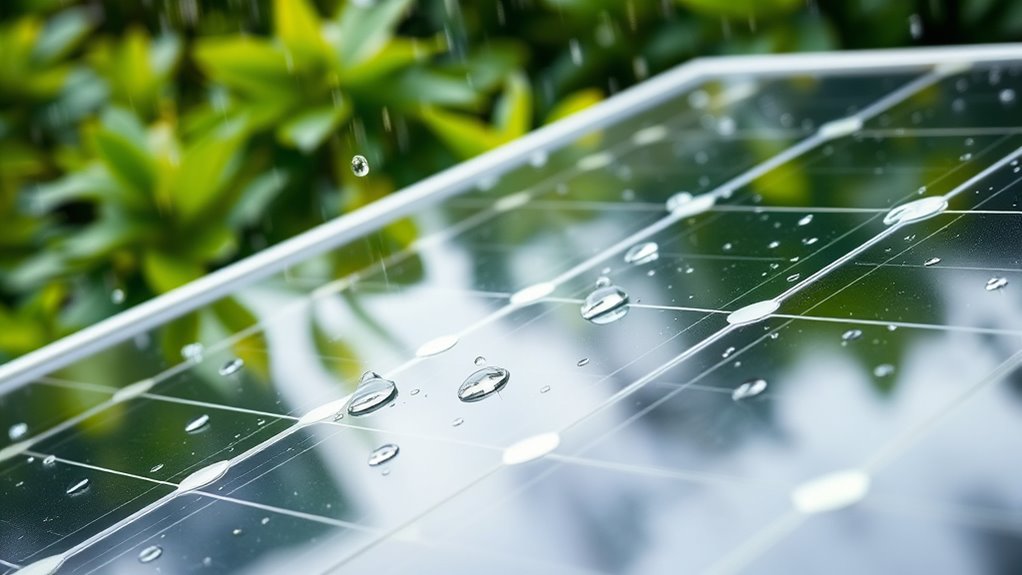
Rain can help wash away loose dirt and dust from your solar panels, giving them a quick, natural rinse. When it rains, you’ll notice a visible difference as some of the surface grime gets swept away, improving sunlight absorption.
But here’s the thing—rain mainly tackles light debris. It won’t remove stubborn residues like bird droppings, pollen, or oily films.
You should understand that while rain reduces the frequency of manual cleanings, it doesn’t replace them entirely. To keep your panels operating at peak efficiency, you’ll still need to check for and clean off any stubborn buildup that rain can’t handle.
Why Rain Can’t Wash Away All The Dirt
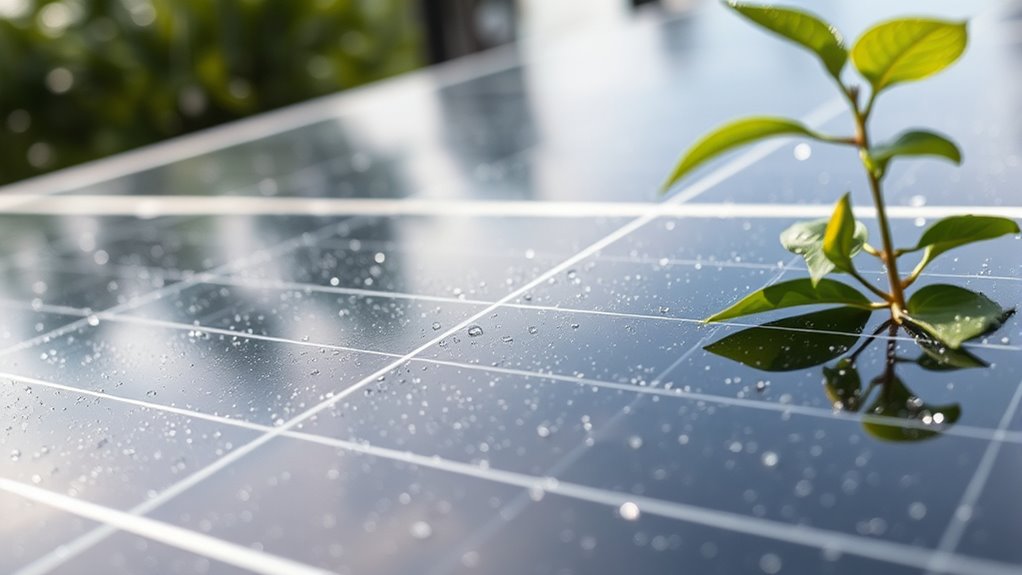
While rain helps clear away loose dust and dirt, it can’t tackle every type of grime on your solar panels. Some residues stick stubbornly, reducing your panels’ efficiency over time.
You need to understand what rain struggles with so you can take action when necessary.
| Dirt Type | Why Rain Can’t Remove It |
|---|---|
| Bird droppings | They dry hard and become sticky |
| Pollen | Often oily, clings to surfaces |
| Tree sap | Thick and resinous, resists rain |
| Mineral deposits | Leave behind hard water stains |
| Grease and oil | Hydrophobic, repel water |
Knowing this helps you decide when manual cleaning is needed to keep your solar panels shining and efficient.
How Often Does Rain Clean Solar Panels?
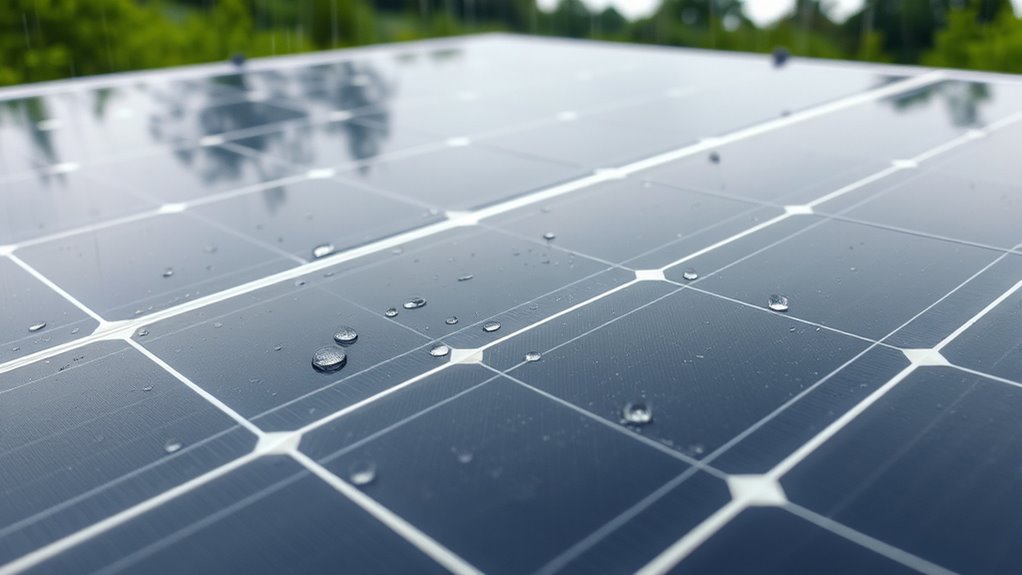
Even though natural precipitation can wash away some surface dirt, it doesn’t clean your solar panels thoroughly or regularly enough to maintain peak performance on its own. How often rain cleans your panels depends on where you live and the amount of rainfall you get.
In dry regions, rain might be too infrequent to make a noticeable difference. In contrast, wetter climates might see more regular natural washes, but even then, dust, bird droppings, and stubborn grime can build up between storms.
You can’t rely solely on rain to keep your panels spotless or operating at full efficiency. To optimize your solar panel’s energy production, you’ll need to monitor their condition and clean them manually or professionally when natural rainfalls fall short.
Ways To Boost Rain’s Cleaning Power
Although natural rainfall helps wash away some dirt, you can take simple steps to enhance its cleaning effect on your solar panels. First, ensure your panels are installed at an ideal angle—steeper slopes allow rainwater to rinse off debris more effectively.
Keep nearby trees and plants trimmed to reduce pollen, leaves, and bird droppings that stick stubbornly. You might also consider applying a hydrophobic coating designed for solar panels; these treatments help water bead and slide off, carrying dirt with it.
Finally, check your panels regularly for buildup that rain alone can’t remove, so you can address stubborn grime before it reduces efficiency. By managing these factors, you’ll maximize rain’s natural cleaning power and keep your solar system running smoothly.
Tools And Tips To Supplement Rain Cleaning
To keep your solar panels performing at their best, you’ll want to supplement rain cleaning with the right tools and techniques. Use a soft-bristle brush or a microfiber cloth to gently remove stubborn dirt without scratching the panels.
A hose with a gentle spray setting can rinse off loose debris before or after rain. Avoid harsh chemicals; instead, opt for mild soap mixed with water if needed.
Regularly inspect your panels for bird droppings or pollen buildup, especially after dry spells. Installing a rainwater diverter can help channel natural water flow more effectively over your panels.
How Clean Solar Panels Improve Efficiency And Savings
When you keep your solar panels clean, they capture sunlight more effectively, directly boosting their energy output. Dirty panels can lose up to 25% of their efficiency, meaning you’re literally leaving money on the table.
Clean panels convert more sunlight into electricity, reducing your reliance on the grid and lowering your energy bills. Plus, maintaining cleanliness extends your system’s lifespan, protecting your investment.
By staying on top of cleaning, you’ll enjoy benefits like:
- Increased daily energy production
- Noticeable savings on utility costs
- Reduced carbon footprint, helping the planet
- Enhanced system longevity with fewer repairs
Taking time to clean your panels means you get the most from your solar setup, maximizing both efficiency and savings. It’s a simple step that really pays off!
Frequently Asked Questions
Can Hard Water Rain Damage Solar Panel Surfaces?
Yes, hard water rain can leave mineral deposits on your solar panels. These deposits might reduce their efficiency over time.
Do Different Solar Panel Materials Affect Rain Cleaning Efficiency?
Like a knight’s armor, some solar panel materials repel dirt better, so rain cleans more efficiently. You’ll find glass panels shed grime easier than textured ones, letting you rely more on nature’s rinse and less on scrubbing.
It’s pretty neat how the material makes a difference. So, when you’re picking panels, think about how they handle dirt too!
How Does Climate Impact the Natural Cleaning Process of Solar Panels?
Your panels clean better in rainy, humid climates since moisture helps wash away dirt.
In dry or dusty areas, rain’s less frequent, so you’ll need extra maintenance to keep them efficient and free from buildup. It’s just how the climate plays a big role in the natural cleaning process.
Are There Specific Times of Day When Rain Cleans Panels Better?
Rain cleans your solar panels best during early morning or late afternoon when temperatures are cooler, preventing rapid evaporation. This allows water to loosen dirt effectively, maximizing the natural cleaning process without leaving streaks or residues behind.
It’s kind of like giving your panels a gentle rinse instead of a quick splash that dries too fast. So, if you can, keep an eye out for rain during those cooler parts of the day—it really makes a difference!
Can Rainwater Quality Affect the Longevity of Solar Panel Coatings?
Think of rainwater as a painter’s brush—if it’s pure, it gently cleans without harm.
But if it’s acidic or polluted, it can wear down your solar panel coatings, shortening their life and reducing efficiency over time.
Conclusion
Rain can help wash away some dust and loose dirt from your solar panels, but it won’t remove stubborn grime or bird droppings. So, relying solely on rain means you’ll miss out on maximizing your panels’ efficiency.
To truly boost performance and savings, it’s best to combine natural rainfall with occasional manual cleaning or specialized tools. This way, you keep your panels clear from buildup that rain alone can’t handle.
Remember, while rain aids in maintenance, proactive care ensures your solar panels shine at their best and generate ideal energy. Regular cleaning paired with natural cleaning from rain can maximize your solar panels’ output and prolong their lifespan. So, don’t just wait for the rain—take charge and keep those panels sparkling for the best energy results!