
What Does a Solar Cover Do to Heat a Pool?
A solar cover traps the sun’s heat and transfers it directly to your pool water, warming it efficiently while reducing heat loss. It works like a cozy blanket, keeping your pool water warm during the day and slowing heat escape overnight.
This simple tool is key to maintaining a comfortable swimming temperature without extra energy costs.
Plus, a solar cover cuts down on evaporation, which means you save water and chemicals. Using the right material and design can make a big difference in how well it works.
So, if you want to boost your pool’s warmth and enjoy energy savings, keep exploring to find out how to maximize the benefits of a solar cover.
Key Takeaways
- Solar covers absorb and transfer the sun’s heat directly to the pool water, warming it efficiently. They act as a thermal blanket, reducing heat loss during cool and nighttime hours.
- They also minimize water evaporation, which helps maintain a consistent pool temperature and reduces heat loss.
- By trapping solar energy, solar covers reduce the need for pool heaters and can lower your energy costs.
- Plus, they extend the swimming season by keeping the pool water warmer for longer periods. It’s a simple way to enjoy your pool more!
How Solar Covers Warm Your Pool
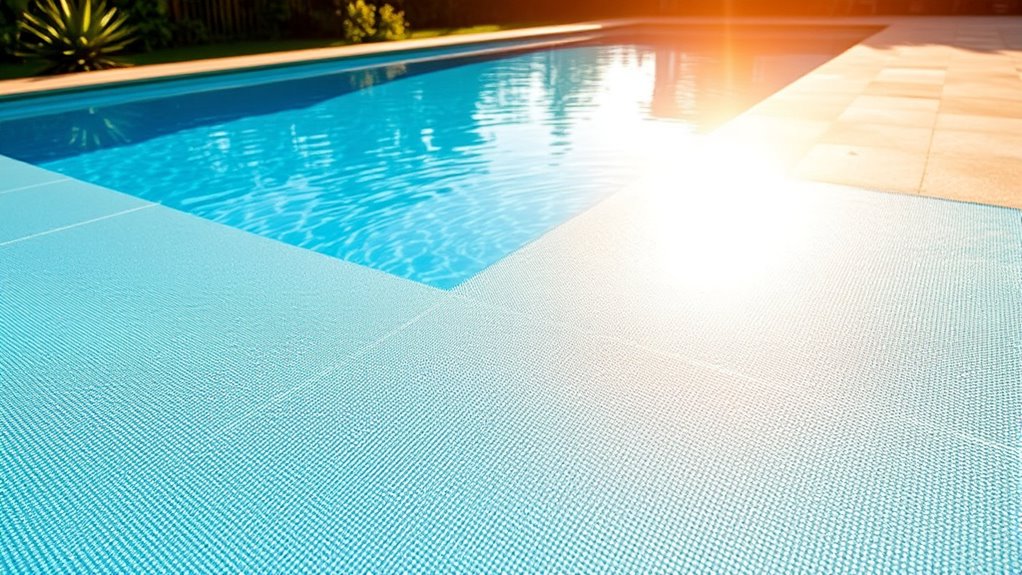
Although you might not realize it at first, solar covers work by trapping the sun’s heat and transferring it directly to your pool water. When sunlight hits the cover, it heats the cover’s surface, which then warms the water beneath it.
The cover acts like a blanket, absorbing solar energy and preventing it from escaping into the atmosphere. As a result, your pool water temperature rises steadily throughout the day.
You don’t need any extra energy or complicated equipment—just the power of the sun and a well-fitted solar cover. This process is efficient and natural, helping you enjoy a warmer pool without increasing your energy bills or carbon footprint.
Using a solar cover is a simple way to maximize your pool’s heat gain every sunny day. It’s an easy, eco-friendly solution that makes a big difference.
How Solar Covers Prevent Heat Loss Overnight
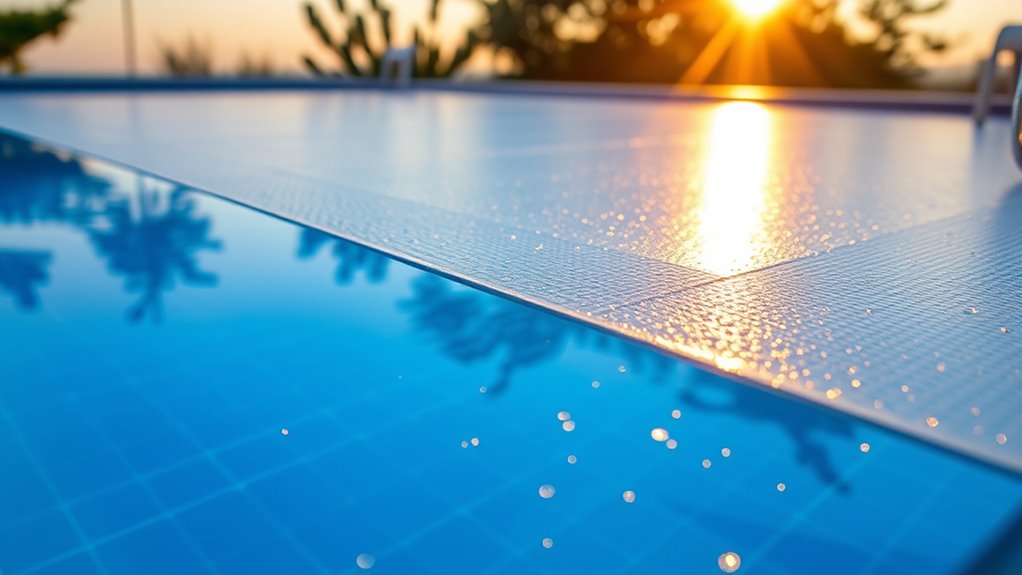
When night falls, your pool starts losing the heat it gained during the day through evaporation and radiation. A solar cover acts like a blanket, trapping that warmth and preventing it from escaping into the cooler night air.
By covering the water’s surface, the cover reduces heat loss caused by radiation, which happens when the warm water emits infrared energy into the sky. It also creates a barrier that slows the movement of cooler air across the water, helping maintain a stable temperature.
Without a cover, your pool can lose several degrees overnight, but with one, you keep more heat in, saving energy and extending your swimming season. Using a solar cover overnight is a simple, effective way to preserve your pool’s warmth.
How Solar Covers Reduce Water Evaporation
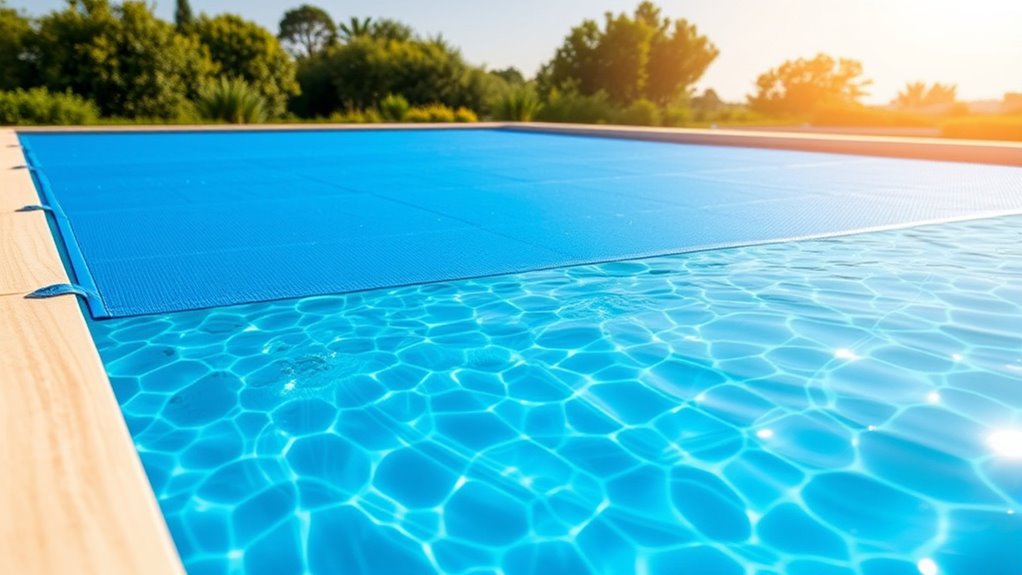
You’ll notice that solar covers considerably cut down on surface water loss by blocking direct exposure to air. This barrier helps keep more moisture in your pool, which means less frequent refilling.
Plus, by maintaining higher humidity right above the water, the cover slows evaporation even further. It’s a simple yet effective way to save water and keep your pool topped up longer.
Minimizing Surface Water Loss
How much water does your pool lose to evaporation each day? Quite a bit, especially on hot, dry, or windy days. Using a solar cover substantially cuts down this loss by creating a barrier that traps moisture on the surface.
When you cover your pool, you reduce the direct exposure of water to air, which slows evaporation dramatically. This means you won’t have to refill your pool as often, saving both water and money.
Plus, by minimizing surface water loss, you help maintain your pool’s chemical balance longer. That way, you won’t need to make frequent adjustments.
A solar cover is an easy, effective way to keep your pool water where it belongs—inside the pool—while also conserving a valuable resource.
Enhancing Humidity Retention
Reducing surface water loss not only keeps your pool full but also helps maintain a more stable environment around the water. When you use a solar cover, it acts as a barrier that considerably cuts down on evaporation.
This means less water vapor escapes into the air, keeping humidity levels higher right above your pool’s surface. Higher humidity reduces the rate at which water evaporates, so you don’t have to refill as often.
By retaining moisture, your pool area feels more comfortable, especially in dry or windy conditions. Plus, less evaporation means you save on water bills and reduce chemical loss.
That makes pool maintenance easier and more cost-effective. Using a solar cover is a smart way to enhance humidity retention and protect your pool’s water balance.
Choosing the Best Materials and Designs for Solar Covers
When selecting a solar cover, understanding the materials and designs available can considerably impact your pool’s energy efficiency and maintenance. Most solar covers are made from durable, UV-resistant polyethylene or vinyl, which trap heat effectively while resisting tearing.
You’ll find bubble designs popular—they create an insulating layer that keeps water warm and reduces evaporation. Clear or blue-tinted covers let sunlight pass through while minimizing heat loss, so choose based on your climate and heating needs.
Thicker covers last longer but can be heavier to handle. Some designs also include reinforced edges or built-in handles, making installation and removal easier for you.
Tips to Use Your Solar Cover for Maximum Heat
To get the most heat from your solar cover, you’ll want to make sure it stays on your pool as much as possible, especially during sunny days and warm nights.
Only remove the cover when you’re ready to swim, then put it back right after you’re done.
Keep the cover clean—debris and dirt block sunlight and reduce heat absorption.
Using a solar reel makes covering and uncovering quick and easy, so you’re more likely to keep the cover on.
Check for air bubbles or wrinkles that can trap heat unevenly and smooth them out.
And finally, avoid using chemical treatments that might degrade the cover’s material. Store it properly when you’re not using it to extend its lifespan and keep it working well.
How Solar Covers Help You Swim Longer Each Season
You can swim longer each season by keeping your pool warmer with a solar cover that reduces heat loss. It traps the sun’s energy, maximizing the warmth your pool gets during the day.
Using a cover means you’ll enjoy comfortable water temperatures well beyond the typical swimming months. So, you get more time to relax and have fun in the water without feeling chilly.
Extending Pool Warmth
Although the days may start to shorten and temperatures drop, a solar cover helps keep your pool water warm by trapping heat from the sun. By placing the cover over your pool, you create a barrier that absorbs sunlight and transfers that warmth directly to the water below.
This means you can enjoy swimming even as cooler weather approaches. The cover also minimizes heat loss during chilly nights, helping maintain a comfortable temperature longer than an uncovered pool.
With consistent use, you extend your swimming season without relying heavily on extra heating systems. So, by using a solar cover, you make the most of natural solar energy, allowing you to swim comfortably well beyond the typical warm months and get more enjoyment from your pool year-round.
Reducing Heat Loss
How does a solar cover reduce heat loss and let you swim longer each season? It acts as a barrier, trapping the pool’s heat and preventing evaporation. Evaporation is the main cause of heat loss.
By covering your pool, you keep warmth locked in. So, your water stays at a comfortable temperature for longer. This means you can enjoy swimming even when the air cools down.
Here’s how a solar cover helps reduce heat loss:
| Heat Loss Factor | Solar Cover Benefit |
|---|---|
| Evaporation | Minimizes water evaporation |
| Radiation | Reflects heat back into pool |
| Convection | Reduces heat carried by air |
Using a solar cover means less heat escapes. It’s a simple way to extend your swimming season efficiently.
Maximizing Sun Exposure
Where does your pool get most of its warming energy? From the sun, of course. Solar covers maximize this energy by capturing and transferring sunlight directly to your pool water.
By spreading a solar cover over your pool, you create a barrier that absorbs the sun’s rays and converts them into heat, warming the water beneath. This process extends your swimming season, letting you enjoy warmer water earlier in spring and later into fall.
Plus, the cover reduces evaporation, which otherwise cools the pool. You don’t have to rely solely on your pool’s heater, saving energy and money.
Frequently Asked Questions
How Long Do Solar Covers Typically Last Before Needing Replacement?
You can expect a solar cover to last about 3 to 5 years before needing replacement. Proper care, like cleaning and storing it out of harsh sunlight when not in use, helps extend its lifespan.
Taking a little extra time to maintain your cover really pays off. It keeps the cover in good shape, so you don’t have to replace it too soon. Just a bit of care goes a long way!
Can Solar Covers Protect the Pool From Debris and Dirt?
Yes, you can rely on solar covers to protect your pool from debris and dirt. They act as a barrier, keeping leaves and dust out while helping maintain water cleanliness.
This means you spend less time cleaning and more time enjoying your pool. It’s a simple way to keep things tidy without extra effort.
Are Solar Covers Safe for All Types of Pool Surfaces?
Yes, solar covers are safe for most pool surfaces, but you should check your pool’s material first. Some delicate surfaces might need special covers to avoid damage, so always follow the manufacturer’s recommendations for the best results.
It’s a good idea to double-check just to be sure. That way, you can keep your pool safe and enjoy all the benefits of a solar cover without any worries.
How Much Energy Can Solar Covers Save on Pool Heating Costs?
You can effortlessly reduce your pool heating expenses by up to 50% using a solar cover. It gently tucks in warmth, so you won’t need to rely heavily on energy-hungry heaters.
That means you save both money and the planet. Pretty cool, right?
Do Solar Covers Affect Pool Chemical Balance or Maintenance?
Yes, solar covers can affect your pool’s chemical balance by reducing evaporation and slowing chemical loss. You’ll need to check and adjust chemicals regularly, but overall, they help maintain cleaner water and lower maintenance efforts.
They really make a difference in keeping your pool water balanced. Plus, using a solar cover can save you time and money on pool upkeep. It’s a smart addition to your pool care routine!
Conclusion
By using a solar cover, you’re not just saving heat—you’re wrapping your pool in a warm, protective blanket that keeps the chill at bay and water evaporation to a minimum.
With the right cover and a few smart tricks, you’ll extend your swim season and enjoy cozy, inviting water longer.
It’s like hitting two birds with one stone—saving energy while making every swim feel like a warm embrace.
In short, a solar cover is essential for heating your pool efficiently. It locks in warmth, reduces heat loss, and cuts down evaporation, which helps maintain the water temperature naturally. Using a solar cover means you can enjoy more comfortable swims without cranking up your heater, saving both energy and money. So, if you want to keep your pool warm and inviting while boosting energy efficiency, a solar cover is the way to go. It’s a simple, effective solution for heating your pool and extending your swimming season.




3 Comments