Do Solar Lights Need Direct Sun to Work?
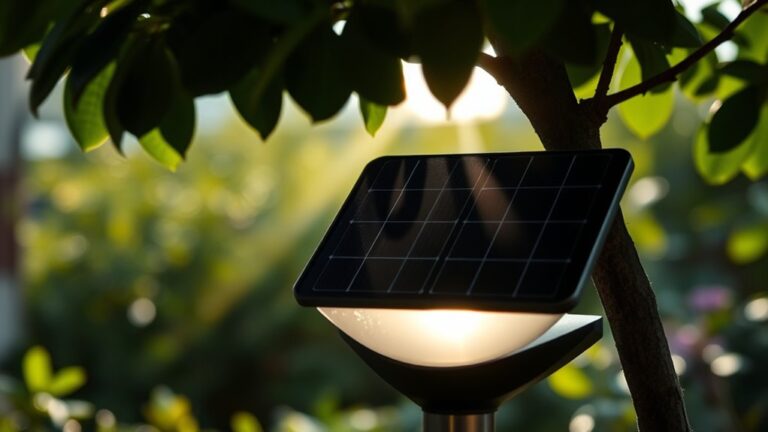
You don’t need direct sunlight for solar lights to work since they can capture and convert ambient or diffused light. Solar lights are designed to soak up whatever light is available, even if it’s not bright sun.
While direct sun does boost charging speed and brightness, these lights still gather energy on cloudy or shaded days.
That said, their performance can drop when the light is limited. Dirt, shade, and weather conditions can also affect how well they charge.
But don’t worry—many solar light models are built to optimize limited light conditions and conserve power.
Keep reading to discover how you can maximize their efficiency even in low-light spots!
Key Takeaways
- Solar lights perform best with direct sunlight but can still operate using ambient or indirect light. They absorb diffused light on cloudy or shaded days, though with reduced brightness or shorter run time.
- Shade and weather conditions lower charging efficiency but do not completely stop energy collection. So, even if it’s not super sunny, your solar lights can still soak up some energy.
- Batteries store limited energy during low-light periods, which may reduce illumination duration. But don’t worry, they’ll still give you some light when it’s needed.
- High-efficiency panels and shade-optimized designs enable solar lights to work effectively without direct sun. This means newer models are better at handling less-than-perfect sunlight conditions.
Can Solar Lights Work Without Direct Sunlight?
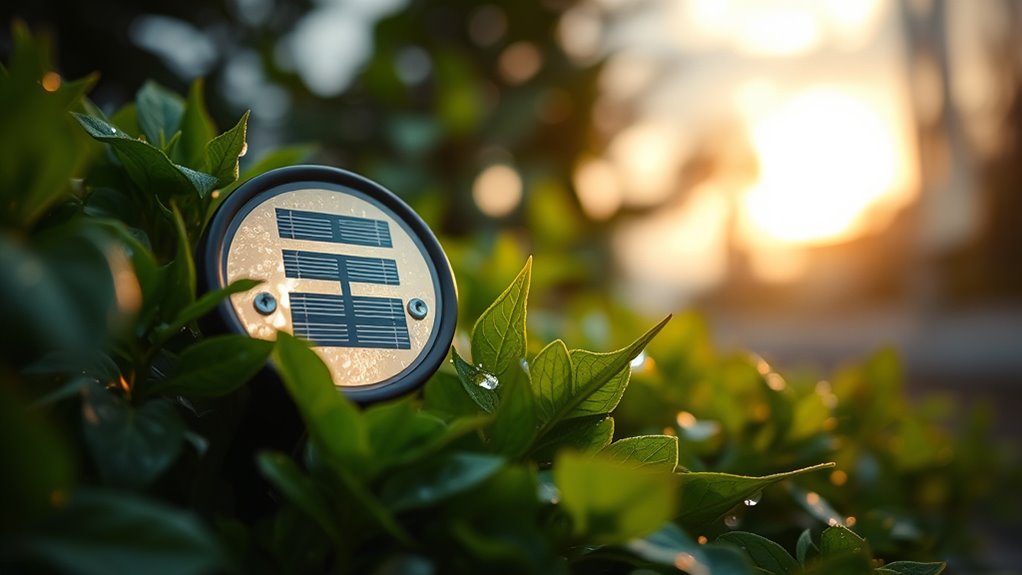
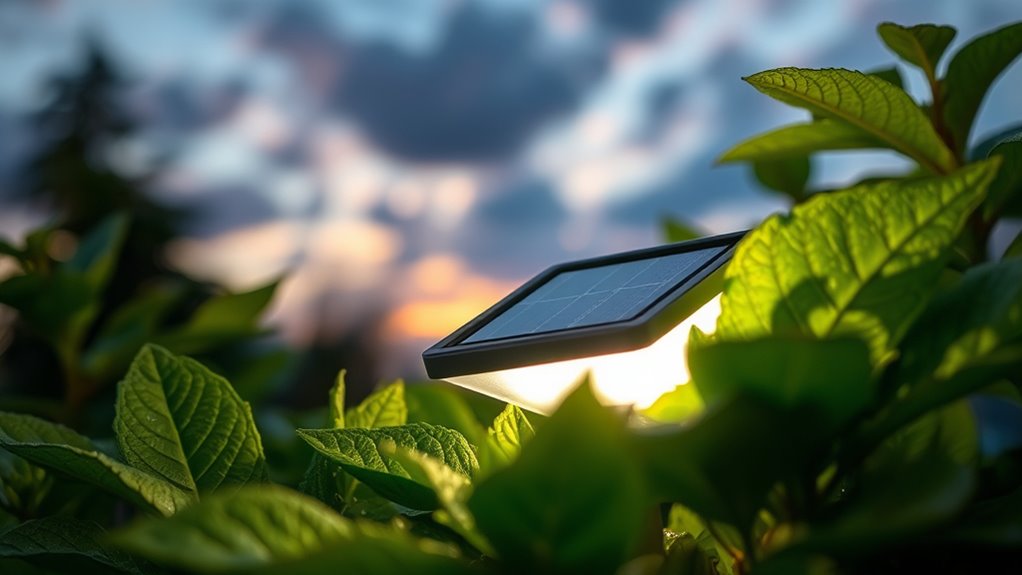
Although solar lights perform best under direct sunlight, they can still work without it. You’ll notice that solar panels can absorb some ambient light, even on cloudy or partially shaded days.
While the energy collected won’t be as strong, your lights will continue to charge and operate, just with reduced brightness or shorter run time. You don’t need full sunlight to keep them working, but less light means less power.
Solar lights charge and work with less than full sunlight, but expect reduced brightness or shorter use time.
If your solar lights are placed in areas with very little light, you might see them dim earlier or fail to turn on altogether. So, while direct sun is ideal, your solar lights are designed to function in less-than-perfect lighting conditions.
This gives you some flexibility in where you install them.
Can Solar Lights Charge on Cloudy or Shaded Days?
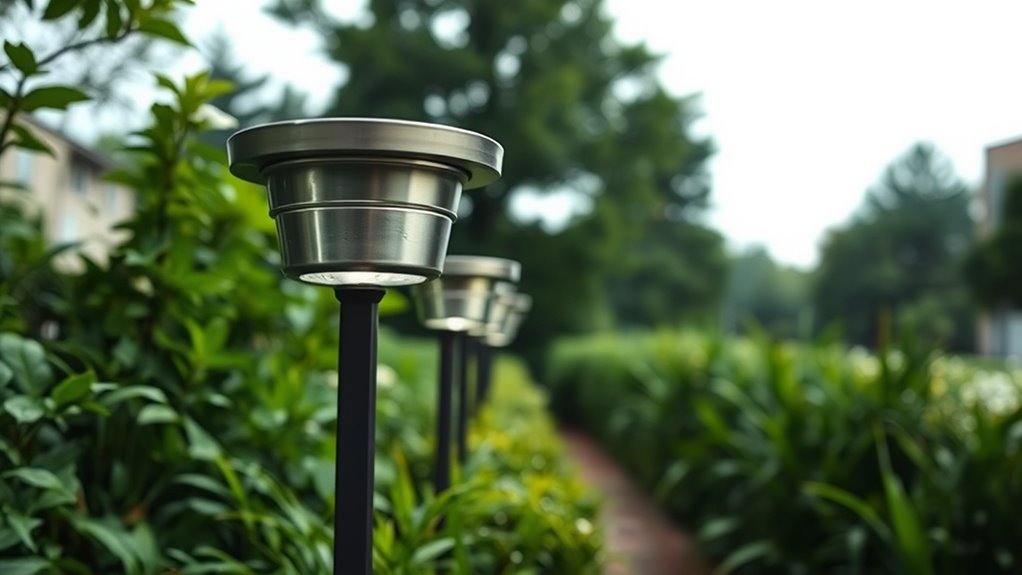
You might wonder if solar lights can still charge when it’s cloudy or shaded outside. While they don’t get full power, they can still gather some energy.
It really depends on how much shade covers the panel and the battery’s ability to store charge. Let’s explore how these factors affect your solar lights’ performance on less sunny days.
Charging Efficiency on Cloudy
Even when the sun hides behind clouds, solar lights can still capture enough energy to charge. Though the sunlight is diffused, solar panels absorb ambient light and convert it into electrical energy.
You might notice the charging rate slows down on overcast days, but it doesn’t stop entirely. The efficiency drops because less light reaches the panels, meaning the battery charges more slowly and may store less energy than on sunny days.
To maximize performance, place your solar lights where they receive the most consistent exposure to daylight, even if it’s indirect. This way, they’ll maintain a reasonable charge and keep shining after dark.
Impact of Shade Coverage
Solar lights rely on sunlight to charge, so the amount of shade they receive directly affects their performance. If your solar lights sit under heavy shade from trees or buildings, they won’t absorb enough light to fully charge.
While they can still capture some indirect or diffused light on cloudy or partially shaded days, the charging efficiency drops markedly. You might notice shorter illumination times or dimmer light output as a result.
To get the best performance, place your solar lights where they’ll get at least a few hours of direct sunlight daily. Even partial shade reduces their ability to convert sunlight into energy, so consider the surrounding environment carefully when installing your solar lights for consistent brightness and reliability.
Battery Storage Capabilities
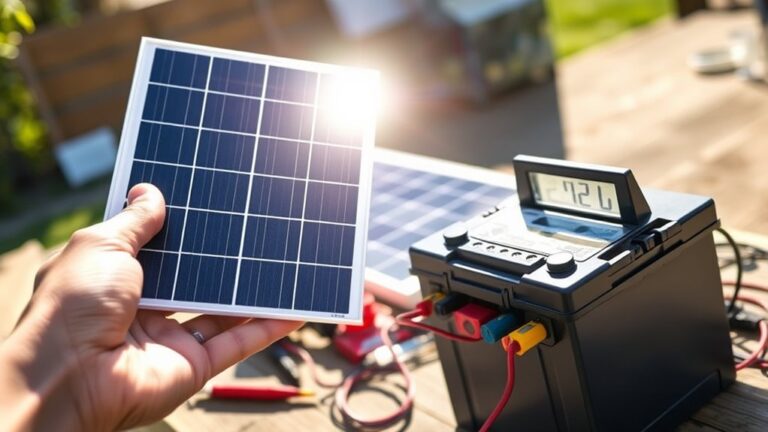
Although cloudy or shaded days limit the amount of sunlight reaching your solar lights, their built-in batteries can still store some energy during these conditions. Solar lights use rechargeable batteries designed to capture whatever light is available, even if it’s indirect or diffused.
While they won’t charge as quickly or fully as on bright, sunny days, the batteries still accumulate enough power to keep your lights functioning. You might notice shorter illumination times after extended cloudy periods, but the lights won’t go completely dark unless the battery drains completely.
To maximize performance, consider solar lights with higher-capacity batteries or ones specifically built for low-light charging. This way, your lights stay reliable even when the sun hides behind clouds or trees.
How Much Sunlight Do Solar Lights Really Need?
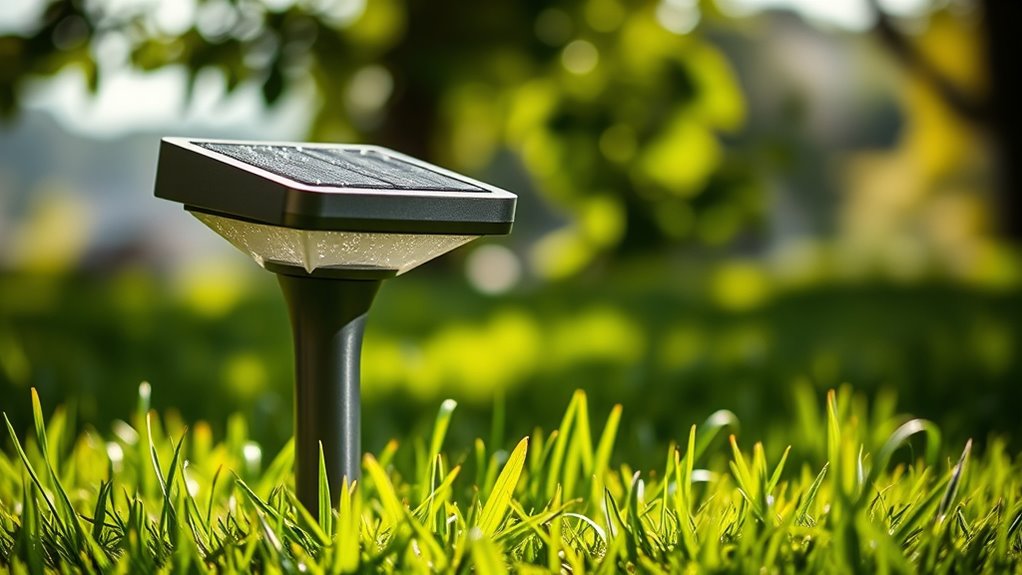
While your solar lights don’t require hours of direct sunlight every day, they do need enough exposure to charge their batteries fully. Typically, 4 to 6 hours of good sunlight is enough for most solar lights to gather sufficient energy.
Even on cloudy days, solar panels can absorb diffused sunlight, but the charging will be slower and less efficient. If your lights receive less than 3 hours of sunlight regularly, their brightness and runtime will likely suffer.
Try to position them where they can soak up morning or afternoon sun rather than being shaded by trees or buildings. By ensuring consistent, moderate sunlight, you help maintain ideal battery performance and extend the lighting duration during the night without relying strictly on intense, direct sun exposure.
Key Factors That Affect Solar Light Performance Outdoors
Because outdoor conditions vary widely, several factors can influence how well your solar lights perform. First, the amount of sunlight your solar panels receive directly impacts battery charging. Shadows from trees, buildings, or clouds reduce energy absorption.
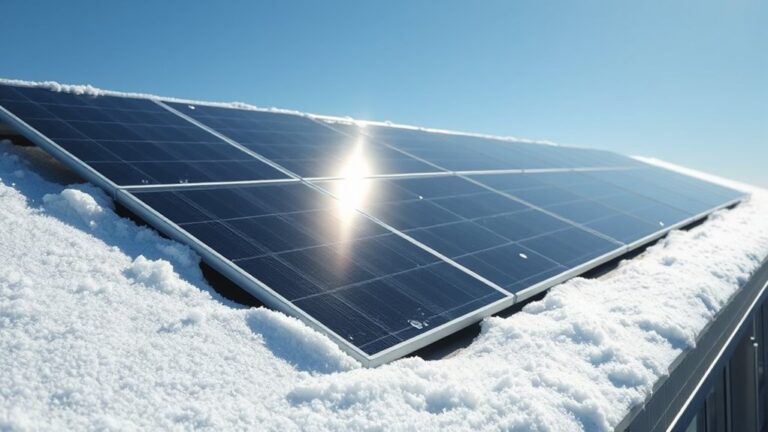
Second, the angle and placement of the solar panel matter—a tilted panel facing south in the northern hemisphere captures more sunlight. Weather conditions like rain, fog, or snow can also limit solar efficiency.
Third, dirt and debris buildup on the panel surface block sunlight, so keeping panels clean is crucial. Finally, temperature extremes affect battery life and performance; very cold or hot weather can reduce your solar lights’ run time.
Considering these factors helps guarantee your solar lights work effectively outdoors. It’s all about giving them the best chance to soak up the sun!
How Can You Maximize Solar Light Charging in Low-Light Areas?
If your solar lights are in a shaded or low-light area, you can still boost their charging efficiency by optimizing placement and maintenance. Position the solar panels where they receive the most available light, even if it’s indirect. Tilt panels toward the brightest part of the sky to maximize light absorption.
Keep the panels clean by wiping off dust, dirt, or debris regularly, since buildup reduces their ability to capture light. Also, trim nearby branches or plants that may cast shadows during peak daylight hours.
You might want to consider installing reflective surfaces nearby to bounce additional light onto the panels. Finally, make sure the lights have fully charged during the brightest hours to store enough energy for nighttime use.
Are There Solar Lights Designed for Limited Sun Exposure?
You might wonder if solar lights can still work in shaded spots. There are models designed specifically for limited sun exposure, using advanced technology to capture and store energy efficiently.
Knowing the best placement for these lights can help you get the most out of them even in low-light areas. It’s pretty neat how they manage to work well, even when the sun isn’t shining directly.
Types of Low-Light Solar Lights
Although solar lights typically rely on direct sunlight, several types are designed to perform well in limited sun exposure. If your space doesn’t get much sun, you can still find options that work effectively.
Here are some common types of low-light solar lights you might consider:
- Monocrystalline solar lights: Known for higher efficiency even in low light.
- Polycrystalline solar lights: More affordable with moderate low-light performance.
- Solar garden lights with larger panels: Capture more light throughout the day.
- Solar lights with adjustable panels: Let you optimize angle for best indirect sunlight.
- LED solar lights with energy-saving modes: Extend illumination when charging is limited.
Choosing one of these types helps you enjoy solar lighting without needing full direct sun all day. It’s all about finding the right fit for your space and needs.
Technology Behind Limited Sun Models
When sunlight is limited, solar light technology adapts by using advanced materials and design features to maximize energy capture. You’ll find that these limited sun models often include high-efficiency monocrystalline solar panels, which perform better in low-light conditions than standard panels.
They also use improved battery storage to hold more energy, ensuring lights stay on longer after dark. Some models incorporate smart sensors and energy management systems that adjust brightness based on available power, helping conserve energy.
Additionally, the light fixtures often have reflective surfaces or lenses designed to distribute light efficiently. So yes, solar lights designed for limited sun exposure do exist, and they rely on these innovations to provide reliable illumination even without direct sunlight.
Best Placement for Shade
Solar lights designed for limited sun exposure open up more options for placement, especially in shaded areas. If you want your solar lights to perform well without direct sunlight, you need to pick spots that still receive some indirect light.
Here are the best placements for shade-friendly solar lights:
- Near windows where indirect sunlight filters through
- Under large trees with dappled sunlight
- Along walkways partially shaded by bushes
- On balconies or patios with morning or evening sun
- Close to reflective surfaces like light-colored walls
Frequently Asked Questions
How Long Do Solar Lights Typically Last on a Full Charge?
Solar lights typically last 6 to 10 hours on a full charge. You’ll get longer use in summer when sunlight is stronger.
But even on cloudy days, they’ll still glow for several hours after dusk. So, you can count on them to light up your space pretty reliably.
What Maintenance Do Solar Lights Require for Optimal Performance?
Think of solar lights like your phone—they need regular care. You’ll want to clean the panels monthly, replace batteries every 1-2 years, and make sure no debris blocks sunlight.
This helps keep them shining brightly all night. Just a little attention goes a long way!
Can Solar Lights Be Used Indoors With Artificial Light Sources?
You can use solar lights indoors with strong artificial lights, but they won’t charge as efficiently as outdoors.
Make sure the light source mimics sunlight intensity to keep your solar lights working properly inside your home.
It’s kind of like giving your solar lights a bit of a boost, even when the sun isn’t shining through your windows. Just remember, the brighter the light, the better they’ll perform!
Are Solar Lights Safe to Use in Extreme Weather Conditions?
You can use solar lights in extreme weather, but keep in mind 70% of models are rated for temperatures between -20°F and 120°F.
You’ll want to pick ones designed for your climate to guarantee they last. It’s all about choosing the right fit for where you live.
What Materials Are Solar Light Panels Usually Made From?
Solar light panels are usually made from silicon, mainly monocrystalline or polycrystalline, because they efficiently convert sunlight into electricity.
The panels also include glass covers and durable plastic or aluminum frames to protect the cells.
These materials work together to keep the panels sturdy and long-lasting, even when exposed to different weather conditions.
Conclusion
You don’t always need direct sunlight for solar lights to work, but the more light they get, the better they perform. Even on cloudy or shaded days, they can still charge, just more slowly.
Remember, “every little bit helps.” To get the most out of your solar lights, place them where they’ll catch the best available light. Also, consider models designed for low-light conditions.
With a bit of care, your solar lights will shine bright all night long. So, while direct sun boosts their efficiency, solar lights don’t need it exclusively to function. Proper placement and choosing the right solar light can ensure consistent performance, even in less-than-ideal lighting. That way, your outdoor spaces stay beautifully illuminated, powered by clean, renewable energy no matter the weather.