How to Charge Solar Lights Without Sun Step by Step
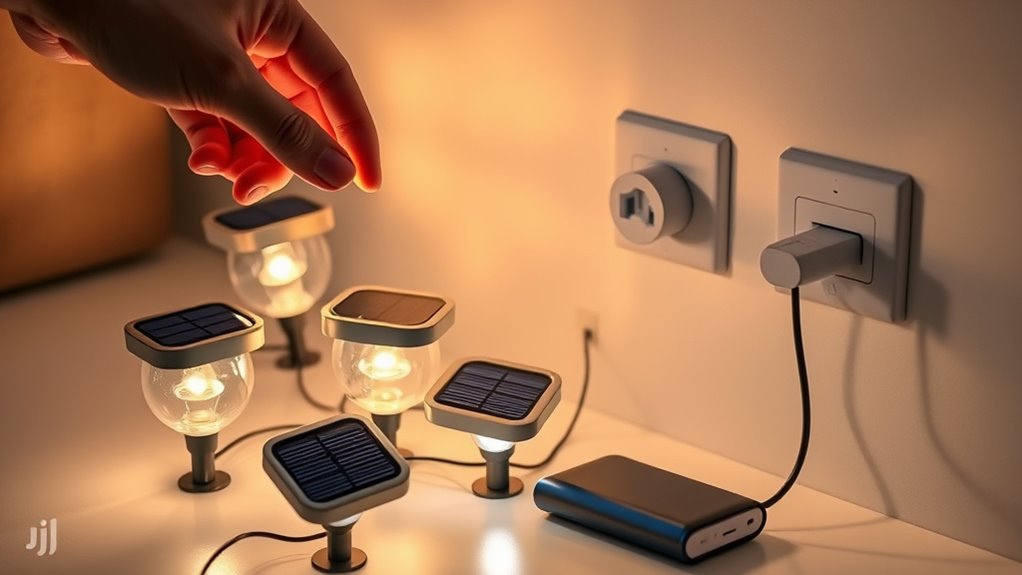
You can charge solar lights without sun by connecting them to a USB or wall charger through their charging port. This method is simple and effective, especially when you don’t have access to direct sunlight.
Alternatively, you can use a compatible power bank or batteries, but make sure the voltage matches and the connections are safe.
Another option is to place the solar panel under strong artificial lights like LEDs or fluorescents for several hours. This helps mimic sunlight and keeps your solar lights powered even on cloudy days or indoors.
Don’t forget to keep the sensors clean and check the wiring for any issues. These small maintenance steps can make a big difference in efficiency.
Keep exploring to discover more helpful tips for maintaining and troubleshooting your solar lights!
Key Takeaways
- Connect the solar light to a USB or wall charger via its charging port to charge indoors without sunlight. This way, you can power it up even when the sun isn’t out.
- Use a compatible portable power bank to safely charge the solar light’s battery. Just make sure to follow the manufacturer guidelines for best results.
- Position the solar panel about 12-18 inches from strong artificial lights like LED or fluorescent bulbs. Let it charge for 6-8 hours to get a good boost.
- Regularly inspect and replace the battery if the voltage is low. Keeping the battery healthy helps maintain efficient charging.
- Also, clean the sensors and wiring often. This ensures everything functions properly and keeps the charging cycles uninterrupted.
How Solar Lights Charge and Why Sunlight Matters
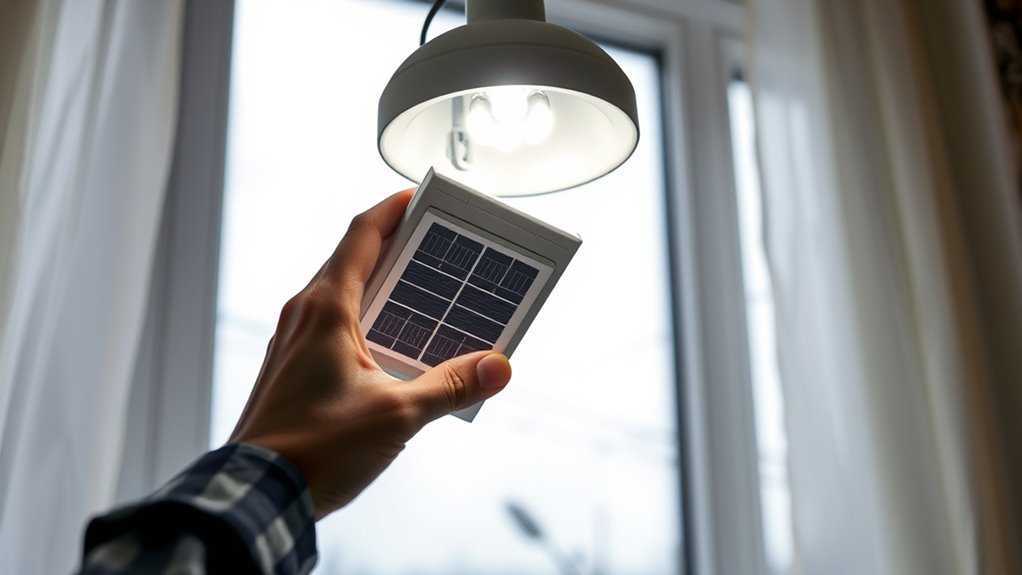
Although solar lights rely primarily on sunlight to charge, understanding their basic operation can help you find alternative ways to power them. Solar lights use photovoltaic cells to convert sunlight into electricity, which charges an internal battery.
Solar lights convert sunlight into electricity via photovoltaic cells, storing energy in a battery for nighttime illumination.
This stored energy powers the light after dark. Sunlight matters because it provides the energy needed for this conversion, and direct exposure maximizes charging efficiency.
Without sufficient light, the battery won’t fully charge, resulting in dim or short-lived illumination. You’ll notice that cloudy days or shaded areas reduce performance.
Knowing this, you can optimize placement for maximum sun exposure or explore other light sources to mimic sunlight’s effect. This understanding lays the groundwork to keep your solar lights running, even when natural sunlight is limited.
Charge Solar Lights Indoors With USB or Wall Chargers
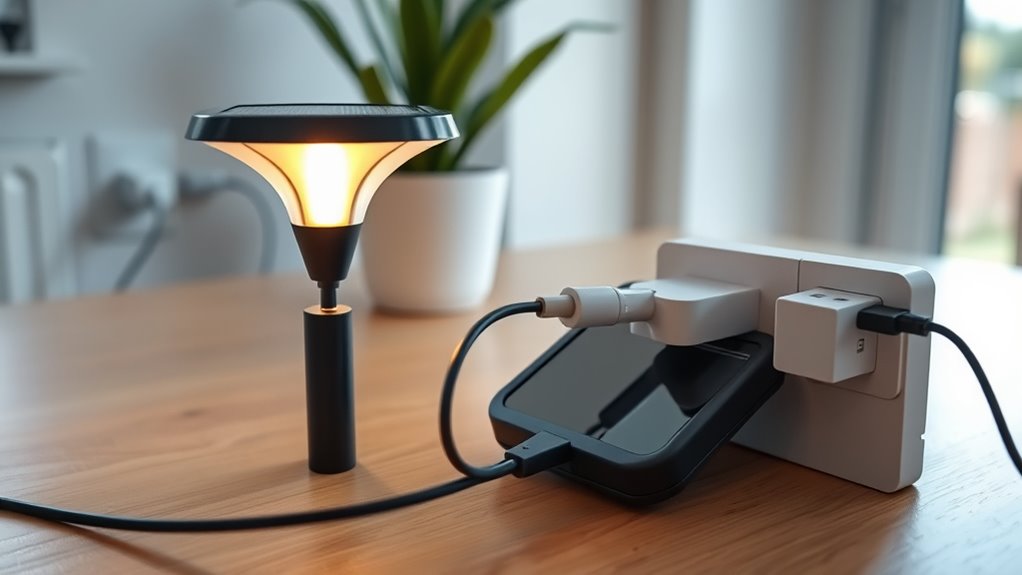
When sunlight isn’t available, you don’t have to let your solar lights go dark. Many solar lights come with USB or wall charger compatibility, so you can charge them indoors quickly.
Just connect the solar light’s charging port to a USB cable or wall adapter, plug it into a power source, and let it charge. This method is super convenient and efficient, especially during cloudy days or winter months.
| Step | Action |
|---|---|
| 1 | Locate the charging port |
| 2 | Connect USB or wall charger |
| 3 | Plug into an electrical outlet |
| 4 | Monitor charging status |
| 5 | Disconnect once fully charged |
Using USB or wall chargers means your solar lights stay bright without always having to rely on the sun. Easy, right?
Use Portable Power Banks and Batteries to Charge Solar Lights
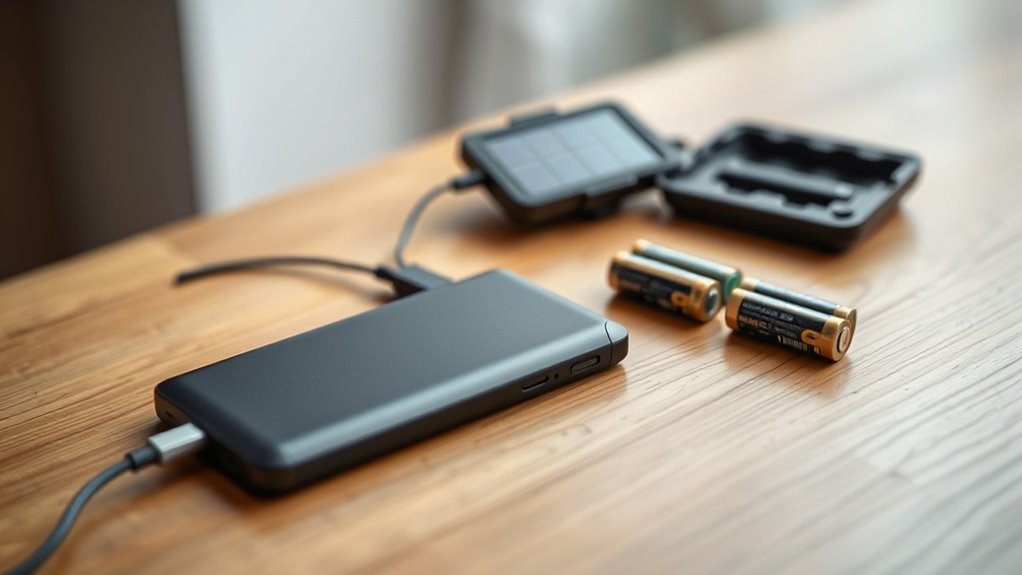
You can charge your solar lights using portable power banks or extra batteries, but you’ll want to pick ones that match your lights’ voltage and capacity.
Make sure to follow safe charging practices to avoid damaging your lights or power sources. It’s pretty important to keep everything safe while charging.
Keeping your batteries well-maintained will help them last longer and perform better. Taking a little time to care for them really pays off in the long run.
Choosing Compatible Power Banks
Since solar lights rely on batteries that store energy, choosing a compatible power bank guarantees you can recharge them efficiently without sunlight.
To pick the right power bank, consider these factors:
- Output Voltage and Current – Match the power bank’s output to your solar light’s battery specifications to avoid damage or slow charging.
- Capacity (mAh) – Choose a power bank with enough capacity to fully recharge your solar light multiple times if needed.
- Connector Compatibility – Ascertain the power bank supports the charging cable or adapter your solar light uses, whether USB, micro-USB, or others.
Charging Solar Lights Safely
Although charging solar lights without sunlight requires extra effort, using portable power banks and batteries offers a safe and convenient solution. Just make sure your power bank matches the voltage and output requirements of your solar light.
Avoid using incompatible chargers because they could damage the battery or create safety hazards. Always connect the power bank or battery through the designated charging port on your solar light.
Don’t charge the batteries directly unless you have the proper charger designed for those battery types. Also, keep the charging area dry and avoid exposing the equipment to extreme temperatures.
It’s a good idea to monitor the charging process to prevent overcharging, which might reduce battery life or cause overheating. Following these steps helps you charge your solar lights efficiently without risking damage or safety issues.
Battery Maintenance Tips
When using portable power banks and batteries to charge your solar lights, maintaining the battery’s health is essential for long-term performance. You want your lights to work reliably, so follow these key tips:
- Avoid Overcharging: Disconnect your solar lights once fully charged to prevent battery degradation. Most power banks don’t automatically stop charging, so keep an eye on them.
- Store Properly: Keep batteries and power banks in a cool, dry place when not in use. Too much heat or moisture can really shorten their lifespan.
- Regular Use and Charging: Use and charge your batteries regularly to keep them active. If you leave them unused for too long, they might lose capacity.
Charge Solar Lights Using Artificial Light Sources
If natural sunlight isn’t available, you can still charge your solar lights using artificial light sources. Place your solar light’s panel under a strong indoor light, like a fluorescent or LED bulb, for maximum charging.
Keep the light about 12 to 18 inches away from the solar panel to maximize energy absorption. Avoid using incandescent bulbs since they emit less usable light for solar charging.
Position your light 12 to 18 inches from the solar panel and skip incandescent bulbs for better charging.
You’ll need to leave the solar light under the artificial light for several hours—usually 6 to 8 hours—to achieve a decent charge. Make sure the solar panel is clean and unobstructed for the best results.
While this method won’t charge your solar lights as quickly as sunlight, it’s a reliable alternative when natural light isn’t an option. So, it’s definitely worth a try if you’re stuck indoors!
Maintain Solar Lights for Better Charging Performance
To keep your solar lights charging efficiently, you need to regularly clean and inspect their panels and batteries. Dust, dirt, and debris can block sunlight, reducing charging capacity.
Here’s what to do:
- Clean the Panels Weekly: Use a soft cloth and mild soapy water to wipe the solar panels gently. Avoid harsh chemicals that might damage the surface.
- Check Battery Health Monthly: Open the battery compartment and look for corrosion or leakage. Replace batteries if you notice any damage or decreased performance.
- Trim Surrounding Vegetation: Make sure no plants or branches shade the panels. Even partial shade can really lower charging efficiency.
Following these steps will help maintain your solar lights’ charging ability and prolong their lifespan. That way, they’ll stay bright even when you rely on artificial light sources.
Troubleshoot Common Issues When Solar Lights Don’t Charge
If your solar lights aren’t charging, start by checking the battery for signs of damage or wear.
Next, inspect the sensors and wiring for any loose connections or dirt blocking the light.
Fixing these common issues can often restore proper charging and performance.
It’s usually pretty straightforward once you know what to look for!
Battery Problems Diagnosis
When your solar lights fail to charge properly, the problem often lies within the battery. To diagnose battery issues, follow these steps:
- Check Battery Age: Batteries typically last 1-2 years. If yours is older, it may no longer hold a charge effectively and needs replacing.
- Inspect for Corrosion: Open the battery compartment and look for corrosion or rust on the contacts. Clean gently with a cotton swab dipped in vinegar or lemon juice to restore proper connection.
- Test Battery Voltage: Use a multimeter to measure the battery voltage. A healthy rechargeable battery should read close to its rated voltage (usually 1.2V). If it’s considerably lower, replace the battery to restore charging function.
Sensor And Wiring Issues
Although battery problems are common, sensor and wiring issues frequently cause solar lights to stop charging properly. First, check the light’s sensor; dirt or damage can block it from detecting darkness, preventing charging cycles.
Clean the sensor gently with a soft cloth and make certain it’s positioned correctly away from artificial lights. Next, inspect the wiring for visible damage or loose connections.
Frayed wires or corrosion can interrupt the charging circuit, so reconnect or replace any faulty components. You can use a multimeter to test continuity if you’re comfortable.
Also, verify that the solar panel’s wiring is secure and that no wires are pinched or cut. Addressing these sensor and wiring problems often restores your solar lights’ ability to charge, even without direct sunlight.
Frequently Asked Questions
Can Solar Lights Charge During Cloudy or Rainy Days?
Yes, your solar lights can charge on cloudy or rainy days, but they’ll absorb less energy since sunlight is weaker.
Make sure they get some indirect light to keep them powered until sunnier days return.
It might take a bit longer, but they’ll still work. Just hang in there until the sun comes back!
How Long Do Solar Lights Typically Last on a Full Charge?
Back in the days of knights, solar lights typically lasted 6 to 12 hours on a full charge. You’ll get a full evening of light, but factors like battery age and weather can shorten that time.
Are There Specific Types of Artificial Lights Better for Charging Solar Lights?
Yes, you’ll want to use full-spectrum or LED grow lights since they mimic sunlight best. They charge solar lights more efficiently than regular indoor bulbs, helping your solar lights power up even without direct sunlight.
These types of lights give off a range of wavelengths similar to the sun, which is exactly what solar cells need to work well. So, if you’re indoors or it’s a cloudy day, these lights are your best bet for keeping your solar lights charged and ready to go.
Can I Replace the Battery in My Solar Light Myself?
Yes, you can replace the battery yourself, even if you’re not tech-savvy. Just make sure to get the right size and type.
Follow safety steps, and your solar light will shine brightly again in no time. It’s easier than you might think!
Do Solar Lights Work Efficiently in Winter Months?
Solar lights work less efficiently in winter since shorter days and cloudy weather reduce sunlight. You’ll still get some light, but consider positioning them for maximum sun.
Or, try using rechargeable batteries to keep them running longer. It’s all about making the most of the limited sunlight during those colder months.
Conclusion
Now that you know how to charge your solar lights without sunlight, you might think the process is simple—but there’s one essential step that can make all the difference.
Are you ready to access the full potential of your lights even on the gloomiest days?
Keep experimenting with these methods, and you’ll soon discover a surprising trick that keeps your solar lights shining bright, no matter the weather.
Stay tuned—you won’t want to miss it! Charging solar lights without sun might seem tricky at first, but with the right approach, it’s totally doable. By following these easy steps, you can ensure your solar lights stay powered even when sunlight is scarce. So, whether it’s cloudy, rainy, or nighttime, you’ll have a reliable way to keep your outdoor space beautifully lit. Remember, learning how to charge solar lights without sunlight opens up new possibilities for using them anytime, anywhere.