How Much Solar Power Do I Need for My RV
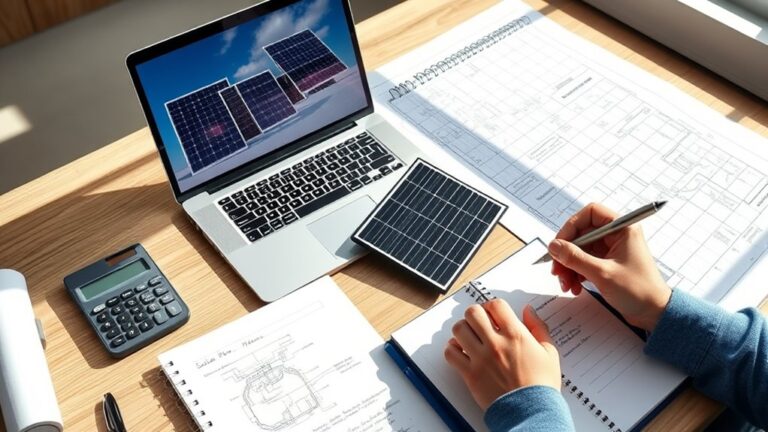
To find out how much solar power your RV needs, start by listing all your electrical devices and estimating their daily usage in watt-hours. This gives you a clear picture of your energy consumption.
Next, divide this total by your average sunlight hours to figure out how much power your solar panels should generate each day.
Don’t forget to add a 20-30% buffer for inefficiencies and any future energy needs you might have.
It’s also important to match your battery capacity so you can store enough energy for cloudy days and nights.
Keep in mind, your location and weather conditions will affect solar output, so plan accordingly.
Keep exploring to discover tips on choosing the best RV solar power setup that fits your camping style and keeps your adventures powered up!
Key Takeaways
- Calculate total daily energy use by listing devices, noting wattage, and estimating hours of use to find watt-hours needed per day.
- Divide daily watt-hours by average sunlight hours, then add 20-30% extra capacity for inefficiencies and weather variations.
- Choose solar panel types and sizes based on available space, efficiency needs, and future power demands.
- Ensure battery capacity matches energy needs to store enough power for nighttime and cloudy days, protecting battery life.
- Factor in location, seasonal sunlight changes, and shading when sizing and positioning your solar system for optimal performance.
It’s really about making sure you cover your daily needs while keeping some wiggle room for less sunny days.
And don’t forget—where you park your RV and the time of year can make a big difference in how much power you get.
How to Calculate Your RV’s Daily Power Needs
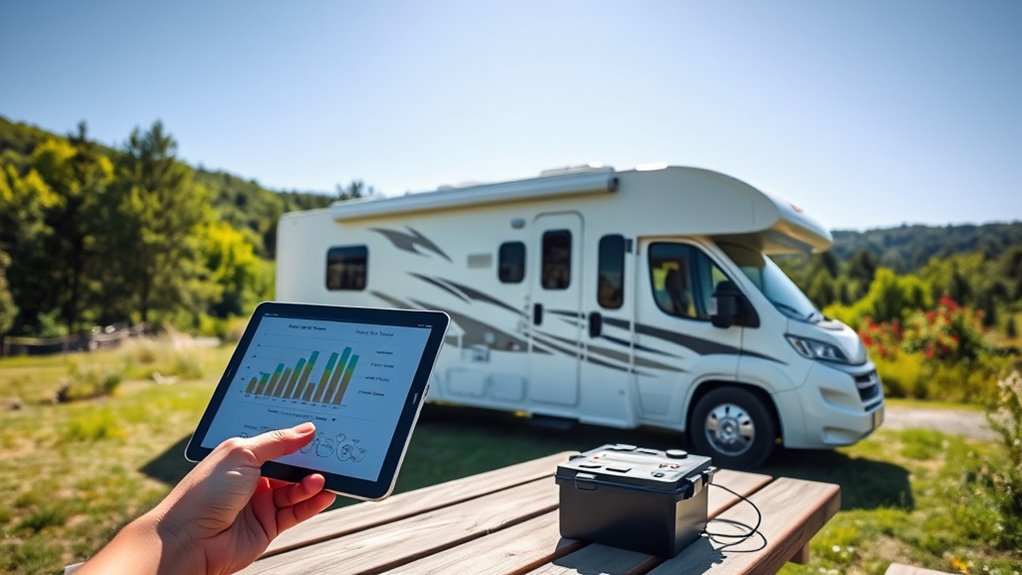
Before you install solar panels, you need to figure out how much power your RV uses daily. Start by listing all the electrical devices you use regularly—lights, refrigerator, fans, water pump, and any gadgets.
Check each device’s wattage, usually found on a label or in the manual. Next, estimate how many hours per day you run each device.
Multiply the wattage by the hours of use to get watt-hours for each item. Then, add those numbers together to find your total daily watt-hour consumption.
This total tells you how much energy your solar panels must generate to keep your RV powered. Tracking your usage for a few days guarantees accuracy, helping you avoid undersizing or oversizing your solar setup later.
How to Choose the Right Solar Panel Size for Your RV
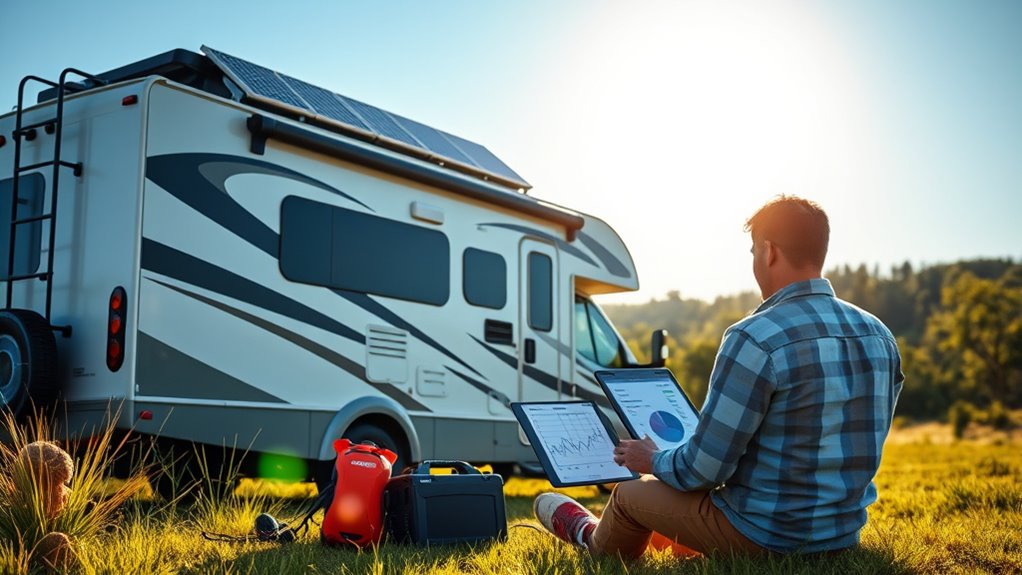
To choose the right solar panel size for your RV, start by evaluating your daily power consumption. Then, calculate how much energy your panels can realistically produce based on their wattage and sunlight exposure.
This will help guarantee your system meets your needs without overspending. It’s all about finding that sweet spot between enough power and not going overboard.
Assess Power Consumption
How much power do you actually need to keep your RV running smoothly? Start by listing all the electrical devices you use regularly—lights, fridge, water pump, fans, and charging ports.
Note their wattage and estimate how many hours each runs daily. Multiply watts by hours to find daily watt-hour consumption per device. Add these values to get your total daily power usage.
Don’t forget to include occasional but significant draws, like the microwave or air conditioner, if you use them often. Understanding your exact power needs helps you avoid undersizing or oversizing your solar setup.
Once you know your daily consumption, you’ll be ready to match it with the right solar panel capacity to keep your RV powered reliably.
Calculate Panel Output
Wondering how to pick the right solar panel size for your RV? Start by calculating the total wattage your panels need to produce daily. Use your power consumption estimate from the previous step and factor in the average sunlight hours at your location.
Then, divide your daily watt-hour needs by the sunlight hours to find the panel wattage required.
Keep these points in mind:
- Account for inefficiencies like shading, inverter loss, and weather conditions by adding a 20-30% buffer.
- Choose panel types (monocrystalline, polycrystalline) based on efficiency and space available on your RV roof.
Also, consider future power needs to avoid undersizing your system.
This approach guarantees you pick solar panels that consistently meet your RV’s power demands.
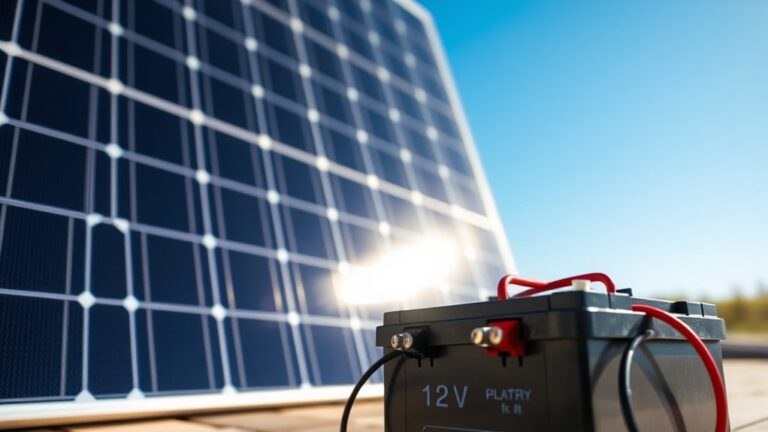
Why Battery Capacity Matters for Your RV Solar System
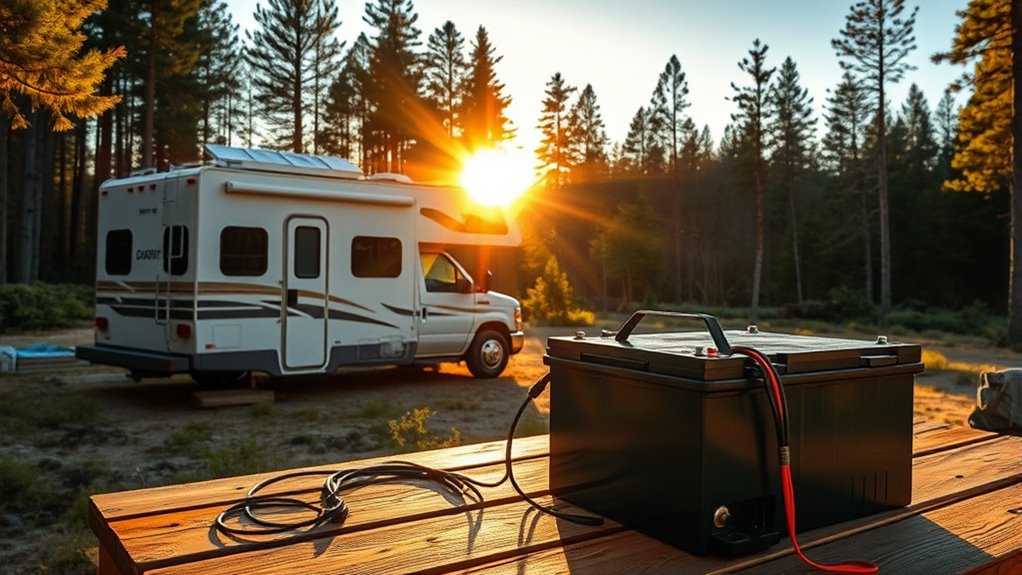
Your RV’s battery capacity directly affects how much solar energy you can store and use when the sun isn’t shining. If your battery is too small, you’ll limit your energy availability and risk running out during cloudy days or at night.
It’s really important to understand this so you can match your battery size to your energy needs. That way, you’ll have reliable power on the road without any surprises.
Battery Storage Importance
Why does battery capacity play such an essential role in your RV solar system? Simply put, it stores the energy your solar panels generate, so you can use power even when the sun isn’t shining.
Without sufficient battery storage, you risk running out of energy during cloudy days or at night.
Here’s why battery storage is indispensable:
- Energy Reserve: It provides a backup, ensuring you have power when solar input is low or absent.
- System Efficiency: Proper capacity prevents overcharging or deep discharging, prolonging battery life.
- Power Availability: It matches your energy needs, so you don’t have to limit your appliance use unnecessarily.
Choosing the right battery size ensures your RV solar system runs smoothly and reliably wherever you roam.
Impact On Energy Usage
How much energy you use and when you use it directly depend on your battery capacity in an RV solar system. If your battery bank is too small, you’ll quickly run out of stored power, limiting when and how you use your devices.
A larger battery allows you to store more energy, so you can run appliances longer—even during cloudy days or at night. This flexibility means you won’t have to worry about shutting off essentials or cutting back on comfort.
Plus, a properly sized battery minimizes the strain on your solar panels and extends their lifespan. In short, matching your battery capacity to your energy needs ensures you get the most out of your solar setup and enjoy hassle-free power on the road.
How Weather and Location Affect RV Solar Power
Although solar panels can provide reliable power for your RV, their efficiency depends heavily on the weather and your location.
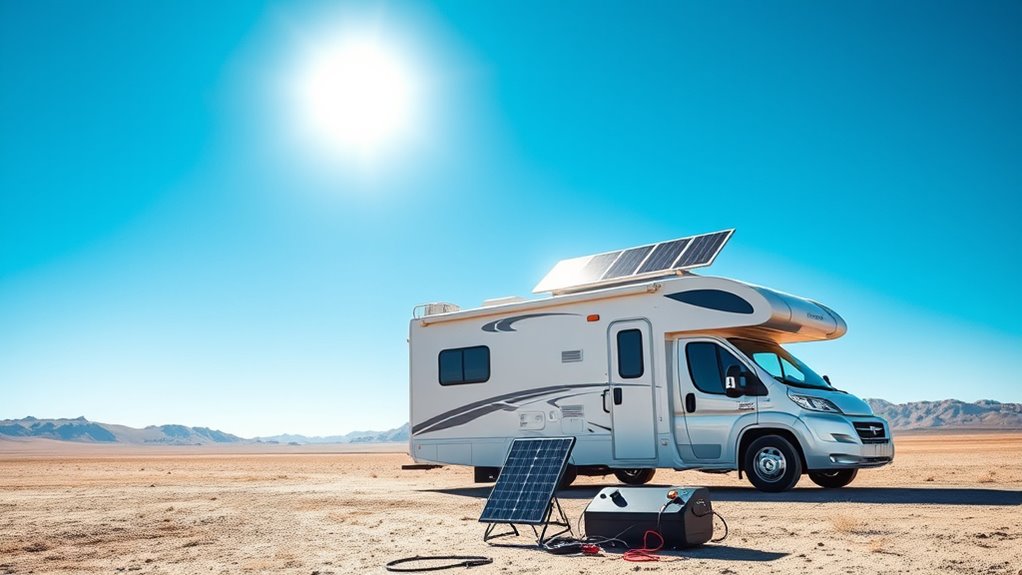
Cloudy days, rain, or snow can reduce the amount of sunlight reaching your panels, which directly impacts the energy they produce. Similarly, where you park matters—a sunny desert spot offers far more power than a shady forest site.
Keep these factors in mind to optimize your solar setup:
- Sunlight availability: More sun means more power; consider seasonal changes.
- Temperature: Excessive heat can decrease panel efficiency.
- Shade: Trees, buildings, or even your RV itself can block sunlight and reduce output.
Choosing the Right Solar Setup Based on Your Camping Style
Since your camping style influences your power needs and mobility, choosing the right solar setup means matching your system to how and where you travel. If you’re a boondocker staying off-grid for days, you’ll want high-capacity panels and a large battery bank to guarantee consistent power.
For weekend warriors who mostly stay in campgrounds, a smaller, portable setup might suffice, focusing on convenience over maximum output. If you move frequently, flexible or foldable panels are ideal because they’re lightweight and easy to pack.
Think about how much space you have on your RV roof and whether you prefer a permanent or portable system. Tailoring your solar setup to your travel habits ensures you have reliable power without carrying unnecessary weight or complexity.
Simple Ways to Expand or Upgrade Your RV Solar System
When you find your current solar setup isn’t meeting your power needs, expanding or upgrading can be straightforward and rewarding. You don’t have to replace everything; small additions can make a big difference.
Start by adding more solar panels to increase energy capture. Then consider upgrading your charge controller to handle the added power efficiently.
Begin by adding panels to boost energy, then upgrade your charge controller for optimal power management.
Finally, think about increasing your battery capacity to store more energy for cloudy days or nighttime use. Here are simple ways to expand or upgrade your system:
- Add extra solar panels compatible with your existing setup.
- Upgrade to a higher-capacity MPPT charge controller for better efficiency.
- Install additional or higher-capacity batteries for extended storage.
These steps help you tailor your system to your evolving power needs without hassle.
Frequently Asked Questions
How Do I Maintain My RV Solar Panels for Longevity?
You should keep your RV solar panels clean by wiping them regularly. It’s also important to check for any damage or loose connections.
Don’t forget to trim nearby branches that might be blocking sunlight. And when harsh weather hits, make sure to store your RV properly.
Doing these things will help your panels last longer and work more efficiently. It’s all about giving them a little regular TLC!
Can I Use Solar Power to Run My Rv’s Air Conditioner?
You can absolutely embrace solar power for your RV’s air conditioner, but it requires a generous setup. High energy demands mean you’ll need substantial solar panels and batteries to keep cool without interruptions or worries.
It’s definitely doable, but you’ll want to plan carefully. Think of it as an investment in comfort and independence while on the road. With the right gear, staying cool under the sun is totally within reach!
What Safety Precautions Are Needed for RV Solar Installations?
You should wear gloves, disconnect batteries, and use proper fuses to prevent shorts. Secure panels firmly, avoid sharp edges on wires, and guarantee your inverter and charge controller are correctly rated.
Always double-check connections for safety. It’s better to be safe than sorry when dealing with electrical components.
Are There Tax Credits or Incentives for RV Solar Systems?
Imagine sunlight and savings shining together—you can get federal tax credits for installing solar on your RV.
You’ll want to check state incentives too, as many offer rebates or credits that make your solar setup more affordable.
It’s a great way to lower the overall cost and enjoy clean energy on the road.
How Portable Are RV Solar Panels for Off-Grid Travel?
RV solar panels are highly portable, designed for easy setup and takedown. You can carry foldable or flexible panels in your storage, making off-grid travel convenient and efficient.
Plus, you won’t have to worry about heavy equipment slowing you down. It’s all about keeping things light and easy while you’re on the road.
Conclusion
You want enough solar power to keep your RV running smoothly, but not so much that you’re hauling around unnecessary weight. Balancing your energy needs with panel size and battery capacity makes all the difference.
Sunlight can be unpredictable, yet with the right setup, you’ll enjoy reliable power wherever you roam. Whether you camp off-grid or stay close to hookups, expanding or upgrading your system keeps your adventure powered and worry-free.
Finding the perfect solar power system for your RV means considering how much energy you use daily and the space available for panels. The goal is to have just enough solar power to cover your needs without overloading your rig. With a well-planned solar setup, you’ll have consistent energy, making your RV trips more enjoyable and stress-free. So, take the time to size your system right, and enjoy the freedom that comes with reliable solar power for your RV.