Do Solar Panels Produce DC or AC?
Solar panels produce direct current (DC) electricity by energizing electrons in their cells using sunlight. This flow of electrons moves in one direction, which is natural for solar panels.
However, this DC electricity isn’t compatible with most home appliances or the grid, which use alternating current (AC).
That’s why solar systems include inverters. These devices convert the DC into AC, making the electricity usable for everyday needs.
If you want to understand how this conversion works and how solar energy fits into your home and the grid, keep exploring the process further.
Key Takeaways
- Solar panels naturally produce direct current (DC) electricity from sunlight using silicon semiconductors. The internal electric fields in solar cells push electrons in one direction, generating a steady DC flow.
- But here’s the thing: DC power from solar panels isn’t compatible with household appliances or the utility grid without some help.
- That’s where solar inverters come in. They convert the DC electricity into alternating current (AC), which is what we actually use in our homes and what the grid needs.
- So, to sum it up, solar panels produce DC. But to power your home or feed the grid, that DC has to be converted into AC first.
Do Solar Panels Produce Direct Current (DC) Or Alternating Current (AC)?
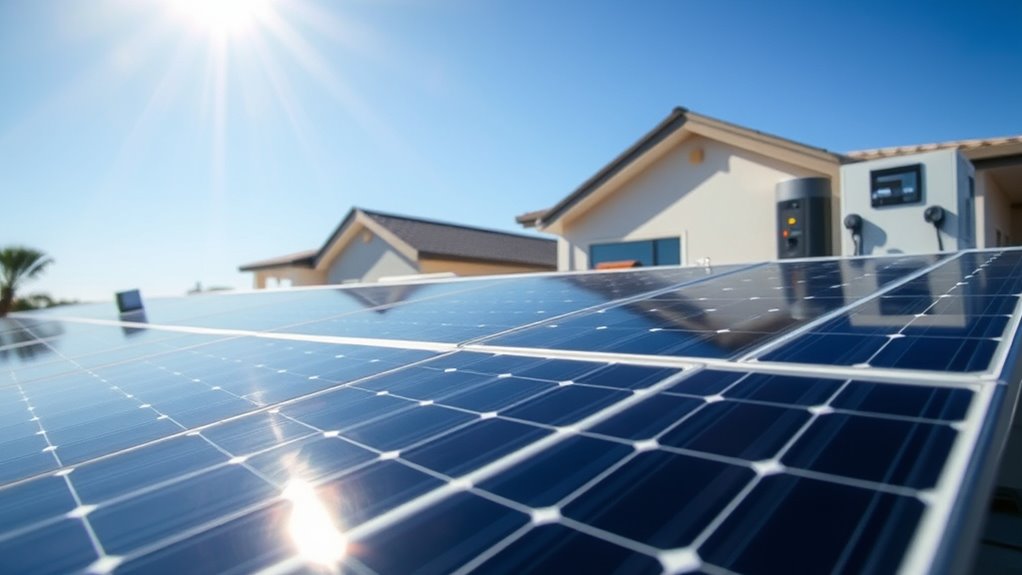
Although you might expect solar panels to produce electricity just like the power outlets in your home, they actually generate direct current (DC) rather than alternating current (AC). This means the electric charge flows in one steady direction, unlike AC, which reverses direction periodically.
When sunlight hits the solar cells, it excites electrons, creating this steady flow of current. You’ll find that DC is the natural form of electricity produced by solar panels because of their design and the way they capture sunlight.
However, most homes and appliances use AC, so this DC must be converted before use. Understanding that solar panels create DC helps you appreciate why additional equipment, like inverters, is essential to make the power usable for your everyday needs.
How Solar Panels Generate Direct Current (DC)
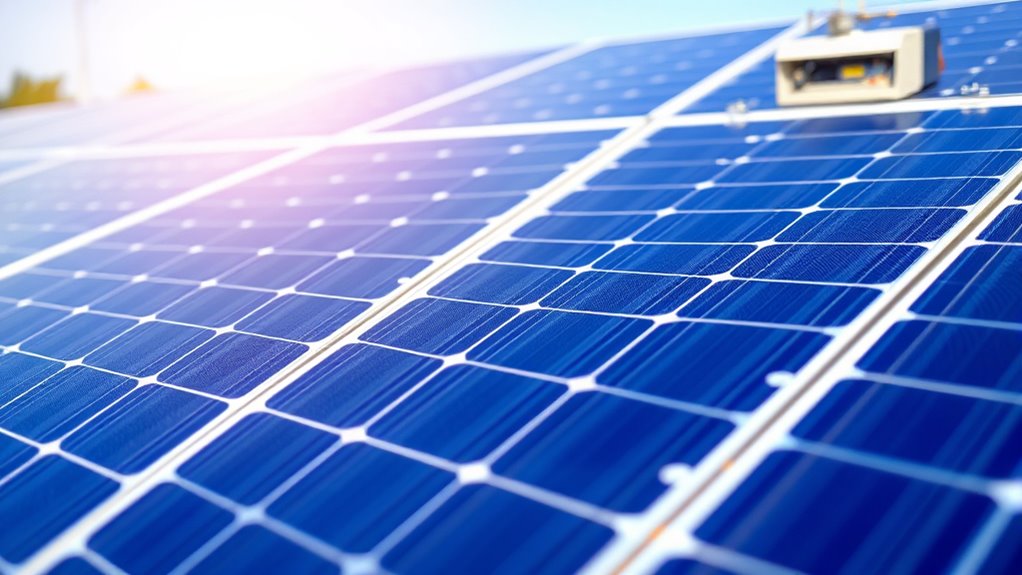
Since solar panels produce direct current (DC), it helps to understand exactly how they generate this steady flow of electricity. When sunlight hits the solar cells, it energizes electrons within the semiconductor material, usually silicon.
This energy excites the electrons, freeing them from their atoms and creating electron-hole pairs. The solar cell’s built-in electric field pushes these free electrons in one direction, producing a flow of electric charge—this is your direct current.
The current flows through the panel’s wiring, ready to power devices or be stored. Because the electrons move uniformly in a single direction, the electricity stays consistent, which is why it’s called direct current.
This fundamental process lets solar panels convert sunlight directly into usable electrical energy. Pretty cool, right?
Why Solar Panels Produce Only Direct Current (DC)
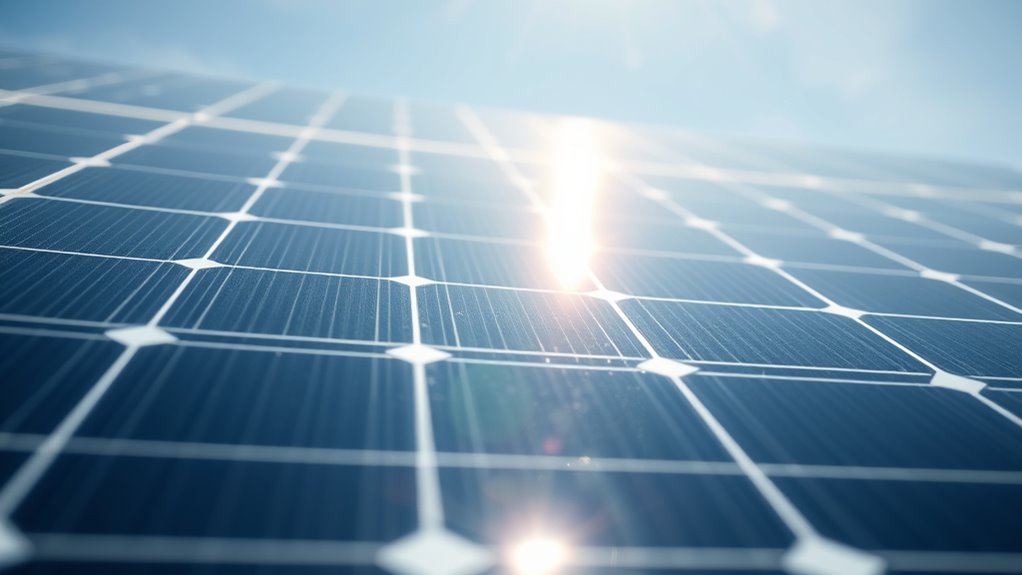
Because solar cells rely on their internal electric fields to guide electrons, they naturally produce direct current (DC) rather than alternating current (AC). When sunlight hits the solar cell, it excites electrons, pushing them in one consistent direction through the cell’s semiconductor layers.
You won’t see the current switch direction because the cell’s structure enforces a unidirectional flow. This behavior contrasts with AC, where the current reverses periodically.
The materials and design inside the solar panel create a fixed polarity, ensuring electrons move steadily from the negative side to the positive side. So, when you use solar panels, you’re harnessing a steady stream of electricity, perfect for storage or conversion but inherently DC by nature.
How Inverters Convert DC To AC In Solar Systems
Now that you know solar panels produce DC, let’s see how inverters change that into usable AC power for your home. You’ll learn how the inverter’s conversion process works and explore the main types of solar inverters available.
Understanding this will help you choose the right system for your needs. It’s pretty interesting once you get into the details!
Inverter Conversion Process
How does an inverter transform the direct current (DC) produced by solar panels into the alternating current (AC) that powers your home? It starts by chopping the DC into a series of pulses, creating a square wave. Then, the inverter uses electronic components like transistors to switch the current’s direction rapidly.
This switching mimics AC’s natural oscillation. Next, the inverter smooths this square wave into a cleaner sine wave, matching the frequency and voltage of your local grid. This process guarantees your appliances receive compatible power.
Throughout, the inverter continuously monitors the output, adjusting as needed to maintain efficiency and safety. In short, the inverter acts as a translator, converting steady DC into the fluctuating AC that your home’s electrical system relies on every day.
Types Of Solar Inverters
Which type of solar inverter suits your system best? You’ll find several options that convert your solar panels’ DC power into usable AC electricity. Each inverter type has unique features tailored to different setups.
Here are the main types you should consider:
- String Inverters: Connect multiple panels into one inverter; cost-effective for uniform shading.
- Microinverters: Attach to individual panels; maximize output when panels face different directions or shading.
- Power Optimizers: Work with string inverters; optimize each panel’s performance.
- Hybrid Inverters: Manage solar production, battery storage, and grid power seamlessly.
- Central Inverters: Used for large-scale systems, handling high power levels efficiently.
Choosing the right inverter guarantees your system runs efficiently and meets your energy needs. It’s all about matching the inverter to your setup and energy goals.
Why AC Power Matters For Your Home
You need AC power because most household appliances run on it, making compatibility essential. Your home’s wiring and devices are designed for AC, so using DC directly isn’t practical.
Plus, connecting your solar system to the grid requires AC to match the utility’s current. It just makes everything work smoothly together.
Household Appliance Compatibility
Why does your home rely on AC power instead of DC for appliances? Most household devices are designed to run on AC because it’s easier to distribute over long distances and convert to different voltages.
Since solar panels produce DC, you’ll need an inverter to change that to AC before powering your appliances.
Here’s why AC compatibility matters for your home appliances:
- Most motors and compressors use AC for efficient operation
- Lighting systems, especially older ones, are designed for AC
- AC allows simple voltage adjustments via transformers
- Household outlets supply AC power exclusively
- Electronic devices include AC-to-DC adapters internally
Without converting DC to AC, your appliances won’t function properly or safely. So, ensuring compatibility means making sure your solar setup includes an inverter to keep everything running smoothly.
Grid Connection Requirements
How does your solar power system connect to the grid? Since the electricity grid operates on alternating current (AC), your solar panels’ direct current (DC) output needs transformation.
That’s where the inverter comes in—it changes DC to AC, making your solar energy compatible with the grid and your home appliances. Without this conversion, you couldn’t safely feed power back to the utility or use it efficiently.
Here’s why AC matters for grid connection:
| Requirement | Why It Matters |
|---|---|
| Voltage Compatibility | Matches grid voltage levels |
| Frequency Synchronization | Ensures stable power flow |
| Safety Standards | Prevents backfeed hazards |
| Power Quality | Maintains consistent supply |
| Regulatory Compliance | Meets utility company rules |
Your inverter ensures all these requirements are met, keeping your home powered and the grid stable.
How Solar-Generated AC Feeds The Electrical Grid
When solar panels generate electricity, the power starts as direct current (DC), but to feed the electrical grid, it needs to be converted into alternating current (AC). This conversion happens through an inverter, which makes the solar power compatible with the grid’s AC system.
Once converted, the solar-generated AC must synchronize with the grid’s voltage and frequency to guarantee safe and efficient energy flow. Here’s how solar-generated AC feeds the grid:
- Inverter converts DC to AC matching grid specs
- Synchronization with grid voltage and frequency
- Power flows through a bi-directional meter
Excess energy feeds back into the grid, and the utility company credits your account for the surplus energy. So, you’re not just using solar power—you’re actively contributing renewable energy and helping reduce reliance on fossil fuels.
Frequently Asked Questions
How Long Do Solar Panels Typically Last?
You can expect solar panels to last around 25 to 30 years. Over time, their efficiency slightly decreases, but they’ll keep producing energy well beyond that if you maintain them properly and avoid physical damage.
It’s kind of like any other piece of tech—it won’t stay brand new forever. But with a little care, they can keep doing their job for a long time. So, don’t worry too much about them wearing out too quickly!
What Maintenance Do Solar Panels Require?
You don’t need to become a solar mechanic! Just keep your panels clean, check for shading, and inspect wiring yearly.
A little dust or debris won’t destroy them, but regular care keeps your energy flowing strong. It’s really not that complicated!
Can Solar Panels Work on Cloudy Days?
Yes, your solar panels can work on cloudy days, but they’ll produce less electricity. They still capture diffused sunlight, so while efficiency drops, you’ll continue generating power even without direct sun shining on them.
It’s pretty cool that they don’t just need bright sunshine to do their job. So, even if it’s gray and overcast, your panels are still working for you. Just expect a bit of a dip in how much energy they make.
How Much Do Solar Panels Cost to Install?
Installing solar panels typically costs between $15,000 and $25,000. You’ll save over time with lower energy bills, and various incentives can reduce upfront costs.
This makes solar a smart, long-term investment for your home’s energy needs. It’s definitely worth considering if you want to cut down on electricity expenses and help the environment.
Are Solar Panels Environmentally Friendly?
Yes, solar panels are environmentally friendly because you’re using clean, renewable energy that reduces greenhouse gas emissions. They help lower your carbon footprint and decrease reliance on fossil fuels, making your energy consumption much greener.
Plus, by switching to solar, you’re doing your part to protect the planet. It’s a simple way to make a big impact on the environment without much hassle.
Conclusion
You rely on solar panels to produce direct current (DC). Then, you depend on inverters to convert that DC to alternating current (AC). This AC power is what you use to run your home and connect to the grid.
Understanding this flow helps you appreciate how solar energy moves from the sun to your devices. By knowing why solar panels produce DC and how inverters transform it, you empower yourself to make smarter energy choices every day.
In short, solar panels naturally generate DC electricity, which is not directly usable for most household appliances. That’s where inverters come in—they convert DC into AC, the standard form of electricity used in homes and the grid. Knowing this process is key to maximizing the benefits of solar power and making informed decisions about your energy system.