What Radiation Does a Solar Panel Produce?
You don’t need to worry about harmful radiation from your solar panels—they don’t produce dangerous ionizing radiation like X-rays or gamma rays. Instead, solar panels emit very low levels of non-ionizing electromagnetic fields and harmless infrared heat.
These types of radiation are completely safe and nothing to be concerned about.
In fact, the emissions from solar panels are far weaker than those from everyday electronics and are well below safety limits. So, they won’t affect your health in any way.
If you’re curious about how solar panels work with sunlight and why they’re totally safe, there’s definitely more to learn. It’s pretty interesting once you dive into it!
Key Takeaways
- Solar panels produce non-ionizing electromagnetic radiation, but it’s at very low levels. This mainly comes from their electrical components and a bit of heat emission.
- They take sunlight—which includes visible and infrared light—and turn it into electricity. The good news is, they don’t emit harmful ionizing radiation like X-rays or gamma rays.
- The electromagnetic fields (EMFs) that solar panels give off are way below safety limits. In fact, they’re similar to what you’d get from everyday household electronics.
- Any infrared radiation from solar panels is minimal and totally harmless. It just comes from their normal operating temperature.
- Plus, solar panels don’t release dangerous chemicals or radiation. So, there’s no health risk when you use them normally.
Do Solar Panels Emit Radiation?
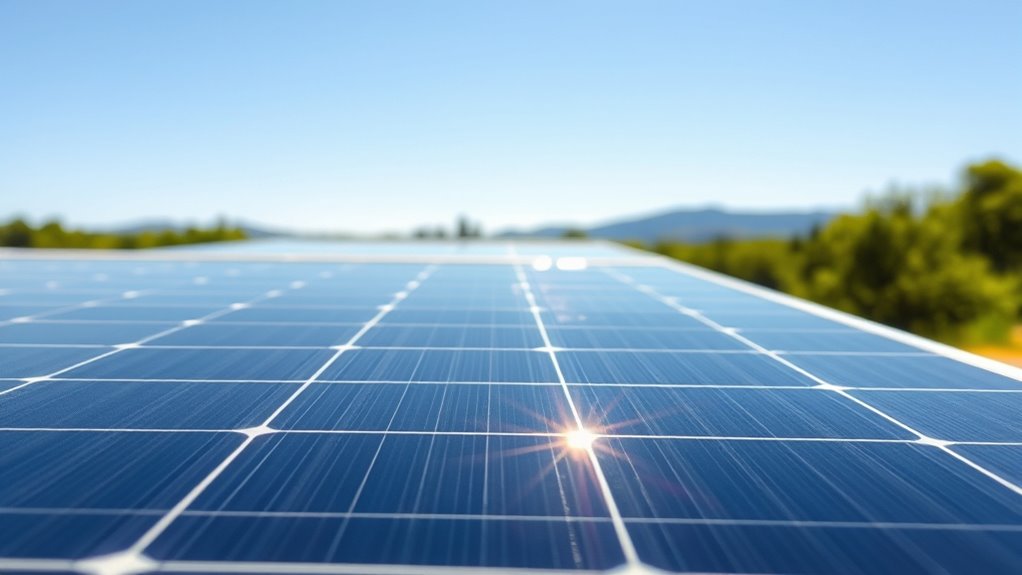
Although solar panels harness the sun’s energy, they don’t emit harmful radiation themselves. When you install or use solar panels, you won’t need to worry about them producing dangerous electromagnetic waves like X-rays or gamma rays.
Instead, solar panels convert sunlight into electricity silently and safely. The materials inside, like silicon, don’t generate radiation that can affect your health or the environment.
You might wonder if the electrical components release something harmful, but modern solar panels operate within strict safety standards to guarantee they don’t emit any hazardous signals.
How Solar Panels Use and Interact With Radiation
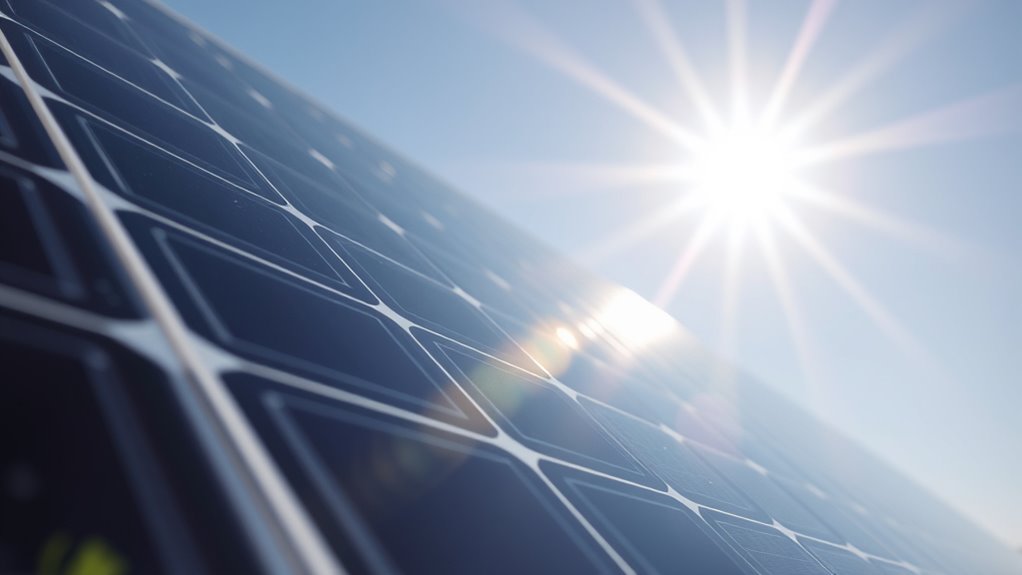
While solar panels don’t emit harmful radiation, they rely on sunlight’s energy to generate electricity. When sunlight hits the solar cells, it interacts with the semiconductor material, usually silicon.
This interaction excites electrons, knocking them loose and creating an electric current. You’re fundamentally harnessing the sun’s radiation—mainly visible light—to power your devices.
The solar cells absorb photons, the energy packets from sunlight, which energize electrons and produce a flow of electricity. This process is called the photovoltaic effect.
As you use solar panels, they convert solar radiation into usable energy without producing any harmful byproducts. So, while radiation plays an essential role in their operation, solar panels themselves don’t release radiation that would affect you or the environment negatively.
Types of Radiation Involved in Solar Panel Operation
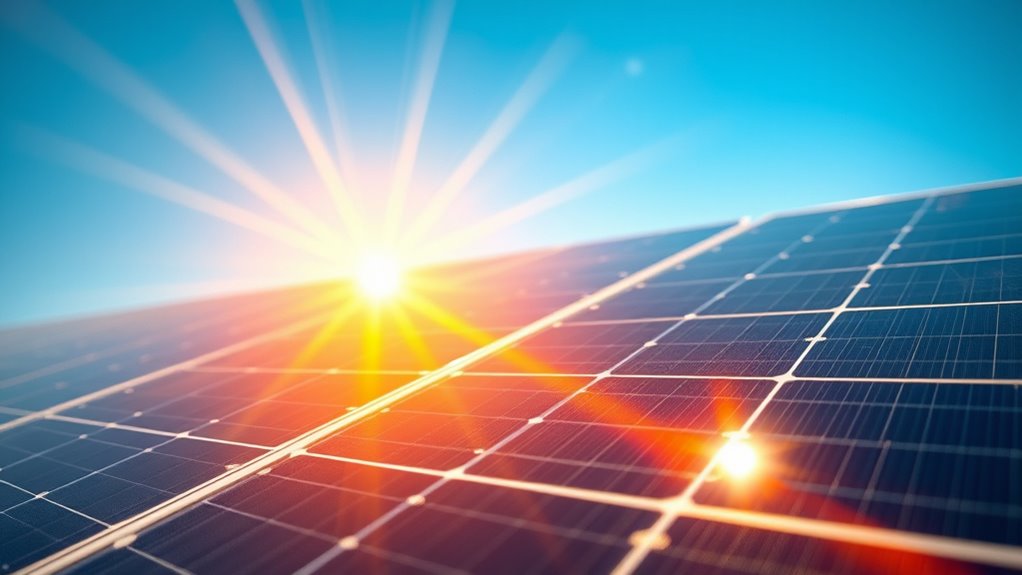
What kinds of radiation actually power your solar panels? They primarily rely on sunlight, which includes visible light, ultraviolet (UV), and infrared (IR) radiation. Visible light provides the energy that solar cells convert directly into electricity.
UV radiation carries more energy but is mostly absorbed by the panel’s protective layers to prevent damage. Infrared radiation contributes heat, which can affect panel efficiency but doesn’t generate electricity.
Beyond sunlight, solar panels themselves emit very low levels of infrared radiation due to their temperature. But don’t worry—they don’t produce harmful ionizing radiation like X-rays or gamma rays.
Understanding these types of radiation helps you see how solar panels harness sunlight effectively. They focus on usable energy while managing heat and protecting the cells from potentially damaging UV rays.
Is Radiation From Solar Panels Safe for People and the Environment?
Since solar panels emit only very low levels of non-ionizing radiation, you don’t need to worry about harmful effects on your health or the environment. The radiation produced is far weaker than everyday sources like sunlight or Wi-Fi.
You can safely live near or work with solar panels without fear of radiation-related issues. They don’t release ionizing radiation, which is the type that can damage cells or DNA.
Overall, solar panels are a safe, clean energy option that won’t harm you or the ecosystems around them.
| Radiation Type | Safety Level |
|---|---|
| Non-ionizing (from solar panels) | Very low, safe |
| Sunlight (UV) | Moderate, some risk |
| Wi-Fi | Low, safe |
| Ionizing radiation | High, harmful |
| Solar panel heat emission | Negligible |
How Solar Panel Radiation Compares to Everyday Radiation Sources
You might wonder how the radiation from solar panels stacks up against what you encounter daily. Solar panels emit very low levels of non-ionizing radiation, similar to common sources like cell phones and Wi-Fi.
Comparing these types and amounts can help you understand why solar panel radiation poses minimal risk. It’s really not something to worry about when you think about the everyday radiation we’re exposed to.
Types Of Radiation Emitted
How does the radiation emitted by solar panels compare to the everyday sources you encounter? Solar panels primarily emit very low levels of non-ionizing radiation, mainly in the form of electromagnetic fields (EMFs) from their electrical components and wiring. This type of radiation is similar to what you’d find around household electronics like computers or Wi-Fi routers.
Unlike ionizing radiation—which can damage cells and DNA—non-ionizing radiation from solar panels doesn’t carry enough energy to cause harm. You won’t find any radioactive materials or harmful particles emitted by these panels. So, when it comes to types of radiation, solar panels produce emissions that are comparable to common electronic devices you use daily, making them a safe and clean technology in terms of radiation exposure.
Radiation Levels Compared
Wondering how the radiation levels from solar panels stack up against everyday sources? You’ll be relieved to know that solar panels emit extremely low radiation, far below levels you encounter daily.
The radiation they produce is minimal and mostly limited to very weak electromagnetic fields during operation. When compared to natural background radiation from the sun, soil, and even the devices you use, solar panel emissions are negligible.
This means you don’t have to worry about any harmful exposure just by having solar panels on your roof. In fact, the radiation from solar panels is so low that it’s often considered insignificant in health and safety assessments.
Everyday Radiation Sources
Where does the radiation from solar panels fit among the everyday sources you encounter? When you step outside, you’re exposed to natural background radiation from the sun, soil, and even the air you breathe.
Your smartphone, Wi-Fi, and microwave oven all emit low levels of electromagnetic radiation too. Compared to these, solar panels produce negligible radiation.
The slight electromagnetic fields they generate are far weaker than what your body experiences daily from common devices. So, if you’re concerned about radiation exposure, solar panels shouldn’t be on your worry list.
In fact, the radiation from these panels is minimal and safe, especially when you consider the constant, unavoidable radiation from natural and household sources around you every day.
Common Myths and Facts About Radiation From Solar Panels
You’ve probably heard some myths about radiation from solar panels, but it’s important to separate fact from fiction.
Understanding the types of radiation involved and the safety standards in place can help clear things up.
Let’s take a closer look at the common misconceptions and what the science really says.
Types Of Radiation
How does radiation from solar panels really work, and should you be concerned?
Solar panels primarily emit non-ionizing radiation, which is harmless to you. They don’t produce dangerous ionizing radiation like X-rays or gamma rays.
Instead, the most common types connected to solar panels are visible light, infrared, and extremely low-frequency (ELF) electromagnetic fields.
Here’s a quick overview:
| Type | Description | Health Impact |
|---|---|---|
| Visible Light | Light solar panels capture | Safe, essential for vision |
| Infrared Radiation | Heat energy emitted | Safe, causes warmth only |
| ELF Fields | Low-frequency electromagnetic | Negligible, no proven harm |
You can rest easy knowing solar panels don’t emit harmful radiation types.
Radiation Safety Standards
Understanding the types of radiation solar panels emit helps set the record straight about their safety. You should know that solar panels comply with strict radiation safety standards enforced by agencies like the EPA and FCC.
These standards limit any electromagnetic emissions to levels far below what could harm you. The radiation involved is mainly non-ionizing, meaning it doesn’t have enough energy to damage your cells or DNA.
Regulatory bodies regularly test solar panels to ensure they meet these safety thresholds before they reach the market. So, when you install solar panels, you’re not exposing yourself to dangerous radiation.
These safety standards exist to protect you and your family, making solar panels a safe choice for clean energy without health risks related to radiation exposure.
Debunking Common Misconceptions
Why do so many people worry about radiation from solar panels when the facts say otherwise? You might have heard that solar panels emit harmful radiation, but that’s a myth.
Solar panels generate electricity by converting sunlight; they don’t produce ionizing radiation like X-rays or gamma rays. Instead, any electromagnetic fields (EMFs) they emit are extremely low and well below safety limits.
You don’t need to fear cancer or other health risks from your rooftop panels. Another misconception is that solar panels release dangerous chemicals or radiation during operation—they don’t.
If you’re concerned, just remember: solar panels are designed and tested to meet strict safety standards. So, you can enjoy clean energy without worrying about hidden radiation threats.
Frequently Asked Questions
Can Solar Panels Interfere With Wireless Signals?
No, solar panels don’t usually interfere with wireless signals. They generate electricity silently without emitting signals that disrupt Wi-Fi or cellular connections.
Do Solar Panels Affect Nearby Electronic Devices?
No, solar panels don’t affect nearby electronic devices. They generate electricity quietly without emitting signals or interference,
so you won’t have to worry about them disrupting your gadgets or wireless connections around your home or office.
How Long Do Solar Panels Last Before Efficiency Drops?
Like a clock slowly winding down, your solar panels typically last 25 to 30 years before their efficiency drops noticeably.
You’ll still get power, but expect about 0.5% less output each year after that. It’s gradual, so you might barely notice at first.
Are There Special Disposal Methods for Old Solar Panels?
Yes, you need to follow special disposal methods for old solar panels. They contain hazardous materials, so recycling centers equipped to handle them safely are best.
Don’t just toss them in regular trash to avoid environmental harm. It’s really important to dispose of them properly to keep our planet safe.
Can Solar Panels Be Recycled Safely?
Absolutely, you can recycle solar panels safely! Like turning old stories into new tales, recycling recovers valuable materials without harm.
Just make sure to use certified facilities that handle hazardous components responsibly. This way, you protect yourself and the environment too.
Conclusion
You don’t need to worry about solar panels “sending out” harmful rays. While they work by capturing sunlight—a form of natural energy—they don’t produce any dangerous radiation themselves.
In fact, their interaction with radiation is more like a gentle exchange than anything threatening. So, you can confidently embrace solar power, knowing it offers a clean energy solution without adding any unwanted “invisible guests” to your environment.
Solar panels are safe and don’t emit harmful radiation, making them a smart choice for eco-friendly energy. They simply convert sunlight into electricity without any risky side effects. This means you get all the benefits of renewable energy without worrying about radiation hazards. Embracing solar power is a great way to protect both the planet and your health, thanks to its clean and harmless radiation profile.