
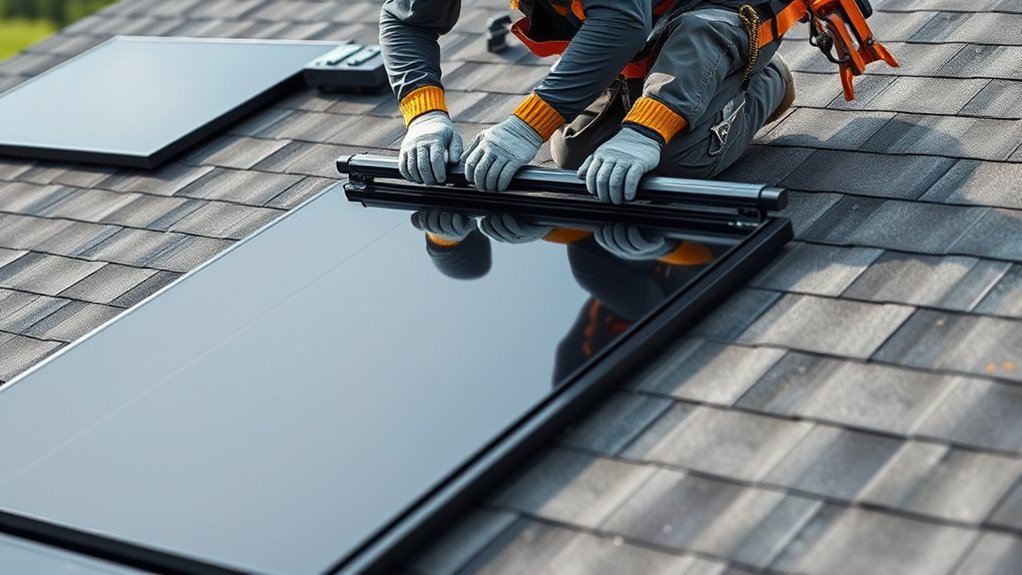
How to Do Solar Panels Without Voiding Your Roof Warranty
To install solar panels without voiding your roof warranty, start by carefully reviewing your warranty terms. This helps you understand any restrictions and maintenance requirements that might apply. Knowing these details upfront can save you from costly mistakes later.
Next, make sure to use authorized installers who are trained and approved by your roofing manufacturer. These pros know how to mount your solar panels properly without causing damage.
It’s also smart to choose mounting systems designed specifically to avoid hurting your roof.
Before installation, inspect your roof and make any necessary repairs. This ensures your roof is in good shape to support the solar panels.
By staying informed and working with the right professionals, you can protect both your warranty and your roof’s integrity. Keep following for more essential steps and tips to safeguard your roof while going solar!
Key Takeaways
- Review your roof warranty terms carefully to understand restrictions related to solar panel installation and potential coverage exclusions. This way, you know exactly what’s allowed before you start.
- Hire a roofing manufacturer-approved and certified solar installer who’s trained to maintain warranty compliance. It really helps to have experts who know the ins and outs.
- Make sure all roof inspections, repairs, and reinforcements are done before mounting the solar panels. Getting this sorted upfront can save you headaches later.
- Get written guarantees from your installers confirming their methods won’t void your roof warranty. It’s always good to have that reassurance in writing.
- Keep up with regular roof maintenance and follow all warranty conditions after installation. Staying on top of this keeps your coverage valid and your roof in great shape.
How Roof Warranties Affect Solar Installation
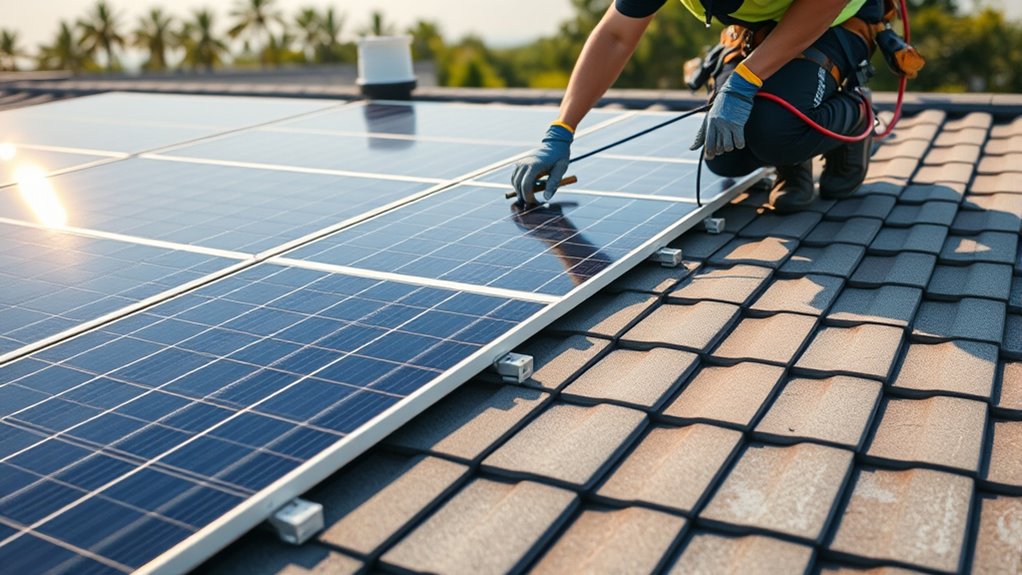
Although installing solar panels can be a smart investment, you need to understand how it might impact your roof warranty. When solar panels are mounted, your roofing materials may be penetrated or altered, which can void certain warranty terms.
Manufacturers often exclude coverage if damage results from third-party installations, including solar setups. This means that if a leak or issue arises where panels are attached, your warranty might not cover repairs.
Damage from third-party installations like solar panels may void your roof warranty coverage.
However, not all warranties react the same way—some have specific clauses about solar installations. You’ll want to review your warranty details carefully to see how it addresses rooftop modifications.
Knowing this upfront helps you avoid unexpected costs and guarantees you work with installers who follow guidelines to keep your warranty intact.
Key Roof Warranty Checks Before Installing Solar Panels
Before you install solar panels, check your roof warranty terms carefully to see what’s covered and what isn’t. Make sure you understand if the warranty requires using authorized installers for any modifications.
Following these rules helps you avoid accidentally voiding your roof warranty. It’s always better to be safe than sorry when it comes to protecting your investment!
Warranty Terms Review
When you’re planning to install solar panels, you need to carefully examine your roof warranty’s terms to avoid unexpected voids. Don’t assume your warranty covers all alterations—some clauses might exclude solar installations or require specific conditions.
Focus on these key points:
- Damage Coverage: Check if the warranty covers damage caused by installations or if you’ll be responsible for repairs.
- Modification Restrictions: Look for any clauses that prohibit or limit roof modifications, including mounting equipment.
- Maintenance Requirements: Understand if maintaining the panels or roof in a certain way is necessary to keep the warranty valid.
Reviewing these details helps you avoid surprises and guarantees your roof warranty stays intact while you harness solar energy. It’s worth taking the time to get this right!
Authorized Installer Requirements
Since roof warranties often specify who can perform installations, you’ll need to confirm that your solar panel installer is authorized by your roofing manufacturer. Using an unauthorized installer can void your warranty, leaving you unprotected if roof damage occurs.
Always ask for proof of authorization before proceeding. It’s a simple step that can save you a lot of trouble down the line.
Here’s a quick checklist to help you verify your installer’s credentials:
| Requirement | Why It Matters | What to Ask |
|---|---|---|
| Manufacturer Approval | Ensures compliance with warranty | “Are you certified by the roof maker?” |
| Installation Training | Reduces risk of roof damage | “Have you completed specific training?” |
| Insurance Coverage | Protects against accidents | “Do you have liability insurance?” |
| Past Experience | Shows proven skills | “Can you provide references?” |
Checking these *guarantees* your roof warranty remains valid. So, don’t skip this step—it’s worth it!
Find Solar Installers Who Protect Your Roof Warranty
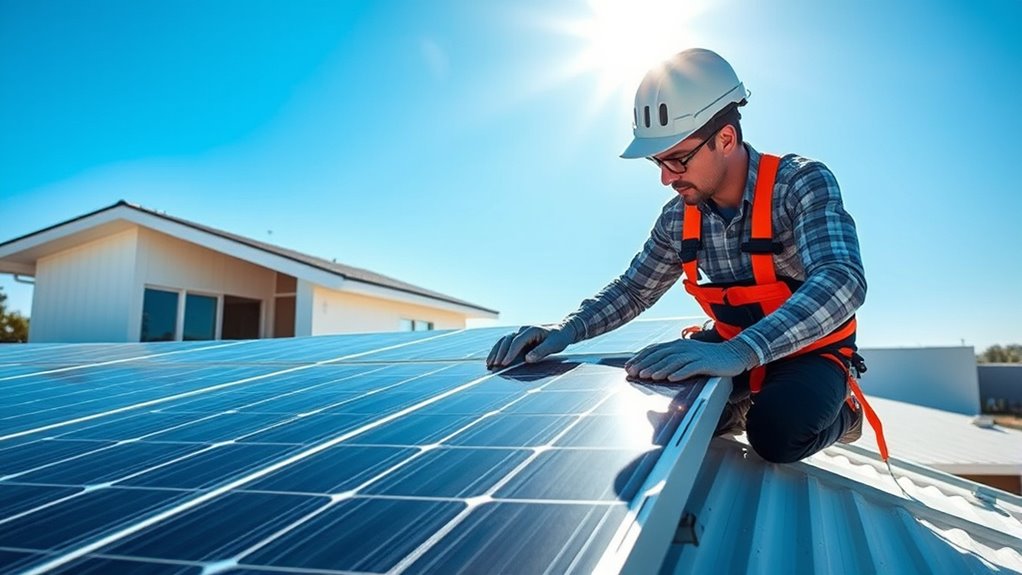
How do you guarantee your roof warranty stays intact after installing solar panels? The key is finding solar installers who prioritize your roof’s protection. Not all installers understand the importance of preserving your warranty, so you need to be selective.
Here’s how to find the right installer:
- Verify Warranty Experience: Choose installers familiar with your roofing brand’s warranty terms to avoid violations.
- Check for Certifications: Look for certifications from roofing manufacturers or industry groups signaling expertise in warranty-safe installations.
- Request Written Guarantees: Get a clear, written commitment from the installer ensuring they’ll follow proper procedures that won’t void your roof warranty.
Prepare Your Roof for Solar Installation Safely
Before installing solar panels, you need to make certain your roof is in good condition and prepared to handle the new equipment. Start by inspecting for any damage like missing shingles, leaks, or weak spots. Fix these issues before installation to avoid voiding your warranty.
Clean your roof’s surface to ensure proper adhesion and reduce debris interference. Confirm your roof structure can support the added weight of solar panels by consulting a professional if needed. Avoid walking on fragile areas to prevent damage during preparation.
Also, check local building codes and your warranty terms for any specific requirements. Taking these steps guarantees your roof stays protected and ready for solar installation without compromising its warranty.
Pick Mounting Systems That Keep Your Roof Warranty Intact
When you choose mounting systems for your solar panels, you’ll want to pick options designed to protect your roof’s integrity and warranty. Selecting the right system guarantees your roof stays leak-free and your warranty remains valid.
Here are three mounting options to evaluate:
- Ballasted mounts – These use weight to hold panels in place without penetrating your roof, minimizing damage risks.
- Non-penetrating mounts with rubber pads – They attach without drilling, reducing potential leaks and preserving roofing materials.
- Flash-mounted systems with proper sealing – These penetrate the roof but use specialized flashing and sealants approved by manufacturers to maintain warranty coverage.
Always check with your roof manufacturer before installation to confirm which mounting system fits your warranty terms. It’s a smart move to avoid any surprises later on.
Maintain Solar Panels Without Voiding Your Roof Warranty
Choosing the right mounting system is just the start; keeping your solar panels in good shape without risking your roof warranty requires regular care and attention. You should clean your panels gently with a soft cloth or sponge and mild soap, avoiding harsh chemicals or abrasive tools that could damage seals or roofing materials.
Inspect the mounts and flashing periodically for signs of wear or leaks, and fix issues promptly to prevent water damage. Don’t attempt major repairs yourself—hire qualified professionals familiar with your roof type and warranty terms.
Also, keep a record of all maintenance and inspections as proof you’re following proper care guidelines. By staying proactive and cautious, you’ll protect both your solar investment and your roof warranty for years to come.
Frequently Asked Questions
Can Solar Panels Increase My Home’s Resale Value?
Yes, solar panels can increase your home’s resale value by making it more energy-efficient and attractive to buyers. You’ll likely recoup installation costs and enjoy faster sales.
Homes with eco-friendly features like solar panels tend to catch buyers’ attention more easily. It’s a great way to boost your property’s appeal and stand out in the market.
How Do Solar Panels Affect My Energy Bills?
Imagine Sarah cutting her energy bills by 60% after installing solar panels.
You’ll see similar savings as solar power reduces your reliance on the grid.
This means lower monthly costs and protection from rising utility rates.
Are There Tax Incentives for Installing Solar Panels?
Yes, you can get tax incentives for installing solar panels. You’ll often qualify for federal tax credits, which can significantly reduce your costs.
Some states or local governments also offer additional rebates or incentives. These extras help you save even more money while going green. It’s definitely worth checking out what’s available in your area!
What Is the Average Lifespan of Solar Panels?
You can expect solar panels to last about 25 to 30 years on average. With proper maintenance, they’ll keep producing energy efficiently.
Often, they still work beyond that timeframe but with gradually reduced output over time. So, while they might not be as powerful after a couple of decades, they’re usually still doing their job.
Can I Install Solar Panels Myself to Save Money?
You can install solar panels yourself to save money, but it’s tricky. You’ll need proper tools, knowledge, and safety precautions.
Mistakes might void warranties or cause damage, so consider professional help for a secure, efficient setup. It’s worth thinking about if you want peace of mind.
Conclusion
By following these steps, you can install solar panels without turning your roof warranty into a pile of ashes. Always check your warranty details carefully. This helps you know exactly what’s covered and what’s not.
Choose installers who respect your roof and understand the importance of maintaining your warranty. Pick mounting systems designed specifically to protect your roof from damage.
Regular maintenance is key to keeping both your solar panels and your roof in top shape. Clean energy is great, but peace of mind is even better.
With the right care and attention, you’ll enjoy the benefits of solar power without risking your roof warranty. It’s like having a superhero shield over your home that protects your investment while helping the environment. So go ahead, harness the sun safely, and keep your roof warranty intact!




2 Comments