
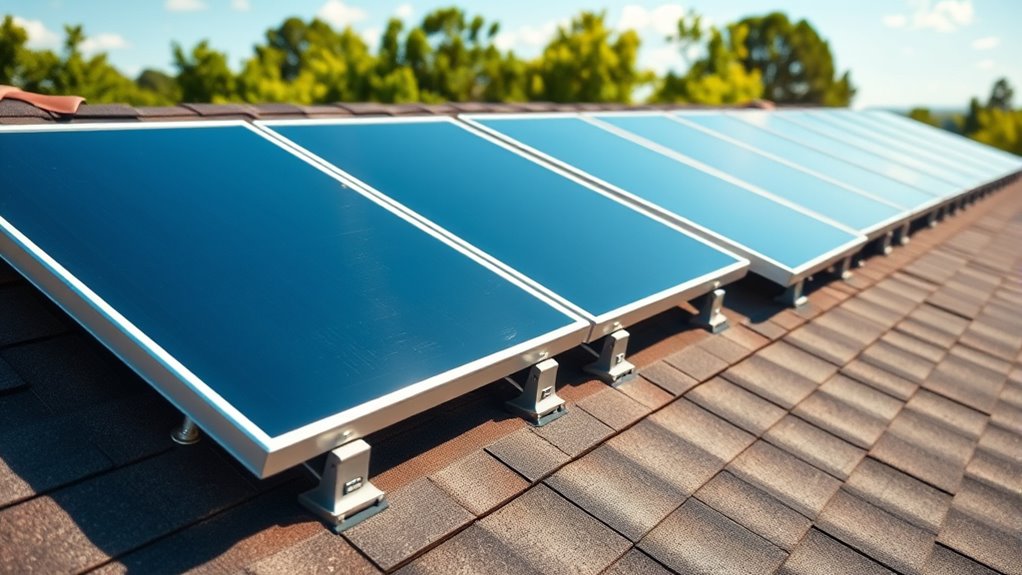
How Do Solar Panels Protect Your Roof Step by Step
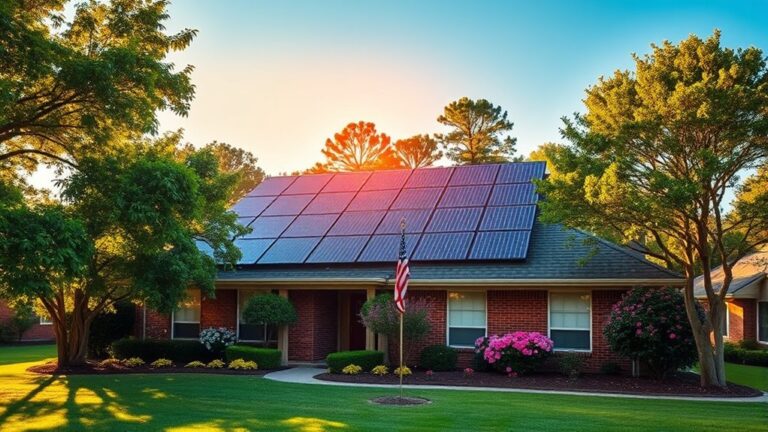
You safeguard your roof step by step by installing solar panels that act as a durable shield, absorbing and blocking harmful UV rays to prevent fading and cracking. These panels are a smart way to protect your roof from everyday wear and tear caused by the sun’s harsh rays.
They also deflect rain, hail, and extreme weather while regulating temperature swings to reduce thermal stress. This means your roof faces less damage from sudden changes in the weather, keeping it stronger for longer.
Proper installation guarantees no leaks and strengthens the roof against damage. When done right, solar panels add an extra layer of protection that extends your roof’s lifespan and saves you money on maintenance costs.
Discover how this smart upgrade benefits your entire home by providing reliable protection and energy savings at the same time. It’s a win-win for your roof and your wallet!
Key Takeaways
- Solar panels block UV rays, which helps reduce shingle damage. This also prevents fading, cracking, and warping.
- They act like a shield for your roof against rain, hail, and debris. This means less physical damage and less wear from the weather.
- Because panels are installed a bit above the roof, rainwater gets diverted efficiently. That helps prevent pooling and lowers the risk of leaks.
- When installed properly by professionals, solar panels come with secure sealing and flashing. This protects the vulnerable parts of your roof from leaks.
- Plus, solar panels help keep your roof’s temperature steady. By reducing thermal stress, they can actually extend your roof’s lifespan.
How Solar Panels Protect Your Roof From Sun Damage
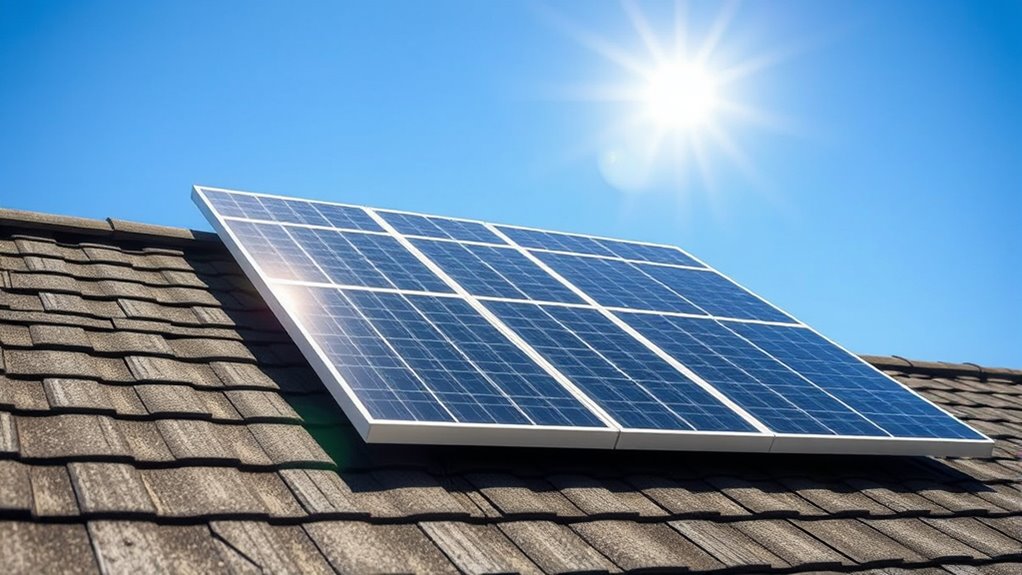
Although your roof faces constant exposure to harsh sunlight, installing solar panels can considerably reduce the damage caused by UV rays. When you mount solar panels, they act as a shield, absorbing and blocking a significant portion of the sun’s ultraviolet radiation before it reaches your roofing material.
This protection slows down the breakdown of shingles and prevents fading, cracking, or warping caused by prolonged sun exposure. You’ll notice that your roof stays structurally sound longer because it’s not directly exposed to intense heat and UV rays.
Plus, the panels help maintain your roof’s appearance by reducing discoloration. By installing solar panels, you’re not only generating clean energy but also safeguarding your roof from premature aging due to sun damage.
How Solar Panels Reduce Temperature Swings and Roof Wear
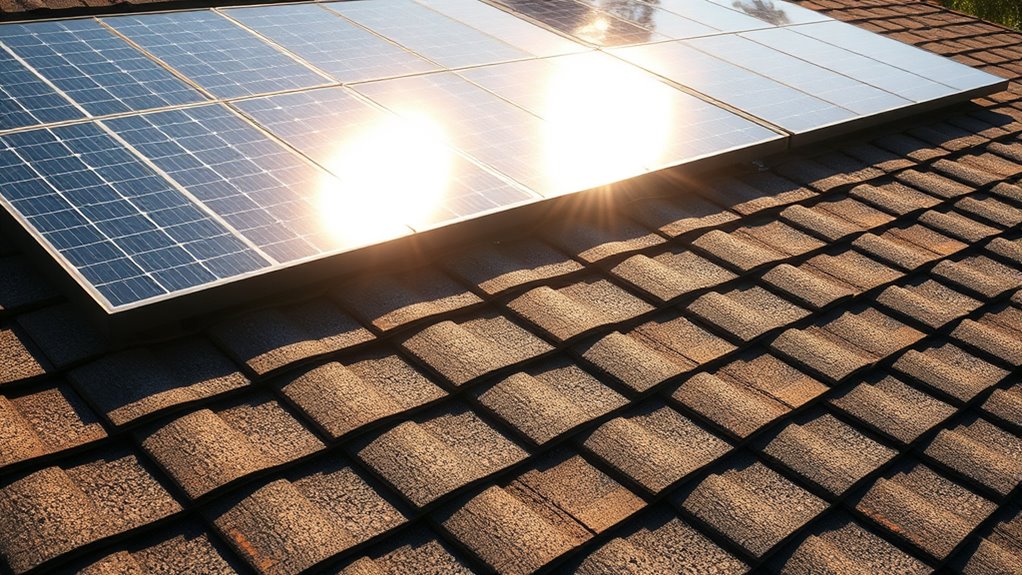
Because solar panels cover your roof, they help moderate temperature fluctuations throughout the day. When the sun beats down, your roof surface stays cooler under the panels, reducing heat buildup.
At night, the panels retain some warmth, preventing rapid temperature drops. This steadier thermal environment means your roofing materials experience less stress from constant expansion and contraction.
Over time, this reduces cracking, warping, and other wear that temperature swings typically cause. By lessening these extreme changes, solar panels extend your roof’s lifespan and maintain its structural integrity.
How Solar Panels Shield Your Roof From Rain and Hail
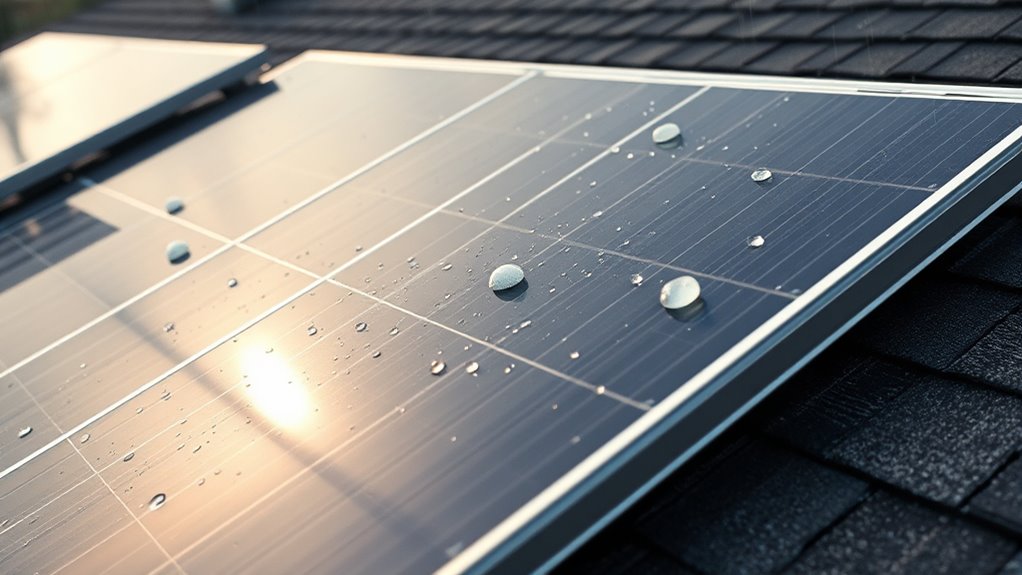
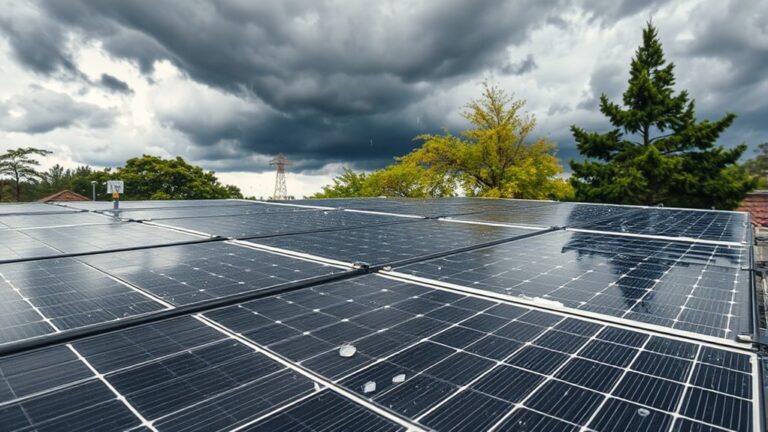
You’ll find that solar panels help divert rainwater, preventing it from pooling on your roof and causing damage. They also absorb the impact of hail, reducing the risk of dents and cracks on your shingles.
Rainwater Diversion Benefits
When rain or hail hits your roof, solar panels act as a protective barrier that directs water away from vulnerable areas. By channeling rainwater off your roof, they reduce the risk of water pooling, which can lead to leaks or damage to your roofing materials.
The panels’ elevated installation creates a gap that encourages efficient water runoff, preventing moisture buildup that might otherwise cause mold or rot. You’ll also find that your gutters handle runoff more effectively, as solar panels guide water flow toward them in a controlled manner.
This means less wear and tear on your roof’s surface over time. In short, solar panels don’t just generate energy—they actively help maintain your roof’s integrity by managing rainwater effectively.
Hail Impact Absorption
Solar panels don’t just manage rainwater—they also provide a strong shield against hail damage. When hailstones strike, the panels absorb and disperse the impact, reducing the force that reaches your roof’s surface.
This means your roof’s shingles or tiles face less direct stress, lowering the chances of cracks or punctures. Because solar panels are made from durable tempered glass designed to withstand harsh weather, they act as a protective barrier during hailstorms.
You don’t have to worry about small to moderate hail damaging your roof underneath, as the panels take the brunt of the impact. This added layer of defense helps maintain your roof’s integrity and can save you money on repairs after severe weather events.
Roof Surface Protection
How exactly do solar panels shield your roof from rain and hail? When installed, solar panels act as a protective barrier, absorbing the initial impact of hailstones and preventing direct contact with your roof’s surface. This reduces the risk of damage such as cracks, dents, or punctures to shingles or tiles.
During rain, panels help divert water away from vulnerable areas, minimizing water pooling and potential leaks. Because panels cover a significant portion of your roof, they lessen exposure to harsh weather elements, prolonging the roof’s lifespan.
How Proper Installation Improves Solar Panel Roof Protection
Because improper installation can cause leaks and damage, ensuring your solar panels are fitted correctly is essential for protecting your roof. When installers follow precise guidelines, they create a secure seal around mounting points, preventing water infiltration.
Proper alignment and spacing also reduce stress on shingles, avoiding cracks or lifting. Additionally, using quality flashing and waterproofing materials safeguards vulnerable areas.
You’ll want certified professionals who understand your roof type to handle the job, ensuring panels don’t compromise structural integrity. Correct installation minimizes wear and tear, so your roof remains intact beneath the solar array.
How Solar Panels Help Extend Your Roof’s Lifespan
You’ll find that solar panels act as a shield against harsh weather, keeping your roof safer from rain, hail, and wind. They also reduce harmful UV exposure, which can weaken roofing materials over time.
Shielding From Harsh Weather
Ever wondered how solar panels can act as a shield for your roof during storms and extreme weather? When you install solar panels, they create a sturdy barrier that absorbs the initial impact of hail, heavy rain, and strong winds.
This protective layer reduces the wear and tear your roof would otherwise endure. Plus, solar panels stop debris like branches from directly hitting your shingles, which helps avoid cracks and punctures.
By lessening physical damage, they help maintain your roof’s integrity and prevent costly repairs. So, with solar panels in place, your roof can better withstand harsh weather conditions.
That means your roof lasts longer and you save money on maintenance over time. Pretty neat, right?
Reducing UV Damage
While your roof faces constant exposure to the sun’s harsh ultraviolet (UV) rays, solar panels act as a protective shield that considerably reduces UV damage. By absorbing sunlight to generate energy, these panels block harmful UV radiation from directly hitting your roofing materials.
This protective barrier slows down the breakdown of shingles and other components, helping you avoid costly repairs. It’s like giving your roof an extra layer of defense against the sun’s wear and tear.
Here’s how solar panels protect your roof from UV damage:
- Preserve Roof Integrity – They reduce the fading and cracking caused by constant UV exposure.
- Extend Roof Lifespan – By limiting UV wear, your roof lasts longer, saving you money.
- Maintain Home Value – A well-protected roof keeps your home looking solid and cared for over time.
Solar panels do more than save energy; they safeguard your home’s foundation. It’s a smart way to protect your investment while going green.
Minimizing Roof Wear
Solar panels don’t just shield your roof from UV rays—they also reduce overall wear and tear that comes from exposure to weather elements like rain, wind, and temperature changes. By acting as a barrier, solar panels absorb the brunt of harsh conditions, preventing direct impact on your roofing materials.
This means less cracking, warping, and erosion over time. You’ll find that your roof stays in better shape longer, saving you money on repairs or early replacement.
Plus, solar panels help regulate temperature fluctuations by providing shade, which lessens thermal stress on your roof. Installing solar panels is a smart way to extend your roof’s lifespan, protect your investment, and enjoy energy savings—all at once.
Why Solar Panels Are a Smart Investment for Roof Preservation
Because your roof faces constant exposure to the elements, installing solar panels can considerably extend its lifespan by shielding it from harsh weather conditions. When you invest in solar panels, you’re not just generating clean energy—you’re also protecting your home’s foundation.
Here’s why it’s a smart move:
- Weather Defense: Solar panels act as a barrier against rain, hail, and UV rays, reducing wear and tear.
- Temperature Regulation: They help keep your roof cooler, preventing heat damage and reducing thermal expansion.
- Reduced Maintenance Costs: By protecting your roof, solar panels minimize the need for repairs and replacements, saving you money in the long run.
With solar panels, you’re safeguarding your home while boosting its value and efficiency. It’s a smart investment for peace of mind.
Frequently Asked Questions
Can Solar Panels Cause Roof Leaks?
Solar panels themselves don’t cause roof leaks, but improper installation can.
You need a certified installer to guarantee flashing and seals are done right. This helps prevent water from seeping in and protects your roof effectively.
How Do Solar Panels Affect Roof Ventilation?
You’ll find solar panels can improve roof ventilation by creating an air gap that reduces heat buildup.
Studies show this can lower attic temperatures by up to 15%.
That helps your home stay cooler and can even extend the life of your roof.
Do Solar Panels Require Special Roof Maintenance?
You don’t need special roof maintenance for solar panels, but you should regularly check for debris and clean panels to keep them efficient.
Also, inspect mounts and seals to prevent leaks and guarantee everything stays secure over time. It’s a simple routine that helps your system last longer and work better.
What Types of Roofs Are Best for Solar Panel Installation?
You know what they say, “Don’t put all your eggs in one basket.”
You’ll find solar panels work best on asphalt shingle, metal, and tile roofs because they’re durable, sturdy, and support panel weight efficiently.
These types of roofs make the installation process smoother and help ensure your panels stay put for years to come.
Can Solar Panels Be Installed on Flat Roofs?
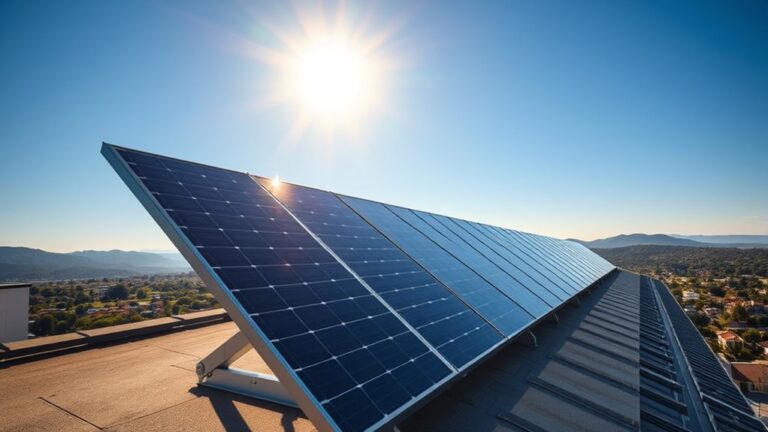
Yes, you can install solar panels on flat roofs. You’ll use mounting systems that tilt panels for ideal sunlight, ensuring efficient energy capture.
This setup also protects your roof from weather damage and helps reduce heat buildup. It’s a smart way to make the most of your flat roof space!
Conclusion
Think of solar panels as a sturdy shield, standing guard over your roof. They soak up the sun’s harsh rays, soften temperature swings, and fend off rain and hail—like a trusted umbrella in a storm.
Installed right, they weave a protective tapestry that extends your roof’s life.
By investing in solar panels, you’re not just saving energy; you’re giving your roof a loyal guardian. Every sunrise becomes a promise of lasting strength and protection.
Solar panels protect your roof by reducing exposure to extreme weather and minimizing wear and tear. This helps prevent damage from UV rays, rain, and hail, which can degrade roofing materials over time. Plus, by maintaining a more stable roof temperature, solar panels reduce the risk of cracks and leaks.
In short, solar panels don’t just cut your energy bills—they also act as a durable barrier that extends your roof’s lifespan. So, choosing solar is a smart way to safeguard your home while embracing clean, renewable energy.
One Comment