How Do Solar Panels Work in Shade?
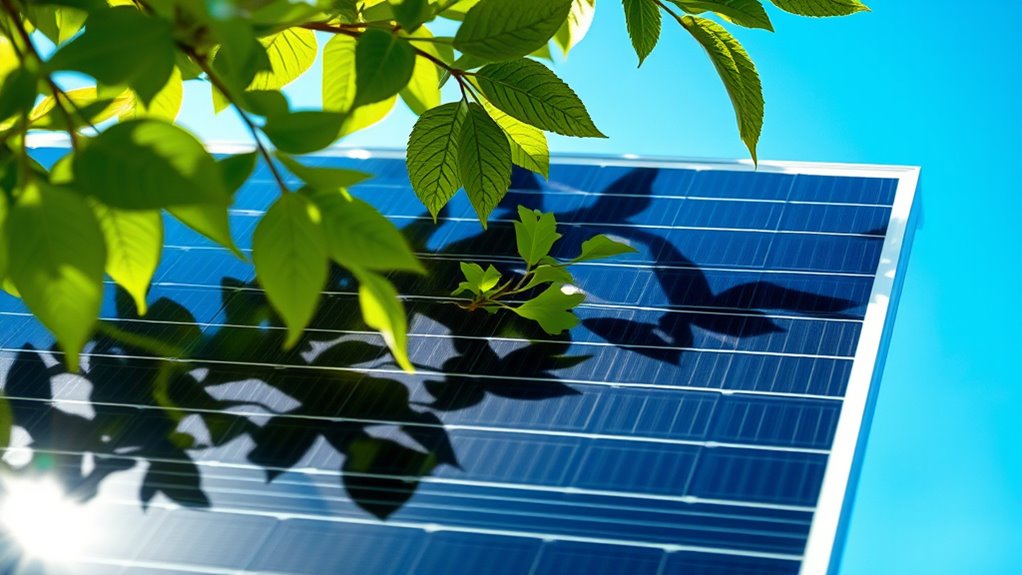
When your solar panels get shaded, they produce less power because shaded cells block sunlight, reducing output considerably. Since panels are wired in series, even small shadows can affect the whole system. This means that shade can have a bigger impact on your solar energy production than you might expect.
Luckily, bypass diodes let current flow around shaded parts, preventing major losses and hot spots. So, even if part of your panel is shaded, the rest can still work efficiently.
While partial shade usually won’t damage panels, persistent shading can stress them over time.
If you want to explore how to minimize shade’s impact on your solar panels and keep your energy flowing smoothly, keep going. There are some simple steps you can take to reduce shading and maximize your system’s performance.
Key Takeaways
- Shade reduces sunlight on cells, which significantly lowers the energy output of solar panels. It’s like blocking the sun from reaching the cells directly.
- When shaded cells are connected in series, the overall panel performance drops sharply. This happens because the weakest cell limits the current for the entire string.
- Bypass diodes come into play here. They let the current flow around the shaded sections, so the panel can still generate some power even if part of it is shaded.
- Usually, partial shading doesn’t physically damage the panels. However, if the shading is persistent, it can cause hot spots, which can be a problem over time.
- To help with shading issues, people often use microinverters or power optimizers. These devices help panels perform better under shaded conditions by managing power at the module level.
How Does Shade Affect Solar Panel Power?
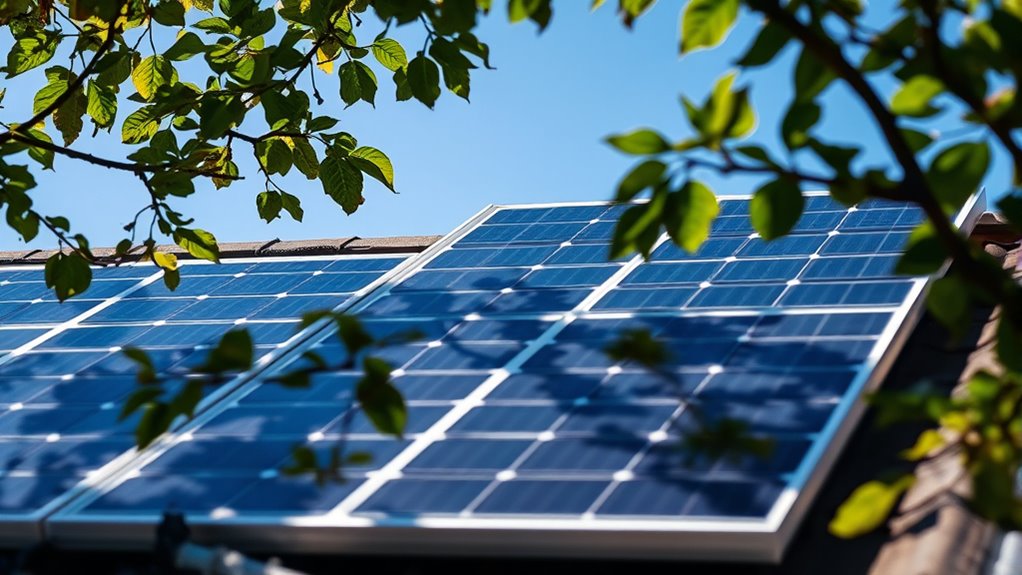
Although solar panels generate electricity by capturing sunlight, even a small amount of shade can substantially reduce their power output. When you have shade on any part of your panels, it limits the sunlight reaching the cells, directly decreasing their ability to produce energy.
Solar cells are connected in series, so if one cell is shaded, it can drag down the performance of the entire string. This means your whole system’s efficiency drops, not just the shaded section.
You might notice your panels producing significantly less electricity even if only a corner is shaded. Understanding this is important because it helps you realize how critical it is to keep your panels as shade-free as possible to maximize their power generation.
Which Types of Shade Cause the Biggest Power Loss?
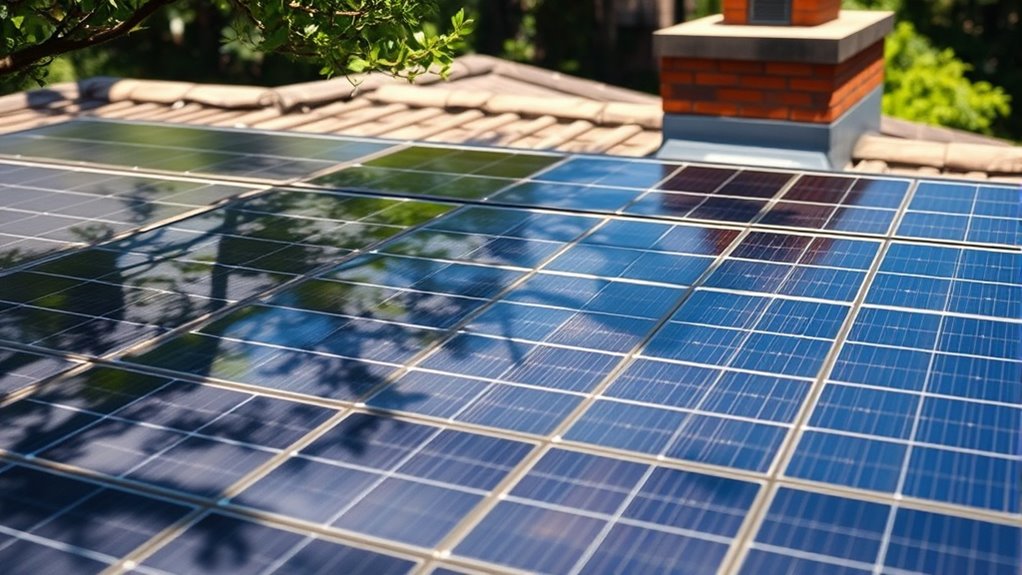
Not all shade impacts your solar panels equally—some types cause much bigger drops in power than others. When shade covers even a small part of your panel, it can drastically reduce output, especially if the shaded area blocks key cells or strings.
You’ll notice the biggest power loss with these types of shade:
- Dense, solid shadows from trees or buildings
- Shadows that move during the day, causing intermittent shading
- Shade covering multiple cells or entire panel sections
- Shadows cast by chimneys, vents, or antennas
- Partial shading on panels wired in series, affecting the whole string
Understanding which shade types hit your solar output hardest helps you plan better panel placement and shading management. It’s worth keeping an eye on those tricky spots to get the most from your system.
How Do Bypass Diodes Help Solar Panels in Shade?
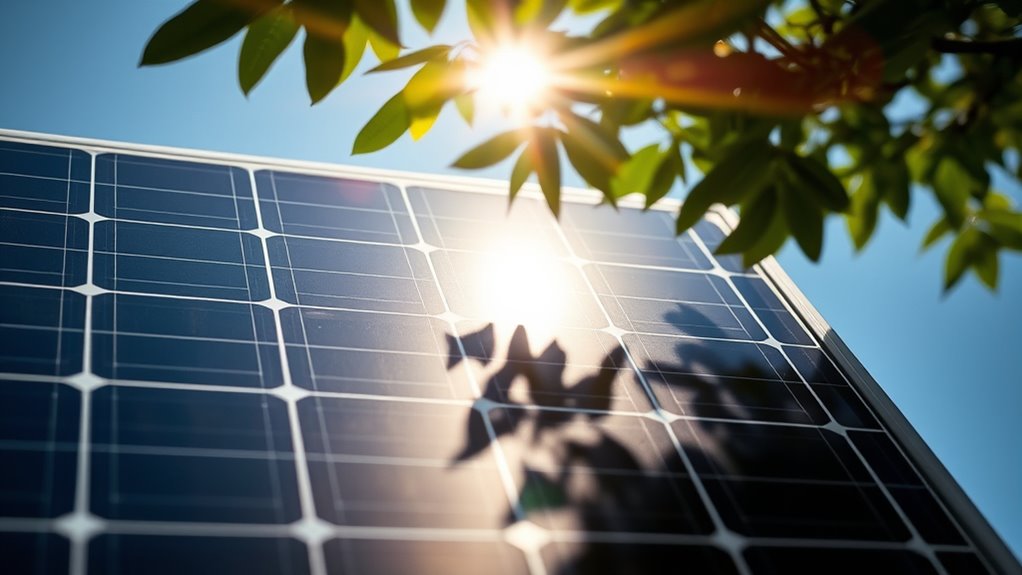
When shade hits part of your solar panel, bypass diodes step in to keep electricity flowing smoothly. These small components connect across groups of solar cells, allowing current to bypass shaded or underperforming sections.
Without bypass diodes, shaded cells can block the flow of electricity, reducing your panel’s overall output. By creating an alternate path for current, bypass diodes prevent power loss and minimize hot spots, which can damage cells.
You won’t notice them working, but they play a vital role in maintaining efficiency when shade affects part of your panel. So, even if a tree or cloud dims some cells, bypass diodes help your system keep generating power without interruption or significant drops in performance.
Can Partial Shade Damage Solar Panels or Shorten Their Lifespan?
If your solar panels experience partial shade regularly, you might worry about potential damage or a reduced lifespan. The good news is that partial shade itself doesn’t usually harm the panels physically or shorten their lifespan considerably.
However, shaded cells can heat up more than unshaded ones, a phenomenon called “hot spots,” which can stress the panel over time. Modern panels often include bypass diodes to minimize this risk.
Here’s what you should keep in mind:
- Partial shade lowers energy output but rarely causes permanent damage
- Hot spots can form if shading is persistent and severe
- Bypass diodes reduce heat buildup and protect cells
- Poorly designed or older panels may be more vulnerable
- Regular inspections help catch and prevent shading-related issues early
Taking care of your system guarantees it runs efficiently and lasts longer. So, keeping an eye on your panels and addressing shade issues early is definitely worth it.
Designing Solar Systems to Reduce Shading Losses
Because shading can considerably reduce your solar system’s efficiency, designing the layout to minimize shading losses is essential. You should position panels where they receive the most sunlight throughout the day, avoiding nearby trees, chimneys, or other obstructions.
Using solar panels with built-in bypass diodes can help maintain power output when parts of the array are shaded. It’s also a good idea to consider installing microinverters or power optimizers on each panel. These devices let panels operate independently, which reduces the impact of shading on the entire system.
You can also space panels to prevent one row from shading another, especially during low sun angles. By carefully planning your system’s placement, orientation, and technology choices, you’ll maximize energy production and reduce the negative effects of shading on your solar investment.
Maintenance Tips to Boost Solar Performance in Shaded Areas
To keep your solar panels working well in shaded areas, you’ll want to clean them regularly to remove dirt and debris. Make sure to trim any nearby trees or plants that could cast extra shadows.
Also, check the panel connections often to catch any issues before they affect performance. It’s a simple step that can really help your panels run smoothly.
Regular Cleaning Routines
Although shaded solar panels naturally receive less sunlight, maintaining their cleanliness can considerably improve their efficiency. Dirt, dust, and debris block light, further reducing your panels’ power output.
By sticking to a regular cleaning routine, you can maximize whatever sunlight your panels do get.
Here’s how to keep your solar panels clean and performing well:
- Clean panels early in the morning or late afternoon to avoid thermal shock.
- Use a soft brush or sponge with mild, non-abrasive soap.
- Rinse thoroughly with water to prevent soap residue.
- Avoid high-pressure hoses that might damage the panels.
- Inspect panels for grime buildup at least once a month.
Regular cleaning helps you get the most from your shaded solar setup without extra costs.
Trim Nearby Vegetation
Keeping your solar panels clean helps maximize sunlight exposure, but even the clearest panels can struggle when nearby trees or bushes cast shadows.
To keep your panels performing well, regularly trim any vegetation that could block sunlight. Overgrown branches and leaves can create shade patches that reduce energy output markedly.
You don’t have to clear everything—just focus on branches that directly shade your panels during peak sunlight hours. Use proper tools and take safety precautions when trimming tall trees.
Scheduling seasonal checks ensures you catch growth before it impacts performance. By managing nearby vegetation, you’ll help your solar panels capture more sunlight, boosting efficiency and energy generation even in areas prone to shade.
Inspect Panel Connections
Since shaded conditions can already limit your solar panels’ output, making sure every connection is secure is even more important. Loose or corroded connections can cause power losses and reduce efficiency, especially when sunlight is limited.
Regularly inspecting these connections helps keep your system running at its best and prevents unexpected failures. Here’s what you should check:
- Tighten all electrical connectors and junction boxes
- Look for signs of corrosion or rust on terminals
- Inspect wiring insulation for cracks or damage
- Ensure grounding wires are firmly attached
- Verify that panel connectors are free from dirt and moisture
Frequently Asked Questions
Can Solar Panels Still Charge Batteries in Shaded Conditions?
Yes, you can still charge batteries in shaded conditions, but your solar panels won’t work as efficiently. The reduced sunlight means slower charging.
Do Solar Panel Warranties Cover Shade-Related Power Loss?
Of course, your warranty totally covers shade-related power loss—just kidding! Most warranties don’t.
They focus on defects, not performance drops from shade. You’ll need to manage shading or accept reduced output yourself.
How Does Shading Affect Solar Panel Monitoring Systems?
Shading causes your solar panel monitoring system to show reduced power output, alerting you to performance drops. It can also trigger error messages or warnings, helping you quickly identify and address shaded or malfunctioning panels.
Basically, when part of your panel is shaded, the system notices the dip in energy. This way, you’re not left guessing what’s going on with your setup. It’s a handy feature that keeps you in the loop and helps maintain your system’s efficiency.
Are Microinverters Better Than String Inverters for Shaded Panels?
Yes, microinverters are better for shaded panels because they optimize each panel individually. You’ll get more consistent performance and less power loss compared to string inverters.
String inverters struggle when any panel is shaded, which can drag down the whole system. So, if shading is a concern, microinverters are definitely the way to go.
Can Shading Impact the Resale Value of a Solar Energy System?
Shading sharply slashes solar system savings, so yes, it can impact resale value. You’ll want to showcase strong sunlight spots, guarantee efficient equipment, and highlight maintenance to maximize market appeal when selling your solar setup.
Think of it this way: buyers are looking for systems that perform well. If shading reduces output, that’s a big red flag. So, showing off areas with good sun exposure can really help your case.
Also, keeping your equipment in top shape and sharing maintenance records builds trust. It makes your solar setup more attractive and can boost what buyers are willing to pay.
Conclusion
When it comes to solar panels and shade, remember that “every cloud has a silver lining.” While shade can reduce power, bypass diodes and smart system design help keep your energy flowing.
You don’t have to fear partial shading—it won’t damage your panels if you maintain them well. By understanding how shade affects your setup and taking proactive steps, you can enjoy reliable solar performance even in less-than-perfect sunlight.
In fact, modern solar panels are designed to work efficiently, even when some parts are shaded. Using technologies like bypass diodes ensures that shaded cells don’t drag down the whole system. So, with proper maintenance and smart planning, you can maximize your solar energy output despite shade. Embracing these solutions means your solar panels will keep generating clean, renewable power, helping you save on energy bills while protecting the environment.