
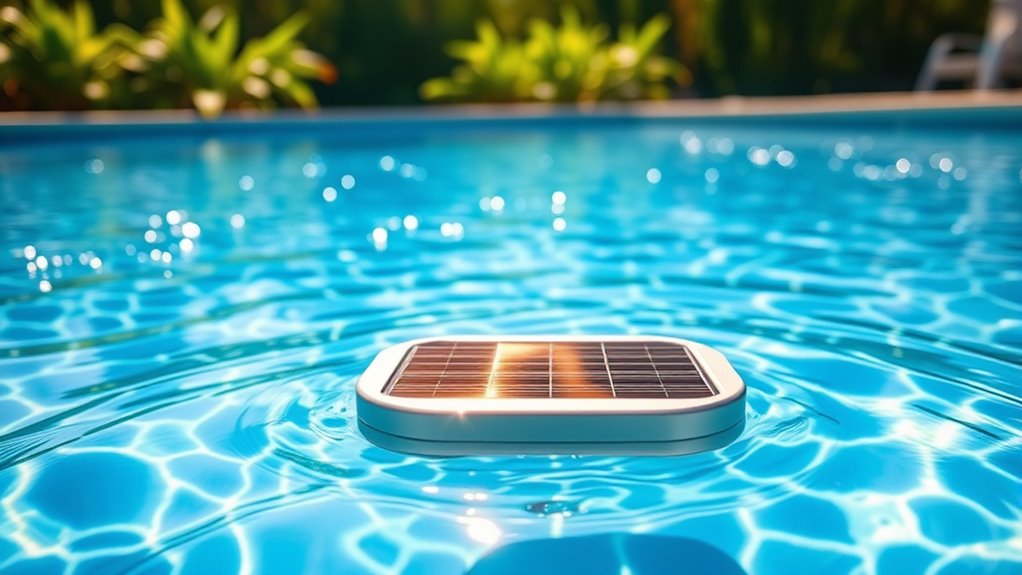
Are Solar Pool Ionizers Any Good?
Solar pool ionizers can be a great eco-friendly way to reduce chemicals and keep your pool clear. They release metal ions that inhibit algae and bacteria, helping maintain clean water naturally.
Since they run on solar power, you save on electricity costs, and the maintenance is pretty low.
That said, these ionizers work best as a supplement rather than a full replacement. They’re less powerful compared to traditional chemical treatments and depend on sunlight to operate effectively.
If you’re curious about how they stack up against conventional methods or want tips on choosing the right one, there’s definitely more to explore.
Key Takeaways
- Solar pool ionizers use sunlight to release metal ions that naturally inhibit algae and bacteria growth, reducing chemical use. They’re energy-efficient, low-maintenance, and eco-friendly.
- But keep in mind, they’re less powerful and slower compared to traditional chlorine or salt systems. Their effectiveness really depends on factors like sunlight exposure, water circulation, and pool size.
- So if your pool is often in the shade or you get a lot of cloudy days, an ionizer might not perform as well. It’s best to think of them as a supplement rather than your main sanitizer, especially if your pool gets heavy use or you need quick cleaning.
- To get the most out of your solar ionizer, regular maintenance is key. Also, make sure you place it where it gets plenty of direct sunlight to keep it working efficiently and lasting longer.
How Do Solar Pool Ionizers Work?
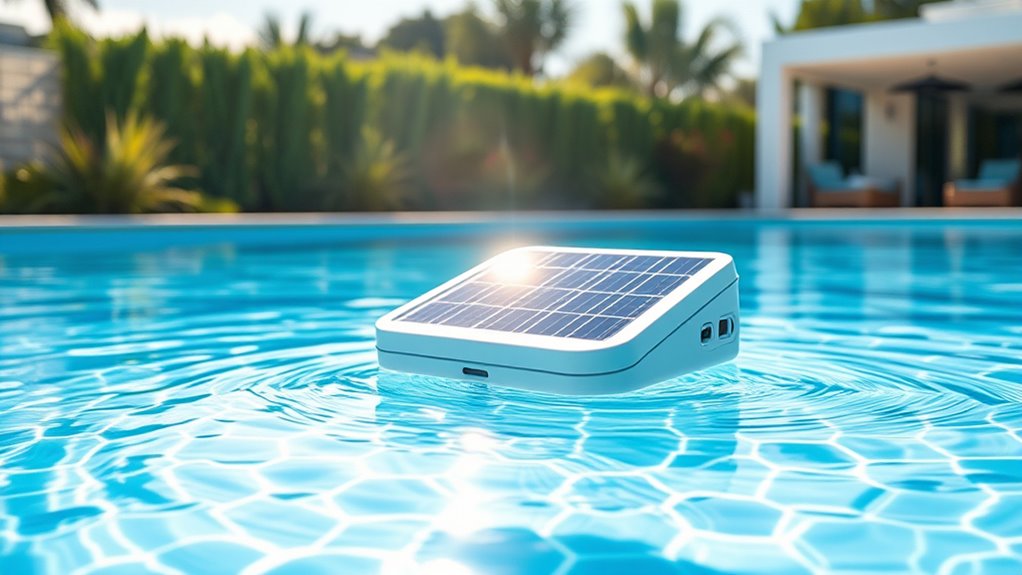
How exactly do solar pool ionizers work to keep your pool clean? They use solar energy to power a small device that releases metal ions, usually copper or silver, into your pool water. These ions disrupt the growth of algae and harmful bacteria, helping to maintain clear, clean water without relying heavily on chemicals.
When sunlight hits the solar panel, it generates electricity, which powers the ionizer’s electrodes. As water passes through or near these electrodes, the device releases the ions directly into your pool. You don’t need to plug it in or replace batteries, making it an eco-friendly option.
How Effective Are Solar Pool Ionizers Compared Compared to Traditional Methods?
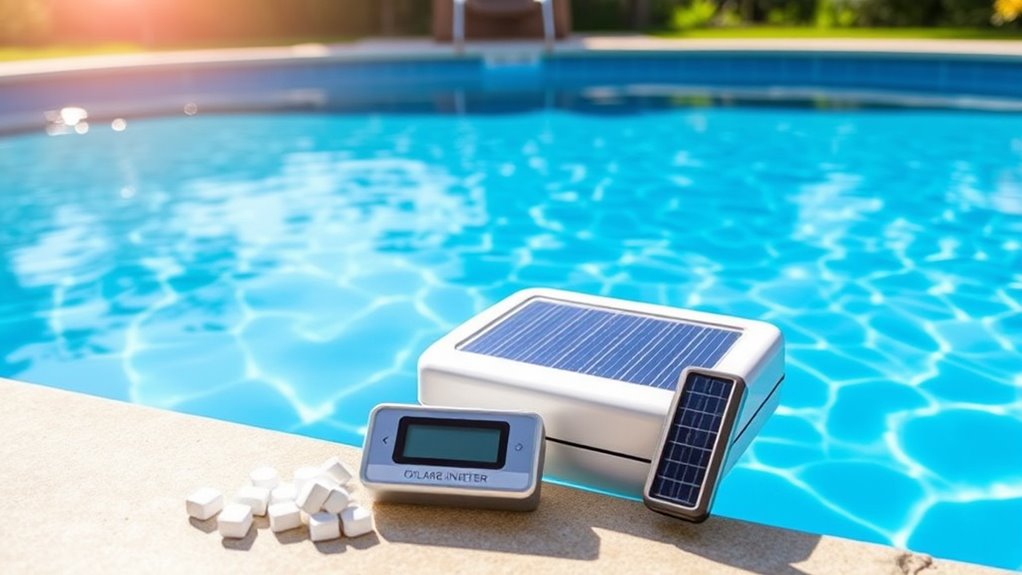
Although solar pool ionizers offer a convenient and eco-friendly way to reduce algae and bacteria, they don’t always match the power and speed of traditional chlorine or salt-based methods. You’ll find that ionizers work best as a supplementary system rather than a complete replacement.
Chlorine and salt systems kill bacteria quickly and maintain consistent sanitizer levels, especially in heavily used pools or after heavy rain. Ionizers, on the other hand, release copper and silver ions gradually, which means their effectiveness depends on sunlight and water circulation.
If you want fast, strong sanitation or need to handle high bather loads, traditional methods outperform ionizers. However, if you’re aiming for lower chemical use and moderate pool conditions, ionizers can still keep your water clear with proper maintenance.
What Are the Main Benefits of Solar Pool Ionizers?
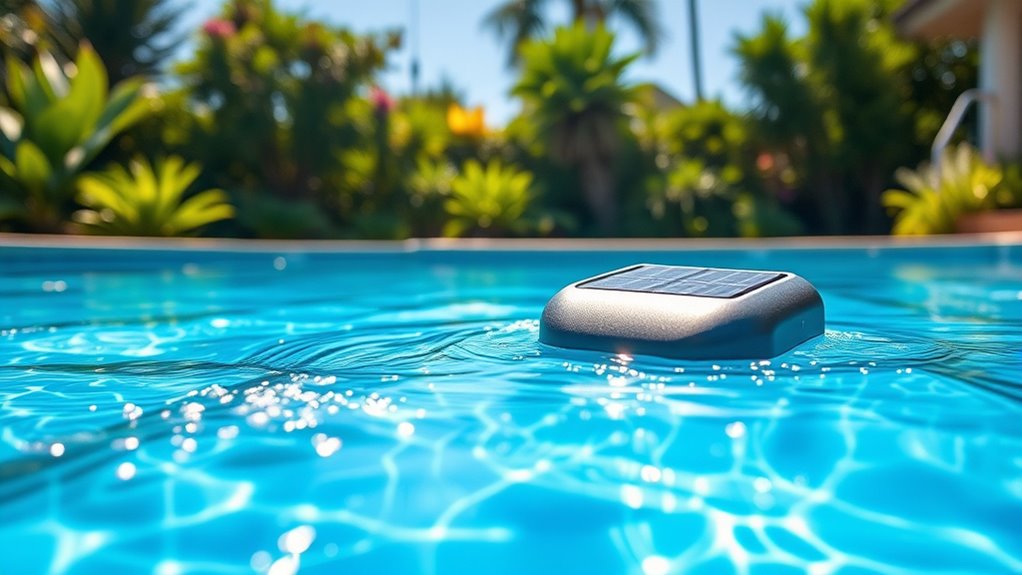
When you choose a solar pool ionizer, you benefit from a low-maintenance, energy-efficient way to keep your pool cleaner with fewer chemicals. These devices generate ions that naturally inhibit algae and bacteria growth, reducing your need for harsh chemicals.
You’ll also save on electricity since they run on solar power, cutting energy costs and minimizing environmental impact. Installation is typically straightforward, and once set up, the system works quietly and automatically.
This means you can spend more time enjoying your pool without worrying about constant upkeep. Plus, by lowering chemical use, you create a gentler swimming environment that’s better for your skin and eyes.
What Are the Downsides of Solar Pool Ionizers?
You should know that solar pool ionizers depend heavily on sunlight, so their effectiveness can drop on cloudy days or in shaded areas.
You’ll also need to keep up with regular maintenance to prevent buildup and guarantee durability.
Understanding these limitations will help you decide if they’re the right fit for your pool.
Limited Sunlight Dependency
Since solar pool ionizers rely solely on sunlight to generate power, their effectiveness drops considerably during cloudy days or in shaded areas. This limits how well they can keep your pool clean and balanced throughout the year.
You’ll face a few challenges: reduced ionization on overcast days, meaning less control over algae and bacteria. Also, poor performance if your pool is surrounded by tall trees or buildings that block sunlight. And don’t forget about limited use during shorter daylight hours in winter, which means you’ll probably need backup systems.
Because of this, you can’t always count on solar ionizers to work consistently. If your location doesn’t get steady sunlight, it’s a good idea to look into alternative or supplemental pool sanitation methods to keep your water quality in check.
Maintenance And Durability
Although solar pool ionizers offer eco-friendly benefits, they come with maintenance and durability challenges you should consider. The ionizer’s plates can accumulate mineral buildup and algae, requiring regular cleaning to keep them effective.
If you skip this, the system’s performance drops, and your pool water won’t stay balanced. Also, the solar panels themselves need occasional rinsing to remove dust and debris, or they won’t charge efficiently.
Over time, exposure to pool chemicals and weather can degrade the components, meaning you might have to replace parts sooner than you’d like. While these devices reduce chemical use, they don’t eliminate maintenance.
How Do You Choose the Right Solar Pool Ionizer?
When selecting the right solar pool ionizer, it helps to take into account your pool’s size, water chemistry, and sunlight exposure. These factors guarantee you pick a model that effectively keeps your water clean and balanced without wasting energy.
Consider these key points:
Keep these essential factors in mind for the best solar pool ionizer performance.
- Pool Size: Choose an ionizer rated for your pool’s volume to maintain proper ion levels.
- Water Chemistry: Look for an ionizer compatible with your current pH and sanitizer levels to avoid imbalances.
- Sunlight Exposure: Ensure your pool gets enough direct sunlight daily for the solar panel to function as effectively.
How Can You Get the Most Out of Your Solar Pool Ionizer?
To get the most out of your solar pool ionizer, you’ll need to maintain it regularly and optimize its placement. Clean the ionizer’s plates monthly to prevent mineral buildup and guarantee efficient ion release.
Make sure to position it where it gets maximum sunlight, usually near the pool’s surface but away from shade. That way, it can work at its best.
Also, keep an eye on your pool’s pH and chlorine levels to maintain balanced water. Ionizers work best when conditions are just right.
| Task | Tip |
|---|---|
| Cleaning | Use a soft brush monthly |
| Placement | Place in direct sunlight |
| Water Chemistry | Maintain pH between 7.2-7.6 |
| Chlorine Levels | Keep low for ionizer efficiency |
| Monitoring | Check ionizer output regularly |
If you follow these simple steps, you’ll maximize your ionizer’s effectiveness and help it last longer.
Frequently Asked Questions
Are Solar Pool Ionizers Safe for All Pool Surfaces?
Yes, solar pool ionizers are safe for most pool surfaces. You just need to check your pool’s material and follow the manufacturer’s guidelines to avoid any damage.
This is especially important for delicate or painted surfaces. Taking these simple steps can help keep your pool in great shape.
Do Solar Pool Ionizers Require Professional Installation?
Imagine sliding the sleek ionizer into your pool’s filtration system. You don’t have to hire a pro; you can easily install it yourself, following simple instructions.
This way, you save time and money while enjoying crystal-clear water. It’s really that easy!
How Often Do Solar Pool Ionizers Need Maintenance?
You’ll need to clean your solar pool ionizer’s plates every 3 to 6 months to prevent buildup. This helps keep everything working smoothly.
Also, check the connections regularly. Replace parts as needed to keep it running efficiently and extend its lifespan. It’s pretty simple once you get into the habit!
Can Solar Pool Ionizers Work in Indoor Pools?
You can use solar pool ionizers in indoor pools, but they’ll work less efficiently without direct sunlight.
You’ll need to supplement with artificial UV light or an alternative sanitizer to keep your pool properly balanced and clean.
What Is the Typical Lifespan of a Solar Pool Ionizer?
You can expect a solar pool ionizer to last around 3 to 5 years with proper care.
Regular cleaning and maintenance will help you get the most out of its lifespan and keep it working efficiently.
Taking a little time now and then really pays off in the long run!
Conclusion
Solar pool ionizers can cut your pool’s chlorine use by up to 50%, making maintenance easier and gentler on your skin. While they won’t fully replace traditional methods, they’re a smart, eco-friendly addition to your routine.
To get the most from your ionizer, pick the right size for your pool and keep it clean. With the right care, you’ll enjoy clearer, fresher water with less hassle—saving time and chemicals every swim season.
In short, solar pool ionizers are a great way to reduce chlorine use and maintain a healthier pool environment. They’re easy to use, cost-effective, and kind to both your skin and the planet. If you want clearer water with less effort, adding a solar pool ionizer to your setup is definitely worth considering.


One Comment