How You Can Charge Solar Powered Lights Indoors Effectively
You can charge your solar-powered lights indoors by placing them near bright, full-spectrum light sources like LED grow lights or full-spectrum bulbs that mimic sunlight’s blue and red wavelengths. These types of lights provide the energy your solar panels need to generate power even without direct sunlight.
Make sure the solar panel is clean and faces the light directly for at least 6 to 8 hours. Using bright lights above 1,000 lux helps too, as this intensity supports better charging.
Proper placement and the right lighting type are key to effective charging.
Also, understanding some simple maintenance tips will help you keep your solar lights shining longer and working efficiently indoors.
Key Takeaways
- Use full-spectrum or LED grow lights with brightness above 1,000 lux to simulate sunlight for effective indoor charging. These lights help your solar panels soak up enough energy even when you’re inside.
- Position solar panels directly facing bright indoor light sources, like south-facing windows or strong artificial bulbs. This way, they get the most light possible during the day.
- Clean solar panels regularly to remove dust and maximize light absorption during indoor charging sessions. A little dust can really cut down on how much energy they collect.
- Allow solar lights to charge for 6 to 8 hours under consistent, intense indoor lighting for optimal energy storage. It might take a bit longer than outside, but patience pays off.
- Keep an eye on battery health, clean contacts, and replace batteries if lights dim or flicker after indoor charging. This helps make sure your solar lights keep shining bright.
Why Indoor Charging for Solar Lights Is Challenging
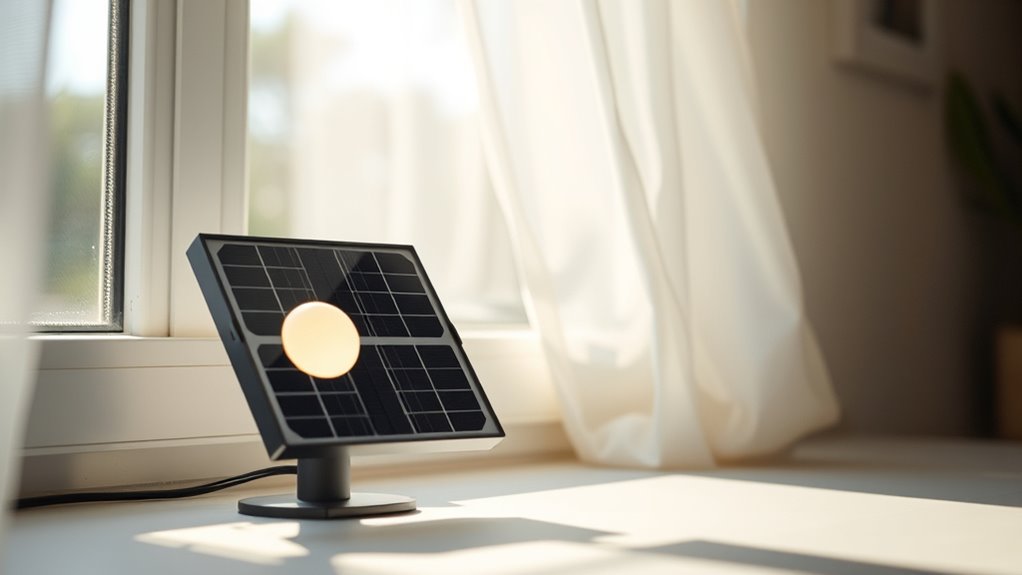
Although solar lights are designed to harness sunlight efficiently, charging them indoors poses significant challenges because indoor lighting rarely matches the intensity or spectrum of natural sunlight.
Solar lights struggle to charge indoors due to indoor lighting’s weak intensity and different spectrum from sunlight.
You’ll notice that typical indoor bulbs don’t emit enough energy for the solar panels to generate a meaningful charge. This means your solar lights will charge very slowly or not at all indoors.
Additionally, the angle and distance of indoor lights often reduce their effectiveness on solar cells. You can’t rely on standard indoor lighting to power your solar lights like the sun does.
Understanding this helps you set realistic expectations and explore better solutions when you want to charge solar-powered lights inside your home.
What Indoor Lighting Works Best for Solar Lights
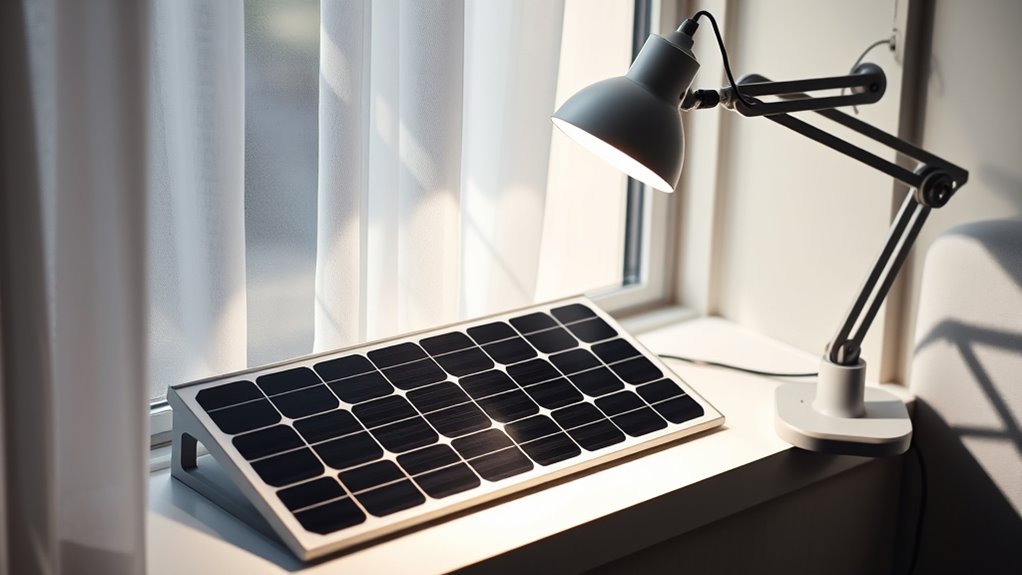
You’ll want to focus on indoor lighting that offers the right spectrum and enough brightness to charge your solar lights efficiently.
Positioning the light source close to the solar panel also makes a big difference. Let’s explore which types of bulbs and placements work best for indoor charging.
Optimal Light Spectrum
How do you choose the best indoor light to charge your solar-powered lights efficiently? Focus on the light spectrum emitted. Solar cells respond best to light wavelengths similar to sunlight, especially in the visible range, with strong peaks in blue (around 450 nm) and red (around 650 nm) light.
LED grow lights or full-spectrum bulbs that mimic natural sunlight provide the most suitable spectrum to stimulate your solar panel’s photovoltaic cells effectively. Avoid lights with narrow spectrums, like some fluorescent or incandescent bulbs. They just don’t emit enough of the key wavelengths.
Brightness Levels Needed
When charging solar-powered lights indoors, the brightness level of your light source plays a critical role in how quickly and effectively your panels gather energy. Too dim, and the charging will be slow or insufficient.
You want a light source that mimics sunlight in intensity, ideally above 1,000 lux, for efficient indoor charging.
| Light Source | Approximate Brightness (lux) | Charging Efficiency |
|---|---|---|
| LED Desk Lamp | 400–700 | Moderate |
| Fluorescent Bulb | 700–1,200 | Good |
| Halogen Lamp | 1,000–2,000 | Very Good |
| Natural Window Light | 1,000+ (varies) | Excellent (daytime) |
| Incandescent Bulb | 500–1,000 | Moderate to Good |
Best Light Placement
Although indoor lighting can vary widely, placing your solar-powered lights near the brightest and most consistent light sources will maximize their charging efficiency.
You’ll want to avoid dim corners or areas with frequent shadows, as these reduce the amount of energy your solar panel captures.
For best results, try positioning your solar lights close to:
- LED grow lights: They emit strong light ideal for charging.
- Fluorescent bulbs: These provide steady illumination without excessive heat.
- South-facing windows: Even indirect sunlight here is better than artificial light alone.
Steps to Charge Solar Lights Indoors
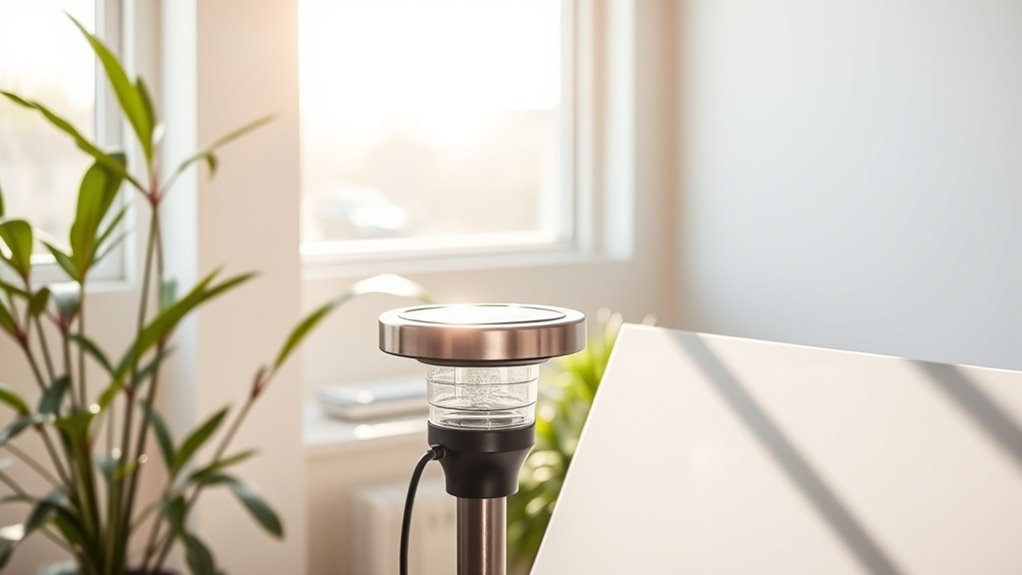
Because solar lights rely on sunlight to charge, you’ll need to simulate that environment indoors by placing them near a bright window or under a strong artificial light source. First, clean the solar panel to remove dust or dirt that can block light absorption.
Next, position the light where it receives the most consistent illumination throughout the day. Make sure the solar panel faces the light source directly to maximize energy intake. Avoid shadows or obstructions on the panel.
Allow the lights to charge for at least 6 to 8 hours, depending on the light’s capacity and your indoor setup. Finally, test the light by turning it on in a dark room to ensure it has stored enough power and is working properly.
Repeat this process regularly for peak performance. It’s pretty simple once you get the hang of it!
Best Supplemental Lights for Indoor Charging
What kind of light works best to charge your solar-powered lights indoors? Since these lights rely on sunlight, you’ll need supplemental lighting that mimics the sun’s intensity and spectrum.
Not all indoor lights provide enough energy to effectively charge the solar cells. So, here are three great options to evaluate:
- Full-spectrum LED grow lights: These emit light across the visible spectrum, closely resembling natural sunlight, making them ideal for indoor charging.
- Compact fluorescent lamps (CFLs): They provide moderate light intensity and are energy-efficient, a good budget-friendly choice.
- Halogen bulbs: These produce bright, warm light with good intensity but may consume more electricity and generate heat.
Choose one based on your budget and available space. This way, you can keep your solar lights charged indoors efficiently.
Monitoring and Maintaining Solar Light Batteries
To keep your solar-powered lights shining brightly, you need to regularly monitor and maintain their batteries. Check the battery charge level often to verify they’re holding power effectively.
If you notice dim or flickering light, it might be time to replace the battery. Clean the battery contacts and terminals to prevent corrosion, which can reduce efficiency.
Avoid overcharging by unplugging supplemental lights once the battery is full. Store your solar lights in a cool, dry place when not in use to extend battery life.
Troubleshooting Common Indoor Charging Issues
If your solar-powered lights aren’t charging properly indoors, several common issues could be at play. First, the amount of light reaching the solar panel might be insufficient. Even bright indoor lighting often lacks the intensity of sunlight.
Second, dirt or dust on the solar panel can block light absorption, reducing efficiency. Third, the battery could be old or damaged, preventing proper charging.
To troubleshoot, try these steps:
- Clean the solar panel with a soft cloth to remove any debris.
- Place the lights near a bright window or under a strong artificial light source designed for plant growth.
- Test or replace the battery to ensure it holds a charge.
Frequently Asked Questions
Can I Use Solar Lights as Emergency Backup Lighting?
Yes, you can use solar lights as emergency backup lighting. Just make sure they’re fully charged beforehand, and keep them in an accessible spot.
They provide reliable, portable illumination during power outages or emergencies. So, it’s a handy option to consider when preparing for unexpected situations.
How Long Do Solar Lights Typically Last Before Replacement?
Think of your solar light as a candle burning steadily through many nights; typically, it lasts 2 to 5 years before needing replacement.
You’ll know when its glow dims and it’s time for a fresh start.
Are Solar Lights Safe to Use Around Children and Pets?
Yes, solar lights are generally safe around children and pets since they don’t use toxic chemicals or high voltage.
Still, you should keep small parts out of reach to prevent choking hazards and avoid breakage risks. It’s always better to be cautious!
Can I Recycle Solar Light Batteries?
You can carefully carry your solar light batteries to a certified recycling center. Recycling reduces waste, recovers resources, and respects the environment.
Don’t just toss them in the regular trash. Proper processing helps protect people and the planet.
Do Solar Lights Work in Cold or Snowy Climates?
Yes, solar lights work in cold or snowy climates, but their efficiency drops. Snow can block sunlight, and cold temperatures may reduce battery performance.
You should keep panels clear and guarantee batteries are rated for low temperatures to maintain brightness. That way, your solar lights will keep shining even when it’s chilly outside.
Conclusion
Charging your solar lights indoors is like nurturing a delicate plant under a window—though sunlight is the best nourishment, the right indoor light can help it thrive.
By choosing the proper bulbs and following simple steps, you can keep your solar lights glowing bright even without direct sun. It’s also important to keep an eye on your batteries to ensure they’re charging properly.
With a little care and the right tools, your solar lights will shine as if they’ve basked in the sun all day long. Using effective indoor light sources, like LED or fluorescent bulbs, can help simulate sunlight and boost charging.
So, if you want to charge solar powered lights indoors effectively, focus on selecting the right lighting and maintaining your batteries regularly. This way, your solar lights will stay bright and reliable, bringing warmth and ambiance to your space even without outdoor sunlight.