How to Charge Solar Lights Indoors Effectively
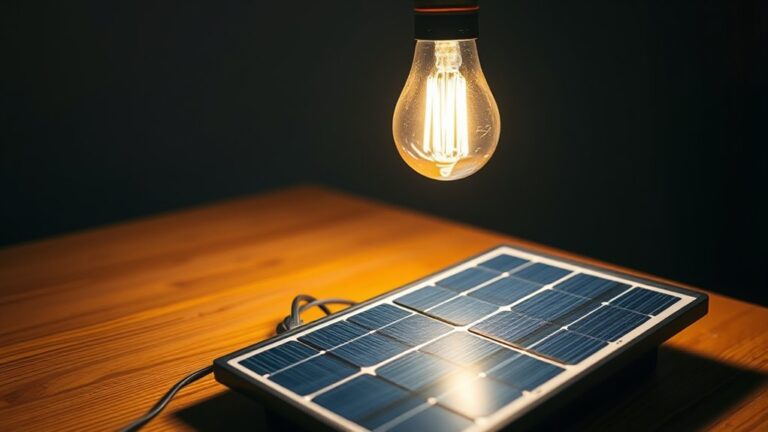
To charge your solar lights indoors effectively, you need to give them the best possible light source. Position them close—within 12 inches—to bright, full-spectrum LED or CFL bulbs, like grow lights, for about 6 to 8 hours. These types of bulbs mimic sunlight better than regular indoor lighting, which helps the solar panels soak up more energy.
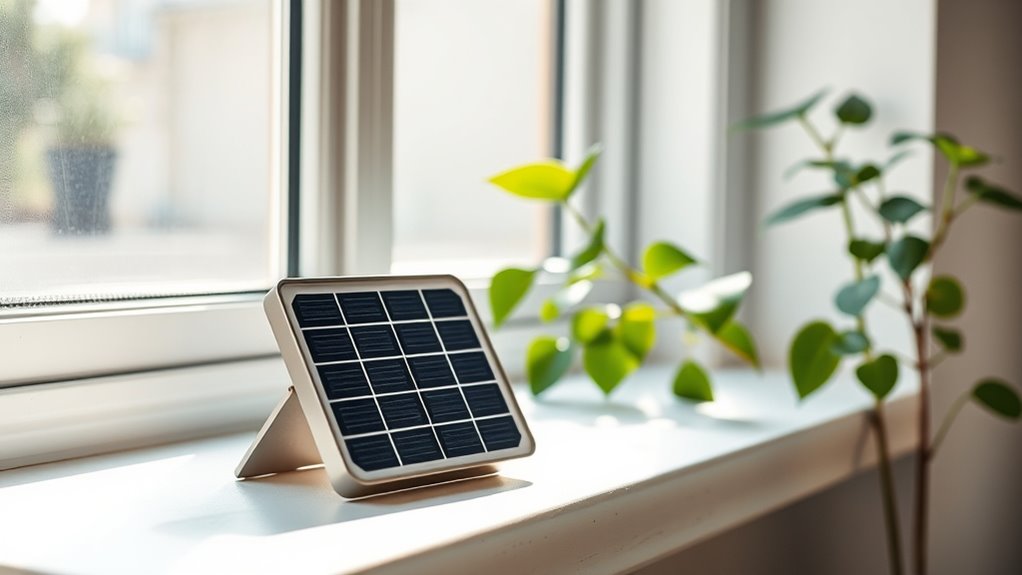
If you can, place the panels near south-facing windows since they get the most natural light during the day. Just make sure there are no shadows or curtains blocking the light.
Also, don’t forget to keep the panels clean and the batteries in good shape—this will make a big difference in how well your lights charge.
Another handy tip is to use portable solar chargers or rechargeable battery packs. They can give your solar lights a boost when indoor lighting isn’t enough.
Want to get the most out of your setup? There’s actually more to explore if you want to optimize placement and extend battery life.
Key Takeaways
– Position solar panels near south-facing windows with direct, unobstructed sunlight for optimal indoor charging.
It really helps to pick a spot where the sun hits directly. This way, your solar lights soak up as much natural light as possible.
– Use bright LED or full-spectrum CFL bulbs placed within 12 inches of the solar panel for effective artificial light charging.
Bright bulbs close to the panel make a big difference when sunlight isn’t available. Just keep the lights nice and close for the best results.
– Keep artificial lights on for 6-8 hours to ensure a full battery recharge indoors.
It might seem like a long time, but those hours make sure your solar lights get fully charged and ready to go.
– Clean solar panels regularly and avoid placing them behind curtains or in shadows to maximize light absorption.
Dust or shadows can really cut down how much light your panels grab. So, a quick wipe now and then and a clear spot can do wonders.
– Disconnect solar lights once fully charged and store batteries in cool, dry conditions to extend battery life.
Taking the batteries out and keeping them somewhere cool and dry helps them last longer. It’s a simple trick to get more life out of your solar lights.
How Solar Lights Charge: and Why Sunlight Is Key
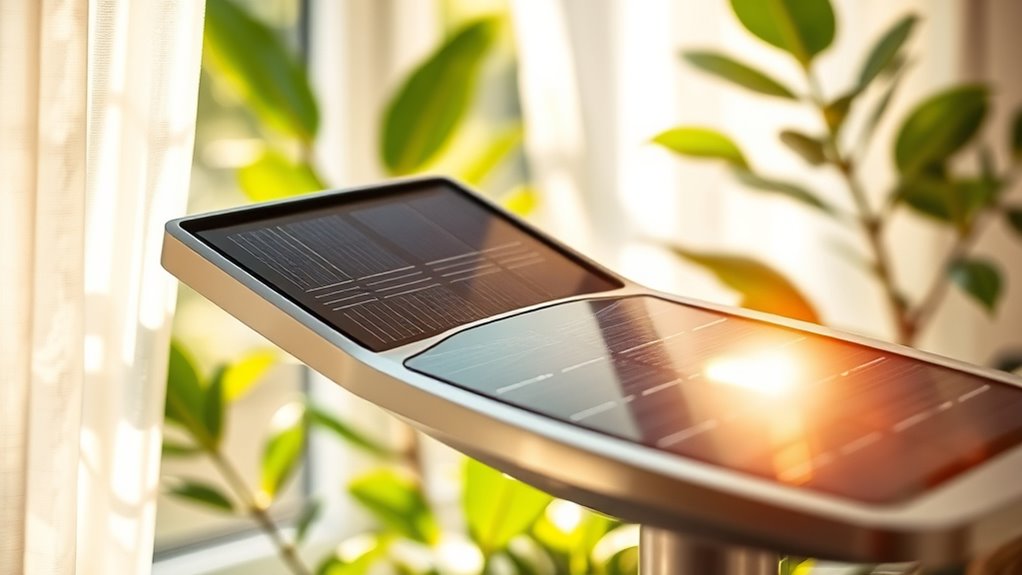
Although solar lights can charge in various conditions, they rely primarily on sunlight to power their batteries efficiently. When sunlight hits the solar panel, it converts light energy into electrical energy through the photovoltaic effect.
Solar lights mainly depend on sunlight, using the photovoltaic effect to transform light into electrical energy efficiently.
This energy then charges the internal battery, allowing the light to work after dark. You’ll notice that solar panels work best under direct sunlight because it provides the most intense and consistent energy.
While some indoor or artificial lights can provide minimal charging, they usually lack the intensity needed for a full charge. So, if you want your solar lights to perform well, positioning them where they can soak up natural sunlight is essential.
This guarantees the batteries store enough energy to keep the lights shining bright all night. It’s really all about making the most of what the sun gives us!
Best Indoor Light Sources for Charging Solar Lights
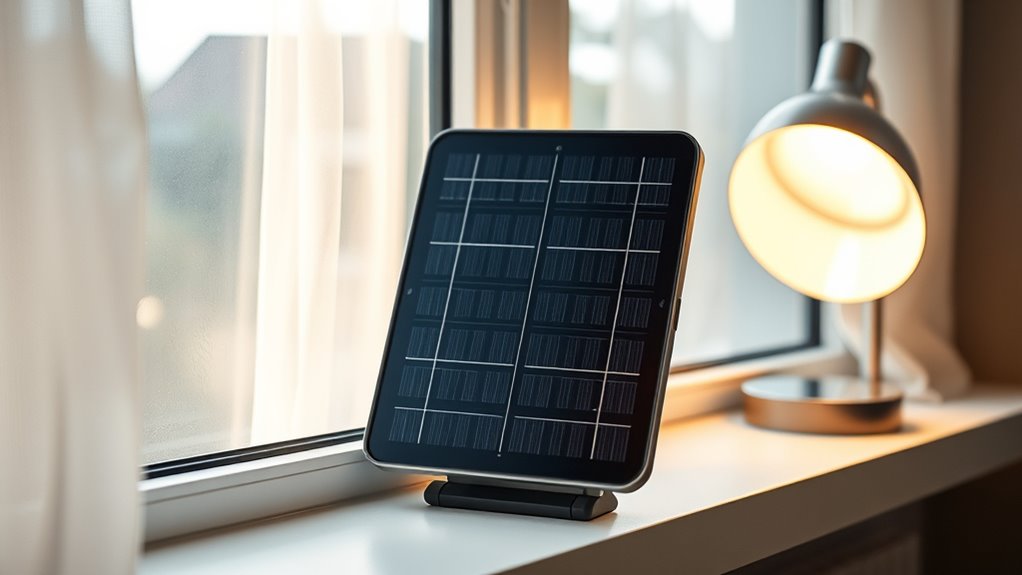
To charge your solar lights indoors effectively, you’ll want to choose light sources with the right intensity and spectrum. LED and CFL bulbs usually work best because they emit sufficient brightness without wasting energy.
Keep in mind, the stronger the light, the faster your solar lights will charge. So, picking a bright bulb really makes a difference. It’s all about giving your solar lights the best possible energy to soak up!
Optimal Light Bulb Types
When you want to charge solar lights indoors, choosing the right light bulb makes a significant difference. LED bulbs are your best bet because they emit a bright, consistent light spectrum that solar panels can efficiently absorb.
Full-spectrum bulbs also work well since they mimic natural sunlight, providing a balanced range of wavelengths to help your solar lights recharge faster. Avoid incandescent bulbs—they generate more heat than usable light, which isn’t effective for solar charging.
Compact fluorescent lamps (CFLs) can be a middle ground but generally perform less efficiently than LEDs or full-spectrum bulbs. By picking bulbs that closely resemble sunlight’s spectrum and brightness, you’ll maximize your solar lights’ indoor charging potential without wasting energy or time.
Intensity Levels Needed
Since solar panels rely on light intensity to generate power, you’ll need to provide your indoor solar lights with a strong and consistent light source to charge effectively. Not all indoor lighting offers enough intensity, so understanding what’s required helps you choose wisely.
To charge your solar lights efficiently indoors, consider these intensity levels:
- At least 10,000 lux: This mimics bright daylight and is ideal for fast charging.
- Between 2,000 to 5,000 lux: Suitable for slower charging but still effective with extended exposure.
- Below 1,000 lux: Usually found in standard indoor lighting; too weak for meaningful charging.
Using powerful LED grow lamps or halogen bulbs can help you reach these intensity levels. That way, your solar lights will charge properly indoors.
How to Charge Solar Lights Indoors: Step-by-Step
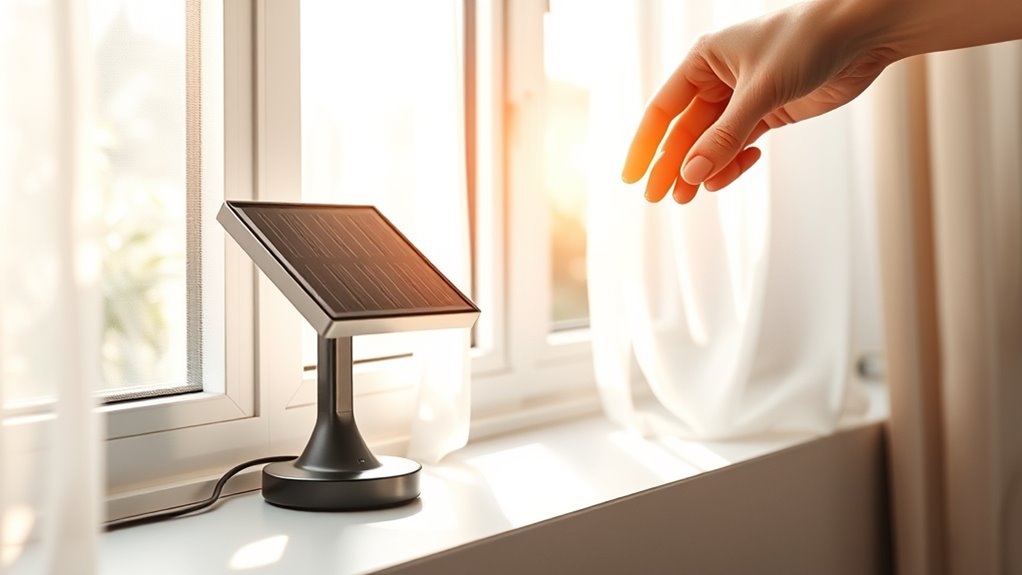
To charge your solar lights indoors, start by finding the brightest spot near a window or under a strong artificial light. You can use LED or fluorescent bulbs as effective options to replace natural sunlight.
Just follow these simple steps to guarantee your solar lights get the energy they need. It’s easier than you might think!
Locate Optimal Light Source
Where should you place your solar lights indoors to guarantee they charge efficiently? Finding the right spot is essential since solar panels need ample light exposure.
Here’s how to locate the ideal light source indoors:
- Near a south-facing window: This offers the most natural sunlight throughout the day, maximizing solar energy absorption. It’s basically your best bet for getting consistent light.
- On a windowsill with unobstructed light: Avoid placing lights behind curtains or blinds. Those block valuable rays, so keep the path clear.
- Away from shadows and reflective surfaces: Make sure nothing casts shade on the panels. Also, steer clear of surfaces that diffuse light ineffectively — they won’t help your panels soak up energy.
Use Artificial Light Alternatives
Although natural sunlight is ideal for charging solar lights, you can effectively use artificial light sources when sunlight isn’t available. To do this, place your solar lights under strong, consistent artificial lights like LED or fluorescent bulbs.
These light types emit the right spectrum to activate the solar panels. Position the lights as close as possible—within 12 inches—to maximize energy absorption. Avoid incandescent bulbs since they produce more heat than light, which isn’t efficient for charging.
Keep the light on for several hours, ideally 6 to 8, to ensure a full charge. Remember, artificial light won’t charge solar lights as quickly as the sun, but it’s a reliable alternative when you need to power your lights indoors.
Charging Indoors: Solar Chargers and Other Handy Tools
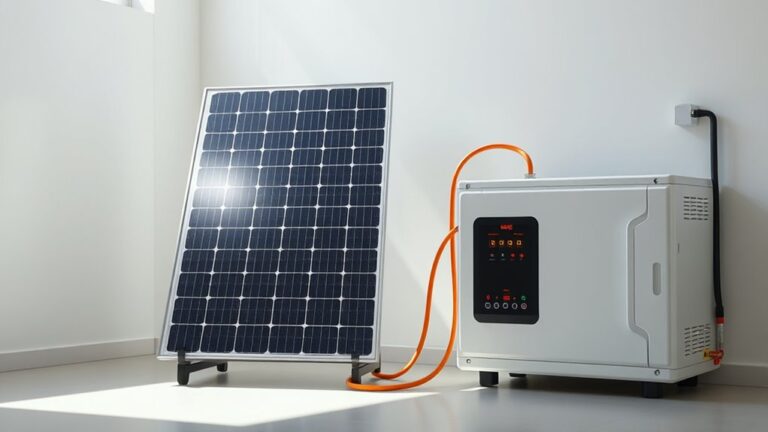
When sunlight is scarce indoors, you can still keep your solar lights powered by using specialized solar chargers and handy tools designed for low-light environments. These devices maximize indoor charging efficiency, ensuring your lights remain functional even without direct sun exposure.
Here are three practical options to evaluate:
- Portable Solar Chargers – Compact and lightweight, these chargers capture available light and boost your solar lights’ battery levels effectively indoors.
- Rechargeable Battery Packs – Use these to store power from any light source and transfer it to your solar lights when needed.
- LED Grow Lights – Positioned near your solar panel, they mimic sunlight and provide a steady energy supply for indoor charging.
How to Extend Battery Life When Charging Indoors
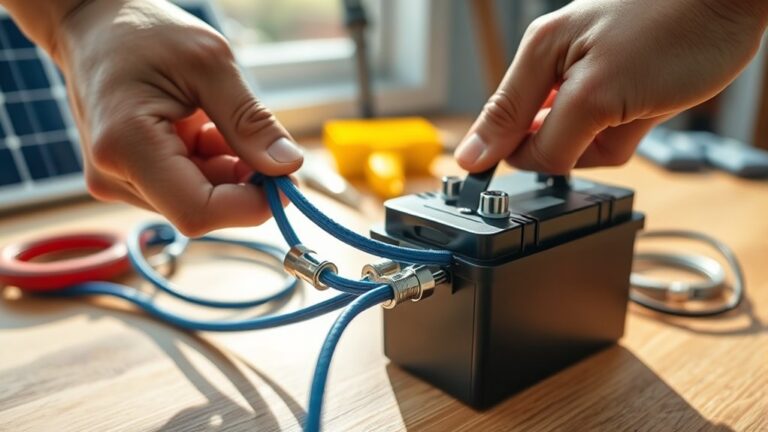
Using tools like portable solar chargers or LED grow lights can keep your solar lights powered indoors, but you’ll also want to focus on extending their battery life during charging. To do that, avoid overcharging—disconnect your lights once fully charged to prevent battery strain.
Charge them in moderate, consistent cycles rather than letting the battery drain completely before recharging. It’s better to keep the battery topped up regularly.
Keep the solar lights in cool, dry places while charging. Excessive heat or moisture can really degrade battery performance, so watch out for that.
Regularly clean the solar panel surface to ensure maximum energy absorption. A clean panel means more power going into your batteries.
Finally, consider using high-quality rechargeable batteries compatible with your lights. They tend to last longer and hold charge better.
These steps help maximize your solar lights’ indoor charging efficiency and prolong battery lifespan. It’s all about keeping things balanced and cared for!
Troubleshooting Indoor Solar Light Charging Problems
If your solar lights aren’t charging properly indoors, you’ll want to pinpoint common issues quickly to get them back on track. First, check the placement—solar panels need bright, indirect light to charge effectively. Avoid shaded or dim locations.
Next, take a look at the solar panel itself. Dirt or dust can block light, so giving it a simple wipe with a soft cloth might just boost the charging.
Also, don’t forget to check the battery condition. Old or damaged batteries won’t hold a charge well and might need replacing.
Frequently Asked Questions
Can Solar Lights Be Charged Using Artificial UV Lamps?
Yes, you can charge solar lights with artificial UV lamps since they emit the necessary light spectrum. Just make sure the lamp is strong enough and positioned close to the solar panel for effective charging indoors.
It’s pretty simple, really. Just think of the solar panel as needing light energy, and as long as the UV lamp provides that, your solar light will charge. Just keep it nearby to get the best results!
Do Solar Lights Work Differently in Winter Months Indoors?
Imagine you live in Minnesota; your solar lights indoors work slower in winter because shorter daylight reduces charging.
You’ll notice dimmer lights since indoor UV exposure is limited compared to summer’s abundant sunlight. It’s just how the seasons affect solar power.
Is It Safe to Leave Solar Lights Charging Indoors Overnight?
Yes, it’s safe to leave solar lights charging indoors overnight as long as you use the appropriate charger and avoid overcharging.
Just make sure the lights are in a well-ventilated area to prevent overheating or damage. That way, you keep everything running smoothly without any worries.
Can Indoor Charging Damage the Solar Light’s Battery?
No, indoor charging won’t damage your solar light’s battery if you use a proper light source and avoid overcharging.
Just make sure the light provides enough intensity and monitor charging time to keep your battery safe and healthy.
How Do Different Solar Panel Sizes Affect Indoor Charging Speed?
Bigger solar panels indoors charge faster—shocking, right? But don’t expect miracles; indoor light’s a diva, so even your massive panel won’t work wonders.
Choose larger panels if you want a speed boost, no magic involved!
Conclusion
Charging your solar lights indoors might not be as effortless as basking in the sun, but with the right techniques, you can still light up your space like it’s a scene from a sci-fi movie. Just like a modern-day Da Vinci, you’ve got the tools and know-how to harness light creatively.
Keep experimenting with your setup, and soon your solar lights will shine bright—even without the sun’s direct kiss. Using bright LED bulbs or placing your solar panels near windows can boost their charging efficiency indoors.
Remember, effective indoor charging of solar lights requires patience and the right conditions. By optimizing light exposure and positioning, you can enjoy bright, energy-efficient lighting even when you’re away from natural sunlight. So, don’t worry about cloudy days or limited outdoor access—charging solar lights indoors is totally doable with some smart adjustments and persistence.