Do Solar Panels Need Direct Sunlight to Work?
You don’t need direct sunlight for your solar panels to generate power—they still work with diffused or indirect light on cloudy or shaded days. Solar panels can capture energy from scattered rays, so even when the sun isn’t shining brightly, they keep producing electricity.
While efficiency drops without full sun, your panels won’t stop working altogether.
Cleaning your panels and positioning them well can help boost output even when conditions aren’t perfect. It’s all about making the most of available light, no matter the weather.
If you want to know how weather, placement, and technology impact performance, there’s more to explore.
Key Takeaways
- Solar panels generate electricity using sunlight, but direct sunlight is not strictly necessary for them to work.
- They can produce power from diffused or indirect light on cloudy or shaded days.
- Efficiency does drop when there are clouds, shade, or low-light conditions, but they still manage to generate some energy.
- There are advanced panels and technologies out there that help improve performance even when the light isn’t direct or strong.
- Plus, keeping your panels clean and positioning them just right can boost how much energy they capture, even without direct sunlight.
How Do Solar Panels Turn Sunlight Into Power?
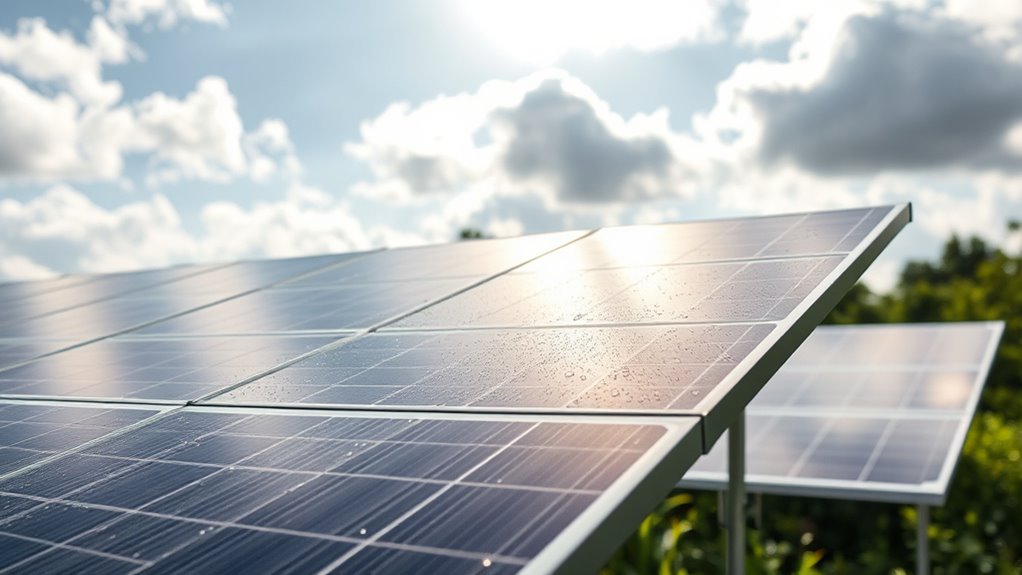
Although you might think solar panels simply soak up sunlight, they actually convert light into electricity through a process called the photovoltaic effect. When sunlight hits the solar cells made of semiconductor materials like silicon, it excites electrons, causing them to flow and generate an electric current.
This current is captured by wiring inside the panel and sent to an inverter, which changes it from direct current (DC) to the alternating current (AC) your home uses. You’ll find that the amount of electricity produced depends on the intensity of sunlight and the efficiency of the solar cells.
Can Solar Panels Work Without Direct Sunlight?
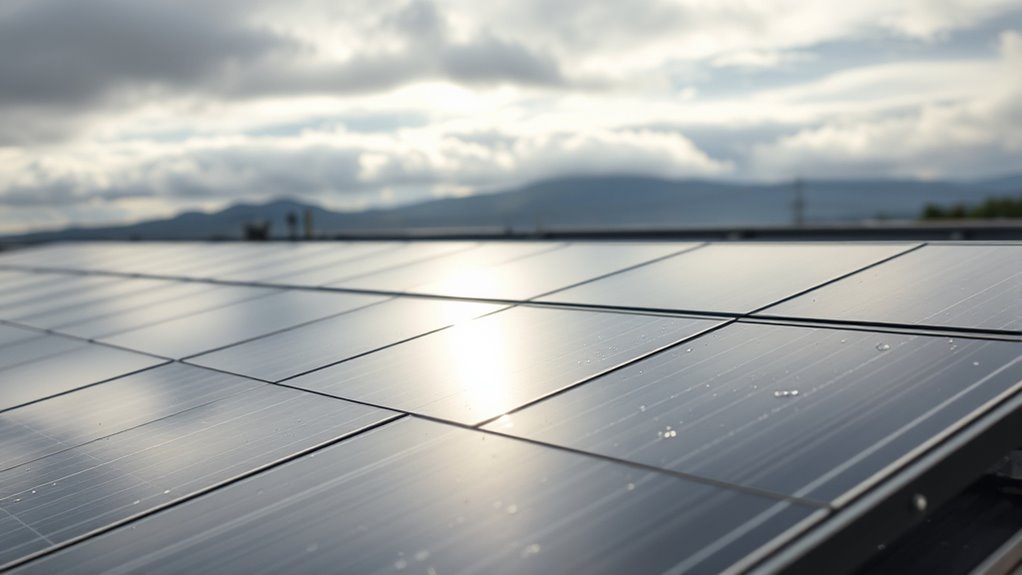
Even when direct sunlight isn’t hitting your solar panels, they can still generate electricity from diffused or indirect light. Clouds, shade, or reflections can scatter sunlight, allowing your panels to capture some energy.
While the output won’t be as strong as in full sun, your panels remain functional and produce power throughout the day. So, on overcast days or in shaded areas, your system won’t stop working entirely.
However, keep in mind that the efficiency drops because less light reaches the solar cells. So, although your panels don’t need direct sunlight to work, their performance depends on the intensity and quality of available light.
You’ll still see energy benefits, just at a reduced level compared to bright, direct sunlight.
What Are the Best Conditions for Solar Panels?
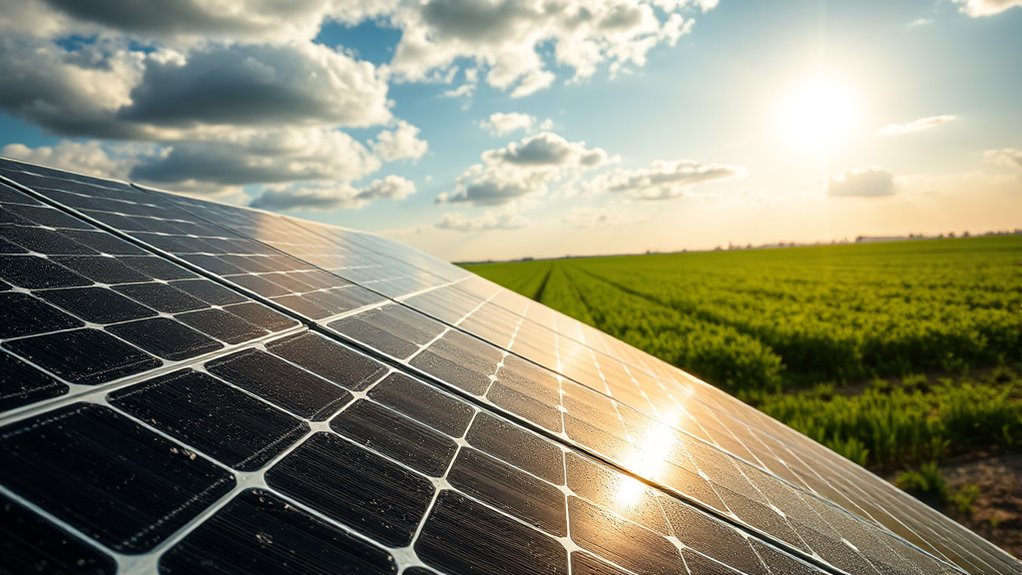
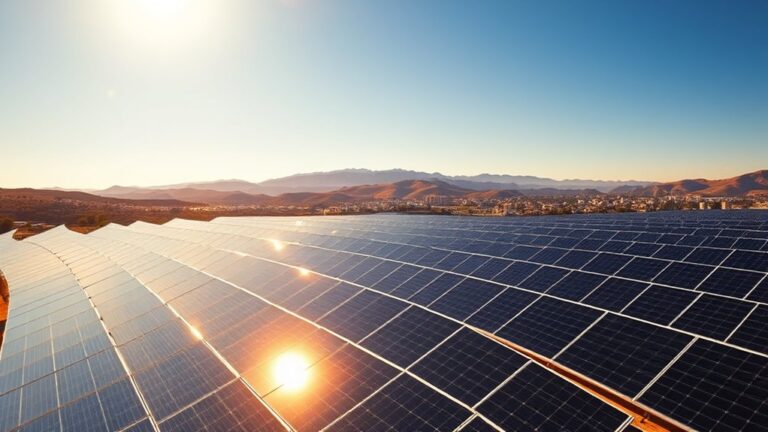
To maximize your solar panels’ output, you need to place them where they receive the most direct sunlight throughout the day. Ideally, you want your panels facing true south in the Northern Hemisphere or true north in the Southern Hemisphere, tilted at an angle close to your location’s latitude.
This positioning ensures the panels capture sunlight efficiently all year round. Avoid shading from trees, buildings, or other obstructions since even small shadows can markedly reduce performance.
Also, keep your panels clean and free from dust or debris, as dirt can block sunlight and lower output. It’s a good idea to install them in well-ventilated areas too, to prevent overheating, which can decrease efficiency.
Following these conditions helps you get the most energy from your solar investment. So, a little extra care goes a long way!
How Do Clouds and Weather Affect Solar Panels’ Efficiency?
While positioning and maintenance set the stage for ideal solar panel performance, the weather plays a significant role in how much energy your panels actually produce. When clouds roll in, they block some sunlight, reducing the amount of energy your panels can capture.
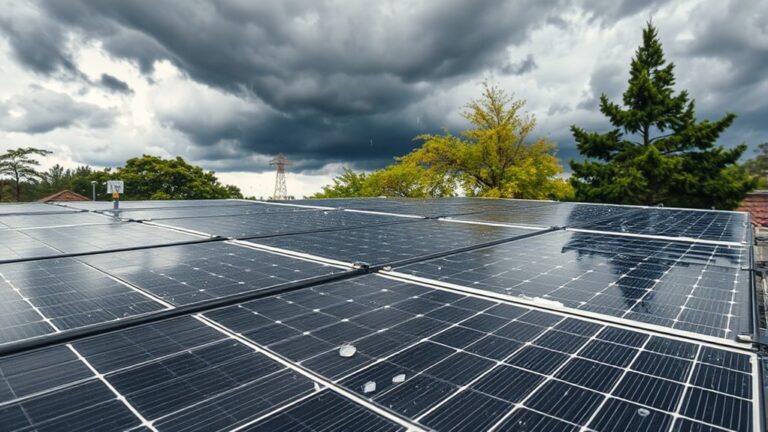
However, even on cloudy days, solar panels still generate electricity because they can use diffused light. Keep in mind, thick clouds and stormy weather will lower efficiency more than light overcast conditions.
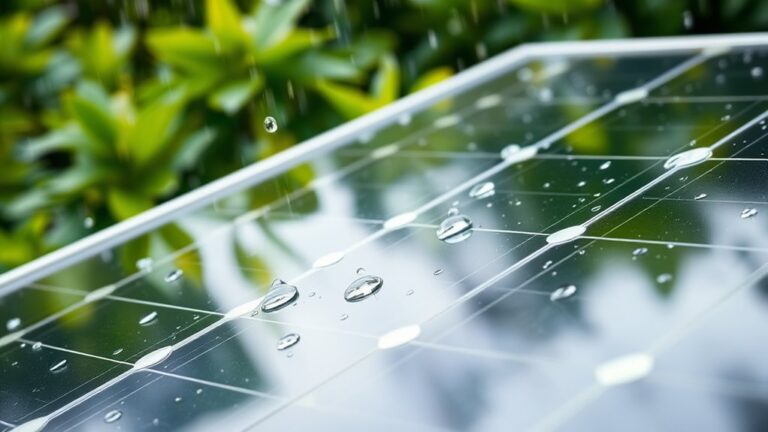
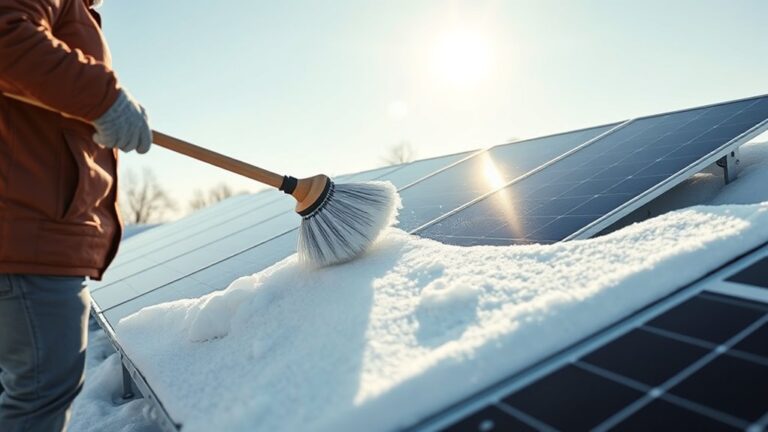
Rain and snow can also affect performance temporarily by covering panels, but they help clean dirt off surfaces in the long run. Temperature matters too—extreme heat can reduce efficiency, while cooler, sunny days often boost output.
Understanding how weather impacts your system helps you set realistic expectations for daily energy production. It’s all about knowing what to expect so you can get the most out of your solar panels.
How Can You Maximize Solar Power Output in Low-Light?
Although low-light conditions pose challenges, you can still boost your solar panels’ output by maximizing their placement and using technology designed for such environments. Position panels at the best angle to capture indirect sunlight, avoid shadows, and keep them clean.
Using panels with higher efficiency or bifacial designs can help capture more diffuse light. These types of panels are great at making the most out of limited sunlight.
Here are practical tips to maximize output in low-light:
| Strategy | Benefit |
|---|---|
| Ideal tilt and angle | Increases exposure to available light |
| Regular cleaning | Removes dust that blocks sunlight |
| Advanced panel tech | Captures more diffuse and reflected light |
Is It Worth Installing Solar Panels in Shady or Cloudy Spots?
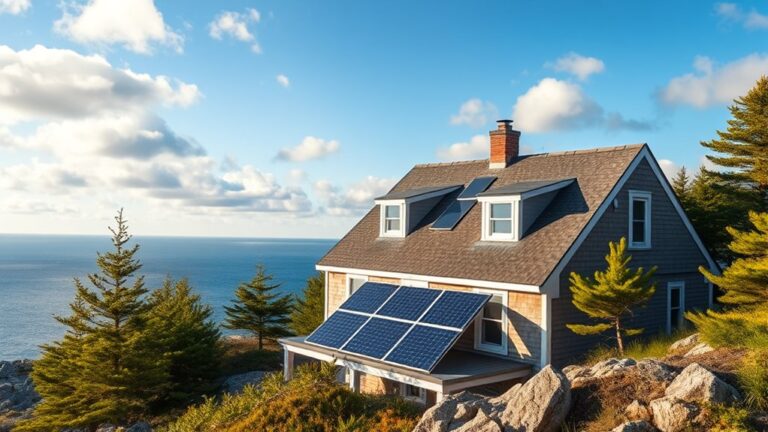
Even if your property has shady or cloudy spots, installing solar panels can still make sense. Modern solar panels work efficiently in diffuse light, so they generate power even without direct sunlight.
Solar panels remain effective in shady or cloudy areas, generating power even without direct sunlight.
While shade and clouds reduce output, panels can still contribute to lowering your energy bills. You should assess your location’s average sunlight and shading patterns to determine potential energy production.
Using microinverters or power optimizers helps manage shading issues by maximizing each panel’s output independently. Additionally, combining solar with energy storage or grid power ensures reliability.
Ultimately, even in less-than-ideal conditions, solar panels can offer long-term savings and environmental benefits. So, installation is worthwhile if you plan carefully and choose the right system components.
Frequently Asked Questions
How Long Do Solar Panels Typically Last?
You can expect solar panels to last around 25 to 30 years. They’ll keep producing electricity efficiently, but their performance slowly declines over time.
Regular maintenance can help you get the most out of them. It’s a good idea to keep an eye on how they’re doing now and then. This way, you can catch any issues early and keep them running smoothly.
What Maintenance Do Solar Panels Require?
You’ll need to clean your solar panels regularly to remove dirt and debris, inspect for damage, and guarantee connections are secure.
It’s a good idea to check on them every now and then to make sure everything’s working as it should.
Occasional professional check-ups help keep them efficient and extend their lifespan.
These visits can catch any issues early before they become bigger problems.
Can Solar Panels Store Energy for Nighttime Use?
Wondering if solar panels can store energy for nighttime use? They can’t store energy themselves, but you can pair them with batteries to save power for when the sun’s down.
This way, your home stays powered 24/7 without any interruptions. Pretty neat, right?
Are Solar Panels Environmentally Friendly to Produce?
Yes, solar panels are generally environmentally friendly to produce, but you should know their manufacturing involves energy and materials that cause some pollution.
Still, their long-term clean energy benefits usually outweigh these initial impacts. So, while there is some environmental cost upfront, the overall impact is positive in the big picture.
How Much Do Solar Panels Cost to Install?
You know what they say: “A penny saved is a penny earned.” Installing solar panels typically costs between $15,000 and $25,000.
But don’t let that number scare you. You’ll save money long-term through lower energy bills and tax incentives. It’s a smart investment that pays off over time.
Conclusion
You don’t need perfect sunshine for solar panels to work—they can still capture energy on cloudy days, though not at full strength. Think of solar panels like a sponge soaking up rays; the more direct sunlight, the more power they squeeze out.
To get the best bang for your buck, place panels where they get plenty of light and keep them clean. Even in less-than-ideal spots, solar power can brighten your energy future!
So, while solar panels work best with direct sunlight, they don’t need it all the time. They still generate electricity when it’s cloudy or overcast, just at a lower rate. This means you can rely on solar energy almost every day, making it a smart and eco-friendly choice for powering your home or business.