
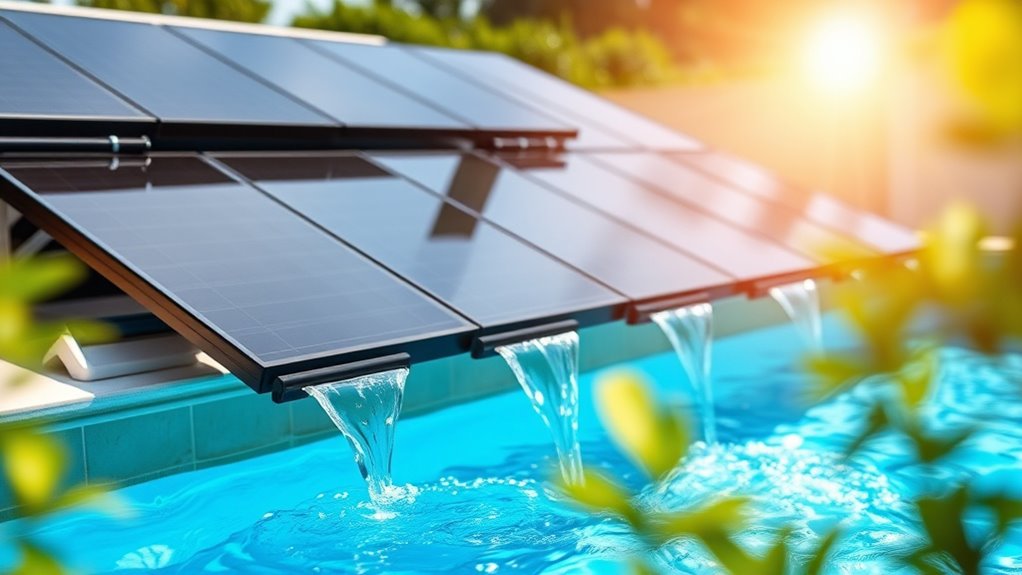
How Do Solar Pool Heaters Work Step by Step
You pump your pool water through dark solar panels that soak up the sun’s heat. These solar pool heaters use the sun’s natural energy to warm your water efficiently and eco-friendly.
First, water passes through filters to keep it clean.
Then, it moves into the solar collector panels where the sun’s energy warms it. Heated water flows back into the pool, raising the temperature naturally without using extra power.
Valves help direct the flow for maximum efficiency. You’ll also find smart tips to boost warmth and keep your system running smoothly if you want to explore further.
Key Takeaways
- Pool water is drawn through a skimmer or main drain and filtered to remove debris. Then, the clean water flows into dark-colored solar panels. These panels soak up sunlight and turn it into heat.
- The heated water circulates back into the pool, slowly raising the overall temperature. A pump keeps the water moving through the system. Meanwhile, valves help control whether water flows through or around the heater.
- To get the best results, the system runs continuously during peak sunlight hours. This way, you maximize heating efficiency and keep your pool water warm and inviting.
Why Choose Solar Pool Heaters for Your Pool?
Although there are several options for heating your pool, choosing a solar pool heater lets you save money while enjoying eco-friendly warmth. You won’t have to worry about rising energy bills because solar heaters use free, natural energy from the sun.
This means lower monthly costs and fewer greenhouse gas emissions. Plus, solar systems are relatively low maintenance, so you can spend more time swimming and less time troubleshooting.
They also tend to last longer than conventional heaters, giving you a better return on your investment. By choosing solar, you’re making a smart financial decision and reducing your environmental impact.
It’s an efficient, sustainable way to keep your pool comfortable without relying on expensive electricity or gas.
Capturing the Sun’s Energy With Solar Pool Heaters
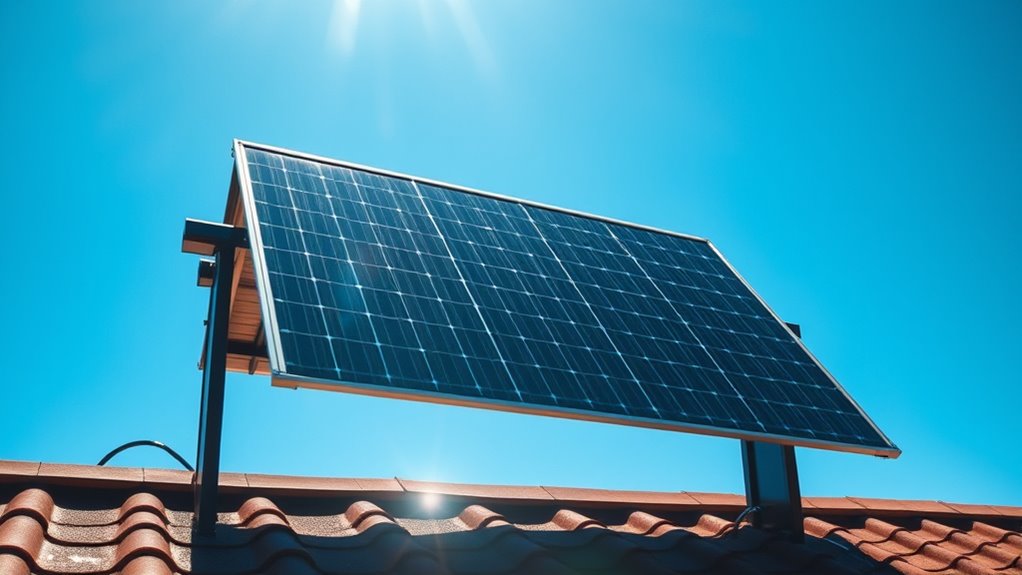
To harness the benefits of a solar pool heater, you need to understand how it captures the sun’s energy. Solar pool heaters use special panels made of dark materials that absorb sunlight efficiently.
When the sun shines on these panels, they convert solar radiation into heat. The design maximizes surface area, so more sunlight is captured throughout the day. These panels are usually mounted on your roof or near the pool, positioned to get the most direct sunlight.
As sunlight hits the panels, their dark surfaces warm up quickly, trapping heat. This captured heat then transfers to your pool water, warming it naturally without relying on electricity or gas.
How Water Circulates in Your Solar Heating System
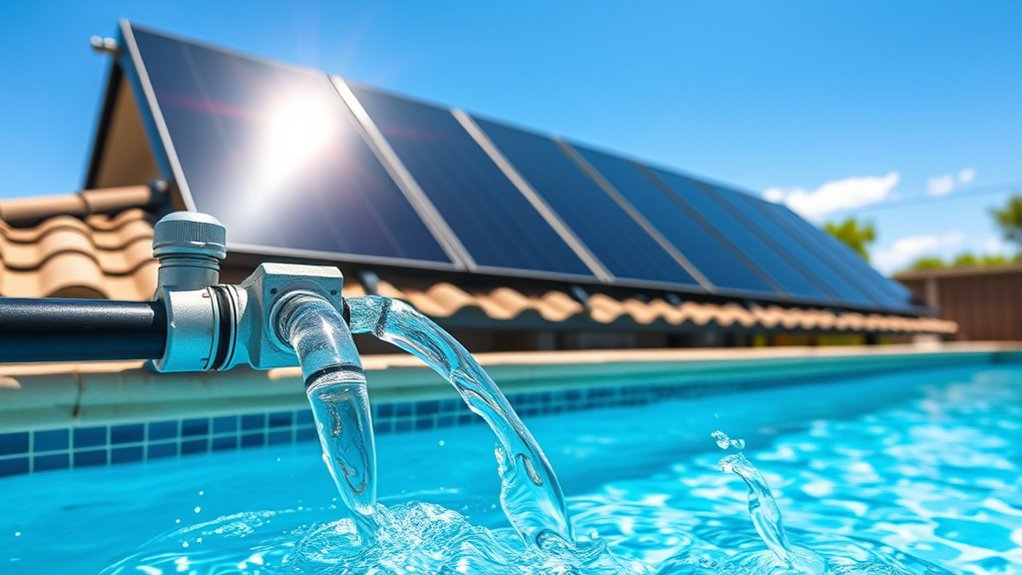
You’ll want to understand how water moves through your solar heating system to keep your pool warm. The pump pushes water from the pool through valves that direct it to the solar collectors.
This flow path guarantees water heats efficiently before returning to your pool. It’s pretty cool how it all works together to keep your pool nice and cozy!
Water Flow Path
How exactly does water travel through your solar pool heating system? Water moves in a continuous loop designed to maximize heat absorption from the sun.
Here’s the flow path you can expect:
- Water is drawn from your pool’s skimmer or main drain.
- It passes through a filter to remove debris.
The clean water then flows into the solar collector panels. As it travels through the panels, the sun heats the water.
Finally, the warmed water returns to your pool, raising the overall temperature.
This cycle repeats continuously when your system runs, ensuring your pool stays comfortably warm using renewable solar energy.
Understanding this path helps you appreciate how efficiently your solar heater works without relying on traditional energy sources.
Pump and Valve Roles
Although the solar collector panels absorb the sun’s heat, your pool water won’t circulate without the pump and valves working together. The pump pushes water from your pool through the system, making sure it flows steadily to the solar collectors.
Valves control this flow, directing water either through the solar heater or bypassing it when heating isn’t needed. You can adjust these valves manually or automatically to optimize heating efficiency and keep the water temperature just right.
The pump’s consistent operation keeps heated water returning to your pool, which raises its temperature. Without the pump and valves working in sync, water won’t reach the collectors or return properly.
How Solar Panels Transfer Heat to Your Pool Water
When sunlight hits the solar panels, they absorb the energy and convert it into heat. This heated surface warms the water as it flows through the panels’ network of tubes.
Here’s how the heat transfer works:
Here’s a simple breakdown of how heat moves through your pool’s solar heating system.
- Water is pumped from your pool and directed to the solar panels.
- As water travels through the panels, it absorbs heat from the warmed surfaces.
- The heated water exits the panels and returns to your pool.
- This continuous circulation raises your pool’s overall temperature.
- The panel’s material and design maximize heat absorption and transfer efficiency.
Maximizing Your Solar Pool Heater’s Efficiency
To get the most out of your solar pool heater, you’ll need to maximize its placement, maintenance, and operation. Position your solar panels where they receive maximum sunlight—usually a south-facing roof with minimal shade. Angle the panels to match your latitude for ideal solar gain.
Run your pool pump during peak sunlight hours to ensure water flows through the panels when they’re hottest. Use a pool cover when the heater isn’t running to reduce heat loss overnight and on cloudy days.
Also, monitor your system’s water flow rate; too fast or slow can reduce efficiency. Finally, consider upgrading to a more efficient pump or controller to better regulate water temperature.
These steps help you harness the sun’s energy effectively, extending your swimming season while cutting costs. It’s all about working smarter, not harder!
Essential Maintenance Tips to Keep Your Solar Heater Efficient
Keeping your solar pool heater running efficiently requires regular maintenance to prevent common issues like clogged panels or leaks. You’ll want to stay on top of these essential tasks to keep your system performing at its best.
Inspect the panels monthly for debris, dirt, or any damage. It’s a quick check that can save you a lot of trouble later on.
Clean the panels with a soft brush and mild soap whenever needed. This helps keep everything running smoothly without causing any scratches.
Make sure to check all connections and fittings for leaks or wear. A little leak can turn into a big problem if left unattended.
Also, keep an eye on the water flow to ensure it’s steady and strong. If the flow slows down, it might be time for a closer look.
And if you live in a cold climate, don’t forget to winterize your system. This will help avoid freeze damage and keep your heater ready for the next season.
Frequently Asked Questions
Can Solar Pool Heaters Work in Cloudy or Cold Climates?
Yes, solar pool heaters can work in cloudy or cold climates, but they’re less efficient. You’ll still get some heat, especially on partly sunny days.
It might take longer to warm your pool compared to sunny areas. So, while they do work, just keep in mind the process could be slower.
How Long Does It Take to Install a Solar Pool Heater?
Installing a solar pool heater usually takes a day or two, like planting a seed that quickly begins to grow warmth.
You’ll have it ready before you know it, soaking up the sun’s energy in no time.
Are There Any Tax Credits or Rebates for Solar Pool Heaters?
Yes, you can often get tax credits or rebates for solar pool heaters, depending on your location. It’s worth checking out local, state, and federal programs to see what incentives are available.
These programs can help reduce your upfront costs and make installation more affordable. So, don’t miss out on potential savings!
What Is the Average Lifespan of a Solar Pool Heating System?
You can expect your solar pool heater to enjoy a solid 15 to 20 years of service.
With proper care and occasional maintenance, it’ll keep your pool comfortably warm through many sunny seasons ahead.
Can Solar Pool Heaters Be Used With Saltwater Pools?
Yes, you can use solar pool heaters with saltwater pools. Just make sure the materials in the system are corrosion-resistant to handle salt.
This way, your heater lasts longer and works efficiently without damage. It’s a smart way to keep your pool warm and enjoy those sunny days!
Conclusion
Imagine stepping into your pool, the water perfectly warmed by the sun’s gentle touch. It’s like nature’s own way of inviting you to unwind and enjoy endless sunny days.
By choosing a solar pool heater, you’re not just saving energy—you’re embracing a smart, eco-friendly way to heat your pool. It’s amazing how sunlight can turn into soothing warmth with just a bit of help.
With simple care and smart use, your solar heater will keep your pool cozy and ready for every splash. So, plunge in, soak up the sun, and make every swim a bright, warm escape.
Solar pool heaters work by capturing the sun’s energy and transferring it to your pool water, making them an efficient and sustainable option. They save you money on energy bills and extend your swimming season comfortably. Embrace solar pool heating as a natural, cost-effective way to enjoy your pool longer, while being kind to the environment.



One Comment