How Long Do Solar Lights Take to Charge – Step-by-Step Guide
You’ll need 6 to 8 hours of direct sunlight to fully charge your solar lights, which then provide 8 to 12 hours of nighttime illumination.
How long do solar lights take to charge? Well, it depends on a few things like your solar panel size, battery capacity, and sunlight intensity.
Make sure you place your lights in sunny, shadow-free spots and keep the panels clean for the best performance.
If your lights charge slowly or start to dim early, don’t worry—there are easy ways to troubleshoot and improve their efficiency you’ll want to explore.
Key Takeaways
- Solar lights typically take 6-8 hours of direct sunlight to fully charge for 8-12 hours of nighttime use.
- Place solar lights in open, shadow-free locations with direct sun exposure for optimal charging.
- Clean solar panels regularly and remove protective films to ensure maximum sunlight absorption.
- Charging time varies with panel size, battery capacity, and weather conditions like cloud cover.
- If charging is slow, check for obstructions, relocate lights, or replace faulty batteries to improve performance.
How Long Do Solar Lights Take to Charge?
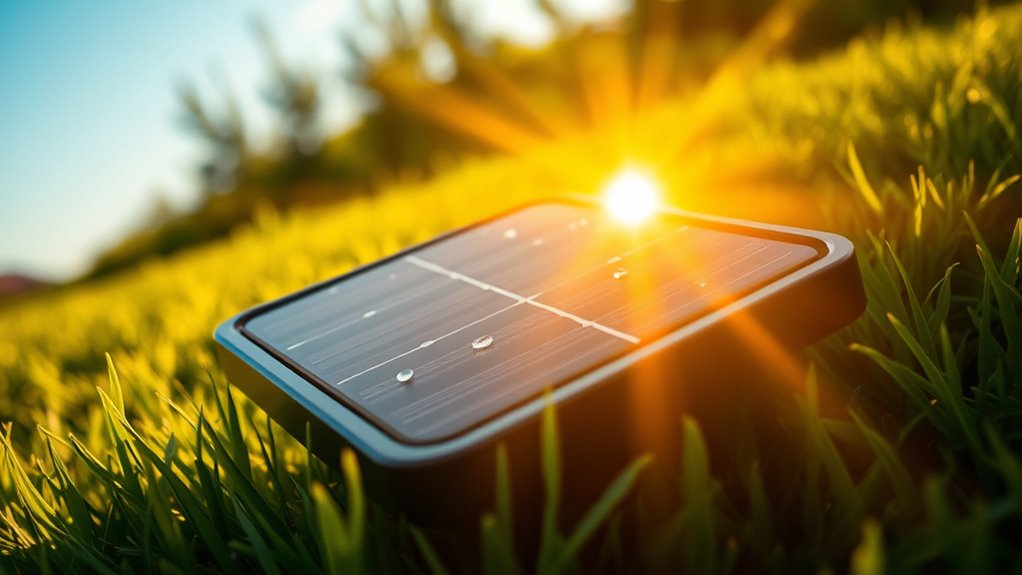
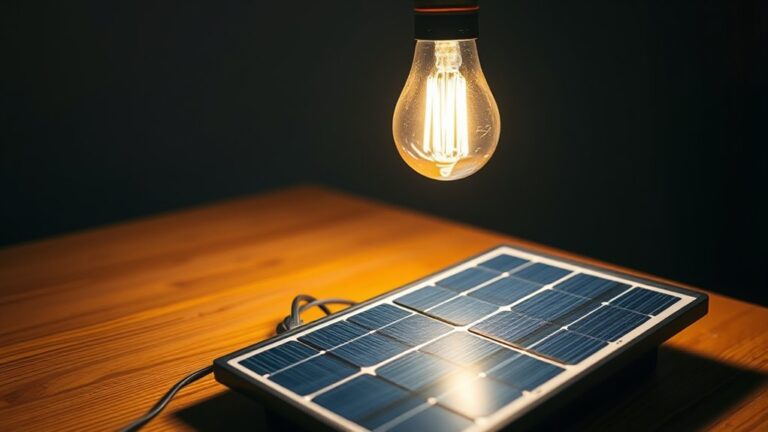
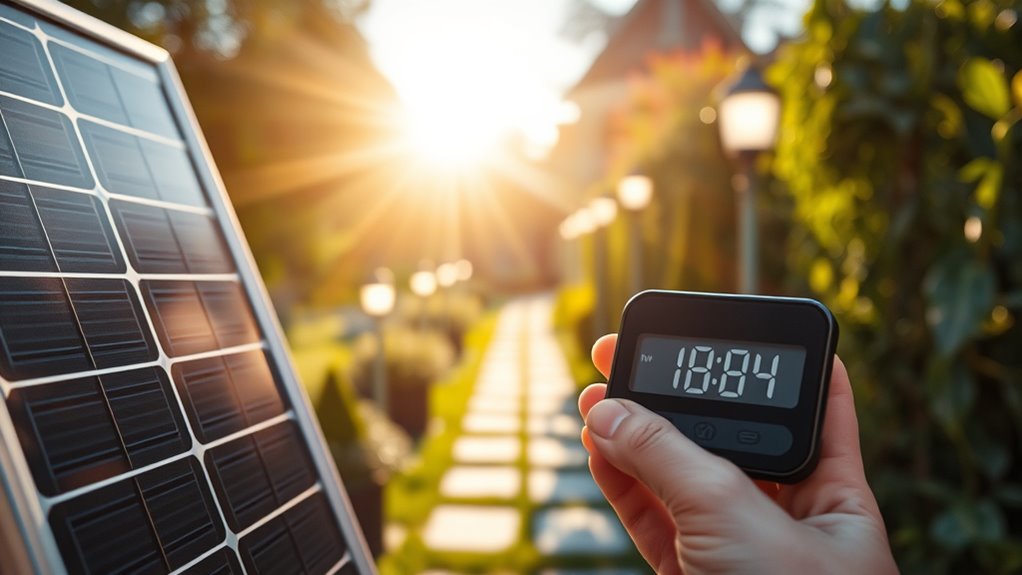
Although charging times can vary based on the model and sunlight intensity, most solar lights take between 6 to 8 hours of direct sunlight to fully charge. You’ll notice that once the solar panel absorbs enough sunlight, the internal battery stores this energy to power the light through the night.
If you place your solar light in a spot that gets full sun during the day, it should charge efficiently within this time frame. Keep in mind, though, that some lights with larger batteries or higher wattage LEDs might need a bit longer.
Generally, after a full day of charging, you can expect your solar light to last around 8 to 12 hours when it’s fully powered. This balance guarantees your outdoor lighting stays reliable and consistent.
What Factors Affect Solar Light Charging Time?
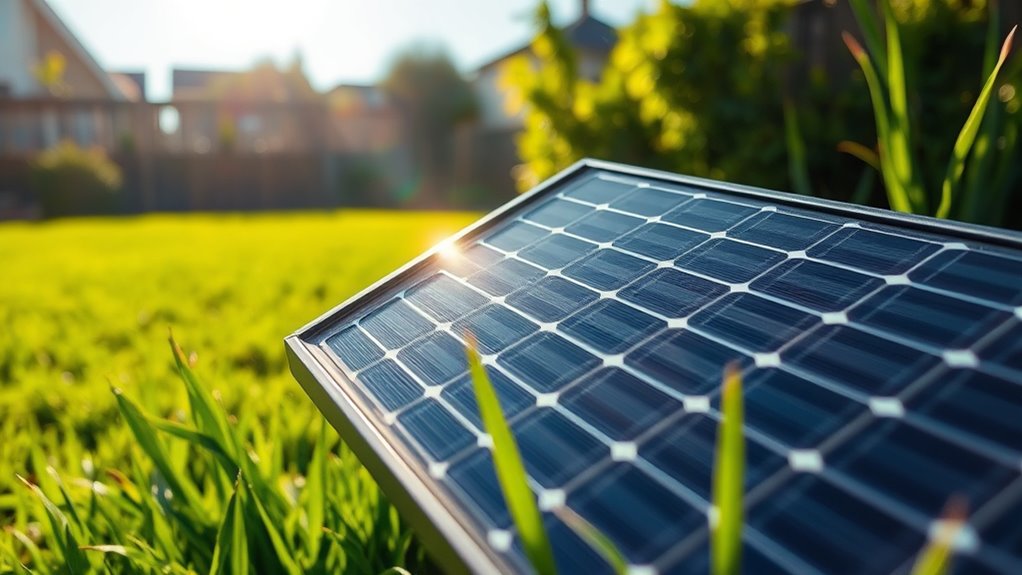
Charging times can vary widely depending on several key factors that influence how quickly your solar lights store energy. You should consider the solar panel size, battery capacity, and light usage to understand charging efficiency.
A larger solar panel captures more sunlight, speeding up charging. Higher battery capacity means more energy storage but requires longer charging. How often and how long your lights run each night also affects how quickly they recharge.
| Factor | Impact on Charging Time |
|---|---|
| Solar Panel Size | Bigger panels charge faster |
| Battery Capacity | Larger batteries take longer to fully charge |
| Light Usage | More usage means more frequent charging needed |
Knowing these helps you optimize placement and usage for efficient solar light charging. It’s all about finding the right balance!
How Do Weather and Location Impact Solar Light Charging?
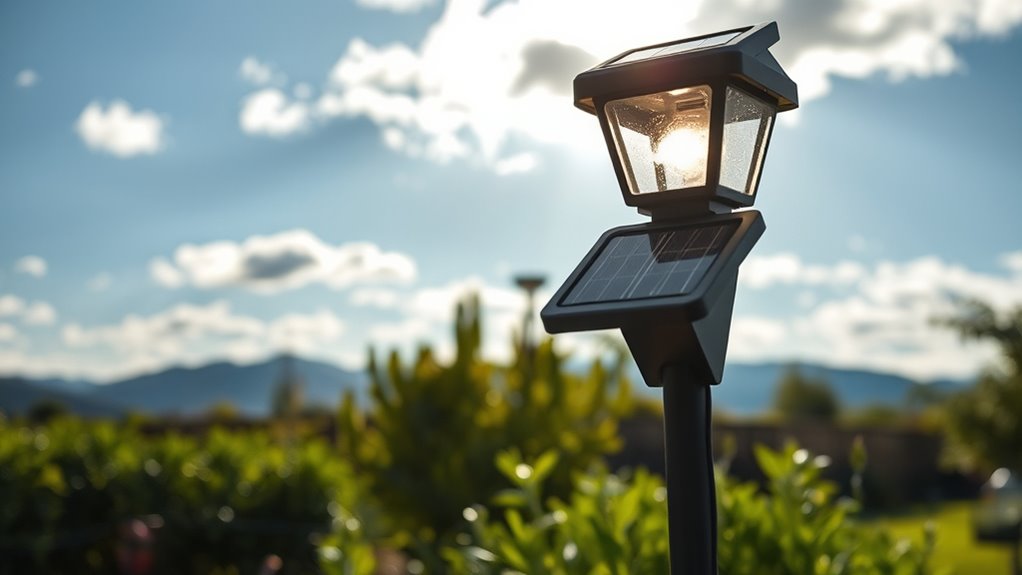
You’ll notice that cloudy days slow down your solar lights’ charging time because they block sunlight.
Where you place your lights matters too—shady spots can reduce their efficiency. Choosing a location with direct sun exposure helps your solar lights charge faster and last longer.
Effect of Cloud Cover
When clouds cover the sky, solar lights receive less sunlight, which slows down their charging process. You’ll notice that on overcast days, your solar lights take longer to reach full charge or may not shine as brightly at night.
Here’s how cloud cover affects charging:
- Reduces sunlight intensity – Clouds block direct rays, cutting down energy absorption.
- Extends charging time – Less light means slower battery recharge.
- Lowers light output – Incomplete charging results in dimmer illumination.
- Varies by cloud thickness – Thicker clouds cause more significant charging delays.
Understanding this helps you anticipate performance changes during cloudy weather. That way, you can manage your solar lights’ expectations accordingly.
Importance of Placement
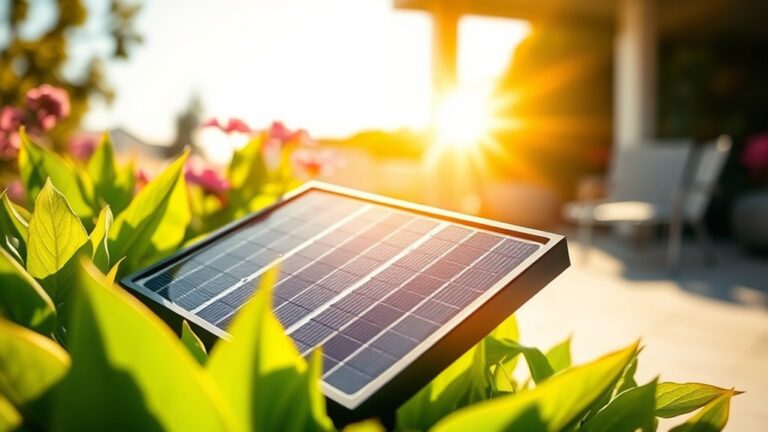
Although weather plays an essential role, where you place your solar lights can make an even bigger difference in how quickly they charge. You’ll want to position them in spots that receive direct sunlight for most of the day.
Avoid shady areas under trees, awnings, or near tall buildings that block sunlight. South-facing locations generally capture the most sun, especially in the Northern Hemisphere.
Keep in mind that even with good placement, heavy cloud cover or rain can reduce charging speed. But by choosing a well-lit, unobstructed location, you maximize the solar panel’s exposure and guarantee your lights charge efficiently.
How to Charge Solar Lights for Best Performance
To get the best performance from your solar lights, position them where they can soak up direct sunlight for several hours daily. Proper charging depends on maximizing sunlight exposure and maintaining your lights well.
Follow these steps to charge your solar lights effectively:
- Place lights in an open area free from shadows or obstructions during peak sunlight hours.
- Clean the solar panel regularly to remove dirt or dust that blocks sunlight.
- Remove any protective film from new solar panels before use.
- Charge your solar lights fully before first use, ideally under direct sunlight for 6-8 hours.
Why Are My Solar Lights Charging Slowly? (Troubleshooting Tips)
If your solar lights are charging slowly, first check if they’re getting enough direct sunlight throughout the day. You’ll also want to inspect the batteries for any signs of wear or damage.
Finally, make sure the solar panels are clean and free from dirt or obstructions that could block sunlight. It’s surprising how much of a difference a little cleaning can make!
Insufficient Sunlight Exposure
When your solar lights charge slowly, insufficient sunlight exposure is often the main culprit. You need to make sure your lights get enough direct sunlight daily to charge effectively.
Here’s what you can do:
- Check placement: Move lights away from shaded areas caused by trees, buildings, or fences.
- Clean solar panels: Dirt and dust block sunlight, so wipe panels regularly.
- Avoid cloudy spots: Position lights where they receive the most sun, especially during peak hours (10 a.m. to 4 p.m.).
- Angle adjustment: Tilt solar panels to face the sun directly for maximum absorption.
Battery Health Issues
Even with ideal sunlight exposure, your solar lights might still charge slowly due to battery health issues. Over time, rechargeable batteries lose their ability to hold a full charge, which directly affects charging speed.
If your lights are older or have been in use for a while, the battery might be worn out or faulty.
| Battery Condition | Charging Impact |
|---|---|
| New and healthy | Charges quickly, lasts long |
| Slightly degraded | Slower charging, shorter runtime |
| Severely worn or faulty | Very slow or no charging |
To fix this, try replacing the battery with a compatible new one. Regularly check your battery’s condition to keep your solar lights working efficiently.
Dirt and Obstruction Effects
Although your solar lights rely on direct sunlight to charge efficiently, dirt and obstructions can considerably reduce their exposure and slow down the charging process. If your solar lights seem to be charging slowly, check for these common issues:
- Dust and dirt buildup on the solar panel, which blocks sunlight.
- Leaves, branches, or other debris covering the panel.
- Placement in shaded areas due to nearby trees or structures.
- Snow or water droplets accumulating on the surface.
To fix this, clean the solar panels regularly with a soft cloth and mild soap. Also, trim any overhanging branches, and try relocating lights to sunnier spots if possible.
Keeping your solar panels clear guarantees they absorb maximum sunlight. This helps your lights charge faster and shine brighter.
Tips to Extend Solar Lights’ Battery Life and Brightness
To get the most out of your solar lights, you’ll want to take simple steps that boost both battery life and brightness. First, position your lights where they’ll get maximum sunlight—avoid shaded areas and keep panels clean from dirt and debris.
Regularly wipe the solar panel with a soft cloth to maintain efficiency. Also, replace old batteries with high-quality rechargeable ones, as worn-out batteries reduce performance.
During winter or extended cloudy days, consider removing the batteries and storing them indoors to extend their lifespan. And hey, if you’re not using the lights for a while, turn them off or cover them to prevent unnecessary battery drain.
Frequently Asked Questions
Can Solar Lights Work Indoors Without Sunlight?
No, solar lights won’t work well indoors without sunlight. They rely on direct sunlight to charge their batteries.
What Types of Batteries Are Used in Solar Lights?
Coincidentally, you’ll find solar lights mostly use rechargeable batteries like NiMH or lithium-ion. They’re perfect for storing sunlight energy, so your lights stay bright all night without you worrying about constant replacements or power failures.
It’s pretty convenient, right? No need to keep swapping out batteries all the time. Plus, these rechargeable types are designed to handle the charge and discharge cycles that come with solar lighting.
Are Solar Lights Safe for Pets and Children?
Yes, solar lights are safe for pets and children since they don’t use harmful chemicals or get hot.
Just make sure the lights are sturdy and placed where kids and pets won’t trip over or chew on them.
How Do Solar Lights Turn on Automatically at Night?
Think of solar lights like your eyes adjusting at dusk—they use a built-in sensor to detect darkness and automatically turn on.
Can Solar Lights Be Painted or Customized?
Yes, you can paint or customize solar lights, but you should avoid covering the solar panel or light sensor. Use light, non-toxic paint and be careful not to block sunlight, ensuring your lights still charge and function properly.
It’s pretty easy to give your solar lights a new look. Just make sure the paint doesn’t interfere with how they collect sunlight or detect darkness. That way, they’ll keep working great while looking cool!
Conclusion
Charging your solar lights is like filling a glass with sunlight—sometimes it’s quick, other times it takes patience. By understanding factors like weather, location, and battery health, you can speed up the process and keep your lights shining bright.
Follow the tips and troubleshooting steps to avoid slow charging and extend your lights’ battery life. With a little care, your solar lights will brighten your space night after night.
Remember, the time it takes for solar lights to charge depends on several things. Bright, direct sunlight usually means faster charging, while cloudy days or shady spots slow it down. Checking and maintaining your battery health is key to getting the most out of your solar lights.
So, to keep your solar lights glowing efficiently, place them where they can soak up plenty of sun, clean the panels regularly, and troubleshoot any issues right away. Doing these simple things will help your solar lights charge faster and last longer—making your outdoor space beautifully lit every evening!