How Long Does It Take for Solar Lights to Fully Charge?
You’ll need about 6 to 8 hours of direct sunlight to fully charge your solar lights and keep them shining brightly all night.
The time it takes for solar lights to fully charge can vary quite a bit depending on several factors.
Charging time depends on things like sunlight intensity, panel type, battery size, and weather conditions.
For example, monocrystalline panels charge faster, while larger batteries take longer to fill.
Also, shaded areas and cloudy days can slow down the charging process.
If you want to understand what else affects charging speed and how to optimize it, there’s more useful info ahead.
Key Takeaways
- Solar lights typically take 6 to 8 hours of direct sunlight to fully charge.
- Charging time depends on sunlight intensity, duration, and panel angle.
- Monocrystalline panels charge faster than polycrystalline or thin-film types.
- Larger batteries require longer charging but provide extended illumination.
- Weather, location, and seasonal changes significantly impact charging speed.
So, keep in mind that how long it takes can really vary depending on these factors!
How Long Do Solar Lights Take to Fully Charge?
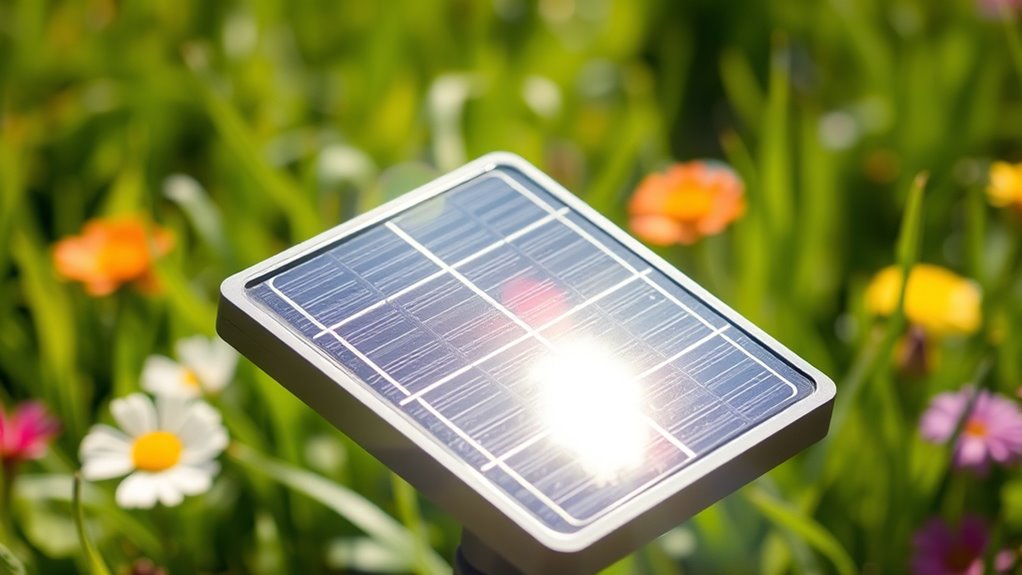
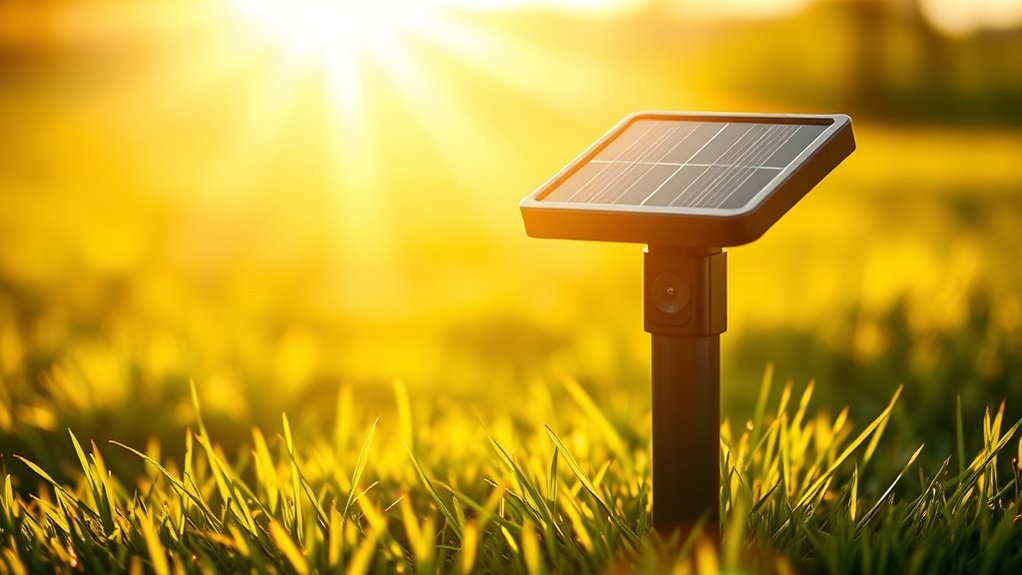
Although charging times can vary, solar lights typically take between 6 to 8 hours of direct sunlight to fully charge. When you place your solar lights outside, their built-in panels convert sunlight into energy stored in rechargeable batteries.
Once fully charged, these lights can shine brightly throughout the night. Keep in mind that if your solar lights receive consistent sunlight during the day, you’ll enjoy longer illumination hours.
Fully charged solar lights provide bright, lasting illumination that shines longer with consistent daytime sunlight.
However, if you’re using them in shaded areas or during shorter daylight periods, they may not reach full charge. To get the best performance, position your solar lights where they’ll soak up maximum sunlight during peak hours.
This way, you guarantee they’re ready to light up your space when night falls.
What Factors Affect Solar Light Charging Time?

Since solar lights rely on sunlight to charge, several factors can influence how quickly they reach full power. First, the intensity and duration of sunlight directly impact charging speed—you’ll notice slower charging on cloudy days or in shaded areas.
The angle at which the solar panel faces the sun also matters; positioning it to capture maximum sunlight speeds up charging. Temperature plays a role, too—extreme cold or heat can reduce battery efficiency, affecting how fast your lights charge.
Additionally, dirt or debris on the solar panel can block sunlight, so keeping it clean helps maintain ideal charging. Finally, the battery’s age and capacity influence charging time; older or larger batteries may take longer to fill.
Paying attention to these factors ensures your solar lights charge efficiently.
How Do Different Solar Panels Affect Charging Speed?
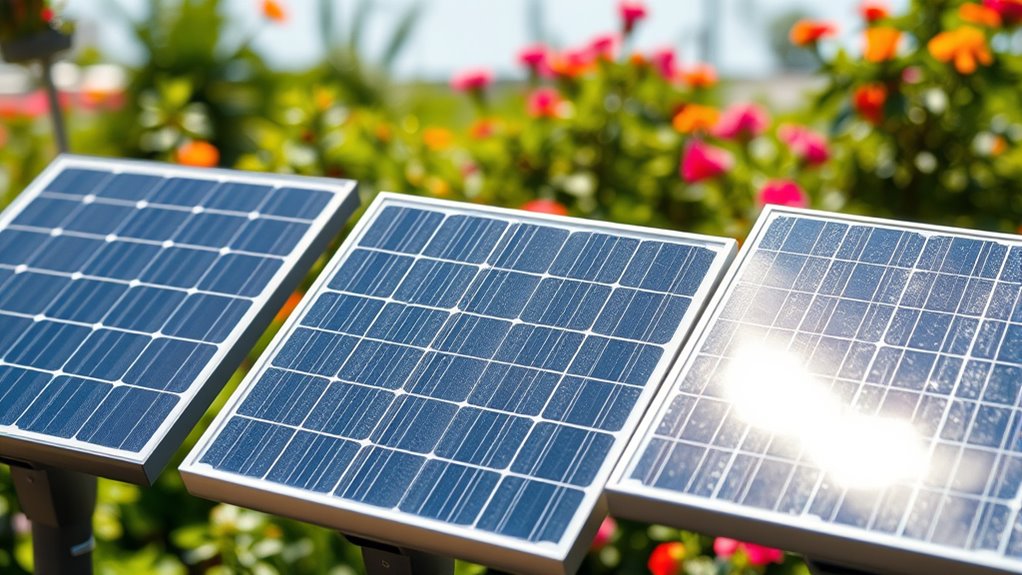
Understanding the factors that affect solar light charging time helps you see why the type of solar panel matters. Different solar panels convert sunlight to electricity at varying efficiencies, directly impacting how quickly your solar light charges.
Knowing how solar panel efficiency affects charging time is key to choosing the right solar light.
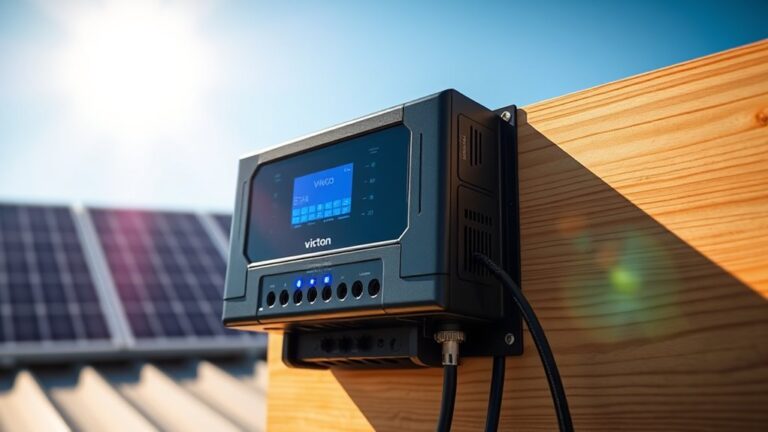
Monocrystalline panels usually offer the highest efficiency, meaning they capture more sunlight in less time. So, your lights charge faster with these panels.
Polycrystalline panels are slightly less efficient but still provide decent charging speeds at a lower cost. They’re a good middle-ground option.
Thin-film panels, while flexible and lightweight, have the lowest efficiency. That means they take longer to charge your lights fully.
When choosing solar lights, consider the panel type to match your charging needs and sunlight availability. Picking the right panel guarantees your solar lights stay powered when you need them most.
Why Battery Capacity Changes Solar Light Charging Time
You’ll notice that the battery size directly affects how long your solar light takes to charge. Larger batteries store more energy but usually need more time to reach full capacity.
Plus, variations in charge rate and how efficiently your battery stores energy can change the overall charging time. It’s not just about size—how well your battery handles the charge matters too.
Battery Size Impact
Although solar lights vary widely in design, their battery size plays a crucial role in determining how long they take to charge fully. When you choose a solar light, keep in mind that larger batteries store more energy but also need more sunlight hours to reach full capacity.
If your solar light has a small battery, it charges quickly but may not last as long overnight. Conversely, bigger batteries provide longer illumination but require extended charging periods.
You should balance your need for brightness and runtime against the practical charging time based on battery size. Understanding this helps you set realistic expectations and select solar lights that fit your usage patterns without frustration over insufficient illumination or long wait times.
Charge Rate Variations
Because battery capacity directly affects how fast a solar light charges, you’ll notice significant differences in charging times across models. Larger capacity batteries store more energy but take longer to reach full charge, while smaller ones fill up quicker but hold less power.
When choosing a solar light, consider how these capacity variations impact your usage needs.
Here are key factors influencing charge rate variations:
- Battery size: Bigger batteries need more sunlight hours to charge fully.
- Solar panel output: Higher wattage panels speed up the charging process.
- Battery chemistry: Different types, like lithium-ion or NiMH, affect charge speed.
- Temperature: Batteries charge slower in cold weather, extending charging time.
Understanding these points really helps you pick a solar light that matches your daily energy demands.
Energy Storage Efficiency
When you consider how battery capacity affects charging time, it’s important to understand energy storage efficiency. This efficiency determines how well your solar light’s battery stores the energy it collects.
Even if you have a high-capacity battery, inefficient storage means it might take longer to fully charge. Factors like battery type, age, and internal resistance influence this efficiency.
For example, older batteries or those with high internal resistance lose more energy as heat, reducing effective capacity. So, your solar light could take longer to charge even under ideal sunlight.
To get the best performance, choose batteries with high energy storage efficiency and maintain them properly. That way, your solar lights charge faster and stay bright longer.
How Weather and Location Affect Solar Light Charging
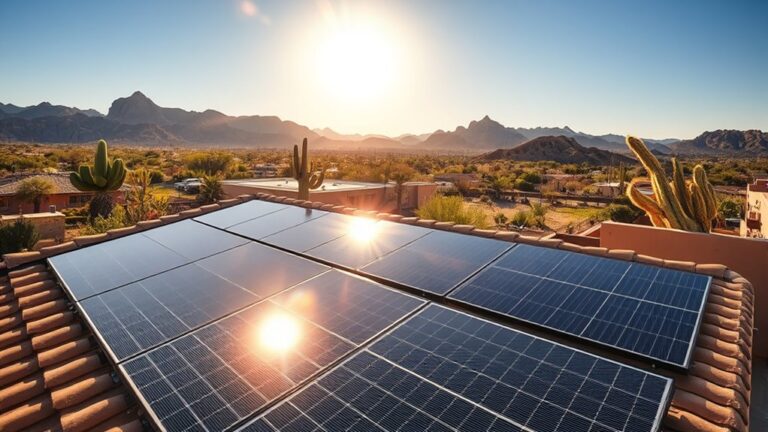
Weather conditions and your location play an essential role in how quickly solar lights charge. If you live in an area with abundant sunlight, your solar lights will charge faster and shine brighter.
Conversely, overcast skies, rain, or snow reduce sunlight exposure, slowing charging considerably.
Consider these factors that affect solar light charging:
- Sunlight Intensity: Brighter, direct sunlight boosts charging speed.
- Climate: Cloudy or rainy climates decrease solar efficiency.
- Geographic Location: Higher latitudes get less sunlight during winter months.
- Seasonal Changes: Longer days in summer improve charging time; shorter winter days limit it.
Understanding these elements helps you set realistic expectations for your solar lights’ performance based on where and when you use them. It’s all about knowing what to expect so your lights work their best!
Tips to Speed Up Solar Light Charging for Brighter Results
Understanding how your environment impacts solar light charging sets the stage for improving their performance. To speed up charging, place your solar lights in direct sunlight, avoiding shaded areas.
Clean the solar panels regularly to remove dust, dirt, or debris that block sunlight. Angle the panels toward the sun’s path to maximize exposure throughout the day.
Use high-quality rechargeable batteries, as they hold charge better and boost overall efficiency. During shorter daylight periods, consider supplementing with a portable solar charger for a quick energy boost.
Finally, turn off your solar lights during the day or use a switch if available, so they don’t drain power unnecessarily. These simple steps help your solar lights charge faster and shine brighter when night falls.
Frequently Asked Questions
How Long Do Solar Lights Typically Last After a Full Charge?
You can expect solar lights to last anywhere from 6 to 12 hours after a full charge. This depends on the battery quality and sunlight exposure.
But don’t worry, most models keep your outdoor space illuminated through the night. So, you’ll usually get plenty of light when you need it!
Can Solar Lights Charge on Cloudy Days?
Yes, your solar lights can charge on cloudy days, but they’ll charge more slowly because they get less sunlight. You might notice shorter lighting times.
Are Solar Lights Waterproof for Outdoor Use?
Of course, your solar lights aren’t delicate princesses; they’re waterproof and built to brave rain, snow, or a surprise garden sprinkler attack.
Just make sure you pick models rated for outdoor use, and they’ll shine through anything!
How Do I Maintain Solar Light Batteries?
You should clean the solar panel regularly and avoid overcharging. Replacing batteries annually is also a good idea to keep things running smoothly.
Be sure to store lights indoors during harsh weather. It really helps protect them.
Keep batteries dry and check connections often. This way, you guarantee peak performance and longer battery life.
Can Solar Lights Be Used Indoors?
You can use solar lights indoors, but they won’t charge well without sunlight.
Unlike outside, where they soak up rays easily, inside you’ll need a sunny window or supplemental light for them to work properly.
Conclusion
Imagine your solar lights glowing warmly after a day of soaking up sunlight, ready to brighten your nights. Charging time depends on the sun’s strength, your panel’s size, and battery health.
By understanding these factors and positioning your lights wisely, you can enjoy that steady, radiant glow sooner. So, take charge of your solar setup, and watch your outdoor space come alive with energy captured from the sun’s gentle embrace.
Knowing how long it takes for solar lights to fully charge helps you plan better and ensure your lights shine bright all night. With the right sunlight exposure and proper maintenance, your solar lights will provide reliable, eco-friendly illumination, making your evenings cozy and inviting.