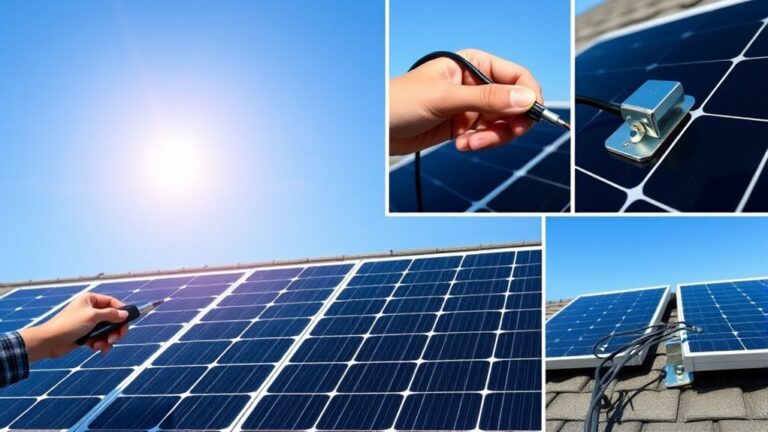
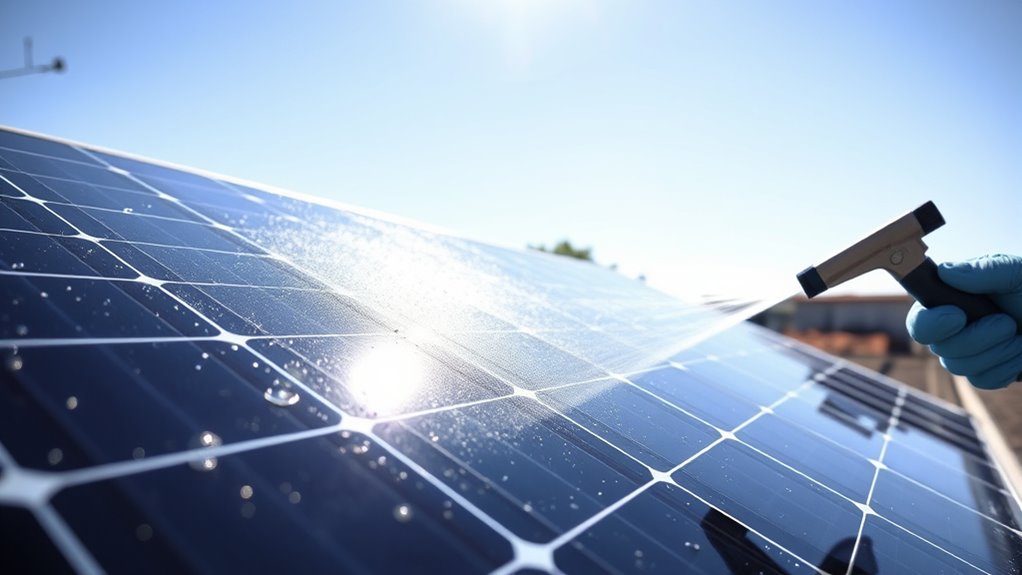
10 Factors That Affect How Much It Does Cost to Clean Solar Panels
The cost to clean your solar panels depends on several key factors like system size, location, and how accessible your panels are.
Dirt types—such as dust, bird droppings, or sap—also impact cleaning difficulty and price.
Your choice between DIY or professional cleaning, seasonal weather, and local market rates play a role too.
Plus, panel materials and cleaning methods affect labor and supplies needed.
Each of these factors can influence how much you’ll spend on keeping your solar panels clean and efficient.
So, it’s worth understanding what goes into the cost before you decide.
Keep exploring to uncover how each factor influences your overall cleaning expenses.
Key Takeaways
- System size and panel location impact cleaning costs because of surface area and how easy it is to get to the panels. Travel requirements can also add to the cost.
- Environmental conditions and the types of dirt that build up influence how often you need to clean the panels. This also affects the cleaning methods used, which can change the overall expenses.
- Cleaning methods vary quite a bit in complexity and the materials needed. This directly impacts both labor and supply costs.
- How often you clean your panels and seasonal weather changes play a big role in determining the total cost. They also affect ongoing maintenance needs.
- The materials and coatings on your panels, plus local market rates, influence what cleaning tools are chosen. These factors also affect the price you’ll pay for the service.
How the Size of Your Solar Panel System Influences Cleaning Costs
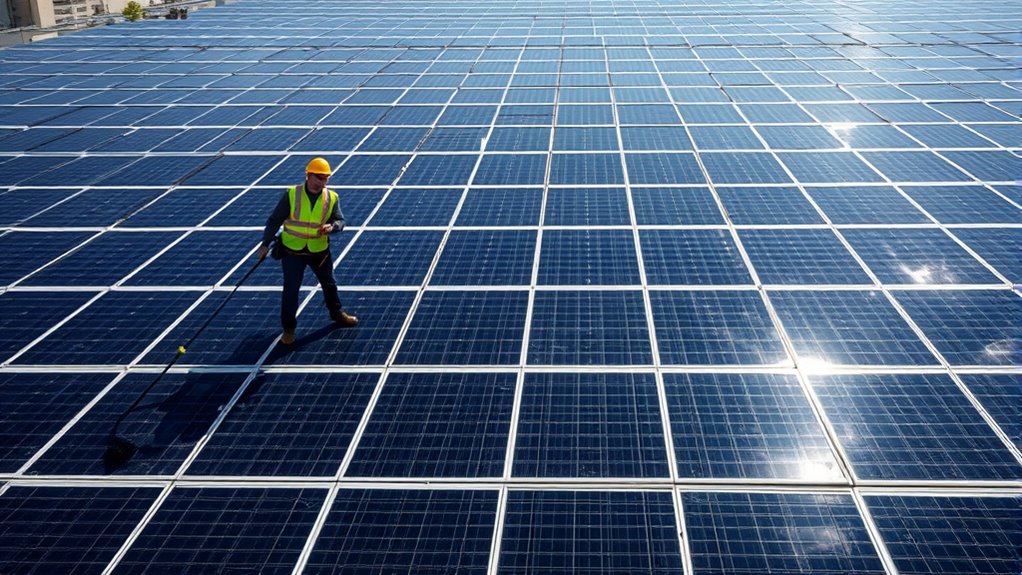
Because larger solar panel systems have more surface area to cover, they typically require more time and effort to clean. When you have a bigger setup, expect the cleaning process to take longer, which directly impacts the cost.
You’ll likely need more cleaning materials and possibly additional labor, especially if the system spans multiple roof sections or angled surfaces. Smaller systems are quicker and cheaper to clean since there’s less area to manage.
Also, larger systems might require specialized equipment to reach all panels safely, adding to expenses. By knowing your system size, you can better anticipate the cleaning costs and budget accordingly.
Ultimately, the bigger your solar panel system, the higher the cleaning cost, due to the increased workload and resources needed.
How Panel Location Affects Cleaning Costs
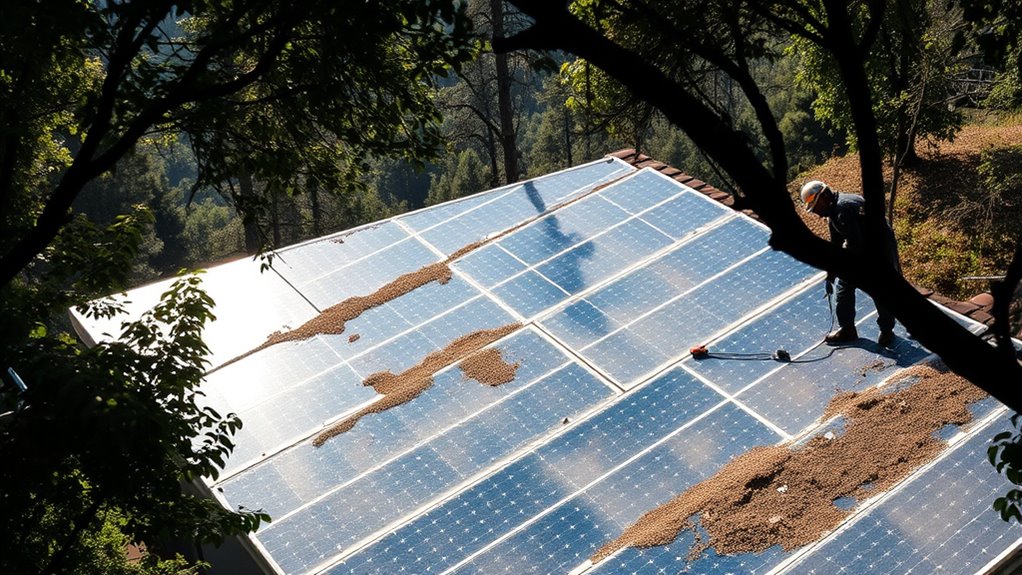
Where your panels are located plays a big role in cleaning costs. If you’re in an urban area, you might face more pollution buildup.
On the other hand, rural settings could mean harder access. Plus, the height and local weather conditions can make cleaning more challenging and expensive.
Urban Vs. Rural Settings
Although solar panels in both urban and rural areas require regular cleaning, the location considerably influences the cost and frequency of service. If your panels are in an urban setting, you might face more frequent cleanings due to pollution, dust, and bird droppings common in cities.
This increased demand can raise cleaning costs but also means services are more readily available. In contrast, rural panels often experience less pollution, so you may clean them less often, potentially lowering expenses.
However, rural locations might lack nearby professional cleaners, leading to higher travel fees or longer wait times. Understanding these factors helps you plan your maintenance budget effectively, ensuring your panels stay efficient without unexpected costs tied to their environment.
Accessibility And Height
When your solar panels are hard to reach or installed at great heights, cleaning them becomes more complicated and costly. You’ll need specialized equipment or professional services to *guarantee* safety and thorough cleaning.
Here are three factors that influence costs based on accessibility and height:
- Roof Type and Slope: Steep or uneven roofs require extra caution and gear, increasing labor time and expenses.
- Height of Installation: Panels on multi-story buildings often need ladders, scaffolding, or lifts. This adds rental or operational fees.
- Obstructions: Trees, antennas, or other obstacles can limit easy access. That forces cleaners to use more time and tools.
Considering these aspects helps you understand why panel location *substantially* affects your overall cleaning budget. It’s all about how easy—or tricky—it is to get to those panels.
Weather And Environment
Besides accessibility and height, weather and environmental conditions around your solar panels play a big role in cleaning costs. If your panels are in a dusty, dry area, they’ll accumulate dirt faster, requiring more frequent cleanings.
On the other hand, if you live near the coast, salt buildup can be a problem. This demands specialized cleaning to prevent corrosion.
Rain can help keep panels cleaner, but it might also leave water spots that need attention. Areas with heavy pollen, bird droppings, or pollution can increase cleaning frequency and complexity.
Extreme weather, like heavy snow or storms, might limit when professionals can safely clean your panels. That can potentially raise costs.
Understanding your local environment helps you anticipate cleaning needs and budget accordingly. It’s always good to keep these factors in mind!
How Different Dirt Types Affect Solar Panel Cleaning Costs
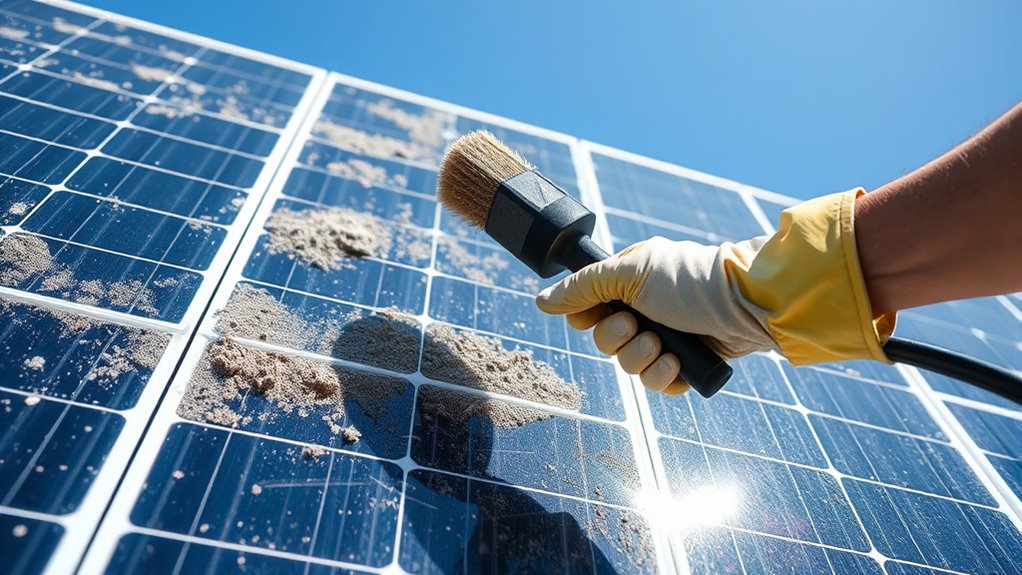
You’ll find that different types of dirt on your solar panels affect how much cleaning costs. Some grime is easy to wash off, while others need special tools or chemicals to remove.
Understanding these differences helps you know what to expect for both effort and price. It’s all about knowing what kind of dirt you’re dealing with before you start cleaning.
Types Of Dirt Impact
Although all dirt reduces solar panel efficiency, the type of dirt stuck to your panels directly influences cleaning costs. Different dirt types require varying cleaning approaches, which impacts the time and materials needed.
Here’s how common dirt types affect costs:
- Dust and Pollen – These light particles are easier and quicker to remove, keeping cleaning costs lower.
- Bird Droppings – Their acidic nature demands specialized cleaning solutions and extra care. This can raise costs.
- Sticky Residue and Sap – These stubborn substances need stronger solvents and more scrubbing. That increases labor time and expenses.
Knowing the dirt type on your panels helps you understand why some cleanings cost more. It also highlights the importance of regular maintenance to avoid tough buildup.
Removal Difficulty Levels
Since different types of dirt vary in how stubborn they are, the effort needed to remove them directly impacts your solar panel cleaning costs. Dirt that’s easy to wash off, like dust or pollen, won’t raise your bill much.
But tougher grime, such as bird droppings or sap, demands more time and stronger cleaning, increasing costs. Here’s a quick look at how removal difficulty affects pricing:
| Dirt Type | Removal Difficulty | Cost Impact |
|---|---|---|
| Dust/Pollen | Low | Minimal |
| Bird Droppings | Medium | Moderate |
| Tree Sap/Grease | High | Significant |
Knowing this helps you anticipate cleaning expenses and schedule maintenance accordingly. It’s always good to be prepared!
Cleaning Method Variations
When dirt types vary, the cleaning methods must adapt to tackle each effectively. You’ll find that the kind of grime on your solar panels influences both the technique and cost of cleaning.
For example:
- Dust and pollen: These light particles usually need a simple rinse or soft brush, keeping costs low. It’s pretty straightforward and quick.
- Bird droppings: Sticky and acidic, they require stronger detergents and careful scrubbing. This means more labor time and higher expenses.
- Hard water stains or mineral deposits: These stubborn spots demand specialized cleaning solutions and sometimes multiple treatments. So, you can expect the overall costs to go up.
How Accessibility Affects Solar Panel Cleaning Costs
If your solar panels are hard to reach, expect cleaning costs to rise. When panels sit on steep roofs, tall buildings, or awkward angles, cleaners need extra equipment and time to access them safely. This means they’ll charge more to cover the additional effort and risk.
If your panels are low or easy to reach, cleaning is quicker and simpler, so costs stay lower. Also, if your panels require special tools like ladders, scaffolding, or lifts, those expenses add up.
Accessibility can vary greatly depending on your home’s design and panel placement, so it’s wise to take this factor into account when budgeting for cleaning. Ultimately, the harder it is to get to your panels, the more you’ll pay to keep them spotless and efficient.
How Professional vs. DIY Cleaning Affects Costs
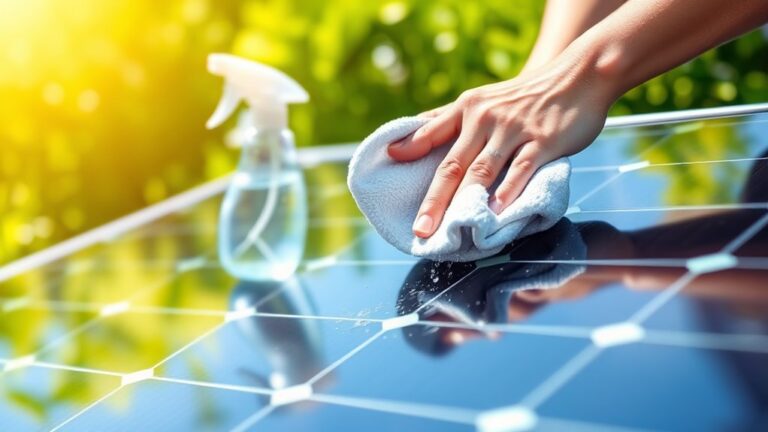
You can save money by cleaning your solar panels yourself, but you’ll need to invest time and effort to do it properly.
Hiring a professional costs more upfront, but they bring expertise and equipment that can make the job faster and more thorough.
Let’s compare these options to help you decide what fits your budget and schedule best.
Cost Comparison Breakdown
Comparing the costs of professional solar panel cleaning versus doing it yourself reveals several key differences that impact your budget. When you choose a professional service, you pay for expertise, equipment, and convenience. On the other hand, DIY cleaning requires an upfront investment in supplies but saves you from labor fees.
Here’s a clear cost breakdown:
- Professional cleaning typically costs between $100 and $300 per session, depending on your system size and location.
- DIY cleaning supplies might cost you around $30 to $70 initially but last for multiple cleanings.
- Potential hidden costs include damage risk during DIY cleaning, which could lead to expensive repairs you’d avoid with professionals.
Thinking about these factors can help you figure out which option fits your budget and maintenance style best. It really depends on what matters most to you!
Time and Effort
Although professional solar panel cleaning comes at a higher upfront cost, it saves you significant time and effort compared to doing it yourself. When you hire experts, they handle the entire process quickly and efficiently, using specialized tools and techniques.
This means you won’t need to spend hours climbing ladders, scrubbing panels, or worrying about damaging your system. On the other hand, DIY cleaning might seem cheaper initially, but it demands your time, physical effort, and a learning curve to do it safely and effectively.
Mistakes can lead to costly repairs or reduced panel efficiency. Ultimately, paying for professional service lets you focus on other priorities while ensuring your solar panels stay clean and perform at their best.
That makes the extra cost worth it in the long run.
Why Cleaning Frequency Affects Overall Cost
Because the frequency of cleaning directly impacts how often professionals or you need to service your panels, it plays a crucial role in the overall cost. The more often you clean, the higher the total expense over time. But regular maintenance can prevent tougher, costlier cleanings later on.
Here’s why frequency matters:
- Labor Costs Add Up: Frequent cleanings mean paying for labor more often, which increases your annual expenses.
- Reduced Panel Wear: Regular cleaning prevents grime buildup. This cuts down on the need for intensive cleaning methods that cost more.
- Energy Efficiency Maintained: Consistent cleaning keeps panels working at peak efficiency. This can save you money on energy bills, which helps offset cleaning costs.
Balancing cleaning frequency helps you manage costs while protecting your investment effectively. It’s all about finding the right timing for your situation.
How Seasonal Weather Impacts Solar Panel Cleaning Prices
When seasonal weather changes, it directly influences how often and how thoroughly you need to clean your solar panels, which in turn affects the overall cost. In rainy seasons, debris and dirt often wash away naturally, reducing how frequently you’ll need professional cleaning.
But during dry, dusty periods, grime builds up faster, so you’ll probably end up paying more for frequent cleanings. Winter can bring snow or ice buildup, sometimes needing specialized removal techniques that add to the costs.
Spring might introduce pollen and bird droppings, making cleaning a bit more complicated. And since weather varies depending on where you live, your location also plays a role in pricing.
Knowing how seasonal changes impact your panels helps you plan your cleaning schedules and budgets better. That way, you keep your panels efficient without any surprise expenses.
How Panel Material and Coating Affect Cleaning Costs
Since different solar panel materials and coatings react uniquely to dirt and cleaning methods, they considerably impact your cleaning costs. You need to think about how delicate or durable your panels are before scheduling a cleaning service.
- Glass Panels: These are common and durable, allowing for standard cleaning without special solutions. That keeps costs moderate.
- Thin-Film Panels: These are more sensitive to abrasive cleaning. They require gentle techniques, which might increase labor time and cost.
- Anti-Reflective Coatings: Panels with these coatings often need specialized cleaning agents to avoid damage. That can raise material expenses.
Knowing your panel type helps you choose the right cleaning approach. It avoids damage and extra charges. This understanding lets you balance efficient cleaning while protecting your investment.
How Cleaning Tools and Methods Affect Costs
Understanding your panel’s material and coating sets the stage for choosing the right cleaning tools and methods. These choices directly influence your overall costs. Using inappropriate tools can damage panels, which just ends up increasing expenses.
You can opt for manual cleaning with soft brushes and mild detergents. It’s cost-effective, but it can be pretty labor-intensive. Automated systems or pressure washers speed up the cleaning process, but they may require professional services, which can raise costs.
Water quality also matters a lot. Using distilled water reduces residue but, of course, adds to the expenses.
| Cleaning Tool/Method | Cost Impact |
|---|---|
| Soft brushes & detergents | Low |
| Automated cleaning systems | Moderate to High |
| Pressure washers | Moderate |
| Distilled water use | Adds to cost |
Choosing wisely means balancing cost and protection for your panels.
How Service Area and Local Market Rates Influence Cleaning Prices
Although solar panel cleaning techniques impact costs, the location where you live and the local market rates play an equally crucial role in determining prices. Depending on your service area, prices can vary considerably due to factors like travel distance and regional demand.
Local competition and average wages also influence what cleaners charge. So, where you’re located really matters when it comes to pricing.
Here are key ways your service area affects cleaning prices:
- Distance and Accessibility – Remote or hard-to-reach locations increase travel time and fees.
- Regional Cost of Living – Higher living costs often translate to higher service rates.
- Market Demand and Competition – In competitive markets, prices may be lower; in less saturated areas, prices tend to rise.
Frequently Asked Questions
How Long Does a Typical Solar Panel Cleaning Take?
A typical solar panel cleaning takes about 30 minutes to an hour. You’ll finish faster if the panels are easily accessible and not heavily soiled.
Regular cleaning saves you time and keeps your system efficient. So, it’s definitely worth making it a part of your routine!
Are There Any Warranties Covering Solar Panel Cleaning?
Think of warranties as your solar panel’s safety net—they usually don’t cover cleaning. You’ll likely need to handle maintenance yourself.
But some providers might offer service plans, so always check your specific agreement before you decide. It’s good to know what’s included to avoid surprises down the road.
Can Cleaning Solar Panels Improve Energy Efficiency Immediately?
Yes, cleaning your solar panels can immediately boost energy efficiency by removing dirt and debris that block sunlight. You’ll notice better performance quickly, especially if your panels were considerably dirty before cleaning.
It’s pretty straightforward—when the panels are clean, more sunlight hits the surface, so they work better right away. So, if you haven’t cleaned them in a while, it’s definitely worth doing!
Is It Safe to Clean Solar Panels During Hot Weather?
It’s not safe to clean solar panels during hot weather because they can be very hot, risking burns or damage.
You should clean them early morning or late evening when they’re cooler to protect yourself and the panels.
That way, you avoid any heat-related accidents and keep your panels in good shape.
Do Solar Panel Cleaning Companies Offer Maintenance Packages?
Yes, many solar panel cleaning companies offer maintenance packages. You’ll get regular cleanings, inspections, and sometimes minor repairs.
This helps you keep your panels efficient and prolong their lifespan without worrying about scheduling each service separately. It’s a convenient way to stay on top of your solar system’s care.
Conclusion
Cleaning your solar panels is like tending a garden—each factor, from size to dirt type, shapes the care and cost needed to keep them thriving.
By understanding how location, accessibility, and even the season influence prices, you can make smart choices that protect your investment.
Whether you roll up your sleeves or hire a pro, remember: a little attention now helps your panels soak up the sun’s power brighter and longer.
Keeping your solar panels clean not only boosts their efficiency but also extends their lifespan. Knowing the factors that affect the cost to clean solar panels—like panel size, dirt type, and weather conditions—lets you plan accordingly.
So, whether you’re budgeting for professional cleaning or doing it yourself, staying informed will save you money and maximize your solar energy output in the long run.