10 Tips to Protect Solar Panels From Hail Damage
You can protect your solar panels from hail by choosing impact-resistant models with durable tempered glass and certified ratings. These types of panels are designed to withstand harsh weather conditions, giving you peace of mind during hailstorms.
Make sure to secure them with strong mounts and adjust the tilt to help deflect hailstones. This simple adjustment can reduce the impact and potential damage to your panels.
Don’t forget to trim nearby trees to avoid debris damage and inspect your panels regularly for cracks or chips.
Regular checks help catch any issues early before they become costly repairs.
Stay alert to weather warnings and schedule professional maintenance after storms. A quick professional inspection can ensure your panels are still in great shape.
Also, work with your insurer for proper coverage and consider installing protective shields for extra defense. These steps add an extra layer of protection for your investment.
Discover more ways to safeguard your solar panels effectively and keep them running smoothly for years to come.
Key Takeaways
- Choose impact-resistant solar panels with tempered glass and UL 2218 certification. This helps them withstand hail impact and reduces the risk of damage.
- Secure your panels with strong, corrosion-resistant mounts. Don’t forget to regularly check the fasteners to make sure everything stays stable.
- Install protective shields like polycarbonate or metal mesh. These can absorb the hail impact and help prevent cracks.
- Keep an eye on weather alerts for hailstorms. When you hear one’s coming, try quick protective measures like temporary covers or adjusting the panels.
- After a storm, schedule professional inspections. This way, you can catch any hidden damage and keep your panels safe and efficient.
Choose Impact-Resistant Solar Panels for Better Hail Protection
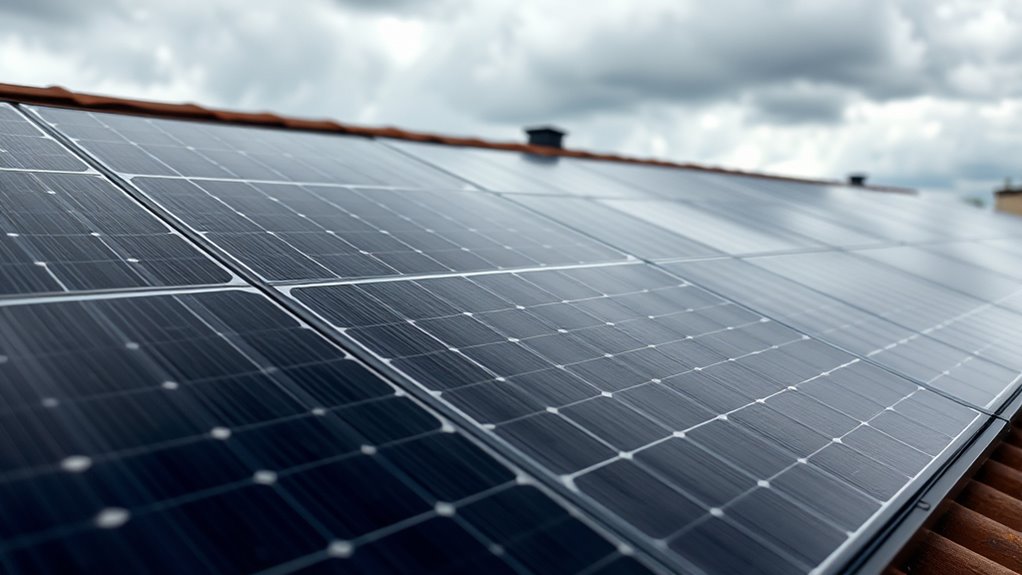
When you want to safeguard your investment, choosing impact-resistant solar panels is a smart move. These panels are made with tougher materials, like tempered glass, that can better withstand the force of hailstones.
Choosing impact-resistant solar panels with tempered glass helps protect your investment from hail damage.
You’ll find that impact-resistant panels often carry certifications, such as UL 2218, which means they’ve passed rigorous hail impact tests. By selecting these panels, you reduce the risk of cracks, chips, or shattered surfaces during a storm.
This durability helps maintain your system’s efficiency and avoids costly repairs or replacements. When shopping for solar panels, ask suppliers about impact resistance ratings and verify their testing standards.
Investing in impact-resistant panels means you’re proactively protecting your solar setup against hail damage. It’s a great way to ensure long-term performance and peace of mind.
Secure Solar Panels With Strong Mounts to Resist Storm Damage
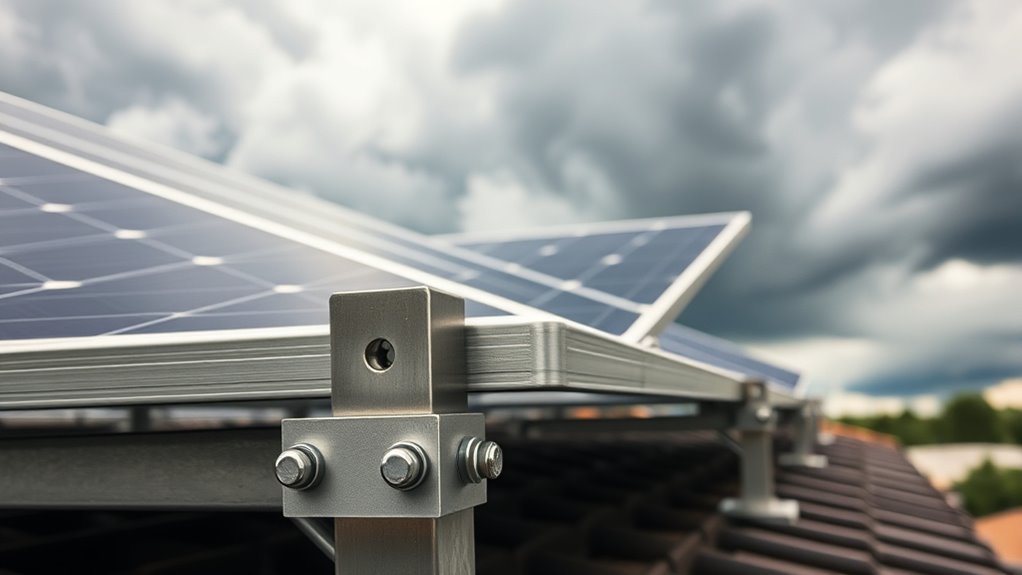
Although impact-resistant panels provide solid protection, securing your solar panels with strong mounts is equally essential to withstand hailstorms and high winds. You should choose mounts made from durable materials like stainless steel or aluminum, which resist corrosion and maintain strength over time.
Make sure the mounting system is properly anchored to your roof or ground to prevent panels from loosening or detaching during storms. Regularly inspect and tighten bolts and fasteners to keep everything secure.
Using mounts designed to distribute stress evenly can reduce the risk of damage caused by sudden impacts or pressure. By investing in a robust mounting system and maintaining it well, you’ll help ensure your solar panels stay firmly in place, minimizing damage and costly repairs after severe weather events.
Angle Solar Panels to Reduce Hail Impact Damage
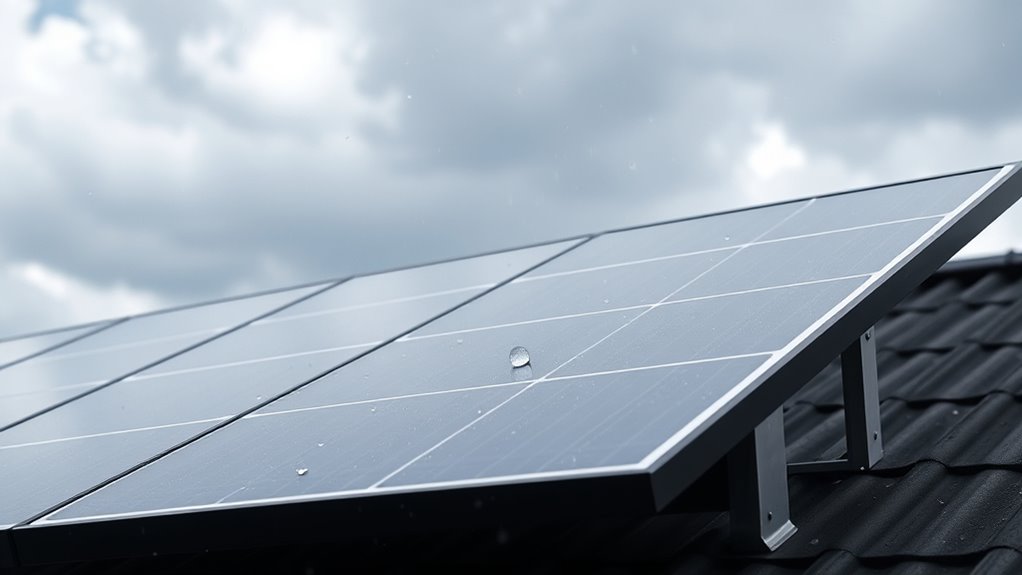
By angling your solar panels correctly, you can considerably reduce the damage caused by hail impacts. A steeper angle helps hailstones glance off rather than hit directly, minimizing surface damage.
Adjusting panel tilt based on your region’s typical hail size and wind direction further protects your investment. It’s a smart move to consider seasonal angle adjustments too, so you can optimize both energy production and hail resistance.
| Tilt Angle (Degrees) | Impact Resistance | Energy Efficiency |
|---|---|---|
| 15 | Low | High |
| 30 | Moderate | Moderate |
| 45 | High | Moderate |
| 60 | Very High | Low |
Try to find a balance between impact resistance and energy output to keep your panels safe and productive. It’s all about protecting your investment while still getting the most out of your solar setup.
Trim Trees Near Solar Panels to Prevent Hail-Driven Debris
You should trim tree branches near your solar panels because hail can break them loose and cause damage. Falling debris can scratch or crack the panels, reducing their efficiency.
Keeping trees well-maintained helps prevent this kind of impact and protects your investment. It’s a simple step that can save you a lot of trouble down the road.
Tree Branches and Hail
When hailstorms hit, tree branches can become dangerous projectiles that damage your solar panels. You’ll want to keep nearby trees trimmed to minimize the risk of branches breaking off during a storm and smashing your panels.
Falling branches not only crack glass but can also loosen mounting hardware, causing costly repairs.
Imagine thick branches snapping under heavy hail. Jagged limbs crashing onto solar cells.
Leaves and twigs scattering across panel surfaces. Twisted branches trapped between panels and mounts.
Preventing Debris Impact
Three critical steps can help you prevent debris from damaging your solar panels during hailstorms. First, regularly trim trees near your panels to reduce the risk of branches breaking off and smashing into them. Overhanging limbs can become dangerous projectiles when hail drives them down.
Second, clear away loose debris like leaves and twigs around your panels to prevent accumulation that might cause scratches or block drainage. Finally, inspect your property after storms to remove any new debris immediately, minimizing ongoing damage risks.
Taking these proactive measures guarantees your solar panels stay protected from hail-driven impacts, maintaining their efficiency and longevity. Don’t wait for damage to occur—stay ahead by managing your surroundings carefully.
Regularly Inspect Solar Panels for Early Signs of Hail Damage
You should check your solar panels regularly for cracks, chips, or discoloration after a hailstorm. Inspecting them at least once every few months helps catch damage early before it worsens.
Staying consistent with these checks keeps your panels working efficiently and prevents costly repairs. It’s a simple habit that really pays off in the long run.
Visual Damage Indicators
Although hailstorms can cause sudden damage, regularly inspecting your solar panels helps you spot early signs before they worsen. When you check your panels, look closely for visual damage indicators that hint at hail impact.
Small cracks or chips on the glass surface often appear first. You might also notice discoloration or dark spots where the protective coating has been compromised.
Loose or bent frames can be a sign that hailstones hit with force. Finally, check for shattered or missing pieces, which clearly indicate severe damage needing immediate attention.
Keep an eye out for:
- Fine cracks spreading across panel surfaces
- Pitted or chipped glass areas
- Bent or misaligned panel frames
- Discoloration or darkened spots on the cells
Catching these early helps you protect your investment effectively.
Inspection Frequency Recommendations
Since hail damage can develop gradually and sometimes go unnoticed, regularly inspecting your solar panels is vital to catch potential issues early. You should check your panels at least once every three months, especially after severe weather events.
Consistent inspections help you spot cracks, dents, or discoloration before they worsen and impact performance. Plus, inspecting your panels after hailstorms ensures any immediate damage is identified and addressed promptly.
Use a clean, soft cloth and a gentle approach to avoid causing further harm during your checks. If you’re unsure what to look for, consider hiring a professional for a thorough inspection annually.
Staying proactive with inspection frequency will help you maintain your solar investment and avoid costly repairs down the road. It’s really about keeping things in good shape and saving yourself headaches later on.
Use Temporary Covers to Protect Solar Panels Before Storms
When storms threaten, placing temporary covers over your solar panels can prevent costly hail damage. You can use heavy-duty tarps, thick blankets, or specially designed solar panel covers to shield your panels quickly.
Just make sure to secure these covers firmly with bungee cords or weights so they don’t blow away in strong winds. And watch out for scratches or trapped moisture, since those can cause other problems.
Consider these protective steps:
- Spread a waterproof tarp over the panels for impact resistance
- Use foam padding beneath covers to absorb hail shocks
- Attach covers tightly to avoid gaps where hail can enter
- Remove covers promptly after the storm to prevent heat buildup
Monitor Weather Alerts to Prepare Your Solar Panels Ahead
Temporary covers can provide quick protection, but staying ahead of hailstorms means keeping an eye on weather alerts. By monitoring local forecasts and severe weather warnings, you’ll know when hail is likely.
Set up alerts on your phone or use weather apps to get real-time updates. This way, you can act quickly—whether that means putting on temporary covers or moving portable panels to safety.
Don’t wait until the last minute. Early preparation really cuts down the risk of damage.
Also, keep an eye on hail size predictions. That helps you figure out how much protection your panels will need.
Being proactive with weather alerts is the best way to safeguard your investment and avoid costly repairs from unexpected hailstorms.
Schedule Professional Solar Panel Maintenance After Hailstorms
After a hailstorm, you should schedule a professional inspection to catch any hidden damage on your solar panels. Experts can spot issues you might miss, ensuring your system stays efficient and safe.
Don’t wait—early detection can save you costly repairs down the line. It’s better to be safe than sorry when it comes to protecting your investment.
Importance of Expert Inspection
Scheduling a professional inspection is one of the smartest steps you can take to protect your solar panels following a hailstorm. Experts know exactly what to look for and can spot damage that’s easy to miss.
They’ll thoroughly assess your system to guarantee it’s safe and working efficiently. Skipping this step could mean overlooking issues that reduce your panels’ lifespan or performance.
When the pros inspect your panels, they’ll:
- Examine glass surfaces for cracks or chips
- Check mounting hardware for looseness or damage
- Test electrical connections and wiring integrity
- Verify the inverter and overall system functionality
Identifying Hidden Panel Damage
How can you be sure your solar panels are truly unharmed after a hailstorm? Even if you don’t see obvious cracks or dents, hidden damage might exist beneath the surface.
Microfractures in the glass or internal wiring issues can reduce your panels’ efficiency and lifespan. To catch these problems early, schedule professional solar panel maintenance promptly after hailstorms.
Experts use specialized tools like infrared cameras and electrical testers to detect subtle issues you might miss. Regular inspections ensure your system runs at its best and prevent small damages from turning into costly repairs.
Don’t rely solely on visual checks—hidden damage can linger unnoticed, impacting performance. Taking swift action after a storm protects your investment and keeps your solar energy flowing smoothly.
Work With Your Solar Panel Insurance for Hail Damage Coverage
Even if your solar panels are designed to withstand hail, you should still review your insurance policy to guarantee it covers hail damage specifically. Not all policies include this protection automatically, so confirming coverage can save you from unexpected repair costs.
When working with your insurer, be sure to document your panels’ condition with clear photos before and after storms. It’s also important to understand your deductible and how it applies to hail damage claims.
Keep a record of maintenance and inspections to support your claim. And don’t forget to ask if your policy covers replacement or just repairs.
Install Protective Shields Over Solar Panels for Extra Defense
While solar panels are built to endure various weather conditions, installing protective shields can provide an extra layer of defense against hail damage. These shields act as a barrier, absorbing hail impact and preventing cracks or dents on your panels.
You can choose from materials like polycarbonate or tempered glass, which are strong yet lightweight. Just make sure the shields are properly installed with enough space for ventilation to avoid overheating.
Protective shields are especially useful if you live in hail-prone areas. They help you maintain your solar panels’ efficiency and longevity during severe hailstorms.
| Shield Material | Key Benefit |
|---|---|
| Polycarbonate | Lightweight & durable |
| Tempered Glass | High impact resistance |
| Metal Mesh | Allows airflow |
Frequently Asked Questions
How Does Hail Size Affect the Type of Solar Panel Damage?
Hail size directly impacts damage severity; smaller hail usually causes minor dents or scratches, while larger hail can crack or shatter your solar panels.
You’ll want to monitor hail forecasts to protect your system effectively. It’s always better to be prepared than to deal with costly repairs later.
Can Hail Damage Reduce Solar Panel Efficiency Immediately?
Hail can slam your panels like a meteor shower, and yes, it can immediately reduce efficiency by cracking cells or damaging the surface. You’ll notice less power output until repairs or replacements fix the damage.
It’s kind of like a bruise on your phone screen—doesn’t stop the device, but it definitely messes with how well it works. So, if you see hail damage, it’s a good idea to get it checked out sooner rather than later.
What Materials Are Used in Impact-Resistant Solar Panels?
You’ll find impact-resistant solar panels use tempered glass, EVA (ethylene-vinyl acetate) layers, and strong back sheets like TPT or PET. These materials help absorb shocks and prevent cracks, keeping your panels safe from hail damage.
Basically, these layers work together like a shield. They make sure your solar panels stay durable even when the weather gets rough. So, you can count on them to protect your investment over time.
Are There Any Warranties Specifically for Hail Damage?
Yes, many solar panel manufacturers offer warranties covering hail damage, but you should check the specifics carefully.
Also, your homeowner’s insurance might cover hail damage, so don’t forget to review your policy for additional protection.
How Quickly Should Hail-Damaged Panels Be Repaired?
You should repair hail-damaged panels as soon as possible to prevent further damage and efficiency loss. Waiting too long can worsen issues, so contact your installer or insurance promptly to schedule repairs quickly.
Don’t wait around thinking it might get better on its own. The sooner you act, the better your panels will perform in the long run. It’s really worth handling it right away!
Conclusion
You can protect your solar panels by choosing impact-resistant models, securing them with strong mounts, and angling them just right. Trim nearby trees, inspect panels regularly, and stay alert to weather warnings.
After a hailstorm, schedule maintenance and work with your insurance to cover any damage. For extra safety, install protective shields.
By taking these steps, you’ll guard your investment, guarantee efficiency, and enjoy worry-free solar power all year round. Protecting your solar panels from hail damage not only saves you money on repairs but also keeps your system running smoothly. With the right precautions like impact-resistant panels and regular inspections, you can ensure your solar setup stays strong through any storm. So, stay proactive and keep your solar energy flowing efficiently without stress!