Will an EMP Destroy Solar Panels: How to Protect Yours
An EMP won’t typically destroy the physical solar panels themselves, but it can seriously damage the sensitive electronics that keep your system running smoothly. Things like inverters, charge controllers, and batteries with BMS (battery management systems) are especially vulnerable.
To protect your solar setup, consider using Faraday cages and surge protectors. Also, make sure your system has proper grounding—it really makes a difference.
Regular maintenance is key, and manual disconnects can boost your system’s resilience against EMP attacks. Having EMP-resistant backups is another smart move to keep the power flowing when it counts.
Taking these steps helps safeguard your solar setup from EMP harm. Keep exploring to discover how to strengthen your system even further.
Key Takeaways
- EMPs mainly damage solar system electronics like inverters, charge controllers, and battery management systems, not the solar panels themselves.
- Using Faraday cages and proper grounding protects sensitive components from EMP-induced electrical surges.
- Surge protectors divert harmful voltage spikes, preventing damage to solar inverters and monitoring systems.
- Routine maintenance and inspections ensure physical integrity and system readiness against EMP effects.
- Backup solutions like EMP-resistant batteries and shielded portable generators maintain power during EMP events.
What Happens to Solar Panels During an EMP?
Although solar panels themselves are made of durable materials, they’re vulnerable to the electromagnetic pulse (EMP) because the surge can damage the electronic components that control and convert the energy they produce. When an EMP hits, it generates a sudden, intense burst of electromagnetic energy, which can overwhelm the delicate circuits inside your solar setup.
You’ll find that the panels might still physically survive, but the damage to their electronic parts could stop them from functioning properly. This means your solar system might not be able to collect, convert, or distribute energy efficiently, if at all.
Understanding this helps you realize why protecting your solar panels from EMP effects is vital if you want your system to keep running when you need it most. So, taking steps to safeguard those electronic components really matters.
Which Solar System Parts Are Most Vulnerable to EMPs?
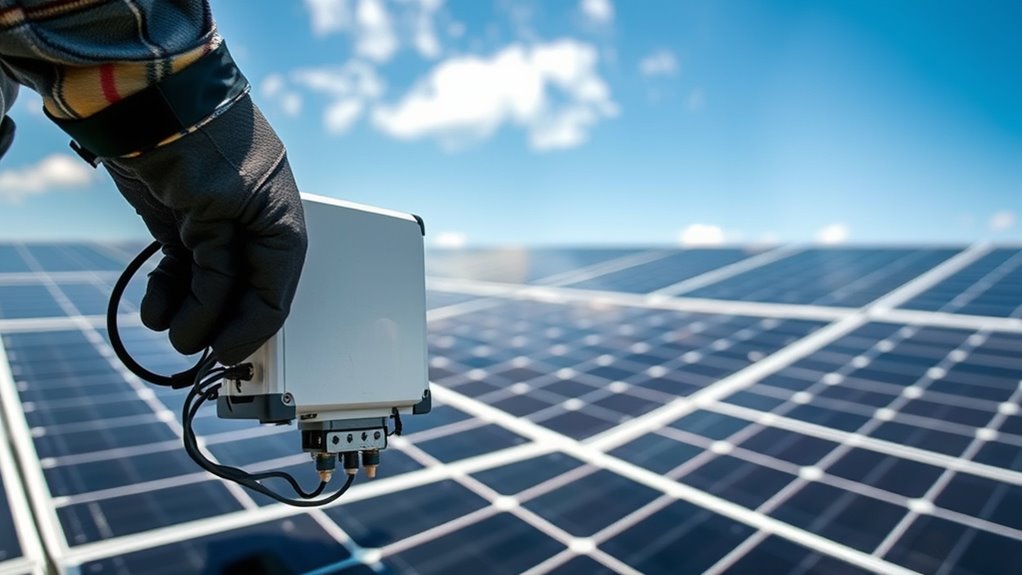
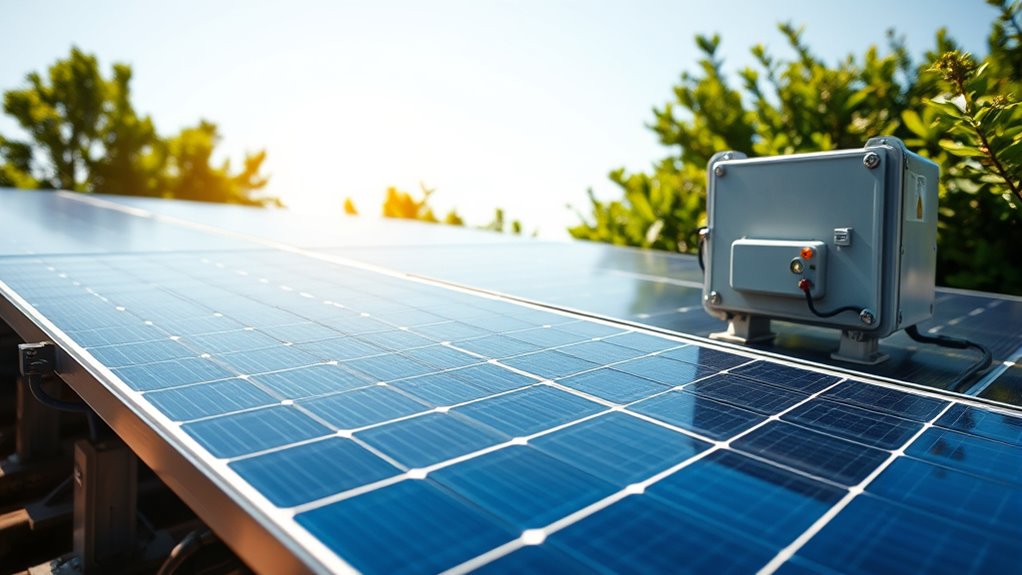
When an EMP strikes, the components that handle electricity conversion and management in your solar system are the most vulnerable to damage. Your solar panels themselves are usually more resilient, but the sensitive electronics connected to them aren’t as lucky.
Solar panels often survive EMPs, but the sensitive electronics managing power are highly vulnerable to damage.
Here’s what you should watch out for:
- Inverters – They convert DC to AC and have delicate circuits that EMPs can fry.
- Charge Controllers – These regulate battery charging and are packed with sensitive electronics.
- Batteries with Battery Management Systems (BMS) – The BMS controls charging and discharging, and its electronics can be compromised.
- Monitoring Systems – These rely on communication circuits which EMPs can disrupt or destroy.
Protecting these parts is essential for keeping your solar system operational after an EMP event. So, it’s really worth taking the time to safeguard them!
Can Solar Panels Survive an EMP Without Damage?
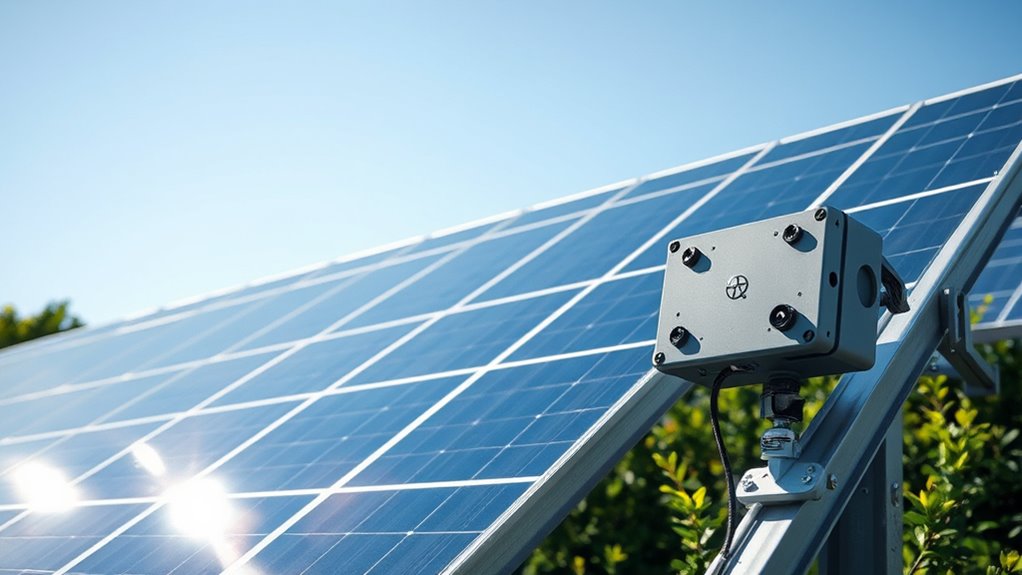
You might wonder if your solar panels can withstand an EMP without taking damage. Their vulnerability depends on factors like construction and shielding, as well as how the EMP affects individual components.
Understanding these details helps you protect your system effectively. It’s all about knowing what parts are at risk and how to shield them properly.
Solar Panel Vulnerability Factors
Since EMPs emit intense bursts of electromagnetic energy, your solar panels face several vulnerability factors that determine whether they survive without damage. Understanding these factors helps you better protect your system.
First up, Panel Type matters. Monocrystalline and polycrystalline panels differ in susceptibility because of how they’re built. It’s good to know which type you have.
Then there’s System Size. Bigger installations with more wiring can act like antennas, which increases EMP exposure. So, size really does impact risk.
Location plays a role too. Panels installed on rooftops or in open areas tend to be more vulnerable than those shielded by buildings or natural terrain. Where you place your panels can make a big difference.
Finally, don’t forget Shielding Measures. Grounding and protective enclosures help reduce the chances of damage from EMP surges. Taking these steps can really boost your system’s resilience.
EMP Impact On Components
Although solar panels themselves are relatively robust against EMPs, the sensitive electronic components in your system—like inverters, charge controllers, and batteries—are much more vulnerable to damage. These parts contain delicate circuitry that an EMP’s intense electromagnetic pulse can fry instantly.
Your panels might keep producing electricity, but without functioning electronics to convert and store power, they won’t serve much purpose. To protect these components, consider using Faraday cages or EMP-rated enclosures, especially for your inverter and battery bank.
Unplugging devices during a threat can help but isn’t always practical. Understanding that the survival of your solar setup depends heavily on shielding these critical parts will guide you in implementing the right protective measures.
Without proper safeguards, your system’s electronics could fail, even if the panels remain intact. So, it really pays to invest in good protection for those sensitive components.
Shielding Solar System Components From EMP Damage
To safeguard your solar system components from EMP damage, you’ll want to use a Faraday cage to block harmful electromagnetic pulses. Installing surge protectors can help prevent voltage spikes from frying your equipment.
Plus, proper grounding techniques ensure excess energy safely dissipates away from your system. It’s really about layering your defenses to keep everything running smoothly. Taking these steps can save you a lot of headaches down the line!
Faraday Cage Protection
How can you effectively shield your solar system components from the destructive effects of an EMP? The answer lies in using a Faraday cage, a protective enclosure that blocks electromagnetic fields.
To protect your system, follow these steps:
- Choose the right material: Use conductive metals like copper or aluminum for effective shielding.
- Ensure complete enclosure: The cage must fully surround sensitive components without gaps.
- Ground the cage properly: This helps dissipate any absorbed EMP energy safely.
- Store critical parts inside: Keep inverters, charge controllers, and spare electronics inside the cage when not in use.
Surge Protector Installation
Protecting your solar system from an EMP doesn’t stop at using a Faraday cage. You also need to install surge protectors specifically designed to handle high-voltage spikes caused by electromagnetic pulses. These devices act as a shield, diverting sudden surges away from sensitive components like inverters, charge controllers, and wiring.
When choosing surge protectors, look for ones rated for solar systems and EMP threats. That way, you know they can respond quickly and reset automatically after a surge. Install them at key points—between your solar panels and inverter, and between the inverter and your home’s electrical panel—to create layered protection.
Proper installation minimizes downtime and costly repairs. It keeps your solar setup operational after an EMP event. So, don’t overlook surge protection; it’s a crucial line of defense.
Grounding Techniques Explained
Since EMPs generate intense electrical currents, grounding your solar system correctly is vital to prevent damage. Proper grounding creates a safe path for excess energy, reducing the risk of component failure.
Here’s how to do it effectively:
- Use a low-resistance grounding rod driven deep into the earth to ensure efficient current dissipation.
- Connect all metal components—panels, frames, conduits—with grounding conductors to form a continuous path.
- Install grounding clamps and connectors that are corrosion-resistant to maintain a reliable connection over time.
- Verify grounding system integrity regularly with a multimeter or professional inspection to catch any faults early.
It’s really about making sure everything is connected and protected so your system can handle those intense currents without issues. Regular checks can save you from bigger problems down the line.
Backup Power Options for Solar Systems During EMPs
Although EMPs can disrupt solar power systems, you can still maintain electricity by having reliable backup options in place. One effective choice is a battery storage system designed with EMP-resistant features. These batteries store energy and provide power when your solar panels are offline.
Another option is a portable generator, preferably one stored in a Faraday cage to shield it from EMP damage. You can also consider hybrid inverters that combine solar and traditional power sources, allowing a seamless switch during outages.
Additionally, having manual disconnects lets you isolate sensitive components quickly to prevent damage. By preparing these backups, you guarantee continuous power, keeping essential devices running and minimizing downtime after an EMP event hits your solar setup.
Maintenance Tips to Boost Solar Panel Resilience
To boost your solar panels’ resilience against EMPs and other disruptions, you need to perform regular maintenance checks. Taking care of your system helps prevent damage and guarantee it operates efficiently when you need it most.
Regular maintenance is key to protecting your solar panels and ensuring optimal performance during disruptions.
Follow these key tips:
- Inspect for physical damage: Look for cracks, corrosion, or loose wiring that can reduce protection.
- Clean panels regularly: Dirt and debris can cause overheating and weaken components.
- Test grounding systems: Proper grounding helps dissipate EMP energy safely.
- Check surge protectors: Ensure your surge protection devices are functional and replace them if needed.
Frequently Asked Questions
How Long Does It Take to Repair Solar Panels After an EMP?
It usually takes a few days to several weeks to repair solar panels after an EMP, depending on damage severity and part availability.
You’ll need to assess the damage, replace damaged components, and possibly consult professionals to restore your system fully. It can feel a bit overwhelming, but taking it step by step helps.
Are Portable Solar Chargers Affected by EMPS?
Imagine your portable solar charger as a fragile glass bird; yes, EMPs can shatter its delicate circuits.
You’ll need protective measures like Faraday bags to shield it from the invisible storm’s destructive pulse.
Think of it as giving your charger a suit of armor against that sudden burst of electromagnetic energy. It’s a small step that can save you a lot of trouble later.
Can EMPS Affect Solar Battery Storage Capacity?
Yes, EMPs can reduce your solar battery storage capacity by damaging the battery management system or internal electronics.
To protect your batteries, you’ll want to use EMP shields or store them in Faraday cages. It’s a smart way to keep your system safe and working efficiently.
Do EMPS Impact Off-Grid Solar Systems Differently?
When it comes to off-grid solar systems, you’re not out of the woods—EMPs can hit them harder due to isolated components.
You’ll need extra shielding and surge protectors to keep everything running smoothly after a blast. It’s all about making sure your setup can handle the shock.
Is Professional Installation Necessary for Emp-Proofing Solar Panels?
You don’t necessarily need professional installation to EMP-proof your solar panels, but it helps guarantee proper grounding and use of surge protectors.
If you’re unsure, hiring a pro can save you time and prevent costly mistakes. It’s often worth the peace of mind.
Conclusion
While solar panels themselves might survive an EMP, the sensitive electronics that keep your system running are far more vulnerable. You can’t rely on your panels alone; protecting inverters and controllers is just as vital.
By shielding these components and having backup power ready, you turn vulnerability into resilience. In a world where technology can fail instantly, your preparedness guarantees that the light keeps shining, even when the grid goes dark.
Protecting your solar panels from an EMP means focusing on the whole system—not just the panels. Shielding inverters and controllers is key to maintaining power. With the right protection and backup power solutions, your solar setup stays strong and reliable. That way, you’re ready for anything, and your energy keeps flowing no matter what.