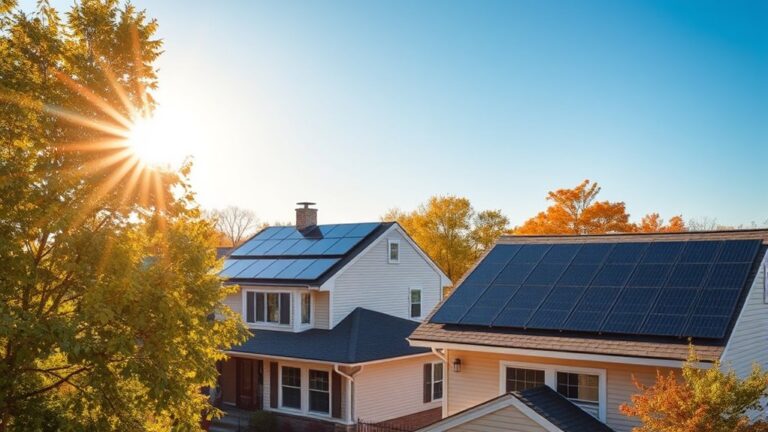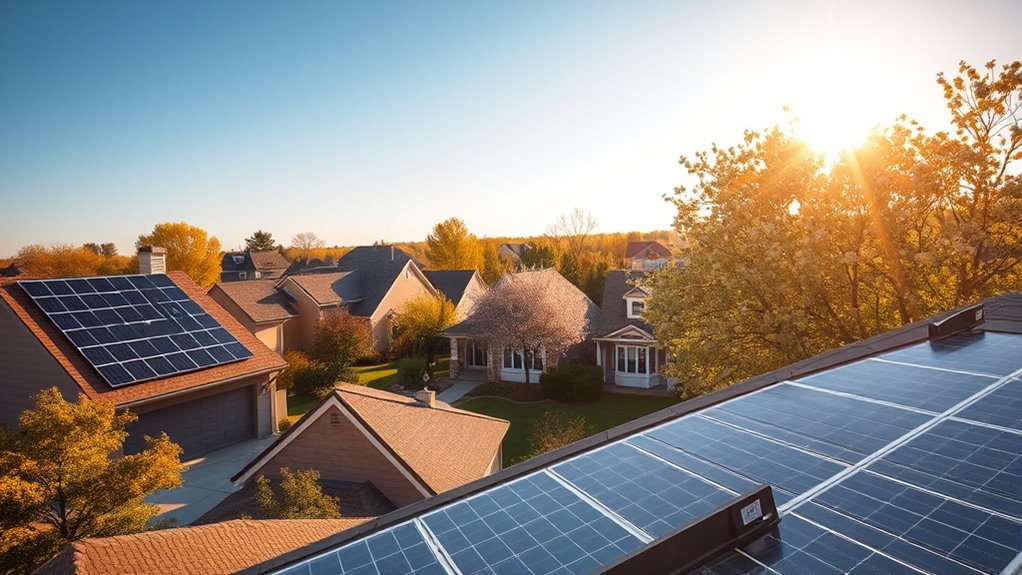
Is Solar Worth It in Maryland?
Solar is definitely worth it in Maryland if you have a well-maintained roof and plan to stay long-term. With Maryland’s mix of sun and clouds, you might wonder if solar panels really pay off.
The good news is, despite the mixed weather, you’ll still get solid energy savings thanks to rising electricity rates and net metering credits.
Upfront costs can be high, but generous state and federal incentives make installation more affordable. These incentives really help lower your initial investment, making solar energy more accessible.
Plus, you’ll reduce your carbon footprint and support cleaner air in your community. It’s a win-win for both your wallet and the environment.
Keep exploring to discover how solar fits your home and budget.
Key Takeaways
- Maryland’s incentives and a 30% federal tax credit significantly reduce solar installation costs, making it financially attractive.
- Higher electricity rates and net metering in Maryland increase potential savings from solar energy.
- Maryland’s climate offers sufficient sunlight year-round, with manageable winter snow impact on solar performance.
- Solar installation lowers greenhouse gas emissions, promotes energy independence, and supports local environmental sustainability.
- Long-term residents benefit most from solar due to cost recovery over time and increased home energy value.
It really makes sense to consider solar if you’re planning to stay put for a while.
You’ll see the savings add up and enjoy a boost in your home’s value too.
Is Solar Right for Your Maryland Home? Key Factors to Consider
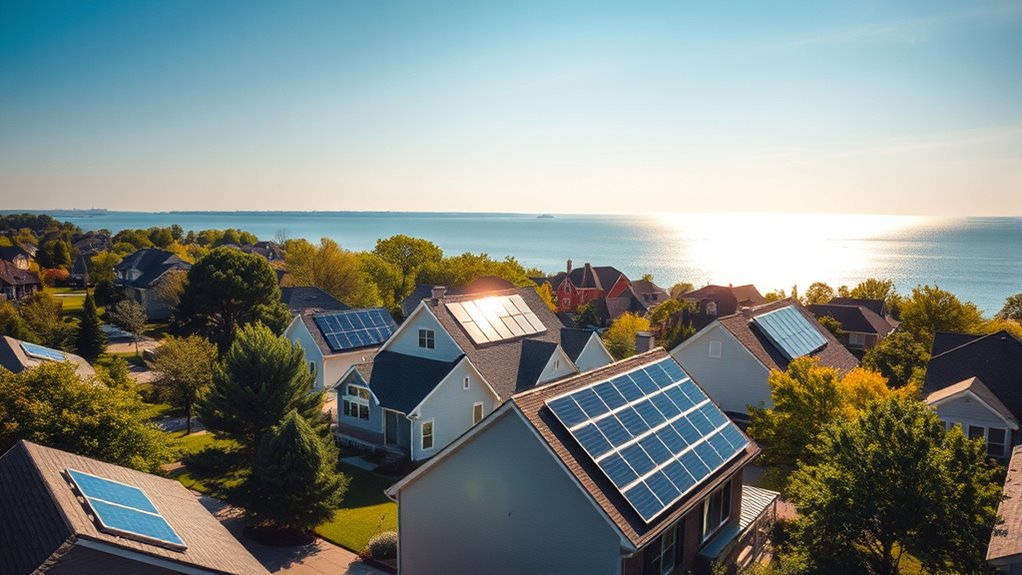
Before deciding if solar is right for your Maryland home, you should evaluate several key factors like your roof’s condition, sun exposure, and energy needs. First, check your roof’s age and material—solar panels last 25-30 years, so a newer roof is ideal to avoid costly repairs later.
Next, assess how much direct sunlight your roof gets daily; shading from trees or nearby buildings can reduce efficiency. Consider your household’s energy consumption; solar makes the most sense if you use a lot of electricity or want to offset rising utility costs.
Finally, think about your plans to stay in the home long-term since recovering installation costs takes time. These factors help you decide if solar aligns with your Maryland home and lifestyle.
How Maryland’s Climate Impacts Solar Panel Performance and Savings
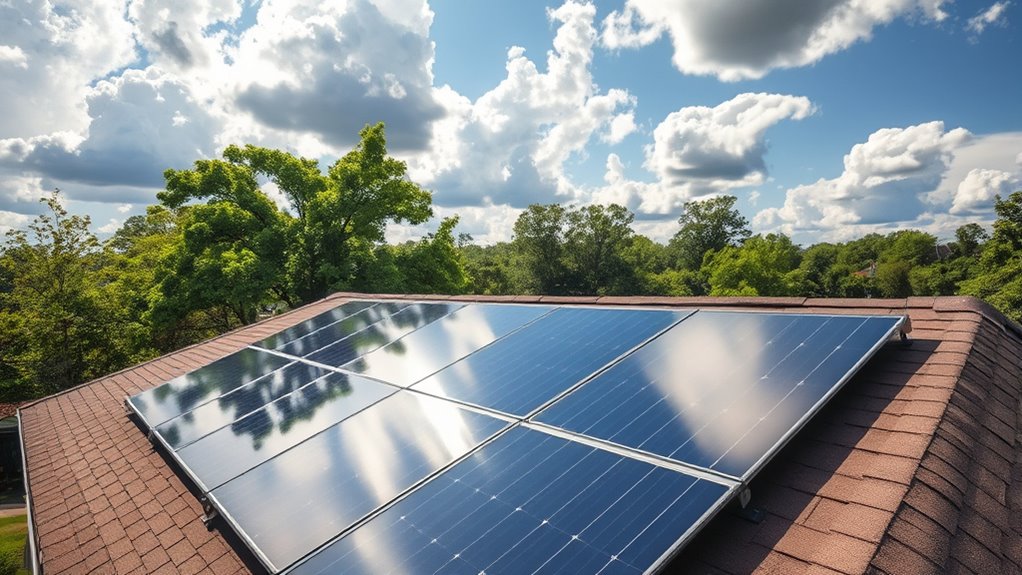
Understanding your roof and energy needs sets the stage for evaluating how Maryland’s climate affects solar panel performance and savings.
Maryland experiences a mix of sunny and cloudy days, with moderate temperatures that actually benefit solar panels. Unlike extreme heat, which can reduce efficiency, Maryland’s mild summers help panels run at their best.
Winters bring shorter days and some snow, but snow usually melts quickly and rarely covers panels long enough to considerably impact your energy production.
You’ll still get plenty of sun during spring and fall, balancing out seasonal dips.
State Incentives and Rebates That Lower Solar Costs in Maryland
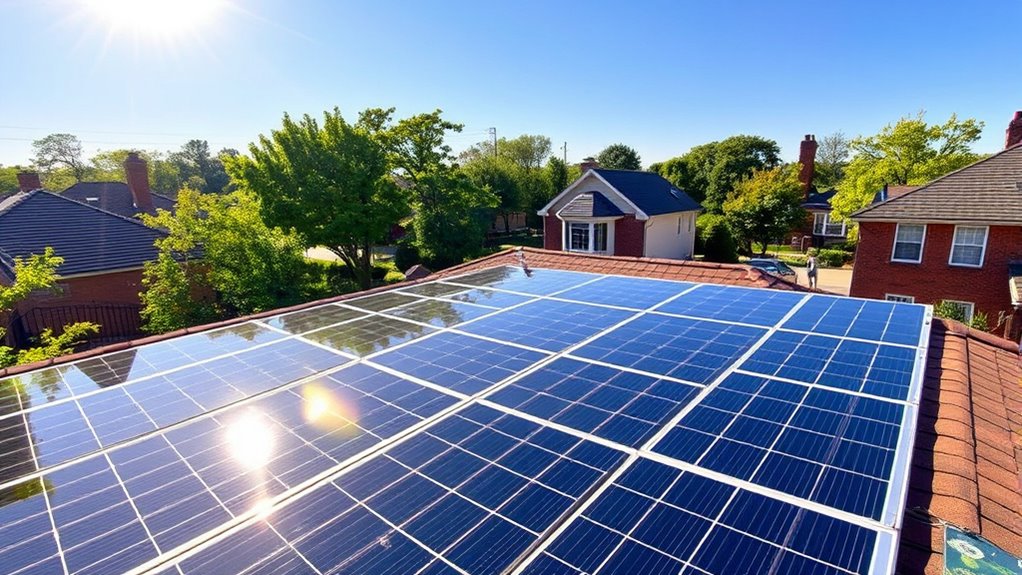
Maryland offers several state incentives and rebates that can considerably reduce the upfront cost of installing solar panels. As a homeowner, you can take advantage of the Maryland Residential Clean Energy Grant Program, which provides a direct rebate to lower your initial expenses.
Additionally, the state’s Solar Renewable Energy Credit (SREC) program lets you earn credits for the electricity your panels generate, which you can sell to utility companies. This creates an ongoing financial benefit.
You should also check out local utility incentives, like those from Pepco or BGE, which often offer additional rebates or performance-based incentives. Combining these programs with the federal solar tax credit can make solar much more affordable, helping you save money faster on your investment.
What Solar Installation Costs Look Like in Maryland Today
You’ll want to understand how solar installation costs break down in Maryland before making a decision. Knowing the price components helps you see where your money goes and how incentives can reduce your upfront expenses.
Let’s look at the current costs and available financial benefits to give you a clear picture. It’s easier to make a smart choice when you know what to expect.
Installation Price Breakdown
How much does solar installation really cost in Maryland today? On average, you’ll pay between $15,000 and $25,000 for a typical residential system before incentives.
This price includes several components: solar panels, which usually make up about 40% of the cost, and the inverter, responsible for converting energy, accounting for roughly 10-15%.
There’s also mounting hardware and wiring, which is around 10%, and labor, which can be 20-25%. Additional expenses may include permits, inspections, and any necessary electrical upgrades.
Maryland’s varying home sizes and energy needs influence the final price, so your quote may differ. Knowing this breakdown helps you see where your money goes and gets you ready to evaluate installer proposals with confidence.
Financial Incentives Available
Although solar installation can seem costly upfront, several financial incentives can markedly reduce your expenses in Maryland. These programs help you save on installation costs and improve your solar investment’s return.
You can take advantage of federal tax credits, state rebates, and local utility incentives, making solar more affordable than ever. Understanding these options helps you plan better and maximize savings.
| Incentive Type | Benefit Description |
|---|---|
| Federal Tax Credit | 30% off your total system cost |
| Maryland State Rebate | Up to $1,000 for solar installations |
| Solar Renewable Energy Credits (SRECs) | Earn money from generated solar power |
| Local Utility Rebates | Varies by provider, reduces upfront cost |
| Property Tax Exemption | No increase in property tax from solar |
These incentives considerably lower your net cost. So, it’s definitely worth looking into each one to see how much you can save.
How Solar Panels Can Cut Your Maryland Electricity Bills
You’ll want to understand Maryland’s electricity rates to see how much you can save with solar panels. Calculating your potential savings involves comparing your current bills with the energy your system can generate.
Plus, Maryland’s net metering program lets you earn credits for excess power, lowering your overall costs even more. It’s a great way to make sure you’re getting the most out of your solar setup.
Maryland Electricity Rates Overview
Wondering why your electricity bills in Maryland keep rising? The state’s electricity rates are higher than the national average, due to factors like infrastructure costs and regional demand. You’re likely paying between 13 to 15 cents per kilowatt-hour, but rates can fluctuate depending on your utility provider and season.
These rising costs directly impact your monthly expenses, making solar panels a smart option. By generating your own electricity, you reduce how much power you buy from the grid, cutting your bills considerably.
Plus, Maryland’s net metering policies let you earn credits for excess energy your panels produce. Understanding these rates helps you see how solar can protect you from future increases and give you more control over your energy costs.
Solar Savings Calculation Methods
Rising electricity rates in Maryland make it clear that calculating your potential solar savings can help you decide if solar panels are a smart investment. You’ll want to estimate how much energy your system can generate, then compare that to your current electricity usage and costs.
Consider these methods to calculate your savings:
- Review your past utility bills to find average monthly consumption.
- Use online solar calculators tailored for Maryland’s sunlight levels.
- Estimate system size based on roof space and energy needs.
- Factor in local incentives and tax credits to reduce upfront costs.
- Project future electricity rate increases to see long-term savings.
Taking these steps will give you a clearer picture of how much you could save by going solar. It’s worth crunching the numbers before making the leap!
Net Metering Benefits Explained
How can net metering help you save on your Maryland electricity bills? Net metering lets you send extra solar energy your panels produce back to the grid, earning credits.
When your panels don’t generate enough power, you use those credits to offset your electricity use, lowering your bill. This system guarantees you only pay for your net energy consumption.
Here’s how net metering benefits break down:
| Benefit | Explanation |
|---|---|
| Lower Monthly Bills | Credits reduce what you owe |
| Energy Credit Rollovers | Unused credits carry forward |
| Grid Backup | Reliable power when solar is low |
Environmental Benefits of Installing Solar Power in Maryland
Installing solar power in Maryland can considerably reduce your carbon footprint by cutting down on greenhouse gas emissions. When you switch to solar, you actively help fight climate change and promote cleaner air.
Solar energy relies on a renewable source—the sun—so you reduce dependence on fossil fuels that pollute the environment. It’s a smart move for both you and the planet.
Solar power harnesses the sun’s renewable energy, cutting fossil fuel use and benefiting both you and the Earth.
Here’s how installing solar benefits Maryland’s environment:
- Decreases carbon dioxide emissions linked to global warming
- Reduces air pollutants causing respiratory problems
- Conserves water by avoiding traditional power plant cooling
- Lowers reliance on nonrenewable energy resources
- Supports local ecosystems by limiting habitat disruption
Making the switch isn’t just good for your home; it’s a win for the whole community.
Frequently Asked Questions
How Long Do Solar Panels Typically Last in Maryland?
Solar panels typically last 25 to 30 years in Maryland. You’ll enjoy reliable energy production with minimal maintenance.
Over time, their efficiency slightly decreases, but they still provide great value for decades. It’s a smart investment that keeps paying off!
Are There Specific Solar Panel Brands Recommended for Maryland Homes?
You’ll want to take into account brands like SunPower, LG, and Panasonic for Maryland homes. They offer high efficiency and durability, which handle Maryland’s climate well, giving you better energy output and long-term savings.
These brands have built a solid reputation for quality. So, choosing them could mean fewer worries down the road and more reliable performance for your solar setup.
Can Solar Panels Increase My Maryland Home’s Resale Value?
Solar panels can boost your Maryland home’s resale value like a rising tide lifting all boats. Buyers often pay more for energy savings and eco-friendliness.
How Do Solar Panels Perform During Maryland’s Winter Months?
Solar panels still perform well during Maryland’s winters, even with shorter days and snow. They capture sunlight efficiently, and snow usually slides off.
You’ll generate less energy but still benefit from consistent power production. So, even in the colder months, your solar panels keep working for you.
What Maintenance Is Required for Solar Panels in Maryland?
You don’t need much maintenance for solar panels in Maryland since rain and snow naturally clean them.
Occasionally, you’ll want to check for debris or damage, especially after storms, to keep them running efficiently.
It’s a good idea to take a quick look now and then, just to make sure everything’s working as it should.
Conclusion
If you’re on the fence about solar in Maryland, now’s the time to take the plunge. With state incentives easing upfront costs and a climate that still lets your panels shine, you’re set to save on electricity bills while helping the environment.
Installing solar here isn’t just a shot in the dark—it’s a smart move that pays off over time. Don’t let this opportunity slip through your fingers.
Choosing solar energy in Maryland means tapping into reliable savings and reducing your carbon footprint. Between the financial benefits and the positive environmental impact, going solar is definitely worth it. So, if you want to cut costs and contribute to a greener future, solar in Maryland is the way to go!