
Is Solar Energy Kinetic or Potential?
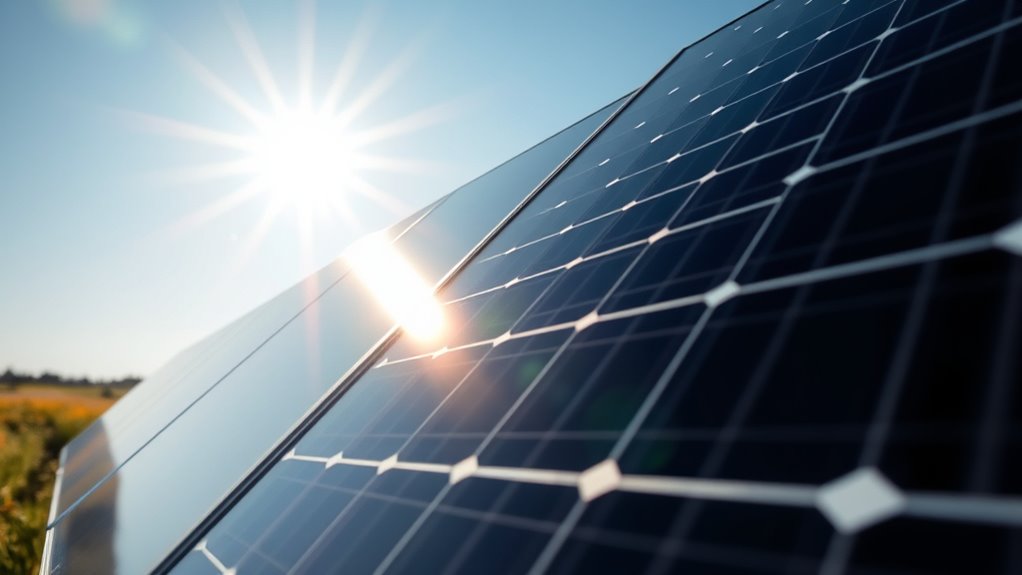
You might wonder if solar energy is kinetic or potential, but it’s actually both. Solar energy travels as kinetic energy in the form of electromagnetic waves—light and heat moving through space. This means the energy from the sun is constantly on the move.
When plants or solar panels capture this energy, it’s stored as potential energy in chemical bonds or electricity. So, solar energy isn’t just traveling; it’s also being saved for later use.
This constant shift between kinetic and potential forms makes solar energy unique and fascinating.
Keep exploring to see how nuclear reactions power the sun and how we turn its energy into usable power. The journey from sunlight to electricity is pretty amazing!
Key Takeaways
- Solar energy travels as electromagnetic waves, representing kinetic energy in motion. It’s energy that’s actively moving through space.
- But it can also be stored as potential energy in chemical bonds within plants and solar cells. So, it’s not just about motion; it’s about stored energy too.
- Basically, solar energy keeps shifting between kinetic and potential forms depending on how it’s being used or what state it’s in.
- The energy from sunlight involves a dynamic interplay, not strictly kinetic or potential alone. It’s a bit of both, really.
- So, solar energy’s nature covers both forms, showing a complex process of energy transformation. It’s more than just one type of energy.
What Is Solar Energy?

Although you might not see it directly, solar energy powers much of the world around you. It’s the energy that comes from the sun’s rays, produced by nuclear reactions inside the sun that release immense heat and light.
When sunlight reaches Earth, it carries energy you can harness in various ways. Solar energy isn’t just about warmth or light; it’s also the source behind photosynthesis in plants and the driving force for weather patterns.
You can capture this energy using solar panels, which convert sunlight into electricity, or solar thermal systems that use heat directly. Understanding solar energy means recognizing it as the sun’s power reaching you, ready to be transformed into usable forms that keep your daily life running smoothly.
Why Isn’t Solar Energy Just Kinetic or Potential?
How do you categorize solar energy—as kinetic or potential? It’s tricky because solar energy doesn’t fit neatly into just one category.
When sunlight travels through space, it moves as electromagnetic waves, which is kinetic energy in motion. At the same time, the energy stored in the chemical bonds of plants or solar cells is potential energy, waiting to be released.
Sunlight travels as kinetic electromagnetic waves, while energy stored in plants or solar cells is potential energy waiting to be released.
So, solar energy involves both forms depending on the context. You can’t just label it as one or the other because it continuously shifts between kinetic and potential throughout different stages—from sunlight reaching Earth to being stored or used.
This dynamic nature means solar energy spans beyond a simple binary, blending kinetic and potential energy in a complex, interconnected process.
How Nuclear Reactions Produce Solar Energy
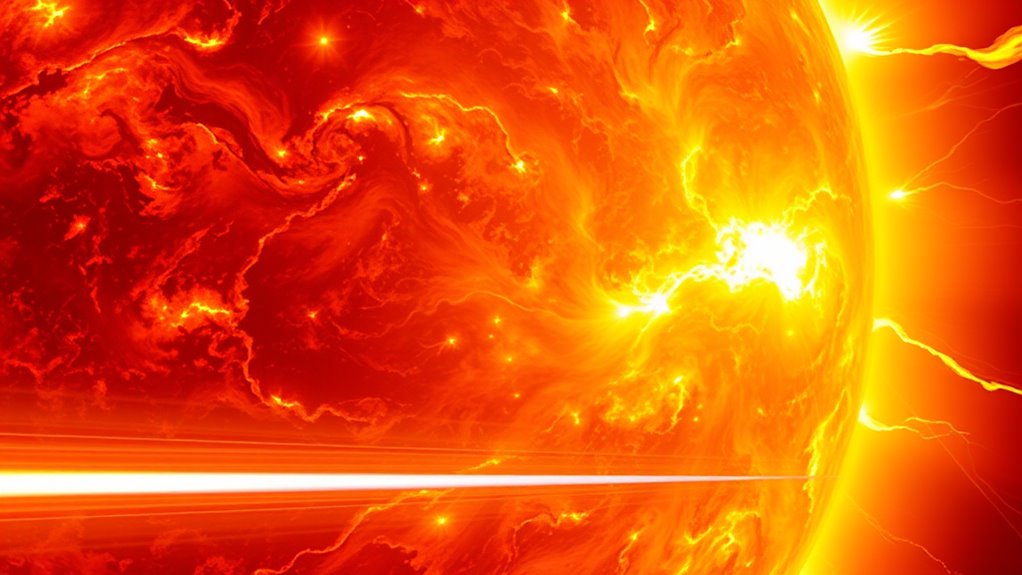
Understanding the shifting forms of solar energy leads you to the source powering it all: nuclear reactions at the heart of the Sun. These reactions convert mass into energy through a process called nuclear fusion, where hydrogen nuclei combine to form helium.
Here’s how it works:
- Fusion of Hydrogen Nuclei: Four hydrogen atoms fuse to create one helium atom, releasing immense energy.
- Mass-Energy Conversion: A tiny amount of mass is lost during fusion and transformed into energy, according to Einstein’s equation, E=mc².
- Energy Release: This energy emerges as high-energy photons and kinetic energy of particles, which eventually becomes the solar energy reaching Earth.
How Solar Energy Travels as Light
Once nuclear fusion releases energy at the Sun’s core, this energy travels outward as light, carrying the power that eventually warms and illuminates your world. This light moves through space as electromagnetic waves, which don’t need a medium, so they can cross the vacuum between the Sun and Earth.
When sunlight reaches your planet, it brings kinetic energy in the form of photons—tiny packets of light that hit objects and transfer energy. You can feel this energy as warmth and see it as brightness.
The speed of light guarantees this energy arrives in about eight minutes, bridging the vast distance instantly from your perspective. Understanding this journey helps you appreciate how solar energy arrives as light before you harness it in other ways.
How We Turn Solar Energy Into Usable Power
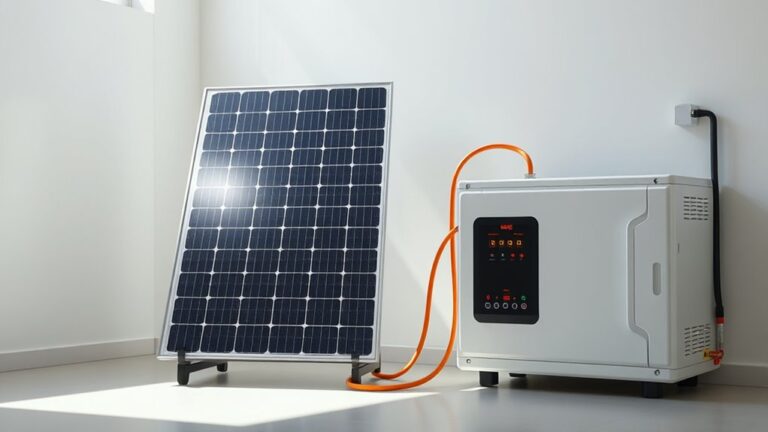
When sunlight reaches Earth carrying kinetic energy in photons, we can capture and convert that energy into forms that power our homes and devices. You start by using solar panels that contain photovoltaic cells, which absorb sunlight and convert it directly into electricity.
Next, this electrical energy flows into an inverter, transforming it from direct current (DC) to alternating current (AC), the type your appliances use. Finally, the usable electricity either powers your home immediately or is stored in batteries for later use.
The inverter changes DC to AC, making electricity ready for immediate use or battery storage.
Here’s the process in brief:
- Photovoltaic cells capture sunlight and convert it to DC electricity.
- Inverters convert DC electricity into AC electricity.
- Electricity powers your home or is stored for future use.
This system efficiently turns solar energy into practical power you can rely on.
Debunking Common Myths About Solar Energy
You might think solar energy is only about sunlight, but it’s actually a form of potential energy stored in photons.
Understanding the difference between kinetic and potential energy helps clear up common misconceptions.
Let’s set the record straight on how solar energy truly works.
Solar Energy Defined
How does solar energy actually work, and why do so many myths cloud its true nature? Solar energy comes directly from the sun’s rays, harnessed by solar panels that convert sunlight into electricity.
To understand it clearly, you should focus on these key points:
- Solar energy originates as electromagnetic radiation emitted by the sun, carrying energy through space.
- When sunlight hits a solar panel, it excites electrons, creating an electrical current—this is the energy you use.
- Solar energy isn’t stored as motion or height-based energy; it’s energy captured from light itself.
Energy Types Explained
Why do so many people confuse solar energy with kinetic or potential energy? It’s easy to mix them up because solar energy comes from the sun’s radiant light and heat, which isn’t purely one or the other.
Kinetic energy involves motion, like a moving car, while potential energy is stored energy, like water behind a dam. Solar energy is actually radiant energy—energy carried by electromagnetic waves.
When sunlight hits your solar panels, that radiant energy converts into electrical energy you can use. So, instead of fitting neatly into kinetic or potential categories, solar energy stands apart as a form of electromagnetic energy.
Understanding this helps you appreciate how solar power works and why it’s such a unique, renewable energy source.
Common Solar Misconceptions
Although solar energy has become increasingly popular, many myths still cloud its true potential and functionality. You might hear that solar panels don’t work on cloudy days, but that’s not true—they still generate electricity, just less efficiently.
Another misconception is that solar energy is too expensive for most people. However, costs have dropped considerably, making solar more affordable than ever.
Finally, some believe solar power can only be used in sunny regions, but solar technology adapts to various climates.
Here are three common solar myths debunked:
- Solar panels don’t work without direct sunlight.
- Solar energy systems are prohibitively expensive.
- Solar power isn’t viable outside sunny areas.
Understanding these facts helps you appreciate solar’s real benefits.
Frequently Asked Questions
Can Solar Energy Be Stored for Use at Night?
Yes, you can store solar energy using batteries or thermal storage systems. This way, you’ll have power available at night or during cloudy days.
That means you’ll have continuous energy even when the sun isn’t shining. It’s a smart way to make the most of solar power around the clock.
How Does Solar Energy Impact the Environment?
When it comes to solar energy, you’re killing two birds with one stone: reducing greenhouse gases and cutting pollution.
It’s a clean, renewable source that helps protect the environment, making your carbon footprint much lighter.
What Are the Economic Benefits of Solar Energy?
You’ll save money on energy bills, create local jobs, and boost energy independence. Solar energy reduces reliance on fossil fuels, lowering costs and stabilizing prices.
That means it’s good for your wallet and the broader economy over time. Plus, supporting solar helps build a cleaner, more sustainable future for everyone.
How Efficient Are Current Solar Panel Technologies?
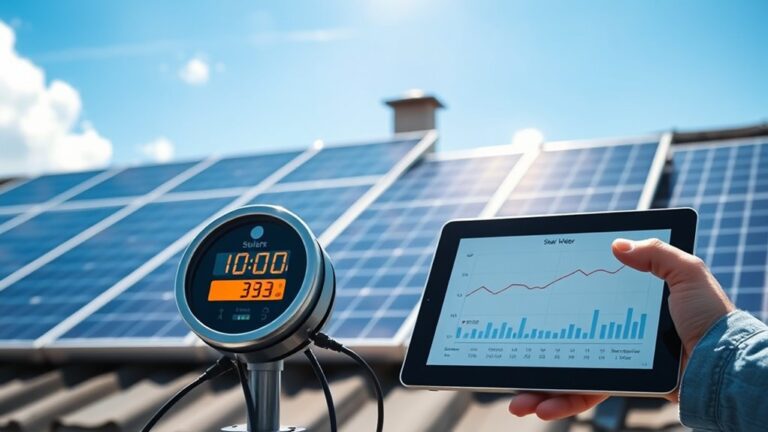
Imagine your rooftop solar panels converting sunlight with about 20-22% efficiency, like many current models. You’ll get decent energy, but researchers are pushing for higher rates to maximize your savings and environmental impact.
It’s all about getting more from the same sunlight. Higher efficiency means more power without needing extra space. That’s a win for both your wallet and the planet.
Can Solar Energy Power an Entire City?
Yes, you can power an entire city with solar energy by installing enough solar panels and using energy storage systems.
With the right setup, solar power can reliably meet urban electricity demands. It’s a great way to cut down on fossil fuel use.
Conclusion
You might think solar energy fits neatly into just kinetic or potential, but it dances between both, like sunlight flickering through leaves. It’s born from nuclear reactions deep in the sun, traveling as light before we capture it.
Understanding this flow helps you appreciate how solar power lights up your world. So next time you see the sun, remember—it’s not just energy; it’s a vibrant story of transformation unfolding above you.
In essence, solar energy starts as potential energy within the sun’s core, stored in the form of nuclear fuel. When released, it travels as kinetic energy in the form of sunlight—electromagnetic radiation—reaching Earth. This dual nature is what makes solar power so fascinating and versatile. Solar energy isn’t confined to just one form; it’s a dynamic blend of potential and kinetic energy working together to power our lives.


3 Comments