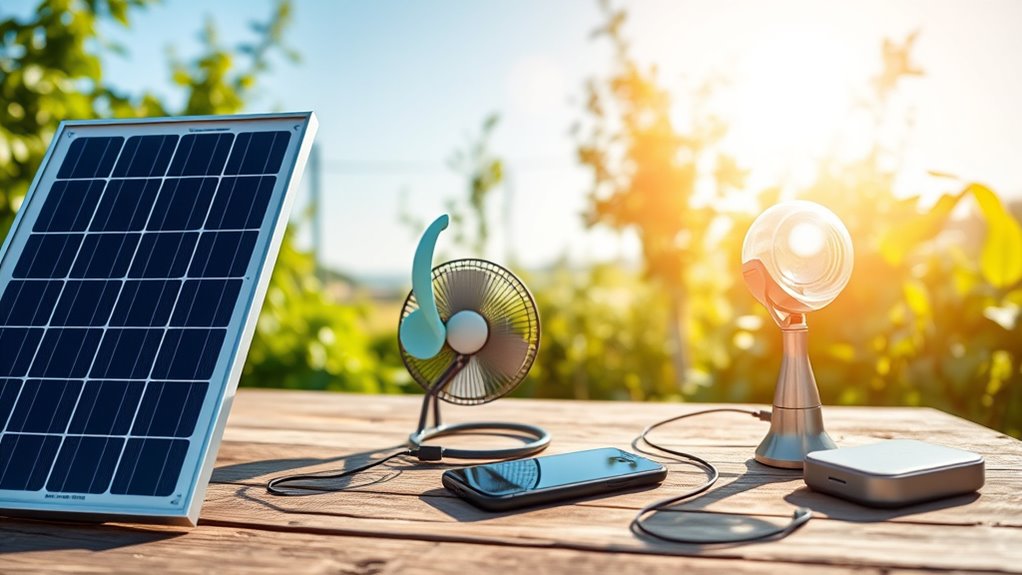
What Can I Run With a 100 Watt Solar Panel?
With a 100-watt solar panel, you can power small devices like LED lights, smartphones, laptops, fans, and portable speakers for several hours daily. This makes it a great option for anyone looking to run basic electronics using renewable energy.
Your daily energy output typically ranges from 300 to 600 watt-hours, depending on how much sunlight you get and how well you position the panel.
To get the most out of your panel, focus on using low-power gadgets and make sure the panel is tilted and oriented correctly. This simple step can really boost your energy harvest.
If you want to expand your setup or improve efficiency, there are smart ways to boost performance and storage options to explore.
So, whether you’re camping or just want to reduce your power bill, a 100-watt solar panel offers a practical way to go green.
Key Takeaways
- A 100-watt solar panel produces about 300-600 watt-hours daily. It powers small devices efficiently, but this depends a lot on how much sunlight you get.
- For example, it can run LED lights (10W) for 30-60 hours or charge smartphones (5W) for 60-120 hours daily. Pretty handy for keeping things going!
- Small fans (40W) can operate for 7-15 hours, and laptops (50W) run for about 6-12 hours on that typical daily solar output. Not bad for such a compact setup.
- Using batteries to store energy lets you use power at night or when it’s cloudy. This way, your devices keep running even when the sun isn’t shining.
- If you want to run more or bigger devices, adding more panels or using power optimizers can really boost your system’s capacity and efficiency. It’s all about scaling up smartly!
Daily Energy Output of a 100 Watt Solar Panel
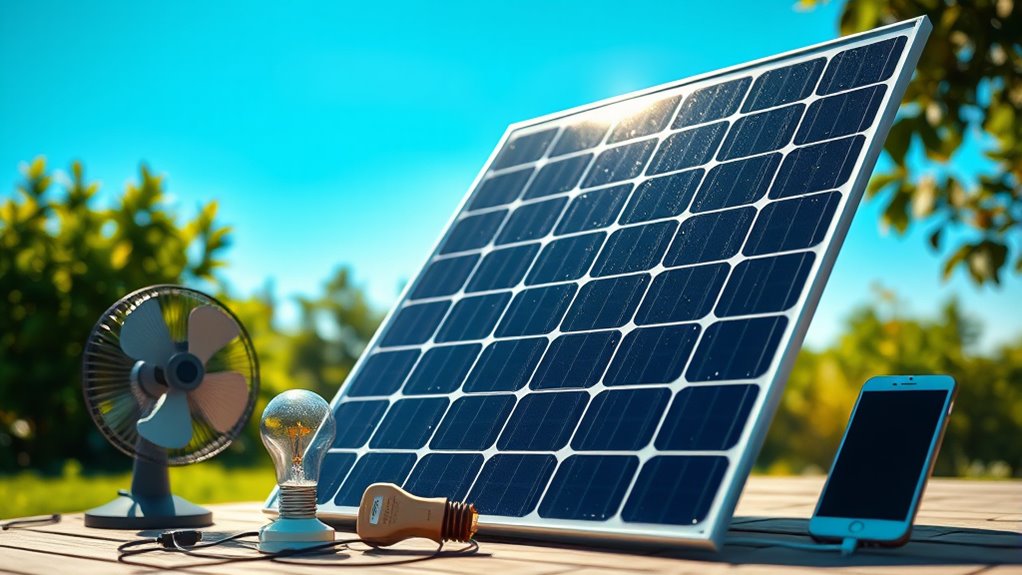
A 100 watt solar panel typically produces between 300 to 600 watt-hours of energy per day, depending on factors like sunlight hours and weather conditions.
If you’re in a sunny area, you can expect the higher end of that range, while cloudy days reduce output considerably.
You’ll want to consider the panel’s orientation and any shading, as these directly affect performance.
Keep in mind, the energy generated doesn’t always translate to usable power; you’ll lose some during storage or conversion.
To make the most of your 100 watt panel, monitor daily energy production and adjust usage accordingly.
This way, you can maximize efficiency and better plan what devices to run without exceeding your energy budget.
Everyday Devices a 100 Watt Solar Panel Can Power
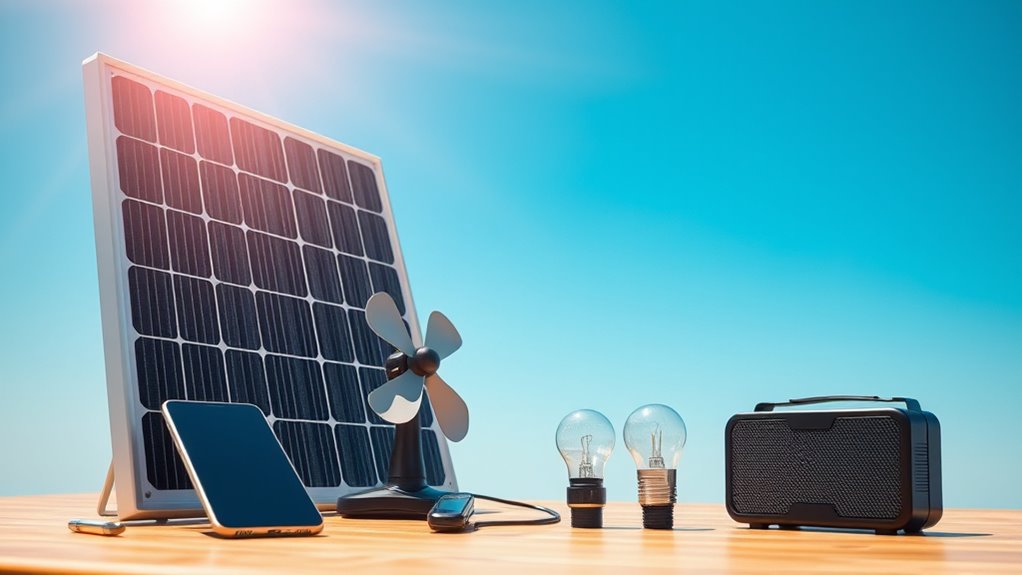
Understanding the daily energy output helps you gauge what everyday devices a 100 watt solar panel can realistically power. Typically, such a panel produces about 300-600 watt-hours per day, depending on sunlight.
This means you can run small appliances and charge gadgets efficiently.
| Device | Power Consumption (Watts) | Estimated Runtime (Hours) |
|---|---|---|
| LED Light Bulb | 10 | 30-60 |
| Smartphone | 5 | 60-120 |
| Laptop | 50 | 6-12 |
| Small Fan | 40 | 7-15 |
| Portable Speaker | 15 | 20-40 |
With this info, you can plan your energy use effectively. And honestly, it’s pretty cool to enjoy the benefits of solar power every day.
Best Small Devices for a 100 Watt Solar Panel
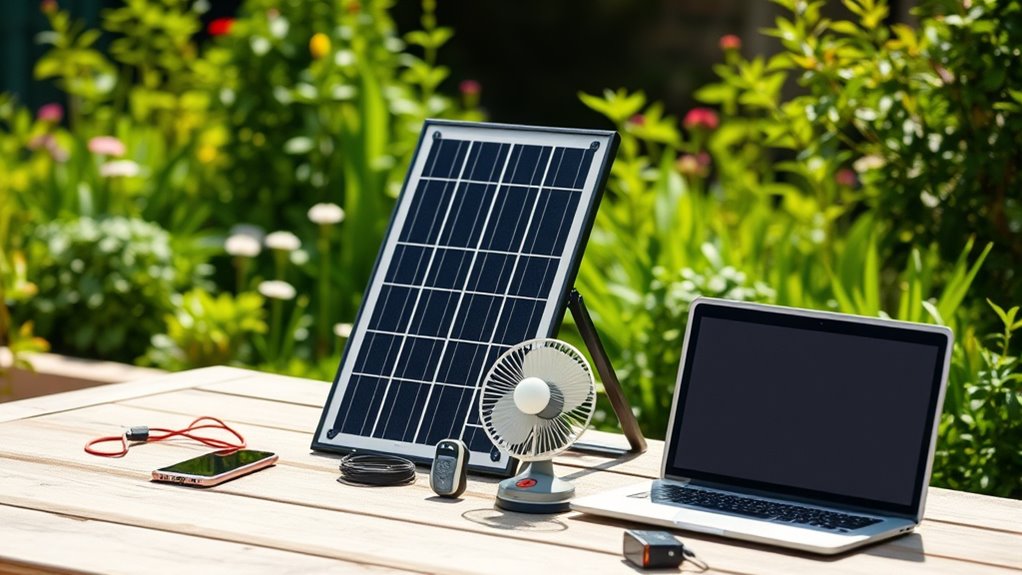
When you rely on a 100 watt solar panel, choosing the right small devices can maximize your energy efficiency and keep your essentials running smoothly. To make the most of your solar setup, focus on low-power gadgets that provide big value without draining your battery.
Optimizing your 100 watt solar panel means selecting low-power devices that deliver maximum efficiency and reliability.
Here are some of the best small devices you can power:
- LED lights: They use minimal energy and provide bright, reliable lighting.
- Smartphone chargers: Keep your phone charged for communication and navigation.
- Portable fans: Great for staying cool without large power draws.
- Small Bluetooth speakers: Enjoy music or podcasts while conserving energy.
Maximizing Efficiency of a 100 Watt Solar Panel
To get the most from your 100 watt solar panel, you’ll want to position it where it catches the most sunlight throughout the day. That way, it can soak up as much solar energy as possible.
Pairing it with a reliable energy storage system guarantees you don’t lose power when the sun goes down. It’s like having a backup battery ready to go.
Plus, cutting down on your device’s power use can stretch every watt further. Small changes make a big difference!
Optimal Panel Positioning
Although a 100 watt solar panel can generate a decent amount of power, you’ll only get the most out of it by positioning it correctly. To maximize efficiency, aim to capture the most sunlight throughout the day.
The angle and direction you choose play a pivotal role in this. So, it’s worth paying attention to how you set it up.
Here’s how to optimize your panel’s position:
- Face the panel true south (in the Northern Hemisphere) or true north (in the Southern Hemisphere) to capture maximum sunlight.
- Tilt the panel at an angle roughly equal to your latitude for year-round efficiency.
- Adjust the tilt seasonally if possible: steeper in winter, flatter in summer.
- Avoid shading from trees, buildings, or other obstructions that can greatly reduce output.
Proper positioning ensures your 100 watt panel delivers its full potential daily. It’s a simple step that makes a big difference!
Energy Storage Options
Positioning your 100 watt solar panel correctly sets the stage for capturing sunlight efficiently, but storing that energy wisely guarantees you can use it whenever you need. To maximize your panel’s potential, invest in a reliable battery system, like a deep cycle AGM or lithium-ion battery, which stores energy effectively and handles repeated charging cycles.
Pair your battery with a quality charge controller to prevent overcharging and extend battery life. Consider the battery’s capacity carefully—too small, and you risk running out of power; too large, and you’ll waste resources.
Proper wiring and maintenance also play a role in efficient energy storage. By choosing the right storage setup, you guarantee your 100 watt solar panel powers your devices smoothly, day or night. It’s all about making sure your energy is ready whenever you need it!
Reducing Power Consumption
A key step in getting the most out of your 100 watt solar panel is reducing power consumption wherever possible. By cutting down energy use, you extend battery life and guarantee your solar setup meets your needs efficiently.
Start by choosing energy-efficient appliances and turning off devices when not in use. You can also optimize usage times to coincide with peak sunlight hours. Simple habits make a big difference.
Consider these tips to reduce power consumption:
- Use LED bulbs instead of incandescent ones
- Unplug chargers and devices when fully charged
- Run appliances like refrigerators during daylight hours
- Limit the use of high-power devices like heaters or microwaves
These strategies help you maximize your solar panel’s potential without upgrading your system. Easy changes can really pay off!
What a 100 Watt Solar Panel Can’t Do
While a 100 watt solar panel can handle many small devices, it can’t power high-energy appliances like air conditioners or electric heaters. These devices demand far more energy than the panel can produce, especially since solar output varies with sunlight conditions.
You also won’t be able to run large kitchen appliances like microwaves or ovens, which require substantial power surges that a single 100 watt panel can’t support. Similarly, electric water heaters and power tools won’t operate effectively on this setup.
If you try to run these, your system will quickly drain any stored battery capacity, leaving you without power. So, if your needs include heavy-duty appliances or continuous high power usage, you’ll need a more robust system than just one 100 watt solar panel.
Expanding Your 100 Watt Solar Panel Setup
If your 100 watt solar panel isn’t meeting all your power needs, you can expand your setup by adding battery storage to save energy for later.
Connecting multiple panels in series or parallel boosts your overall capacity. You might also consider power optimizers to maximize efficiency from each panel.
It’s all about making the most of what you’ve got and ensuring you have power when you really need it.
Adding Battery Storage
How can you make the most of your 100 watt solar panel throughout the day and night? Adding battery storage lets you store excess energy generated during sunlight hours. Then, you can use it after dark or on cloudy days.
This way, you don’t have to rely solely on real-time solar power. When choosing a battery, consider a few important things:
- Capacity (measured in amp-hours) to match your energy needs
- Type (lead-acid, lithium-ion) for lifespan and maintenance
- Voltage compatibility with your solar system
- Depth of discharge to maximize battery life
Also, integrating a charge controller is essential. It protects your battery from overcharging and helps it last longer.
Connecting Multiple Panels
Adding battery storage helps you use your solar energy more flexibly. But sometimes, one 100 watt panel just isn’t enough to meet your power needs.
Connecting multiple panels can increase your power output. This gives you more energy for devices or storage.
You can link panels in series or parallel, depending on your voltage and current requirements. Series connections increase voltage, while parallel connections increase current.
| Connection Type | Effect on System |
|---|---|
| Series | Increases voltage |
| Parallel | Increases current |
| Both Combined | Balances voltage & current |
Be sure to choose the right setup carefully to match your charge controller and battery specs. That way, you can scale your system efficiently without overloading components.
Using Power Optimizers
While expanding your 100 watt solar panel setup, using power optimizers can boost your system’s efficiency by maximizing the output from each panel. These devices work independently on each panel, ensuring that shading, dirt, or panel mismatch doesn’t drag down the whole array’s performance.
Power optimizers are especially useful when panels face different directions or receive uneven sunlight. They really help keep your system running smoothly no matter the conditions.
By incorporating power optimizers, you can increase overall energy harvest from your panels and minimize losses caused by shading or panel inconsistencies. Plus, you get to monitor the performance of each panel individually, which is pretty handy.
This also helps enhance system reliability and longevity. So, using power optimizers lets you get the most out of your solar investment, helping your 100 watt setup run more effectively under real-world conditions.
Frequently Asked Questions
How Long Does It Take to Install a 100 Watt Solar Panel?
It usually takes you about 1 to 3 hours to install a 100-watt solar panel, depending on your experience and setup complexity.
You’ll need to mount it, wire it, and connect it to your system carefully.
If you’re new to this, it might take a bit longer, but with some patience, you’ll get the hang of it!
What Maintenance Is Required for a 100 Watt Solar Panel?
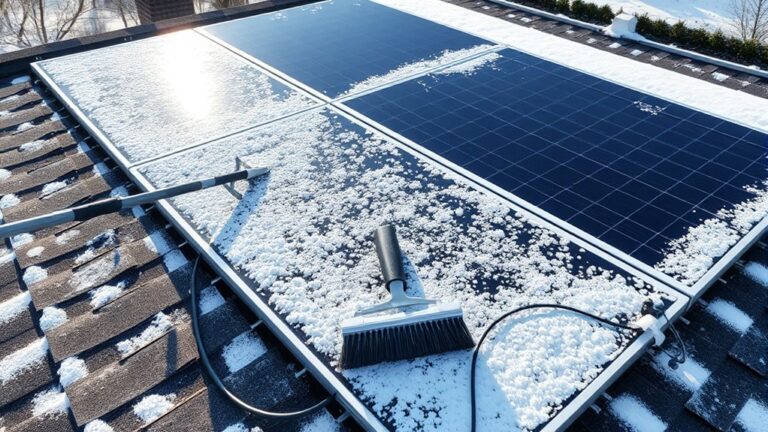
You’ll only need to clean your 100-watt panel a few times a year, as dirt can reduce efficiency by up to 25%. Just wipe off dust and check connections to keep it running smoothly and maximize energy output.
It’s pretty simple to maintain. A quick clean now and then and a glance at the wiring is usually all it takes to keep things working well.
Can a 100 Watt Solar Panel Charge a Car Battery?
Yes, you can charge a car battery with a 100 watt solar panel, but it’ll take time.
You’ll need a charge controller to protect the battery and guarantee efficient, safe charging without overcharging or damage.
It’s a simple setup, but just keep in mind that the process won’t be super fast. Patience is key here!
Are There Portable Options for 100 Watt Solar Panels?
Yes, you can find portable 100 watt solar panels designed for easy transport. They often fold up, include built-in stands, and come with connectors so you can charge devices or batteries while camping or on the go.
They’re super convenient if you’re out in nature or just need power on the move. Plus, setting them up is usually pretty straightforward.
How Do Weather Conditions Affect a 100 Watt Solar Panel’s Output?
Weather conditions directly impact your 100 watt solar panel’s output; cloudy skies, rain, and shade reduce its efficiency. Bright, sunny days, on the other hand, maximize power.
You’ll get less energy during bad weather, so it’s a good idea to plan accordingly. Just keep in mind that the sun plays a big role in how much power you actually get.
Conclusion
With a 100 watt solar panel, you can power plenty of practical, portable gadgets, but don’t expect to run heavy-duty devices. By prioritizing small, smart systems and maximizing your panel’s efficiency, you’ll make the most of your modest setup.
Remember, expanding your energy ensemble can elevate your experience. It ensures sustainable, steady power for your needs. Stay savvy, stay sustainable, and see how small solar solutions spark significant savings and simplicity in your daily life.
In short, a 100 watt solar panel is perfect for charging phones, running LED lights, or powering small fans. It’s an ideal choice for camping, outdoor adventures, or emergency backup. By using energy wisely and pairing it with efficient devices, you can enjoy reliable, eco-friendly power anytime. So, embrace these small solar setups and watch how they bring big benefits—saving money and reducing your carbon footprint every day.