What Can I Run on a 100 Watt Solar Panel – 10 Devices
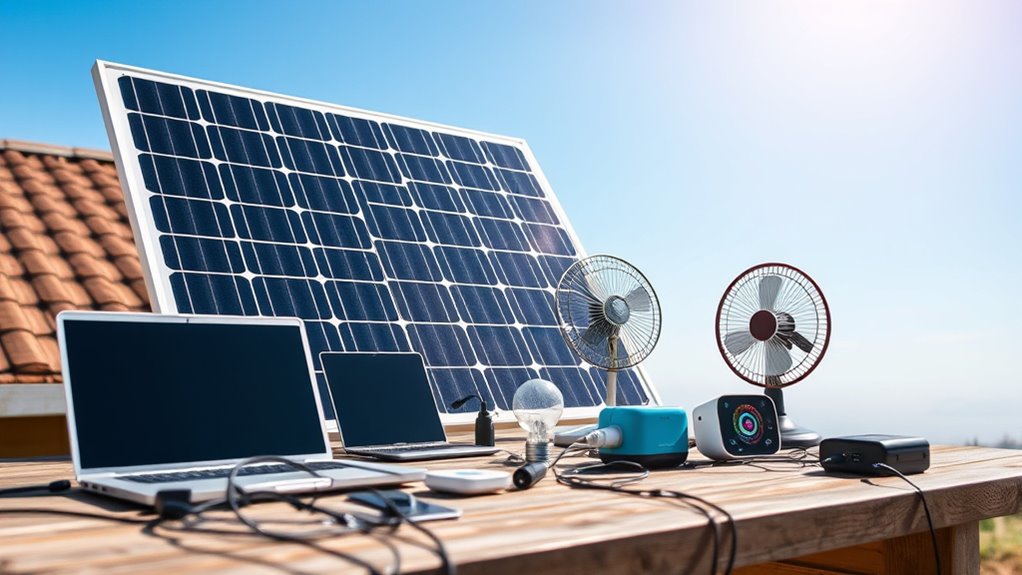
With a 100-watt solar panel, you can power a variety of small but essential devices. Think LED lights, small fans, smartphones, tablets, portable speakers, radios, and even small water pumps.
You can also handle light laptop use and run a small refrigerator if you keep an eye on your energy usage. The key is managing when and how you use your power.
Using devices mainly during peak sunlight hours and storing any excess energy in batteries really helps keep everything running smoothly.
This kind of setup is perfect for outdoor activities or covering basic home needs.
Keep exploring to find out how to get the most out of your solar panel and make the most of every watt you generate!
Key Takeaways
- A 100W solar panel can power LED lights, small fans (10-30W), and USB devices like smartphones and portable speakers. It’s perfect for those everyday small gadgets that don’t need much juice.
- You can also charge tablets, laptops (30-60W), and small water pumps (20-50W) if you manage the energy properly. Just keep an eye on how much power you’re using so you don’t overload the system.
- Small refrigerators (40-60W) and portable air coolers can run too, but they work best if you use them efficiently and during peak sunlight hours. Timing is key here to get the most out of your panel.
- Having battery storage is a game-changer. It lets you use devices like fans, lights, and communication tools even at night or on cloudy days.
- Just remember, large appliances like microwaves or full-size refrigerators are too much for a 100W panel to handle. They need way more power than this setup can provide.
How Much Power Does a 100 Watt Solar Panel Produce?
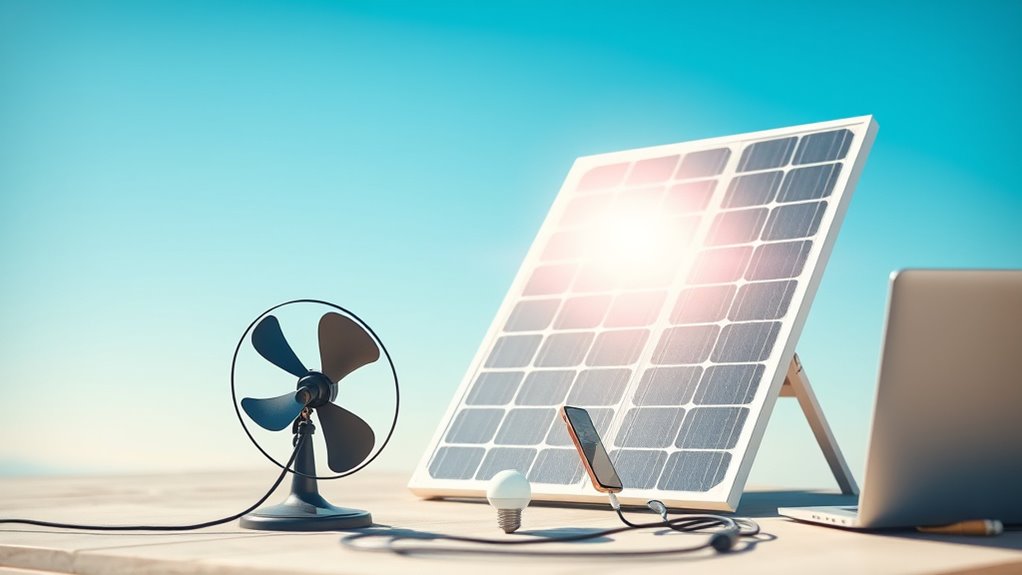
Although the exact power output depends on factors like sunlight intensity and panel angle, a 100 watt solar panel typically produces around 300 to 600 watt-hours of energy per day.
You’ll get more power on sunny days when the panel faces direct sunlight, usually between 4 to 6 peak sunlight hours.
Cloudy weather, shade, and dirt on the panel reduce efficiency, so regular maintenance is key.
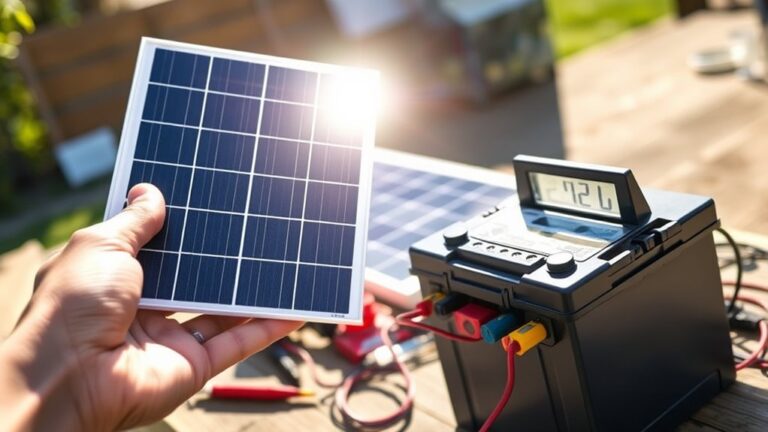
Your panel converts sunlight into DC electricity, which you can store in a battery or use immediately.
Keep in mind, the output also depends on the quality of your solar panel and the system setup.
Understanding these variables helps you estimate how much energy you can consistently generate with a 100 watt solar panel.
What Can You Power With a 100 Watt Solar Panel?
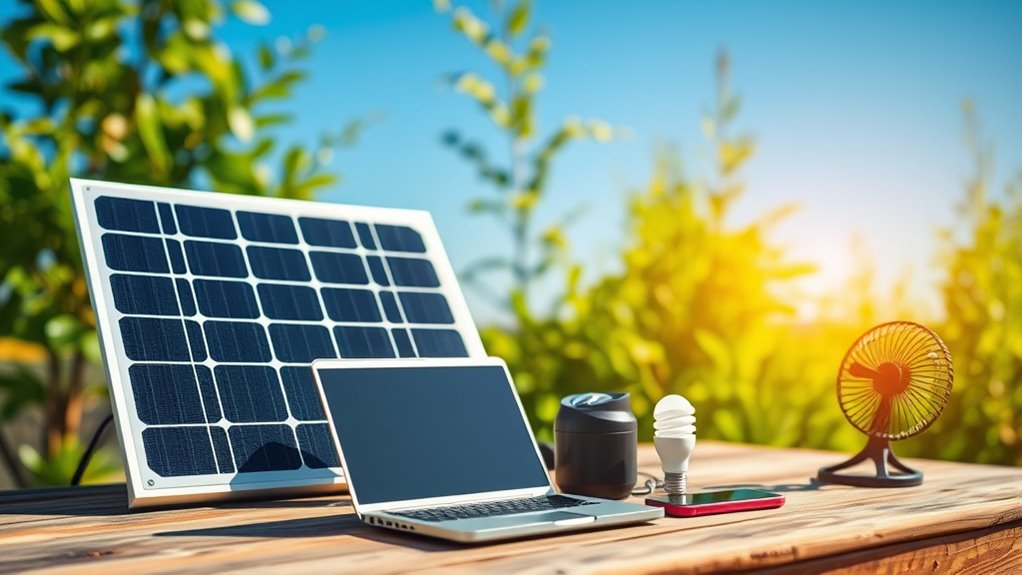
When you harness the energy from a 100 watt solar panel, you can power a variety of small devices and appliances that fit within its daily energy output. This includes LED lights, small fans, and low-power radios, which typically require less energy to run efficiently.
You can also power small water pumps for garden irrigation or run a laptop for several hours, depending on your energy consumption habits. Additionally, a 100 watt panel can support a few USB-powered devices like portable speakers or e-readers.
However, it’s essential to manage your usage carefully, as high-draw appliances like microwaves or refrigerators exceed this panel’s capacity. By matching your devices to the panel’s output, you can enjoy reliable off-grid power for essential small electronics and appliances.
Charging Small Electronics on 100 Watt Solar Panels
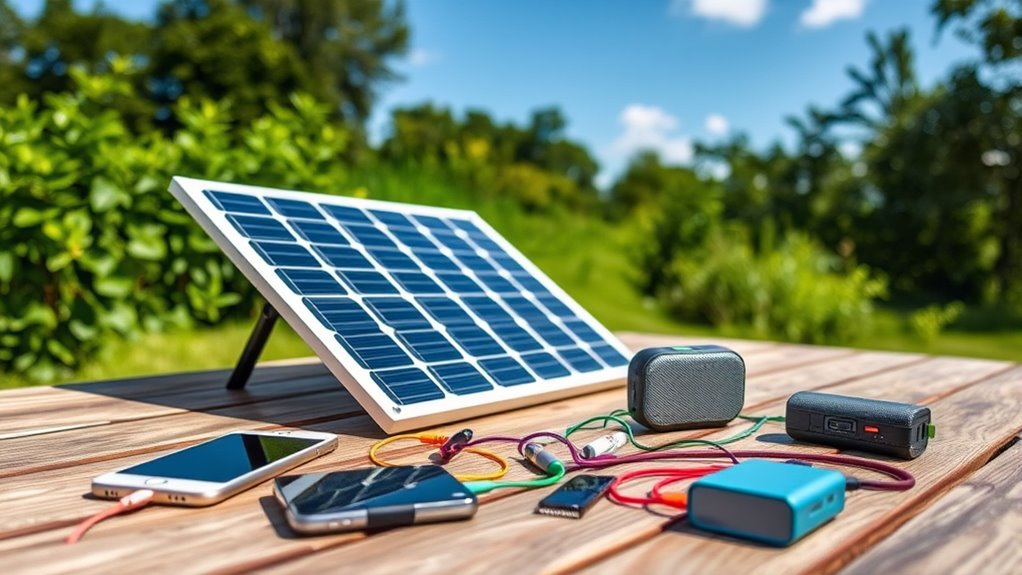
You can charge a variety of small electronics efficiently with a 100 watt solar panel, but charging speed depends on sunlight and device compatibility. Devices like smartphones, tablets, and portable batteries work well with this setup.
Understanding how your solar panel matches your device’s power needs helps you get the best results. It’s pretty straightforward once you get the hang of it!
Charging Speed and Efficiency
How quickly can a 100 watt solar panel charge your small electronics? It depends on several factors, including sunlight intensity, panel angle, and device battery capacity.
Under ideal conditions, expect around 5 to 7 amps of current output, which can charge smartphones or tablets fully in 2 to 4 hours. Efficiency drops when clouds block sunlight or the panel isn’t angled correctly, slowing charging times.
Using a quality charge controller helps regulate power flow, preventing overcharging and maximizing efficiency. Keep in mind, device type and cable quality also impact charging speed.
To get the most from your 100 watt solar panel, position it for maximum sun exposure and use compatible, efficient charging accessories. This way, you’ll keep your small electronics powered reliably and swiftly.
Compatible Device Types
Charging speed and efficiency set the stage for understanding which devices a 100 watt solar panel can power effectively. When it comes to compatible device types, you’ll find that small electronics with low to moderate power requirements work best.
These devices typically have high energy efficiency and can charge fully within a day of good sunlight exposure. Makes sense, right?
Here are three common compatible device types:
- Smartphones and tablets: Perfect for daily charging without draining the panel.
- Portable power banks: Store energy for nighttime or cloudy day use.
- LED lights and small fans: Low wattage devices that run steadily on solar power.
Powering Laptops and Tablets With 100 Watts
You can power laptops and tablets with a 100 watt solar panel, but efficiency plays a big role in how quickly they charge. Laptops often need more power, so understanding their charging requirements helps you get the most from your panel.
Tablets usually require less energy, making them easier to keep charged on the go. So, depending on what you’re using, your charging experience can vary quite a bit.
Laptop Charging Efficiency
Wondering if a 100 watt solar panel can keep your laptop or tablet powered throughout the day? It depends on your device’s charging efficiency and your usage habits. Laptops vary in power consumption, but many require between 30 to 60 watts to charge effectively.
Efficiency can be affected by factors like solar panel output fluctuations due to weather or angle, and energy loss in the charging adapter or inverter. Also, device power management settings and battery health play a role.
To maximize efficiency, use a quality charge controller and keep your panel aimed at direct sunlight. If you’re mindful about power usage and charging times, a 100 watt solar panel can reliably support your laptop or tablet for light to moderate use during the day.
Tablet Power Requirements
How much power does a tablet actually need to stay charged using a 100 watt solar panel? Most tablets require between 10 to 15 watts to charge efficiently, so a 100 watt solar panel can easily handle this demand.
You can expect consistent charging, even when running apps or streaming. However, charging times vary based on tablet battery size and sunlight availability.
| Tablet Model | Power Consumption (Watts) |
|---|---|
| iPad Pro | 18 |
| Samsung Galaxy Tab | 15 |
| Amazon Fire | 10 |
| Microsoft Surface Go | 20 |
| Lenovo Tab | 12 |
With a 100 watt solar panel, you can comfortably power most tablets and even some lighter laptops. Just make sure you have a suitable charge controller and battery storage to keep everything running smoothly.
Can You Run a Small Refrigerator With 100 Watts?
Although small refrigerators are designed to be energy-efficient, running one on a 100-watt solar panel requires careful consideration of its power consumption and usage patterns. A small fridge typically uses around 40-60 watts when running, but it cycles on and off, so average consumption matters.
To effectively power your fridge with a 100-watt panel, keep these points in mind:
- Make certain your fridge’s daily energy consumption (watt-hours) does not exceed the solar panel’s daily output.
- Use a deep-cycle battery to store energy for nighttime or cloudy days.
- Minimize fridge door openings to reduce compressor run time.
Running LED Lights and Lamps on 100 Watts
You can easily power several LED lights with a 100 watt solar panel since they use very little energy.
To keep your lights running after sunset, you’ll need a reliable battery storage system.
Plan to use your lights during evening hours when solar production drops to make the most of your setup.
Power Consumption Estimates
When running LED lights and lamps on a 100-watt solar panel, understanding their power consumption is essential for maximizing efficiency. LED lights are known for their low energy use, making them ideal for solar setups.
Typically, individual LED bulbs consume between 5 to 15 watts. This allows you to power several at once without overloading your panel.
Here’s what you need to keep in mind:
- A 10-watt LED bulb can run for about 10 hours daily on a 100-watt panel under good sunlight.
- Using multiple low-wattage lamps helps spread power usage evenly.
- Dimming options reduce consumption further, extending usage time.
Battery Storage Importance
Since solar panels only generate power during sunlight hours, having reliable battery storage is essential for running LED lights and lamps consistently on a 100-watt system. Without a battery, your lights will only work when the sun shines, which limits usability.
A good battery stores excess energy generated during the day, so you can use it after sunset or on cloudy days. When selecting a battery, consider capacity and efficiency to guarantee it meets your lighting needs without frequent depletion.
Lithium-ion batteries are popular for their longevity and energy density, but lead-acid options can work on a budget. Proper battery storage also protects your system from power fluctuations, prolonging the life of your LED lights.
Investing in quality storage maximizes your 100-watt solar panel’s potential. So, it’s definitely worth choosing the right battery to keep your lights running smoothly anytime.
Ideal Usage Times
Reliable battery storage lets you use LED lights and lamps beyond daylight hours. But knowing the best times to run them on a 100-watt solar panel helps optimize energy use.
To get the most out of your setup, focus on scheduling usage when solar input is high or when battery charge is sufficient.
Here are ideal usage times to contemplate:
- During peak sunlight hours (10 AM – 4 PM) to maximize direct solar power without draining the battery
- Early evening, right after sunset, when your battery still holds a strong charge
- Avoid late night or early morning hours unless your battery capacity supports extended use
Powering Fans and Portable Air Coolers
How effectively can a 100 watt solar panel keep your space cool? It can power small fans and portable air coolers efficiently, especially during sunny days.
Most compact fans use between 10 to 30 watts, so your panel can easily handle one running continuously. Portable air coolers, which rely on water evaporation, typically consume around 40 to 60 watts. That makes them compatible with a 100 watt panel if you manage energy wisely.
A 100 watt panel can power compact fans and portable air coolers with careful energy management.
Keep in mind that running these devices during peak sunlight hours maximizes performance. Storing extra energy in a battery helps maintain cooling when sunlight fades.
While you won’t power large air conditioners, a 100 watt solar panel offers a sustainable way to keep fresh air circulating and add some relief from heat.
Powering Radios and Phones
If you want to keep your radios and phones charged without relying on the grid, a 100 watt solar panel can be a great solution. This setup provides enough power to keep your essential communication devices running, especially during outdoor trips or emergencies.
With efficient solar charging, you won’t have to worry about dead batteries when you need them most.
Here’s what you can expect to power reliably:
- Smartphones and basic cell phones for calls and messaging
- Portable radios for news, weather updates, and entertainment
- Power banks that store energy to charge devices anytime
Powering Small Water Pumps and Outdoor Gear
A 100 watt solar panel can easily power small water pumps and essential outdoor gear, making it a handy addition for camping or gardening. You can run low-wattage water pumps to circulate water in small ponds or operate drip irrigation systems. This helps keep plants hydrated without relying on electricity.
It’s also great for powering outdoor lighting, small fans, or portable speakers, enhancing your outdoor experience. Keep in mind, these pumps typically draw between 20 to 50 watts, so your panel can handle them comfortably during sunny hours.
Just connect your equipment directly or through a voltage regulator to guarantee stable operation. With this setup, you’ll enjoy reliable, off-grid power that supports your outdoor activities without hassle or noise.
Charging Batteries With a 100 Watt Solar Panel
Beyond powering small devices, a 100 watt solar panel can efficiently charge batteries, giving you a reliable energy reserve. You can use it to keep your deep cycle, car, or lithium batteries charged, ensuring your gear runs smoothly even when off-grid.
A 100 watt solar panel reliably charges various batteries, keeping your gear powered even off-grid.
To maximize charging efficiency, pair your panel with a suitable charge controller to protect your batteries from overcharging and damage. Here are key points to take into account:
- Battery type compatibility: Choose the right controller for lead-acid or lithium batteries.
- Charge time: Expect around 6-8 hours of good sunlight for a full charge.
- Energy storage: Use a battery bank to store excess power for nighttime or cloudy days.
This setup lets you harness solar power effectively for longer adventures. It’s a great way to stay powered up no matter where your journey takes you.
Frequently Asked Questions
How Do Weather Conditions Affect a 100 Watt Solar Panel’s Efficiency?
Weather conditions impact your 100 watt solar panel’s efficiency considerably. Cloudy, rainy, or snowy days reduce sunlight, lowering power output.
But on bright, clear days, your panel will maximize energy production. It really makes a big difference.
Also, don’t forget to keep your panels clean. That way, they maintain peak performance no matter the weather.
What Maintenance Is Required for a 100 Watt Solar Panel?
You’ll need to clean the panel regularly to remove dirt and debris. This helps keep it working at its best.
Also, check for any damage or loose connections. It’s important to make sure everything is secure and in good shape.
Don’t forget to guarantee it’s positioned correctly. The angle and direction can really affect how much power you get.
Finally, inspect the wiring and mounting hardware. Keeping these in good condition will help your 100 watt solar panel run efficiently.
Can a 100 Watt Solar Panel Be Used Off-Grid?
Yes, you can use a 100-watt solar panel off-grid. It produces about 400 watt-hours daily, which is enough to power small devices, lights, or charge batteries.
This makes it perfect for camping or remote locations without electricity access. So, if you’re looking for a simple way to get some power in the wild, a 100-watt panel can do the trick!
How Long Does It Take to Install a 100 Watt Solar Panel?
It usually takes you about 1 to 3 hours to install a 100 watt solar panel, depending on your experience and setup complexity.
You’ll need basic tools, mounting brackets, and some wiring to get it done efficiently.
If you’re new to this, don’t worry—it might take a bit longer, but it’s definitely doable. Just take your time and follow the instructions carefully.
Are There Any Safety Concerns With Using a 100 Watt Solar Panel?
Yes, you should avoid touching live wires and guarantee proper insulation. Don’t overload the panel, and always use a charge controller to prevent battery damage.
Also, wearing gloves and working in dry conditions helps keep you safe. It’s all about taking simple precautions to avoid any issues.
Conclusion
With a 100 watt solar panel, you could practically power your whole life—well, almost! From charging your phone to running a small fan, it’s like having a tiny sun in your backpack.
Imagine sipping cold drinks while your mini fridge hums away, all thanks to that little panel soaking up rays. It’s pretty amazing what 100 watts can do!
So, don’t underestimate 100 watts; it’s enough to keep your gadgets buzzing and your adventures powered up, no matter where you roam! With a 100 watt solar panel, you can run a variety of small devices efficiently. Whether you’re camping, traveling, or just want a reliable backup power source, this size panel is perfect for keeping your essentials charged and ready. It’s a great way to stay off the grid while still enjoying modern conveniences.