How Do You Replace Your Roof With Solar Panels in 3 Steps?
To replace your roof with solar panels in three simple steps, you first need to assess your roof’s age, condition, and material. This is super important to make sure your roof is ready and sturdy enough for the solar panel installation. You don’t want any surprises later on!
Next, it’s time to choose high-quality, efficient solar panels that fit your space and style. Picking the right panels can make a big difference in how much energy you generate and how your roof looks.
Finally, hire licensed professionals to install the system securely. They’ll connect everything safely and help you activate it with your utility company.
Keep reading to dive deeper into each step for a smooth and long-lasting solar upgrade!
Key Takeaways
- Assess and repair or replace the existing roof to ensure it is in good condition and suitable for solar panel installation. This step is crucial because a sturdy roof will support the panels effectively and last longer.
- Select high-quality, weather-resistant solar panels that match your roof’s material and structural capacity. Choosing the right panels ensures both durability and optimal energy production.
- Hire licensed professionals to remove old roofing, install solar panels securely, and connect the system safely to your electrical grid. It’s important to trust experts who know the local codes and installation best practices.
- Obtain necessary permits and schedule inspections to ensure compliance with local building and electrical codes. This helps avoid any legal issues and guarantees your system is safe.
- Activate the solar system with the utility company and use monitoring tools to track energy production and system performance. Keeping an eye on your system helps you get the most out of your investment.
Check If Your Roof Is Ready for Solar Panels
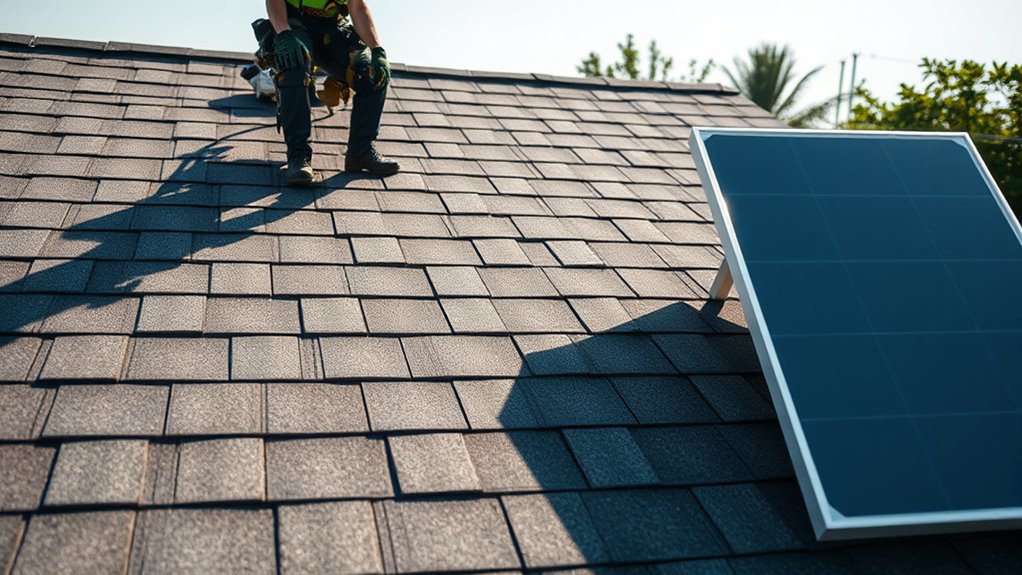
Before installing solar panels, you need to make certain your roof can support them. Start by inspecting the roof’s age and condition. If your roof is older than 15-20 years or shows signs of damage like leaks, cracks, or missing shingles, consider repairing or replacing it first.
You don’t want to install panels only to remove them later for roof work. Next, check the roof’s structure and material. Most roofs made of asphalt, metal, or tile are suitable, but some materials may require special mounting equipment.
Also, verify your roof has enough space, ideally a south-facing area free from shade for maximum sunlight exposure. Finally, consult a professional to evaluate your roof’s load capacity and confirm it can handle the panels safely.
Pick the Best Solar Panels for Your Roof
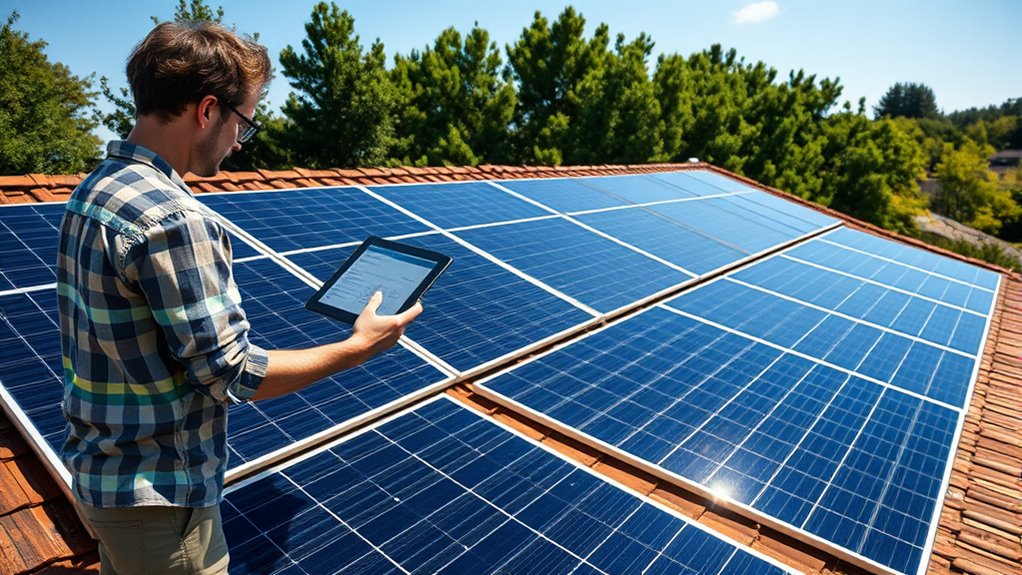
Once you verify your roof can support solar panels, the next step is choosing the right ones for your home. Focus on efficiency, durability, cost, and aesthetics to find panels that fit your needs and budget.
| Factor | What to Consider |
|---|---|
| Efficiency | Higher efficiency saves space |
| Durability | Weather resistance for longevity |
| Cost | Balance price with quality |
| Aesthetics | Match panel style with your home |
You’ll want efficient panels if space is limited, but don’t overlook durability—your roof’s exposed to all weather. Cost matters, but investing a bit more can mean better performance and lifespan.
Finally, pick a design that complements your home’s look. This careful selection ensures your solar roof is both functional and attractive.
Install and Turn On Your New Solar Roof
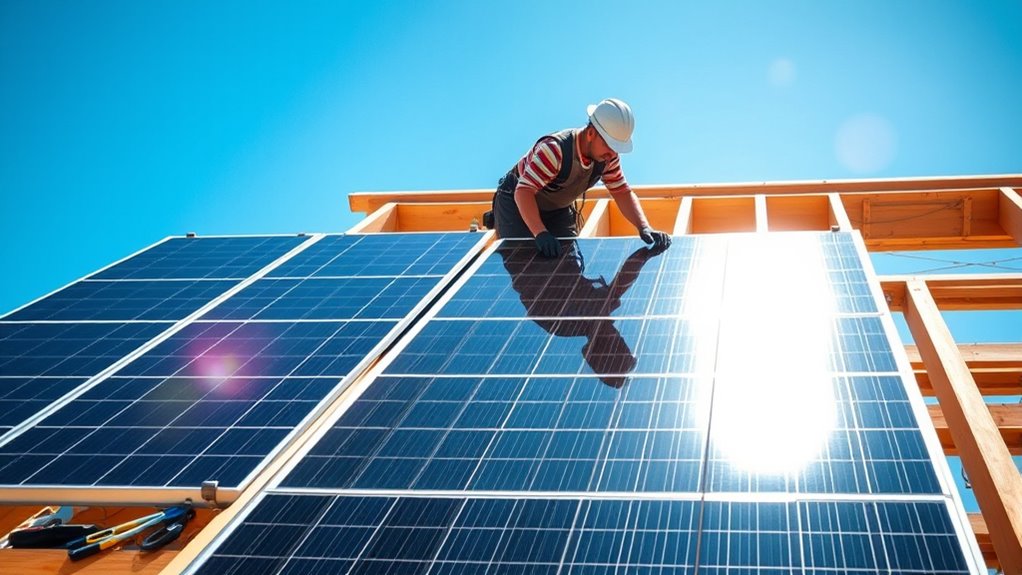
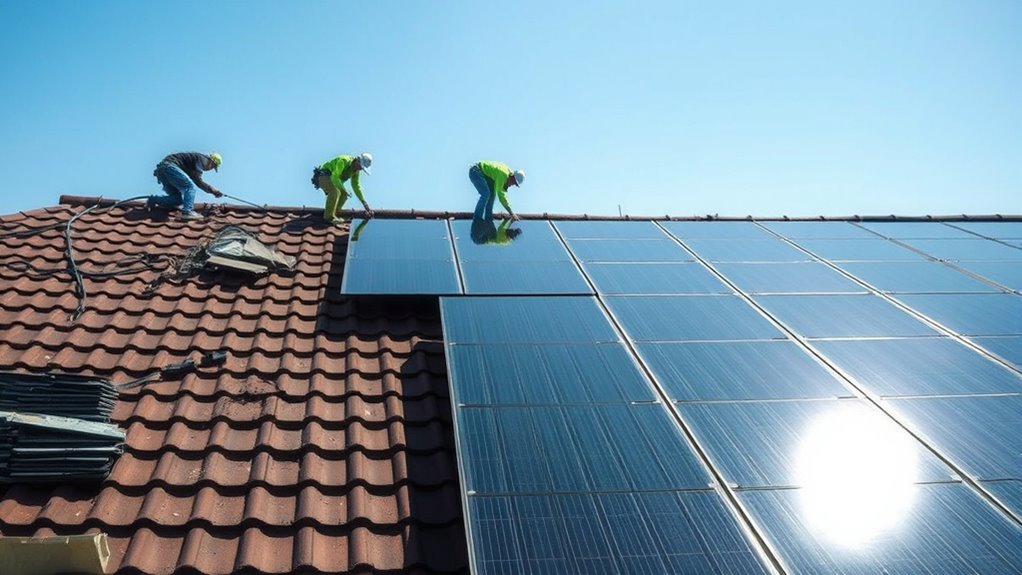
After selecting your solar panels, the next step is to have them professionally installed to guarantee safety and peak performance. Schedule a licensed installer who will remove your old roof if needed, then carefully mount the solar panels and connect them to your electrical system.
Throughout the process, they’ll ensure all wiring meets local codes and that the panels are securely fastened to withstand weather conditions.
Once installed, your installer will perform system checks and coordinate with your utility company to activate your solar roof. You’ll receive the necessary permits and inspections to confirm everything’s up to standard.
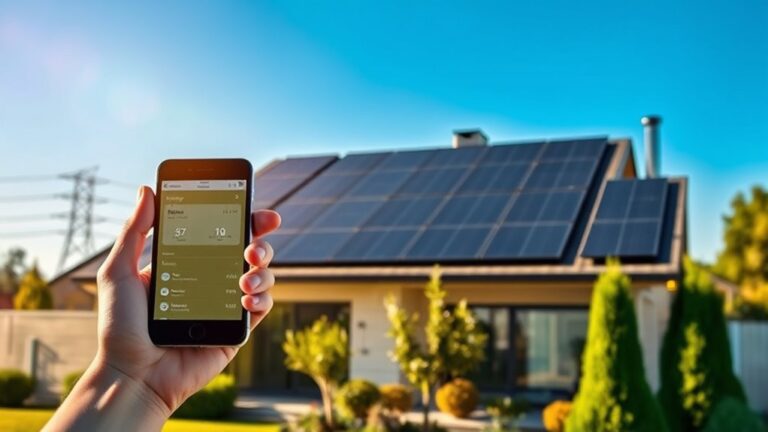
Finally, turn on your new solar roof and monitor its output through the provided app or interface. Enjoy cleaner energy and reduced electricity bills immediately.
Frequently Asked Questions
How Do Solar Panels Affect My Home Insurance Policy?
You’ll need to update your home insurance policy when adding solar panels to cover potential damages or theft. Your premiums might increase, but some insurers offer discounts for energy-efficient upgrades, so check with your provider for details.
It’s a good idea to give them a quick call. They can tell you exactly how adding solar panels might affect your coverage and costs. That way, you’re not caught off guard later on.
What Maintenance Is Required for Solar Panel Roofs?
You’ll need to clean your solar panels a couple of times a year. Also, check for debris or shading that might block sunlight.
It’s important to inspect the wiring for any damage. Scheduling professional inspections every few years helps guarantee everything’s working efficiently and safely.
Can I Install Solar Panels on a Flat Roof?
Yes, you can install solar panels on a flat roof. You’ll need mounting racks to angle the panels for maximum sunlight.
This setup also simplifies cleaning and maintenance, making sure your system performs efficiently over time. It’s a pretty straightforward way to get the most out of your solar investment.
How Do Solar Roofs Impact Property Value?
Imagine your home glowing with eco-friendly power; solar roofs can boost your property value by attracting buyers seeking energy savings and sustainability.
You’ll enjoy increased appeal and potentially higher resale prices thanks to those sleek, sun-capturing tiles. It’s a win-win for your wallet and the planet!
Are There Tax Incentives for Installing Solar Roofs?
Yes, you can get tax incentives for installing solar roofs, like the Federal Investment Tax Credit. It lets you deduct a big chunk of your solar costs, saving you money while boosting your home’s value.
Pretty cool, right? These incentives make going solar more affordable and help you get more bang for your buck.
Conclusion
Replacing your roof with solar panels is like planting a seed that grows into lasting energy. First, you prepare the soil by checking your roof’s readiness. This step ensures your roof can support the panels safely and efficiently.
Next, you choose the right seed—your ideal solar panels. Picking the panels that fit your energy needs and roof style is key to a successful solar installation.
Finally, you nurture this new growth by installing and activating your solar roof. This step brings your clean energy system to life and starts powering your home.
By taking these steps, you’re not just changing your roof; you’re cultivating a future where your home thrives on clean, sustainable power. Replacing your roof with solar panels means investing in renewable energy that reduces your carbon footprint and lowers electricity bills. It’s an easy, effective way to upgrade your home with solar technology that benefits both you and the planet.