How Can I Sell Solar Panels in 7 Easy Steps?
You can sell solar panels in 7 easy steps by first understanding how they work and their key benefits. Knowing the basics helps you explain the value clearly. Solar panels save money and are great for the environment, which is a big selling point.
Next, identify your ideal customers—those with high bills, good roofs, or eco-friendly values. Pinpointing who’s most likely to buy makes your efforts way more effective.
Then, craft clear, tailored sales pitches that speak directly to their needs. Choose outreach channels like social media or partnerships to reach them where they hang out.
Offer competitive pricing with flexible financing options to make the deal attractive. Be ready to handle objections confidently and close the sale while supporting your customers every step of the way.
Keep going to discover specific tactics that boost your success.
Key Takeaways
– Understand solar panels’ benefits so you can clearly explain cost savings, environmental impact, and maintenance advantages to potential customers.
Knowing these points helps you connect better with what they care about.
– Identify and target ideal customers like homeowners with high bills, residents in sunny locations, and eco-conscious buyers.
These folks are more likely to be interested in making the switch.
– Craft a simple, tailored sales pitch that focuses on customer needs. Use clear language and always end with a strong call to action.
Make it easy for them to see why solar is right for them.
– Use effective outreach channels such as social media, local groups, partnerships, and SEO to reach and engage prospects.
Mix it up to find where your audience hangs out the most.
– Offer competitive pricing and flexible financing options. Highlight long-term savings and be upfront with terms to build trust.
People appreciate honesty and options that fit their budget.
Understand Solar Panels and Their Benefits
Before you can effectively sell solar panels, you need to understand how they work and the benefits they offer. Solar panels convert sunlight into electricity using photovoltaic cells, providing a clean, renewable energy source.
Effective solar panel sales start with understanding their function and the benefits they provide.
This helps reduce electricity bills and lowers carbon footprints, making them attractive to environmentally conscious buyers. You should also know that solar panels require minimal maintenance and can increase property value.
Understanding these points allows you to confidently explain why investing in solar energy is smart. Plus, being aware of common concerns, like installation costs and efficiency in different weather conditions, prepares you to address questions honestly.
Mastering this knowledge sets a strong foundation, making your sales pitch clear, credible, and compelling.
Identify Your Ideal Customers for Solar Panels
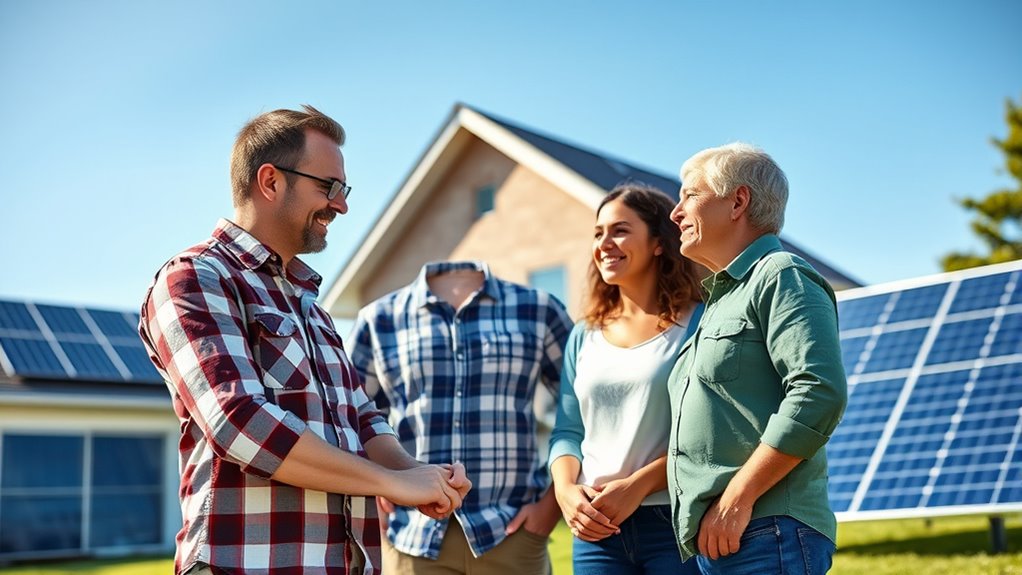
Since not every homeowner or business will benefit equally from solar panels, you need to pinpoint who will gain the most value from your product. Start by focusing on customers with high electricity bills or those in sunny regions, as they’ll see the fastest return on investment.
Also, consider environmentally conscious buyers enthusiastic to reduce their carbon footprint. Homeowners with suitable roof space and minimal shading make ideal candidates, as do businesses looking to cut operational costs.
Don’t forget to target those eligible for local incentives or tax credits, since financial benefits can be a strong motivator. By clearly identifying these ideal customers, you can tailor your marketing and outreach efforts, ensuring you invest your time where it’ll have the greatest impact and close more sales effectively.
Craft a Clear and Compelling Solar Panel Sales Pitch
A strong solar panel sales pitch has three key elements: clarity, relevance, and persuasion. You want to quickly explain how solar panels benefit the customer, address their specific needs, and motivate them to act.
Focus on what matters most to your audience.
To craft your pitch, follow these steps:
- Clearly state the main benefit, like saving on energy bills or reducing carbon footprint.
- Tailor your message to the customer’s priorities and concerns.
- Use simple, jargon-free language to keep it understandable.
- End with a compelling call to action, such as scheduling a free consultation or offering a limited-time discount.
Choose the Best Channels to Reach Solar Buyers
Once you’ve crafted a clear and compelling sales pitch, the next step is figuring out where to share it. Focus on channels where potential solar buyers spend time. Social media platforms like Facebook and LinkedIn let you target homeowners and businesses interested in green energy.
Local community groups and forums are great for building trust and answering questions directly. Don’t overlook partnerships with home improvement stores or real estate agents—they often connect with motivated buyers.
Hosting informational webinars or attending green energy expos also puts you in front of engaged prospects. Finally, optimize your website for search engines so people searching for solar solutions find you easily.
Offer Attractive Solar Panel Pricing and Financing Options
You need to set competitive prices that catch your customers’ attention without cutting into your profits. Offering flexible financing options makes solar panels more accessible and boosts your sales.
Competitive Pricing Strategies
While quality and reliability matter, competitive pricing often seals the deal when selling solar panels. You need to balance affordability with value to attract buyers without undervaluing your product.
Here are four strategies to help you set prices that win customers:
- Research local market rates to understand competitor pricing.
- Bundle products or services to offer better value.
- Highlight cost savings over time to justify your price.
- Adjust prices seasonally or based on demand fluctuations.
Flexible Financing Solutions
Although competitive pricing grabs attention, offering flexible financing solutions can turn interested prospects into committed customers. You’ll want to provide options like low-interest loans, leasing programs, or power purchase agreements that reduce upfront costs.
These choices make solar panels more accessible and appealing, especially for customers worried about initial expenses. By tailoring financing plans to different budgets and credit profiles, you show you understand their needs and build trust.
Make sure to clearly explain terms and benefits so prospects feel confident in their decision. When you simplify payment processes and highlight long-term savings, you remove barriers that might hold buyers back.
Ultimately, flexible financing isn’t just about affordability—it’s about empowering customers to invest in clean energy without financial strain.
Answer Common Questions and Overcome Objections
Because potential buyers often have concerns or doubts about solar panels, preparing clear and confident responses to their common questions is essential. When you address objections head-on, you build trust and make buyers feel understood.
Anticipate typical questions and have concise answers ready.
Here are four common areas to focus on:
- Cost and Savings: Explain upfront costs versus long-term savings on energy bills.
- Installation Process: Outline the timeline and what to expect during setup.
- Maintenance and Durability: Reassure them about low maintenance and product lifespan.
- Energy Efficiency and Reliability: Discuss how solar panels perform in different weather conditions.
Close the Sale Confidently and Support Customers Afterward
Once you’ve addressed all their questions and eased their concerns, it’s time to confidently close the sale. Be clear, direct, and positive.
Let your customers know what comes next. Reassure them by outlining the next steps and how you’ll support them throughout installation and beyond.
Keeping strong communication after the sale builds trust and encourages referrals.
| Step | Action | Benefit |
|---|---|---|
| Confirm Agreement | Review contract and payment | Avoids misunderstandings |
| Schedule Installation | Set installation date | Ensures timely setup |
| Provide Support | Offer contact for questions | Builds lasting relationships |
Frequently Asked Questions
What Certifications Are Needed to Sell Solar Panels Legally?
You’ll need certifications like the NABCEP PV Installation Professional for credibility and legality.
Also, check your state’s licensing requirements, which might include contractor licenses or specific solar permits. This will help you sell solar panels legally and confidently.
How Do I Handle Inventory and Supply Chain for Solar Panels?
Streamline stock and suppliers by syncing software systems. You’ll want to work with trustworthy vendors, track timely shipments, and tackle tracking tools to take control of your supply chain.
This way, you can ensure smooth solar sales and keep your customers happy. It’s all about staying organized and on top of things!
What Software Tools Can Help Manage Solar Panel Sales?
You can use CRM tools like Salesforce or HubSpot to track leads, and project management software like Trello or Asana to organize tasks.
These tools really help keep everything on track and make sure no lead falls through the cracks.
Solar-specific tools like Aurora Solar also help design and quote installations efficiently.
They’re designed with the solar industry in mind, so they can save you a lot of time and effort.
How Can I Train My Sales Team Specifically for Solar Products?
You can train your sales team by providing product knowledge sessions, hands-on demonstrations, and role-playing scenarios. Use real customer cases and emphasize benefits like savings and sustainability.
Regular updates keep them confident and effective selling solar products.
This way, they’ll feel more comfortable talking about the products and answering questions. Plus, staying current with new info helps them close deals more easily.
What Are the Tax Implications of Selling Solar Panels?
You’ll face sales tax on solar panel sales in many states, but 26% federal tax credits could benefit your customers, boosting your pitch.
Keep updated on local tax laws to maximize savings and compliance.
It’s a good idea to stay in the loop because these rules can change, and you want to make sure you’re always offering the best deal.
Conclusion
Selling solar panels is like planting seeds in fertile soil—you nurture your knowledge, connect with the right customers, and offer clear, compelling reasons to switch to solar.
By choosing the best channels and providing attractive pricing, you set yourself up for success. Confidently addressing concerns helps you build trust and close the deal.
Remember, closing the sale is just the beginning; supporting your customers afterward guarantees your success shines as brightly as the sun itself.
Keep shining and selling! With the right approach, selling solar panels becomes easier and more rewarding. Focus on educating customers, offering competitive pricing, and providing excellent after-sales support. This way, your solar panel sales grow steadily, and your reputation as a trusted solar provider shines bright in the market.