Are Solar Panels Water Resistant?
You can trust solar panels to handle rain, snow, and humidity without damage because they’re built with tempered glass and sealed frames that keep water out. These features make solar panels water resistant, allowing them to withstand various weather conditions without compromising performance.
While they’re not fully waterproof and shouldn’t be submerged, their IP ratings and engineering protect against moisture in harsh weather.
Snow and hail won’t harm them when installed correctly. If you want to know how these features guarantee durability and spot water issues, keep exploring the details.
It’s pretty amazing how solar panels stay tough through all kinds of weather, right?
Key Takeaways
- Solar panels have tempered glass and sealed frames to resist rain, snow, and humidity without damage. They’re designed to handle typical weather conditions pretty well.
- They are water resistant but not fully waterproof; so, it’s best to avoid submersion or standing water around them. Think of them as tough, but not invincible.
- IP ratings like IP65 or higher show strong protection against water jets and some immersion. This means they can handle a good amount of water exposure without trouble.
- Multiple layers, seals, and durable materials work together to keep moisture out of the sensitive parts. It’s all about preventing damage from the inside.
- Proper installation and maintenance play a big role in keeping that water resistance effective. Taking care of your panels helps ensure they last a long time.
Are Solar Panels Water Resistant?
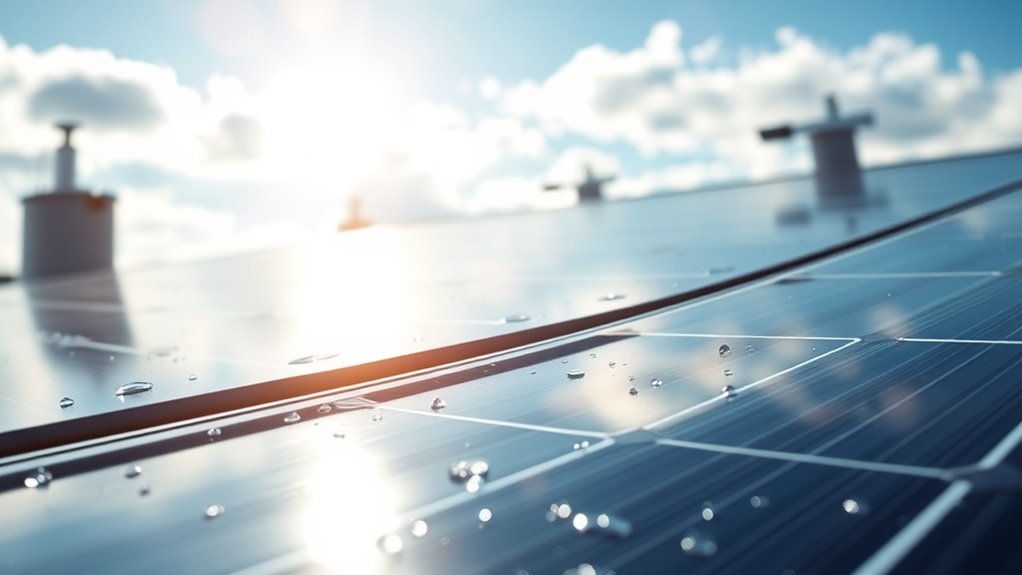
Although solar panels are designed to withstand various weather conditions, you might wonder if they’re truly water resistant. The good news is that solar panels are built to handle rain, snow, and humidity without damage.
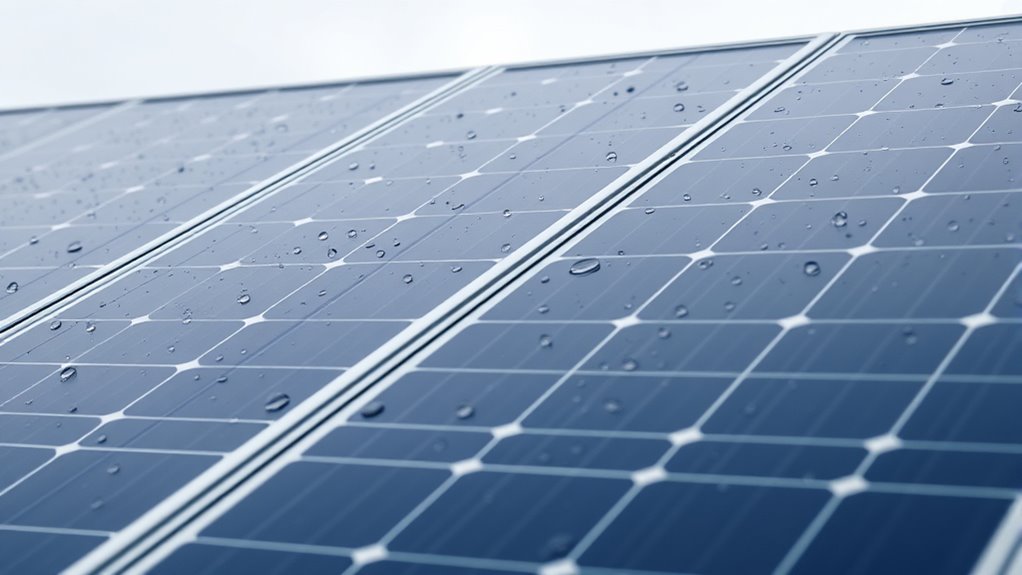
Their outer layer, usually made of tempered glass, acts as a durable shield protecting the sensitive cells inside. Plus, the frames and seals prevent water from seeping into internal components.
However, water resistance doesn’t mean they’re completely waterproof in every scenario. You should still avoid submerging panels or exposing them to standing water for extended periods.
Proper installation and maintenance also play a key role in ensuring they stay protected against moisture over time. This helps your solar investment last longer and perform efficiently.
Understanding Water Resistance Ratings for Solar Panels
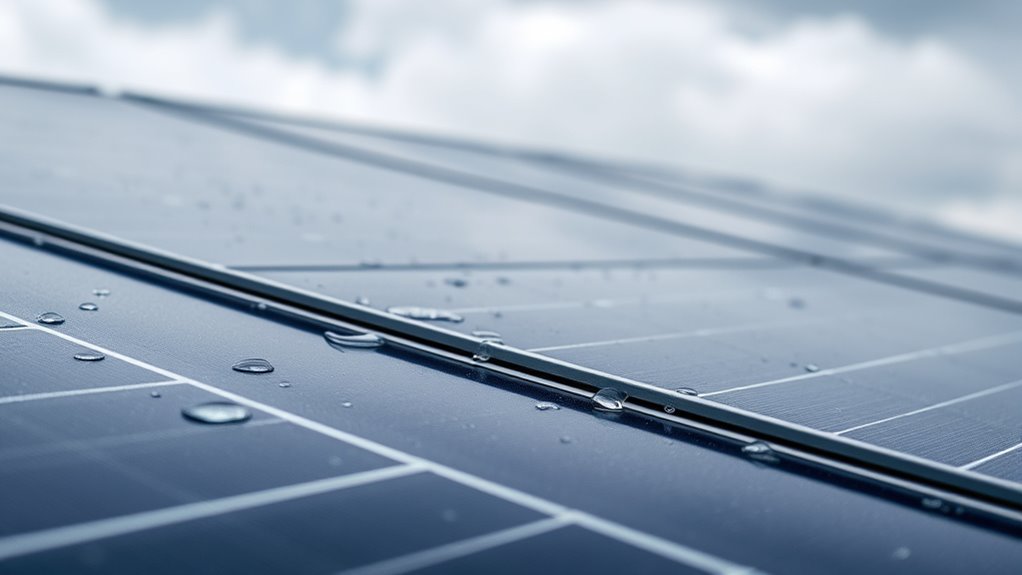
When you’re choosing solar panels, understanding their water resistance ratings can help you make a smarter decision about durability and performance. These ratings, often expressed as IP (Ingress Protection) codes, indicate how well the panels are sealed against water and dust.
The two digits in an IP rating each represent a different level of protection—first against solids, then liquids. Knowing these ratings ensures your panels withstand rain, splashes, or even heavy storms.
| IP Rating | Solid Protection | Water Protection |
|---|---|---|
| IP65 | Dust tight | Water jets from any angle |
| IP67 | Dust tight | Immersion up to 1m |
| IP68 | Dust tight | Continuous immersion |
Check the IP rating to match your local weather conditions. It really helps make sure your panels last longer and keep working well.
How Solar Panels Are Engineered to Be Water Resistant
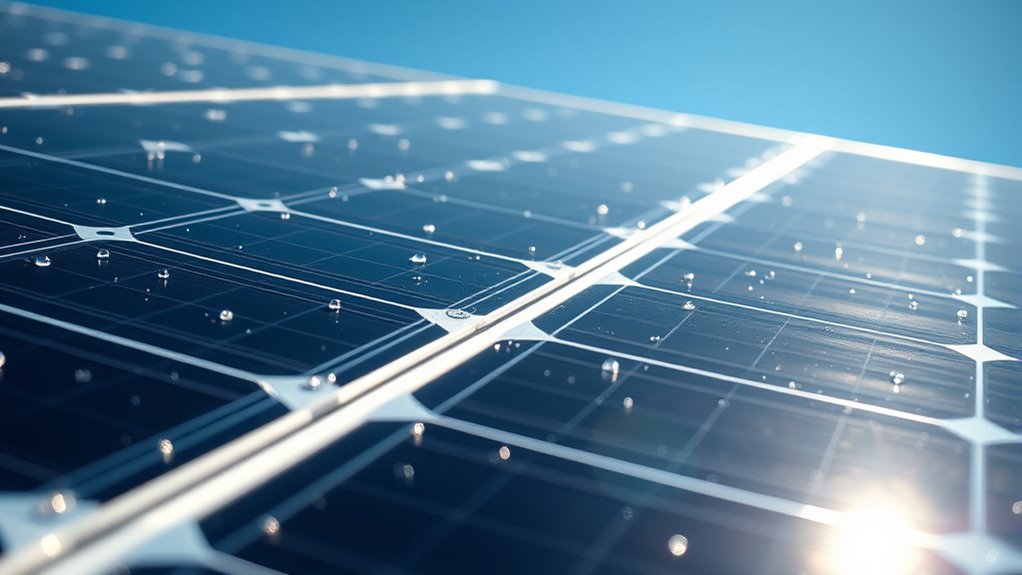
Because water can damage sensitive components, manufacturers design solar panels with multiple layers and seals that keep moisture out. When you look closely, you’ll see a tough glass cover protects the solar cells from direct exposure to rain and humidity.
Solar panels use tough glass and multiple seals to protect sensitive cells from rain and moisture.
Beneath this glass, encapsulant materials secure the cells and prevent water intrusion. The panel’s frame, usually aluminum, includes tight seals and gaskets that block water from seeping in at the edges.
You’ll also find a durable backsheet that shields the panel’s underside from moisture and environmental wear. Every connection point is carefully sealed, so water can’t get inside the wiring or junction box.
These engineering choices guarantee your solar panels stay dry and functional, even during everyday exposure to rain or dew. Pretty clever, right?
How Do Solar Panels Perform in Heavy Rain and Snow?
The water-resistant design of solar panels helps protect them during everyday rain, but you might wonder how they hold up in heavier weather like heavy rainstorms or snow. Solar panels are built with sealed frames and tempered glass, which prevent water from seeping inside, so heavy rain won’t damage the internal components.
Snow can cover panels temporarily, potentially reducing their energy output, but it doesn’t harm them. In fact, the smooth, angled surfaces help snow slide off naturally. Plus, sunlight reflecting off snow can even boost solar energy production once the snow clears.
Just make sure your panels are installed at an appropriate angle and maintained properly, so they continue to perform efficiently no matter the weather conditions you face.
How Do Solar Panels Handle Hail and Harsh Weather?
You might wonder how solar panels stand up to hail and other harsh weather conditions. They use tough, weatherproof materials designed to resist impact and extreme environments.
Let’s explore how their durability keeps them reliable year-round. It’s pretty impressive how these panels handle whatever nature throws at them!
Hail Impact Resistance
When hailstorms strike, solar panels often face the toughest test of their durability. You might worry about damage from large hailstones, but solar panels are designed to withstand impacts much stronger than typical hail.
Manufacturers test panels by simulating hail impacts with steel balls dropped at high speeds to guarantee they don’t crack or shatter easily. While small dents or scratches might occur, the glass used is tempered and surprisingly resilient.
However, extremely large hail or unusual storms can still cause damage, so it’s important to inspect your panels after severe weather. Knowing your solar panels have passed rigorous hail resistance tests gives you confidence they’ll keep generating energy, even when nature throws its worst at your roof.
Weatherproofing Materials Used
Although harsh weather can challenge solar panels, manufacturers equip them with specialized weatherproofing materials that help withstand hail, rain, wind, and sun exposure. The front surface usually features tempered glass, which is toughened to resist impact and prevent water penetration.
Around the edges, a durable frame made from aluminum or stainless steel seals the panel, keeping moisture out. Behind the glass, you’ll find a layer of encapsulant, often made from EVA (ethylene vinyl acetate), which cushions the solar cells and protects them from water and dirt.
The backsheet, typically a polymer film, acts as an additional barrier against moisture and environmental damage. These materials work together, so your solar panels stay sealed, functional, and efficient even when the weather isn’t on your side.
Durability In Extreme Conditions
Since solar panels are constantly exposed to the elements, their ability to endure hail, strong winds, and extreme temperatures is essential for maintaining performance. You’ll find that most solar panels come with a sturdy tempered glass layer designed to withstand hailstones without cracking.
Manufacturers test panels against harsh weather, making sure they meet industry standards like IEC 61215, which includes hail resistance tests. When strong winds hit, the mounting system keeps panels firmly in place, preventing damage or displacement.
Extreme temperatures, whether scorching heat or freezing cold, usually won’t degrade panel efficiency much because the materials used tolerate wide temperature ranges. While no system is completely invincible, modern solar panels balance durability and efficiency.
How to Spot and Prevent Water Damage in Solar Panels
If you want to protect your solar panels from costly damage, you need to know how to spot early signs of water intrusion. Look for discoloration, fogging, or condensation under the glass surface—these indicate moisture has seeped in.
Also, check the panel’s frame and connections for rust or corrosion. These often happen because of prolonged exposure to water.
Listen for unusual noises during rain, like dripping or popping. Those sounds could mean water is trapped inside.
To prevent water damage, make sure all seals and gaskets stay intact. Replace any that show signs of wear.
Keep your panels clean and clear of debris since buildup can trap moisture. And don’t forget to schedule regular inspections with a professional to catch issues early.
Finally, maintain proper drainage around the installation to avoid standing water. That’s a simple step that can save you a lot of trouble down the road.
Frequently Asked Questions
Can Solar Panels Be Cleaned With Water Safely?
Yes, you can safely clean solar panels with water. Just avoid using high-pressure hoses or harsh chemicals.
Try to clean them on a cool, cloudy day to prevent damage or streaks. Use a soft cloth or sponge for the best results.
Do Solar Panels Need Waterproof Coatings or Treatments?
You might think solar panels need extra waterproof coatings, but they don’t. They’re already designed to handle rain and moisture.
Just keep them clean and intact, and they’ll perform well without added treatments. It’s really that simple!
How Does Humidity Affect Solar Panel Efficiency?
Humidity can reduce your solar panel’s efficiency by causing moisture buildup. This moisture scatters sunlight and slightly lowers energy output.
You’ll want to guarantee proper sealing and ventilation to minimize these effects. That way, you can keep performance steady and reliable.
Are There Specific Warranties for Water Damage on Solar Panels?
You’d think your solar panels are invincible in a hurricane, but warranties usually cover water damage only if it’s from manufacturing defects or poor installation.
Always check your specific policy to avoid nasty surprises later!
Can Water Resistance Affect Solar Panel Installation Costs?
Yes, water resistance can affect your solar panel installation costs since higher-quality, water-resistant panels and protective measures may increase upfront expenses.
But the good news is, these investments often save you money by preventing damage and reducing maintenance over time. So, while you might pay more initially, it’s usually worth it in the long run.
Conclusion
You might wonder if solar panels can brave the storm—and they can. Built tough with water resistance in mind, they’re designed to shrug off rain, snow, and even hail like a pro.
But don’t get too comfortable; regular checks keep them in top shape. After all, your solar panels aren’t just catching sunlight—they’re standing guard, turning nature’s challenges into clean energy triumphs.
So, trust their strength but stay vigilant! Water resistance is a key feature that helps solar panels withstand harsh weather conditions, ensuring they continue to perform efficiently. With routine maintenance, your solar panels will keep converting sunlight into renewable energy, rain or shine. This durability means you can rely on your solar investment for years, making water-resistant solar panels a smart choice for sustainable living.