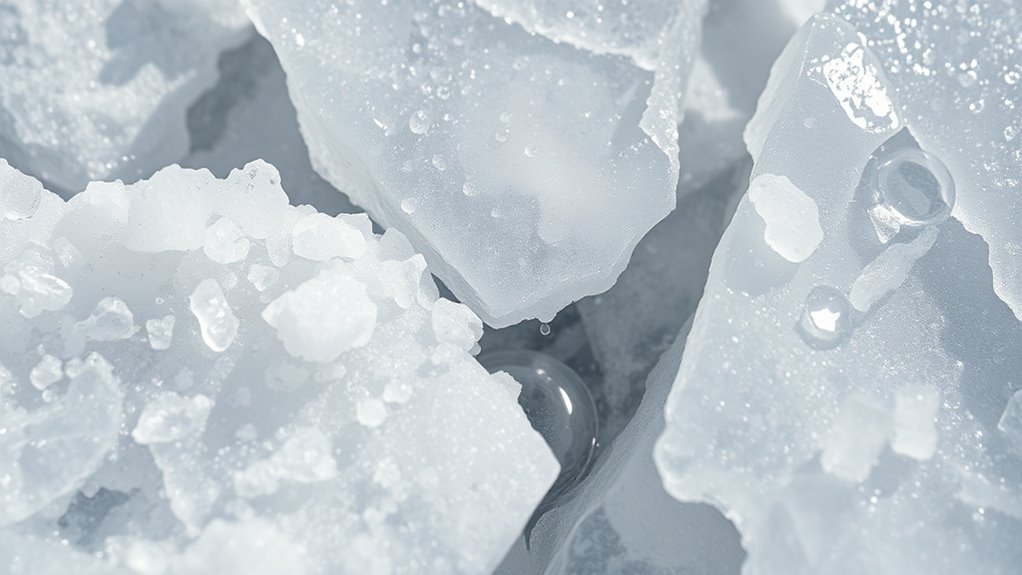
What Will Happen When Solar Salt Melts Ice?
When you spread solar salt on ice, it dissolves into the thin water layer and releases ions that disrupt how water molecules bond. This breaks the ice’s crystal structure, lowers its melting point, and causes ice to melt even below freezing temperatures.
It speeds up melting and creates a salty brine that prevents refreezing, making roads safer more quickly.
You’ll also find there are important effects on the environment and infrastructure worth considering.
Key Takeaways
- Solar salt dissolves on ice, releasing sodium and chloride ions that disrupt water molecule bonding. It lowers the freezing point, causing ice to melt at temperatures below 0°C (32°F).
- The salt breaks down the ice’s crystal structure, turning it slushy and easier to remove. Melting ice forms a salty brine that prevents water from refreezing quickly.
- This process speeds up ice removal, improving safety on roads and walkways in cold conditions. So, using solar salt is a smart way to deal with icy surfaces!
Solar Salt’s Chemical Interaction With Ice
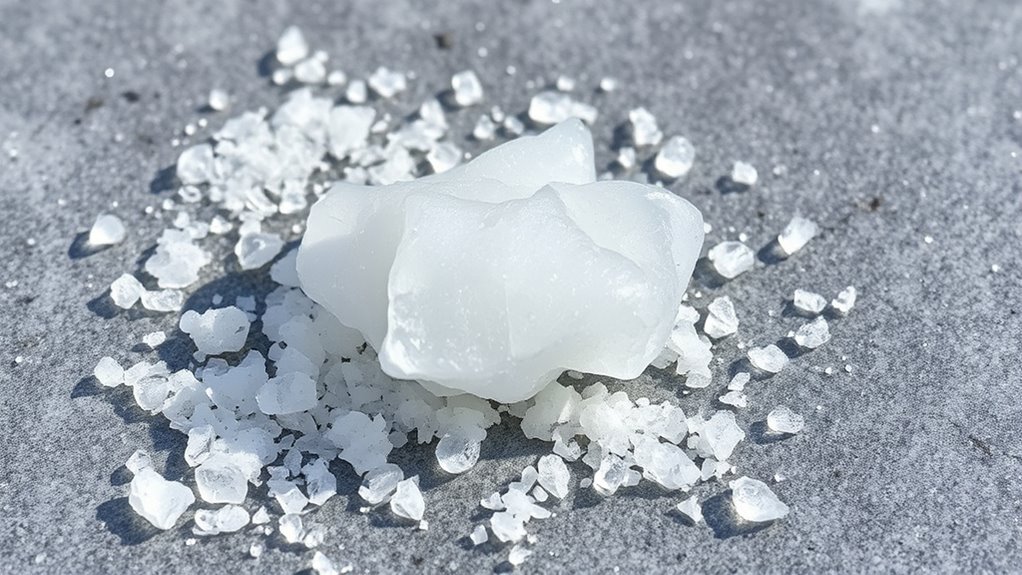
Although ice seems solid and unyielding, solar salt actively disrupts its structure by lowering the freezing point. When you spread solar salt on ice, its sodium and chloride ions dissolve into the thin water layer on the ice surface.
These ions interfere with water molecules’ ability to bond and form a solid lattice. As a result, the ice starts to weaken and melt even if the temperature remains below water’s normal freezing point.
You’ll notice the ice becomes slushy as solar salt continues to work, breaking the ice’s crystalline structure. This interaction doesn’t just physically break the ice but chemically alters the balance between solid and liquid water.
That’s how solar salt effectively initiates melting in conditions where pure ice would stay frozen. Pretty neat, right?
Why Solar Salt Lowers Ice’s Melting Point
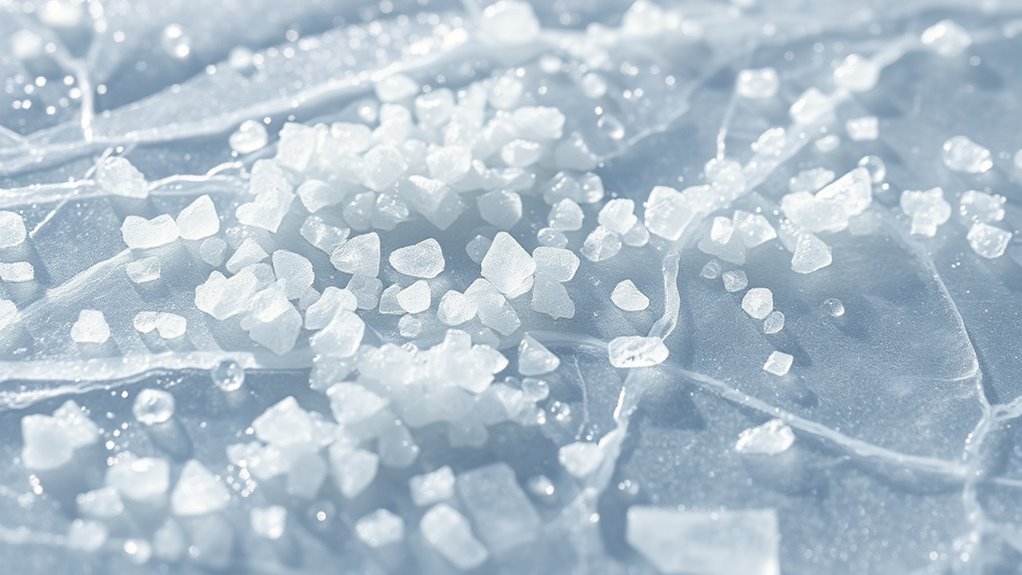
Because solar salt dissolves into the water layer on ice, it disrupts the natural freezing process by lowering the melting point. When salt ions mix with water molecules, they interfere with ice’s ability to form solid bonds.
This means the ice needs a colder temperature to stay frozen. You’ll notice ice melts faster when salt is present because the melting point drops below water’s usual 0°C (32°F).
Here’s a quick comparison:
| Factor | Effect of Solar Salt |
|---|---|
| Melting Point | Decreases |
| Freezing Point | Lowers |
| Ice Formation | Hindered |
| Temperature Needed | Drops below 0°C |
| Ice Stability | Reduced |
How Solar Salt Changes Ice’s Structure
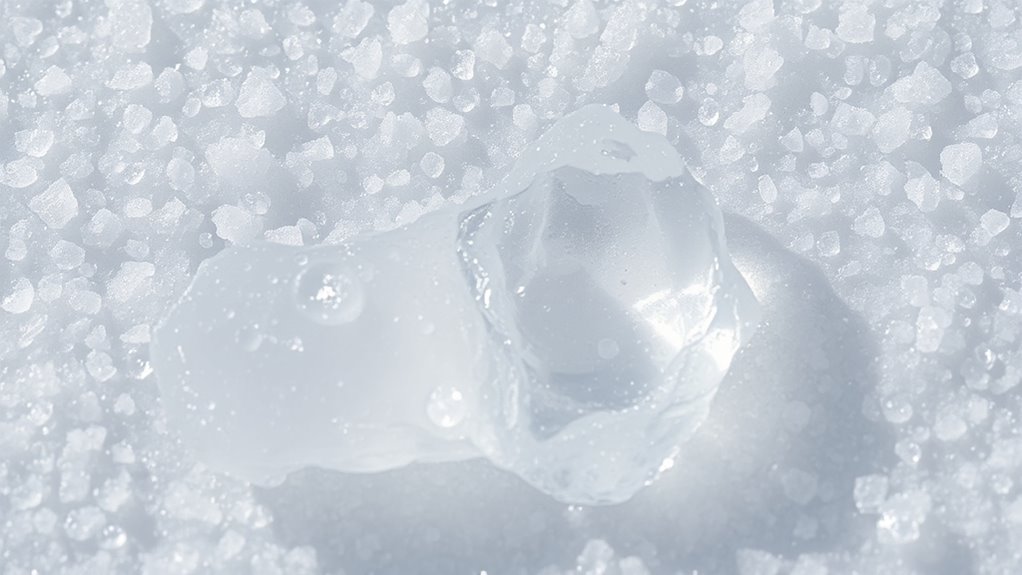
When you add solar salt to ice, its ions start interfering with the ice crystals. This interaction disrupts the orderly structure that keeps ice solid.
You’ll see how these salt ions break apart the crystal network, making the ice weaker and easier to melt. It’s like the salt is messing with the ice’s natural order, so it doesn’t hold together as well.
Ice Crystal Disruption
As you sprinkle solar salt onto ice, its molecules start interfering with the orderly arrangement of water molecules that form ice crystals. This disruption breaks the tight structure, causing the ice to weaken and eventually melt.
Here’s how the process works:
- Salt molecules insert themselves between water molecules, breaking hydrogen bonds. This interference prevents water molecules from locking into a rigid, crystalline pattern.
- With the structure compromised, the ice’s melting point drops, allowing it to turn into liquid at lower temperatures. So basically, the salt messes with the ice’s normal setup, making it melt easier than usual.
Salt Ion Interaction
How exactly do the ions in solar salt change the structure of ice? When you sprinkle solar salt on ice, its sodium (Na⁺) and chloride (Cl⁻) ions interact directly with water molecules. These ions disrupt the orderly arrangement of water molecules in the ice’s crystal lattice.
Instead of holding tight in a rigid pattern, the molecules start to break free because the ions interfere with their hydrogen bonds. This interference lowers the freezing point, causing the ice to melt even when temperatures are below water’s normal freezing point.
You’ll see the ice soften and turn to liquid as the rigid structure breaks down. By understanding this salt ion interaction, you can grasp why solar salt is so effective at melting ice quickly and efficiently.
How Solar Salt Helps Clear Roads Quickly
When you spread solar salt on icy roads, it lowers the ice’s melting point, causing it to melt at colder temperatures. This change makes ice dissolve much faster than it would on its own.
You’ll see roads clear quickly, making travel safer and easier. It’s a simple trick, but it works wonders in keeping things moving smoothly.
Salt’s Melting Point Effect
Although ice melts naturally at 32°F (0°C), solar salt lowers this melting point, allowing it to work effectively even on colder roads. When you spread solar salt on icy surfaces, it disrupts the freezing process by:
- Reducing water’s freezing temperature, so ice starts melting below 32°F.
- Creating a salty brine as it dissolves, which further prevents ice from forming.
- Increasing the time before water refreezes, keeping roads safer longer.
This melting point depression means you can count on solar salt to clear ice in conditions where pure water would remain frozen. By lowering the temperature at which ice forms, solar salt helps maintain safer, more navigable roads during harsh winter weather.
Faster Ice Dissolution
Why does solar salt clear ice faster than other methods? When you spread solar salt on icy roads, it immediately starts lowering the freezing point of water. This causes the ice to melt even in temperatures well below zero.
Solar salt dissolves quickly, creating a brine solution that penetrates the ice and speeds up melting. Unlike other de-icing agents, its purity and granule size let it work efficiently, preventing refreezing and ensuring safer roads.
When you use solar salt, you’re effectively accelerating the ice’s breakdown, reducing slippery conditions faster. This means less waiting time for the ice to clear, making travel safer and more convenient during winter storms.
It’s a practical, fast-acting way to keep roads clear and people moving.
Environmental Impact of Solar Salt Use
Because solar salt is widely used to melt ice on roads and sidewalks, you might wonder how it affects the environment. When you use solar salt, it doesn’t just disappear; it interacts with soil, water, and plants around you.
Here are three key environmental impacts to keep in mind:
- Water Contamination – Solar salt can increase salt levels in nearby water bodies, harming aquatic life.
- Soil Degradation – Excess salt can alter soil structure, reducing its fertility and affecting plant growth.
- Vegetation Damage – Salt spray and runoff can cause leaf burn and stress for roadside plants.
How Solar Salt Affects Infrastructure and What to Watch For
When you apply solar salt to melt ice, it can take a toll on infrastructure like roads, bridges, and vehicles. Solar salt accelerates metal corrosion, especially on steel in bridges and car undercarriages.
Concrete surfaces may also suffer from cracking and spalling due to salt’s chemical effects. You’ll want to watch for increased maintenance costs and potential safety hazards caused by weakened structures.
To minimize damage, avoid overusing salt and consider alternative de-icing methods when possible. Regular inspections and prompt repairs can help protect infrastructure longevity.
Frequently Asked Questions
Can Solar Salt Be Used for Melting Ice on Sidewalks?
Yes, you can use solar salt to melt ice on sidewalks. It lowers the freezing point, helping ice dissolve faster.
Just be cautious—solar salt might be less effective in extremely cold temperatures compared to other deicers. So, if it’s super chilly, you might want to consider other options.
How Quickly Does Solar Salt Start Working on Ice?
Like a knight charging into battle, solar salt starts working within minutes, breaking the icy grip beneath your feet.
You’ll feel its power quickly, melting ice to reclaim safe paths and warm your steps.
Is Solar Salt Safe for Pets and Wildlife?
Solar salt isn’t completely safe for pets and wildlife. You’ll want to use it carefully because it can irritate paws and harm animals if ingested.
Always rinse paws and avoid overapplication to protect them. It’s better to be cautious and keep your furry friends safe!
Can Solar Salt Be Mixed With Other De-Icing Agents?
Sure, you can cautiously combine solar salt with other de-icers, but be careful! Mixing might maximize melting but may also cause chemical clashes, corrosion, or reduced results.
Always test tiny amounts to tailor treatment safely. It’s better to play it safe when mixing to avoid any unwanted surprises.
What Is the Best Temperature Range for Using Solar Salt?
You’ll get the best results using solar salt when temperatures are above 15°F (-9°C).
Below that, it loses effectiveness. So, you might want to combine it with other agents or choose alternatives for colder conditions.
Conclusion
When you spread solar salt on ice, it lowers the melting point, breaking the ice’s structure and turning it into water faster. This process helps ice melt more quickly than it normally would.
For example, in Minneapolis, using solar salt during winter storms helps clear highways quickly, keeping traffic flowing safely. It’s a practical way to manage icy roads and reduce accidents.
However, you should also watch for potential corrosion on roads and vehicles. Salt can wear down infrastructure and damage car parts over time.
Understanding these effects lets you use solar salt effectively while minimizing environmental and infrastructure damage. By knowing how solar salt works to melt ice and the possible downsides, you can make smarter choices. This balance helps you keep roads safe and protect the environment at the same time.