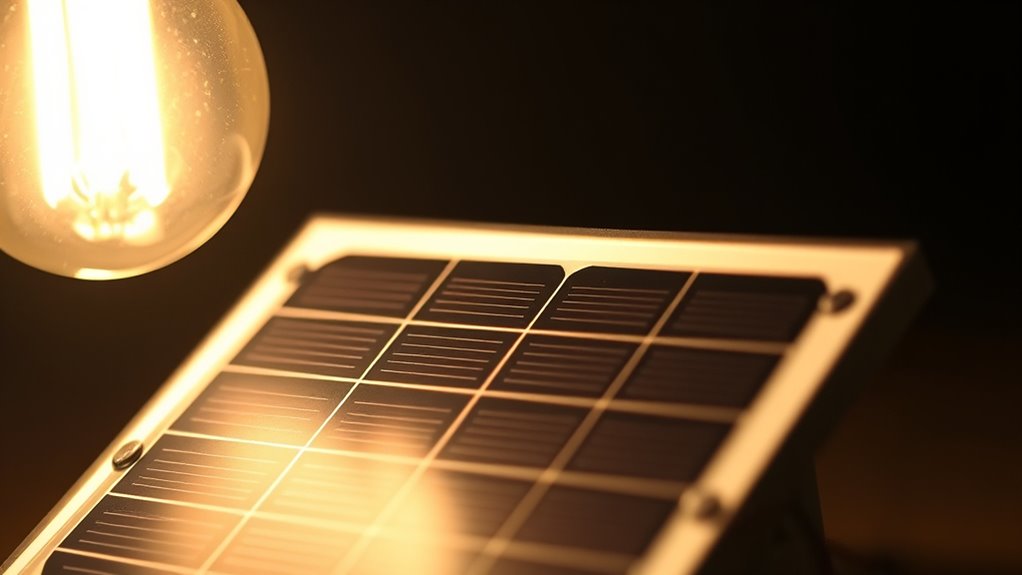
What Happens If I Charge a Solar Panel With a Light Bulb?
If you charge a solar panel with a light bulb, it will generate electricity, but much less efficiently than sunlight. Light bulbs emit lower intensity and a limited spectrum, which means your panel won’t get enough energy to charge quickly or fully.
Specialized lights like LEDs can improve this a bit, but standard bulbs still fall short. So, if you’re thinking about powering a solar panel indoors, keep in mind that typical household bulbs aren’t the best choice.
Using sunlight or proper indoor lights will boost your panel’s performance significantly. Keep exploring to understand how different light sources impact solar charging and why sunlight remains the top option.
Key Takeaways
- Charging a solar panel with a light bulb produces small amounts of electricity because the light intensity is much lower than sunlight.
- Plus, artificial light often doesn’t match the solar cell’s spectrum, which cuts down how much energy gets converted and the overall power output.
- Some lights, like LED grow lights and high-intensity discharge lamps, do better indoors.
- They give off stronger light that’s closer to what solar panels actually need compared to your average bulb.
- Regular household bulbs, on the other hand, emit pretty weak and inefficient light.
- That means charging your solar panel with them can be super slow or just not work well at all.
- So, if you want your solar panel to charge efficiently, it’s best to stick with sunlight or special lighting made for this purpose.
- Typical light bulbs just aren’t up to the task.
How Solar Panels Convert Light Into Electricity
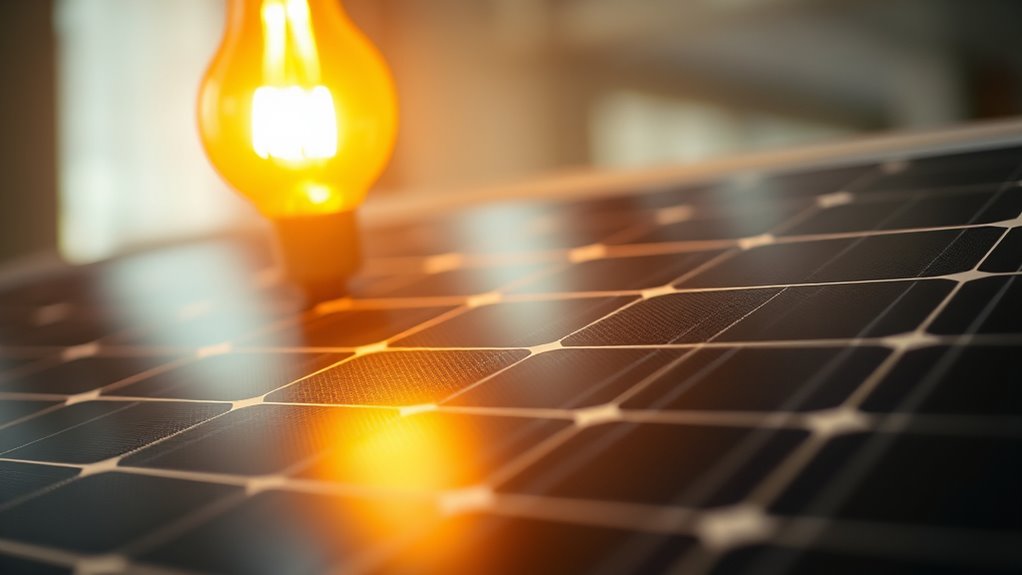
Although solar panels are often associated with sunlight, they actually convert any light into electricity by using photovoltaic cells. When light hits these cells, it excites electrons, creating an electric current.
You don’t need direct sunlight; even indoor lighting can trigger this effect, though less efficiently. These cells are made from semiconductor materials, usually silicon, which absorb photons and release electrons.
The panel’s internal electric field then directs these electrons, producing electricity you can use or store. The amount of electricity generated depends on light intensity and cell quality.
Light Bulbs’ Ability to Charge Solar Panels
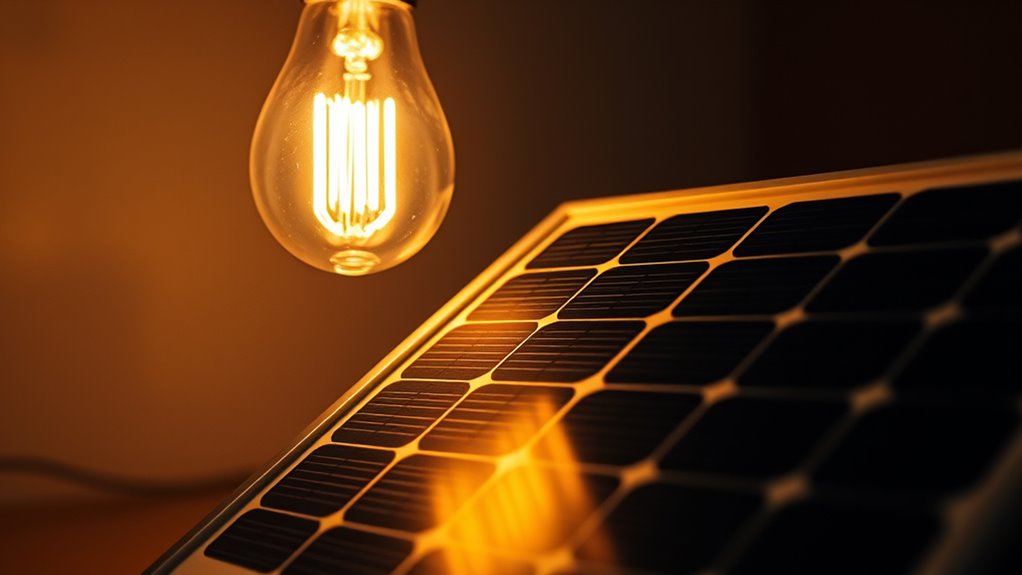
How well can light bulbs charge solar panels? You might expect that since solar panels convert light into electricity, any light source could work. However, not all light bulbs emit the right type or intensity of light needed for effective charging.
Incandescent and fluorescent bulbs produce light, but their output often lacks the intensity and spectrum that solar cells require. LED bulbs, while efficient, still don’t provide enough energy to generate substantial power.
When you shine a light bulb on a solar panel, it can produce a small amount of electricity, but it’s minimal compared to sunlight. So, while light bulbs can technically charge solar panels, the results are often limited and not practical for powering devices or charging batteries efficiently.
Why Solar Panels Work Better With Sunlight Than Artificial Light
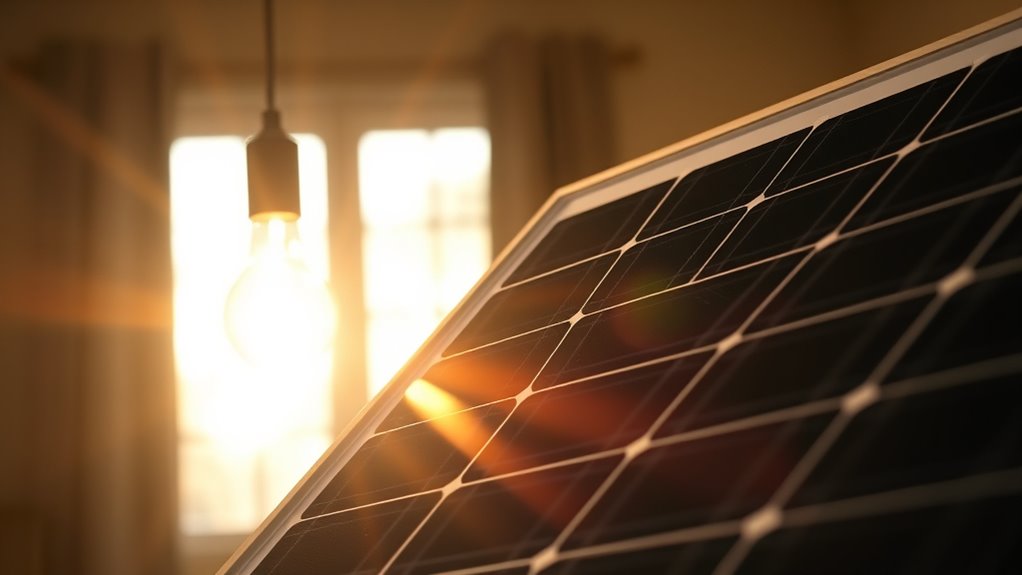
You’ll notice solar panels perform best under sunlight because it’s much more intense than artificial light. The sun’s broad spectrum matches what panels need, while bulbs emit a narrower range that limits energy capture.
These differences directly affect how efficiently your panel converts light into electricity. So, in simple terms, the sun just gives your panels more of what they’re looking for.
Light Intensity Differences
Why does sunlight charge solar panels more efficiently than artificial light? It all comes down to light intensity.
Sunlight delivers a much higher intensity, providing more photons per second to excite the solar cells. Artificial light sources, like bulbs, emit far less energy, so your panel produces less power.
Here’s a quick comparison:
| Light Source | Intensity (W/m²) | Effect on Solar Panel Output |
|---|---|---|
| Direct Sunlight | 1000 | High |
| LED Bulb | 10-50 | Low |
| Incandescent Bulb | 5-20 | Very Low |
| Fluorescent Light | 20-40 | Low |
| CFL Bulb | 15-35 | Low |
Since intensity directly influences output, sunlight remains your best power source. It’s just the most powerful option you’ve got.
Spectrum Variations Impact
What makes sunlight so much better at powering solar panels than artificial light? The answer lies in the spectrum—the range of light wavelengths.
Sunlight offers a broad, balanced spectrum that perfectly matches the materials in solar cells, allowing them to absorb energy efficiently. Artificial lights, like bulbs, emit light in narrower, less ideal wavelength ranges.
For example, many bulbs focus on visible light and lack the full spread of infrared and ultraviolet rays sunlight provides. Since solar panels are designed to capture energy across a wide spectrum, artificial light simply doesn’t stimulate them as effectively.
Energy Conversion Efficiency
The spectrum differences directly affect how efficiently solar panels convert light into electricity. When you shine a light bulb on a solar panel, the wavelengths emitted don’t match the panel’s ideal absorption range like sunlight does.
Sunlight offers a broad, balanced spectrum containing plenty of visible and near-infrared light, which solar cells are designed to capture effectively. Artificial lights, especially incandescent or LED bulbs, often emit a narrower or skewed spectrum with less energy in the perfect wavelengths.
This mismatch reduces the panel’s ability to generate power efficiently. So, while you can charge a solar panel with a light bulb, it won’t produce nearly as much electricity as sunlight.
Understanding this helps you see why solar panels perform best outdoors under the sun.
How Different Types of Light Bulbs Affect Solar Panel Charging
You’ll notice incandescent bulbs produce a warm glow, but they aren’t very efficient for charging solar panels.
On the other hand, LED and CFL bulbs emit light that solar panels can use more effectively.
Understanding these differences helps you choose the best light source for your charging needs.
Incandescent Bulbs’ Impact
Although incandescent bulbs emit light that can power solar panels, they do so less efficiently than other light sources. When you use an incandescent bulb, most of the energy converts to heat rather than light, so the solar panel receives less effective illumination.
This means the panel charges more slowly or generates less power compared to exposure to natural sunlight or more efficient bulbs. If you’re relying on an incandescent bulb to charge your solar panel, expect limited results.
The broad spectrum of light they emit isn’t optimized for the solar cells’ sensitivity, which further reduces charging efficiency. While they can technically provide some charge, incandescent bulbs aren’t practical if you want meaningful or consistent energy from your solar panel indoors.
LED and CFL Efficiency
Incandescent bulbs don’t provide the best energy for solar panels, but LED and CFL bulbs offer a more effective alternative. When you use LED or CFL bulbs to charge a solar panel, you’ll notice better efficiency because these bulbs emit light at wavelengths that solar cells can convert more readily into electricity.
LEDs, in particular, produce a focused, intense light with less heat loss, making them ideal for this purpose. CFLs also perform better than incandescent bulbs but usually fall short of LEDs in efficiency and lifespan.
If you want to experiment with charging your solar panel using a light bulb, choosing LED bulbs will give you a higher power output and faster charging times compared to CFLs or incandescent bulbs. So, LED lighting is definitely a smarter choice for solar charging setups.
Testing Charging a Solar Panel With a Light Bulb
When testing charging a solar panel with a light bulb, you need to understand how artificial light compares to natural sunlight regarding intensity and spectrum. Set up your solar panel under the light bulb at a fixed distance to maintain consistency.
Use a multimeter to measure voltage and current output from the panel as you expose it to the bulb’s light. You’ll notice the power generated is markedly lower than what you’d get from direct sunlight.
Measure voltage and current with a multimeter to see how much power your solar panel generates under a bulb.
That’s because most light bulbs don’t emit the full spectrum of light solar panels need and lack the intensity sunlight provides. Still, this test helps you see how solar panels respond to different light sources.
It also confirms that while charging is possible, it’s far less efficient under a bulb. So, it’s a neat way to experiment but don’t expect the same results as outside in the sun.
Better Ways to Charge Solar Panels Without Using Light Bulbs
Testing a solar panel with a light bulb shows you how limited artificial light can be for charging. To get better results, you need more effective energy sources.
Here are four better ways to charge your solar panels:
- Direct sunlight – The most efficient and natural energy source for solar panels.
- LED grow lights – These emit a light spectrum closer to sunlight, improving charging efficiency.
- High-intensity discharge lamps – Often used in industrial settings, they provide stronger light better suited for solar charging.
- Solar simulators – Specialized devices designed to mimic sunlight precisely, ideal for testing and charging.
Using these methods, you’ll maximize the energy your panels can absorb. This way, you won’t have to deal with the weak output you get from standard light bulbs.
Frequently Asked Questions
Can Charging a Solar Panel With a Light Bulb Damage the Panel?
No, charging a solar panel with a light bulb won’t damage it because solar panels are designed to handle varying light levels.
That said, a light bulb won’t provide enough energy to charge the panel efficiently or effectively. So, while it’s safe, it’s not really practical.
How Long Does It Take to Charge a Solar Panel Using a Light Bulb?
Charging a solar panel with a light bulb is like filling a bucket with a slow drip. It can take hours or even days, depending on the bulb’s brightness and panel size.
Does the Distance Between the Light Bulb and Solar Panel Affect Charging?
Yes, the distance between the light bulb and solar panel affects charging. The closer you place the bulb, the more light the panel receives, increasing energy output.
Move it farther away, and charging efficiency drops considerably. So, it’s best to keep the bulb nearby for better results.
Can Indoor Plants Benefit From Solar Panels Charged by Light Bulbs?
Can indoor plants really benefit from solar panels charged by light bulbs? Not really.
You’ll find the energy output too low to power grow lights effectively, so your plants won’t get enough light to thrive indoors.
In other words, it’s not the best way to help your plants grow inside. Better to use direct grow lights or natural sunlight instead.
Are There Specific Light Bulb Brands Recommended for Solar Panel Charging?
You won’t find specific light bulb brands meant for charging solar panels since typical bulbs lack the right spectrum or intensity.
Instead, focus on full-spectrum or grow lights with high lumens to maximize your panel’s energy absorption indoors.
These types of lights are designed to mimic natural sunlight better, which helps your solar panels perform more efficiently inside.
Conclusion
If you try charging a solar panel with a light bulb, you’ll quickly realize it’s like expecting a drizzle to fill an ocean—it just won’t cut it. Solar panels thrive on the sun’s intense, full-spectrum light, not the weak glow of most bulbs.
While some bulbs work better than others, sunlight remains king. For real power, stick to natural light or specialized solar chargers designed to give your panels the boost they truly need.
Charging a solar panel with a light bulb isn’t very effective because typical bulbs don’t emit enough light intensity or the right spectrum to generate significant electricity. So, if you want your solar panels to perform well, relying on sunlight or high-quality solar chargers is the way to go. This ensures your solar panel gets the energy it needs to charge efficiently and power up your devices.