
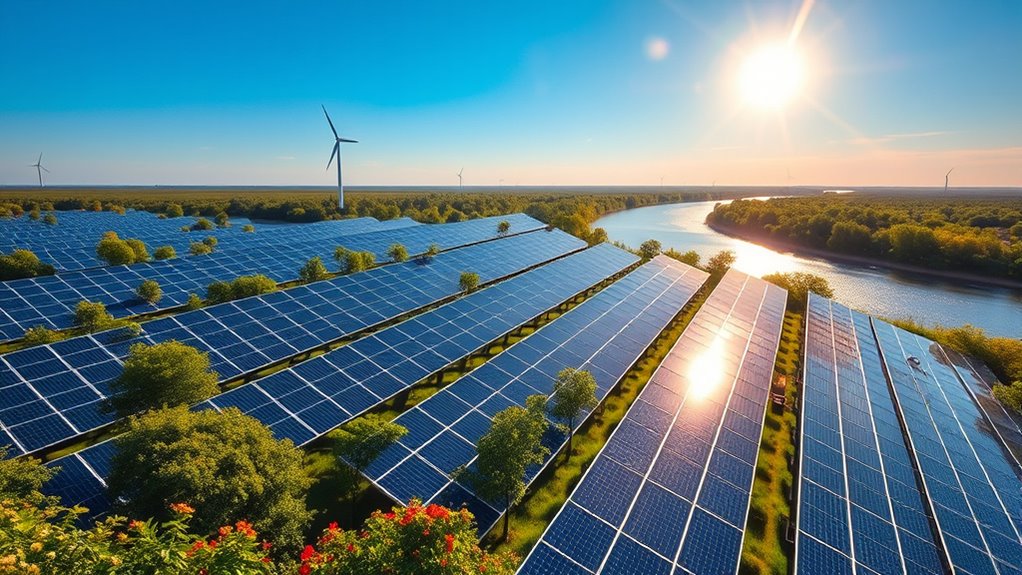
7 Helpful Ways Solar Energy Benefits the Environment
You benefit the environment every time you choose solar energy because it cuts greenhouse gas emissions by generating clean electricity without fossil fuels. This means less pollution and a smaller carbon footprint, which is great for the planet.
It also lowers air pollution, improving the air you breathe. Plus, solar panels use little to no water during operation, so they help conserve this precious resource.
Solar energy protects wildlife habitats by minimizing land disruption.
On top of that, it supports a circular economy since solar panels are recyclable.
By tapping into the sun’s power, you’re helping create a sustainable future. It’s a smart, eco-friendly choice that’s definitely worth exploring further.
Key Takeaways
- Solar energy reduces greenhouse gas emissions by generating electricity without burning fossil fuels. This means it helps fight climate change in a big way.
- It also lowers air pollution by cutting harmful pollutants from traditional power plants. Cleaner air is better for everyone’s health.
- Solar power conserves water because it uses little to no water during energy production. So, it’s a smart choice, especially in dry areas.
- Plus, it protects wildlife habitats by minimizing land disruption and supporting biodiversity. That’s a win for nature and animals alike.
- Lastly, solar energy promotes a circular economy with renewable resources and recyclable panel components. It’s all about using resources wisely and reducing waste.
How Solar Energy Reduces Greenhouse Gas Emissions
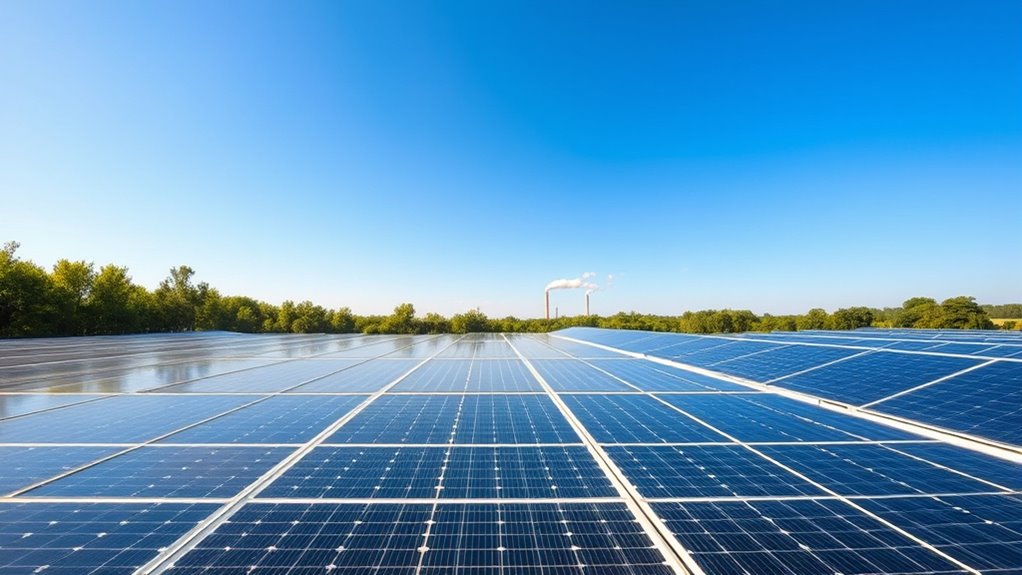
Because solar energy generates electricity without burning fossil fuels, it considerably cuts down greenhouse gas emissions. When you switch to solar power, you avoid relying on coal, oil, or natural gas plants that release carbon dioxide and other harmful gases into the atmosphere.
Switching to solar power reduces reliance on fossil fuels, cutting greenhouse gas emissions significantly.
This means your energy use directly reduces your carbon footprint. Solar panels operate silently and produce clean energy as long as the sun shines, making them a reliable choice for lowering emissions.
By choosing solar, you actively contribute to slowing climate change and promoting a healthier planet. Plus, as more people adopt solar technology, the overall demand for fossil fuels decreases, creating a positive ripple effect that benefits everyone.
Your decision to use solar energy makes a real difference. It’s a simple step that helps protect the planet for future generations.
How Solar Energy Lowers Air Pollution Levels
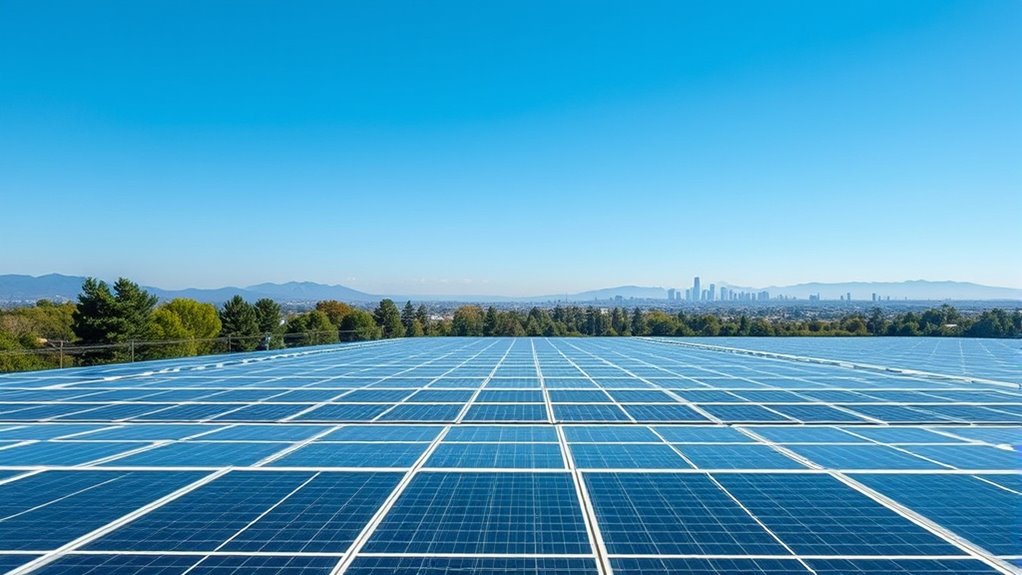
When you switch to solar energy, you cut down on pollutants like sulfur dioxide and nitrogen oxides that traditional power plants release into the air. These harmful emissions contribute to smog, acid rain, and respiratory problems.
By using solar power, you help reduce these toxins, improving the air quality around you. Solar panels generate electricity without combustion, so they don’t produce carbon monoxide or particulate matter either.
This means fewer airborne irritants that can trigger asthma and other health issues. Plus, solar energy lessens your reliance on fossil fuels, which are major sources of air pollution.
Choosing solar power directly supports cleaner air, making your environment healthier for you, your family, and your community. It’s a simple step that creates a big impact on the air we all breathe.
How Solar Energy Conserves Water Resources
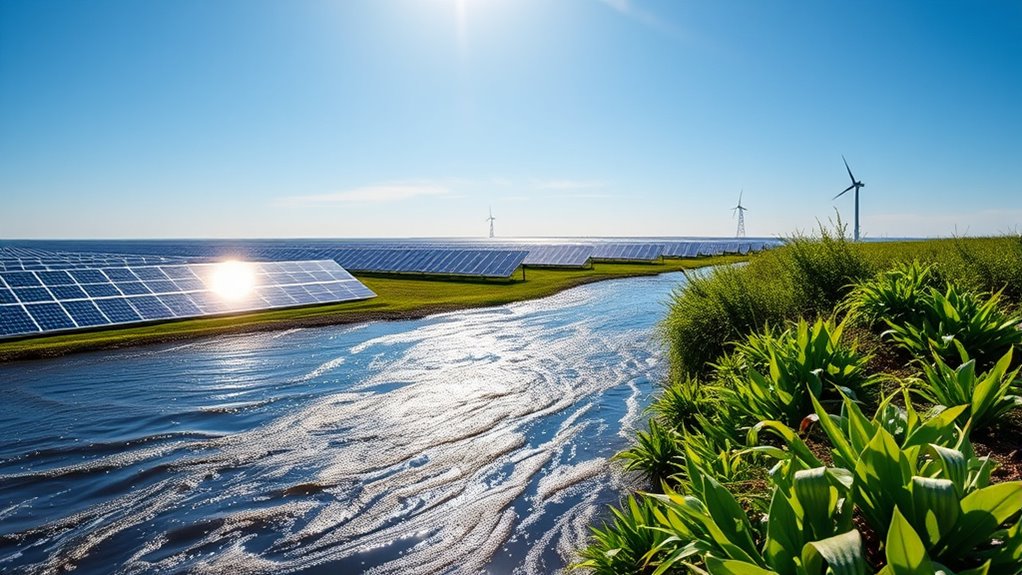
How does solar energy help save water? Unlike traditional power plants that rely heavily on water for cooling, solar energy systems use little to no water during operation. This means you can reduce water consumption considerably by switching to solar power.
Here’s how solar energy conserves water resources: Solar panels generate electricity without needing water, unlike coal or nuclear plants. Using solar reduces the demand on water sources, especially in drought-prone areas.
Plus, solar installations don’t produce wastewater, which helps prevent water pollution and keeps aquatic ecosystems healthy. So, going solar isn’t just good for your energy bills—it’s great for our water too!
How Solar Energy Protects Wildlife Habitats and Land
Although renewable energy sources like wind and hydro can impact wildlife, solar energy offers a way to generate power while minimizing harm to habitats and land. When you choose solar, you help preserve natural areas because solar panels can be installed on rooftops, parking lots, or degraded land. This means less need to clear untouched habitats.
Solar farms usually require less disruption of soil and vegetation compared to other energy projects. That helps protect local flora and fauna.
Plus, solar installations can coexist with agriculture or grazing. So, they support land use without displacing wildlife.
How Solar Energy Reduces Fossil Fuel Use
When you switch to solar energy, you cut down on burning fossil fuels, which lowers carbon emissions and air pollution.
This shift helps conserve nonrenewable resources that are running out fast. By choosing solar, you play a direct role in protecting the environment and promoting cleaner energy.
Decreasing Carbon Emissions
Why does switching to solar energy matter for the environment? When you choose solar power, you directly cut down on carbon emissions by relying less on fossil fuels like coal and natural gas.
This shift helps combat climate change and protects ecosystems. Here’s how solar energy decreases carbon emissions:
- It generates electricity without burning fuels, so no carbon dioxide is released.
- It reduces the demand for power plants that emit greenhouse gases.
- It encourages cleaner energy habits, prompting more sustainable choices overall.
Lowering Air Pollution
How exactly does solar energy help clear the air we breathe? When you switch to solar power, you reduce the need for electricity generated by burning fossil fuels like coal and natural gas.
These traditional energy sources release harmful pollutants—such as sulfur dioxide, nitrogen oxides, and particulate matter—that degrade air quality and harm your health. By relying on solar energy, you cut down on these emissions, leading to cleaner air around you.
Solar panels produce electricity without releasing pollutants, making your energy consumption much greener. So, every time you use solar power, you’re actively lowering air pollution and contributing to a healthier environment for yourself and your community.
It’s a simple choice that makes a big difference in the air you and others breathe daily.
Conserving Nonrenewable Resources
Because solar energy generates power without relying on finite fuels, it helps you reduce your use of coal, oil, and natural gas. By switching to solar, you actively conserve these nonrenewable resources for future generations.
You’ll also cut down on the environmental damage caused by extracting and transporting fossil fuels. Here’s how solar energy supports conservation:
- Reduces dependency on fossil fuels, lowering demand and depletion rates
- Minimizes harmful extraction processes like drilling and mining
- Encourages sustainable energy habits that protect natural reserves
When you choose solar power, you’re not just saving money — you’re preserving essential resources and promoting a cleaner, more sustainable energy future. Your decision makes a meaningful difference in conserving the planet’s limited energy supplies.
How Solar Energy Supports a Circular, Renewable Economy
When you choose solar energy, you’re actively contributing to a circular, renewable economy that helps reduce waste and conserve resources. Solar panels use abundant sunlight, which is a renewable input. This means they minimize reliance on finite materials.
Manufacturers are also designing panels to be durable and recyclable. That way, valuable components like glass, aluminum, and silicon can be recovered and reused. This approach cuts down on raw material extraction and lowers the environmental impact.
Plus, solar energy systems often work with energy storage and smart grids. This promotes efficient energy use and reduces losses.
How Solar Energy Promotes Sustainable Living for the Future
As you integrate solar energy into your daily life, you actively reduce your carbon footprint and conserve natural resources for future generations.
Solar power offers a practical path to sustainable living by helping you:
- Lower your reliance on finite fossil fuels, ensuring cleaner air and healthier ecosystems.
- Decrease energy costs over time, making sustainable choices economically viable.
- Support the growth of green jobs, fostering communities focused on environmental responsibility.
It’s a simple change that can make a big difference—for you and the planet.
Frequently Asked Questions
How Long Do Solar Panels Typically Last?
Solar panels typically last around 25 to 30 years. You’ll find they keep producing electricity efficiently for decades, though their output might slightly decrease over time.
Proper maintenance can help you maximize their lifespan. It’s worth taking care of them so they keep working well!
What Maintenance Is Required for Solar Energy Systems?
You’ll only need to clean your solar panels about twice a year to maintain 95% efficiency. Regular inspections check for debris, shading, or damage.
This helps ensure your system runs smoothly and saves you money long-term. It’s pretty simple to keep things in good shape!
Can Solar Energy Be Stored for Nighttime Use?
Yes, you can store solar energy for nighttime use by using batteries. These batteries save excess power generated during the day.
How Much Does It Cost to Install Solar Panels?
You can expect to pay between $15,000 and $25,000 to install solar panels, depending on your system size and location.
But here’s the good news: incentives and tax credits can substantially reduce your upfront costs, making it more affordable. So, it’s definitely worth looking into what’s available in your area!
Are Solar Panels Effective in Cloudy or Cold Climates?
Yes, solar panels still work well in cloudy or cold climates. They capture diffused sunlight, which means they don’t need direct sun to generate power.
And here’s the cool part—they actually perform better in cooler temperatures. So, you can count on them to generate energy efficiently year-round.
Conclusion
Imagine your home as a thriving garden. By choosing solar energy, you’re planting seeds that grow cleaner air, cooler waters, and safe havens for wildlife. Each ray of sunlight you capture waters this garden, reducing harmful emissions and fossil fuel use.
Your actions nurture a cycle of renewal, ensuring the garden flourishes for generations. So, take the step—let solar power be the sunlight that helps your world bloom sustainably and brightly into the future.
Switching to solar energy benefits the environment in many ways. It cuts down pollution, conserves natural resources, and supports a healthier planet. By embracing solar power, you’re not just saving energy—you’re creating a cleaner, greener world for yourself and future generations. Solar energy truly is a powerful tool for environmental protection and sustainable living.






10 Comments