

How to Claim Federal Tax Credits for Commercial Solar Panels
You can claim federal tax credits for commercial solar panels by making sure your system is new and installed after the IRS’s eligible date. It’s important that the panels are primarily used to generate commercial electricity.
This way, you qualify for the credit, which is 30% of your expenses.
To file, use IRS Form 3468. Be sure to document all qualified expenses like equipment, labor, and permits.
Keeping detailed records of installation and costs helps avoid any issues and ensures you maximize your credit.
If you want to optimize your savings and stay compliant, there’s definitely more to explore.
Taking the time to understand the rules means you get the most out of your investment in commercial solar panels.
Key Takeaways
- Ensure your commercial solar project meets IRS eligibility. This includes new installation, commercial use, and proper ownership or leasing arrangements.
- Track and document all qualified expenses like equipment, labor, permits, and wiring. Keep detailed receipts and invoices to make things easier.
- File IRS Form 3468 with your tax return. Make sure to include accurate total qualified expenses and supporting documentation showing the system is placed in service.
- Start construction after the IRS’s specified date. Also, complete installation before the tax credit expiration to keep your eligibility intact.
- It’s a good idea to consult a tax professional. They can help you maximize credits, combine federal incentives with state rebates, and ensure you’re following all IRS guidelines.
Understanding the Investment Tax Credit for Commercial Solar

Although maneuvering tax incentives can seem complex, understanding the Investment Tax Credit (ITC) for commercial solar is essential if you want to maximize your savings. The ITC allows you to deduct a significant percentage of your solar installation costs directly from your federal taxes.
Right now, that percentage is set at 30%, meaning you can reduce your tax bill by nearly a third of your system’s cost. This credit applies to the total cost, including equipment, labor, and associated expenses.
Which Commercial Solar Projects Qualify for Federal Tax Credits?

To qualify for federal tax credits, your commercial solar project must meet specific criteria, including eligible project types and minimum system size.
You’ll also need to guarantee your installation date falls within the designated timeframe.
Let’s go over what projects qualify so you can maximize your tax benefits.
Eligible Project Types
Which types of commercial solar projects qualify for federal tax credits? You can tap into these credits for a variety of solar installations that help reduce your business’s energy costs while boosting sustainability.
Eligible projects include systems that generate electricity primarily for commercial use, not just residential purposes. Here are some common project types that qualify:
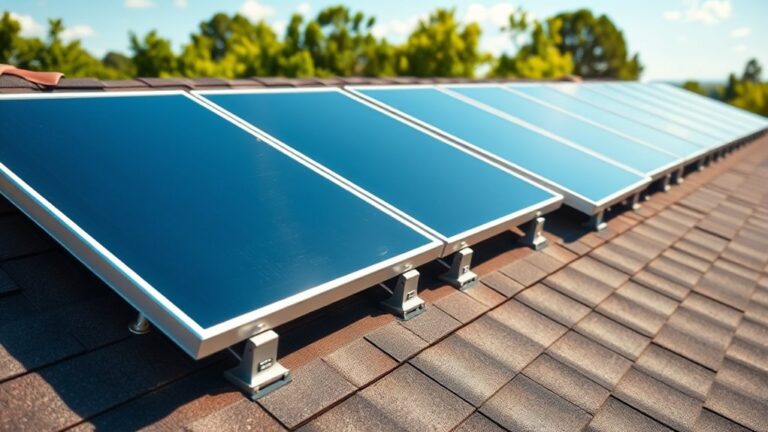
- Rooftop solar panel installations on commercial buildings
- Ground-mounted solar arrays on business properties
- Solar carports providing shaded parking with energy generation
- Integrated solar systems incorporated into building designs
Minimum System Requirements
Once you know which types of commercial solar projects qualify, it’s important to understand the minimum system requirements that make your installation eligible for federal tax credits. Your solar energy system must be new and meet specific performance standards.
Generally, the system should generate electricity for use in your business, with no minimum size requirement. But it must be installed on property you own or lease. The equipment must be certified for safety and quality, typically by recognized entities like UL (Underwriters Laboratories).
Additionally, the system should be connected to the grid or used for off-grid applications that produce renewable energy. Keep in mind, components like solar panels, inverters, and mounting systems need to be part of the qualifying project to claim the credit.
Installation Date Criteria
Although you’ve met all system requirements, your commercial solar project must also meet specific installation date criteria to qualify for federal tax credits. The key is that your system’s original installation date falls within the eligible timeframe set by the IRS.
Typically, the project must begin construction after a certain date and be placed in service before the credit’s expiration. Keep track of these important dates to verify eligibility.
Here’s what to ponder:
- Construction must start after the IRS’s specified date for the current tax credit cycle.
- The system must be placed in service (fully operational) by the deadline.
- Projects started before the eligible date usually don’t qualify.
- Extensions or changes in law can affect these dates, so stay updated.
Meeting these criteria secures your claim for federal tax credits. So, make sure you keep an eye on those deadlines!
How to Claim Your Federal Commercial Solar Tax Credit

To claim your federal commercial solar tax credit, you’ll first need to confirm your project meets the eligibility criteria. Then, follow the specific steps in the IRS filing process to make certain you get the credit.
Let’s walk through what you need to qualify and how to properly file your claim. It’s easier than it sounds once you know the steps!
Eligibility Criteria Overview
Before you claim the federal commercial solar tax credit, you need to verify that your solar installation meets specific eligibility criteria. This makes sure your project qualifies and you get the maximum credit allowed.
Generally, your system must be placed in service during the tax year and used for a qualified commercial purpose. Here are some key points to check:
- Your solar panels must be installed on a business property you own or lease.
- The system should generate electricity for commercial use, not just for residential purposes.
- Equipment must meet the IRS definition of solar energy property.
- Installation costs, including labor and materials, must be properly documented and incurred during the eligible period.
Filing Process Steps
Once your commercial solar installation meets all eligibility requirements, you’ll need to gather the necessary documentation and complete the proper IRS forms to claim your federal tax credit. Start by collecting your IRS Form 3468, which is specifically used to claim the Investment Tax Credit (ITC).
You’ll also need receipts, contracts, and proof of payment for your solar equipment and installation costs. Fill out Form 3468 carefully, entering the total qualified solar expenses in the appropriate sections.
Attach all supporting documents to your tax return. If you’re unsure about any step, consider consulting a tax professional to guarantee accuracy.
Finally, submit your completed tax return with Form 3468 to the IRS by the deadline. Following these steps will help you successfully claim your commercial solar tax credit.
How to Calculate Your Eligible Solar Tax Credit Amount
Calculating your eligible solar tax credit amount starts with understanding the total qualified expenses of your commercial solar panel system. This includes all costs directly related to purchasing and installing your system.
To figure out your credit, simply multiply your total qualified expenses by the current federal tax credit percentage, which is typically 30%.
Here are the key components to include:
- Solar panels and mounting equipment
- Inverter and electrical wiring
- Labor costs for on-site installation
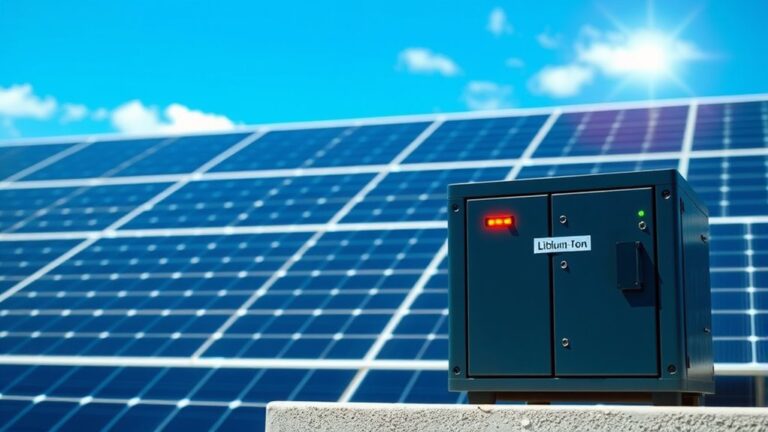
- Energy storage devices, if integrated with the solar system
It’s pretty straightforward once you know what to count. Just make sure you include everything that qualifies!
Essential Documentation and Forms for Filing Your Solar Credit
What documents do you need to gather to successfully claim your federal solar tax credit? Start with Form 3468, the Investment Credit form, which you’ll file with your business tax return.
You’ll also want the IRS Form 5695 if you’re claiming residential credits, but for commercial panels, focus on Form 3468.
Keep detailed records of your solar system purchase, including invoices and receipts showing costs for equipment and installation. Don’t forget any contracts or agreements with your solar provider.
Additionally, gather proof of when your system was placed in service, like utility bills or completion certificates. Having these documents organized guarantees you can accurately complete your tax forms and substantiate your credit claim if the IRS requests verification.
Pro Tips to Maximize Your Commercial Solar Tax Credit Savings
Gathering all the right documents sets a strong foundation, but you can take additional steps to boost your commercial solar tax credit savings. To maximize your benefits, focus on strategic planning and staying informed about current tax laws.
Here are some pro tips to help you get the most out of your credit:
- Schedule your solar installation before the end of the tax year to claim the credit sooner.
- Combine the federal credit with state incentives and utility rebates for extra savings.
- Work with a tax professional who understands renewable energy credits to avoid costly mistakes.
- Keep track of all expenses related to your solar project, including labor and permits, to increase your eligible credit amount.
Doing these things can really pay off, so it’s worth putting in the effort!
Frequently Asked Questions
Can Federal Solar Tax Credits Be Combined With State Incentives?
Yes, you can combine federal solar tax credits with state incentives. You’ll want to check your specific state’s programs and guidelines to maximize savings, but stacking these benefits is common and helps lower your overall solar installation costs.
It’s a smart way to save more on your solar investment. Just make sure you understand the rules for each incentive so you don’t miss out!
How Do Tax Credits Affect My Commercial Property Insurance?
Tax credits don’t directly impact your commercial property insurance premiums, but installing solar panels might change your coverage needs.
You’ll want to inform your insurer to make sure your policy covers the new equipment properly. It’s always better to double-check so you’re fully protected.
Are Leased Solar Panels Eligible for Federal Tax Credits?
Leased solar panels typically don’t qualify for federal tax credits because you don’t own them. Instead, the leasing company claims the credit.
You can check your lease terms to see if any benefits pass to you. It’s always good to know what’s included in your agreement!
What Happens to Unused Tax Credits if My Business Is Unprofitable?
Like finding a telegram in your mailbox, if your business is unprofitable, you can carry unused federal tax credits forward to future years.
You won’t lose them—they’ll reduce your taxes when you do turn a profit.
Can Nonprofit Organizations Claim Federal Solar Tax Credits?
No, you can’t directly claim federal solar tax credits if you’re a nonprofit.
However, you might partner with a for-profit entity to benefit indirectly. Or explore other incentives designed specifically for nonprofits installing solar panels.
It’s worth looking into these options to make solar energy more affordable for your organization.
Conclusion
Claiming your federal tax credits for commercial solar panels isn’t just a smart move—it’s your golden ticket to brighter savings and greener energy. By understanding the steps and gathering the right documents, you can access powerful financial benefits that fuel your business’s growth.
So, don’t let this opportunity slip through your fingers. Seize the sunlight, maximize your credits, and watch your investment shine like a beacon of success. Taking advantage of these federal tax credits can significantly reduce your upfront costs and improve your return on investment.
By claiming these credits, your business supports sustainability while boosting profitability. Remember, knowing how to claim federal tax credits for commercial solar panels ensures you unlock the full potential of these incentives. Start today and make your solar energy project a win-win for both your wallet and the environment.




13 Comments