How to Charge Solar Lights Indoors Step by Step
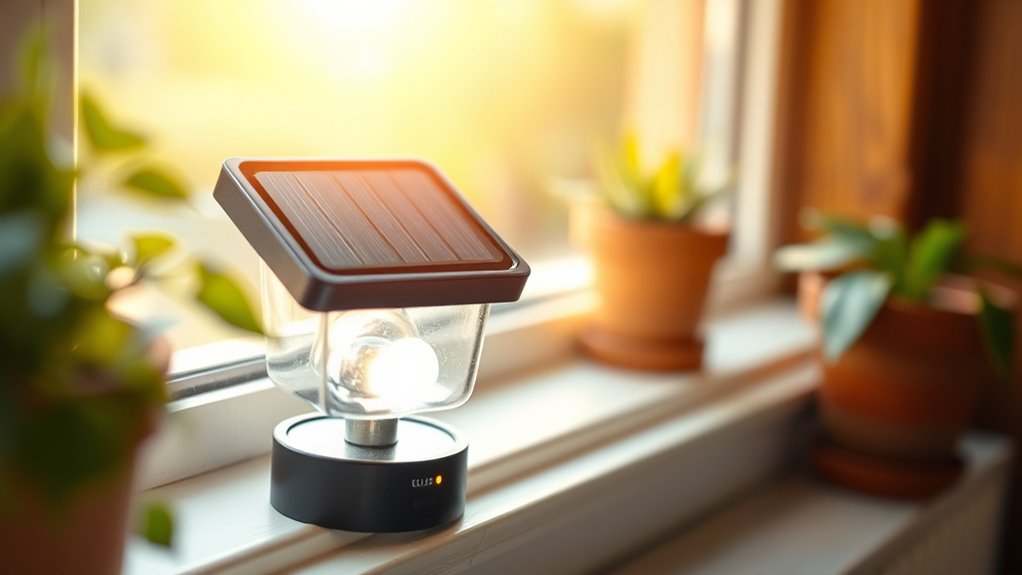
To charge your solar lights indoors, start by placing the detachable solar panel near a bright window or directly under strong LED or fluorescent lamps. Make sure to keep it close to the light source for the best results. This helps the panel absorb as much light as possible, even without direct sunlight.
Next, give the panel a quick clean before charging. Dust or dirt can block light, so a clean surface means better absorption.
Charge your solar lights for several hours—usually between 8 to 12 hours when using artificial light sources.
It’s also important to use good batteries for optimal performance. If you can, monitor the charging process with a portable meter to see how much energy is being stored.
Follow these simple steps carefully, and you’ll not only learn how to charge solar lights indoors effectively but also how to maintain and troubleshoot them for peak performance.
Key Takeaways
- Place the solar panel near a bright window with direct sunlight or under a strong artificial light source.
- Clean the solar panel to remove dust and ensure maximum light absorption.
- Use bright LED or fluorescent lamps and keep them close to the solar panel for effective charging.
- Charge solar lights for 8 to 12 hours indoors to accumulate sufficient energy.
- Regularly check battery condition and connections to ensure proper charging and functionality.
It’s pretty simple, right? Just make sure your setup gets enough light, and your solar lights will be good to go in no time!
How Solar Lights Work and Why Sunlight Matters
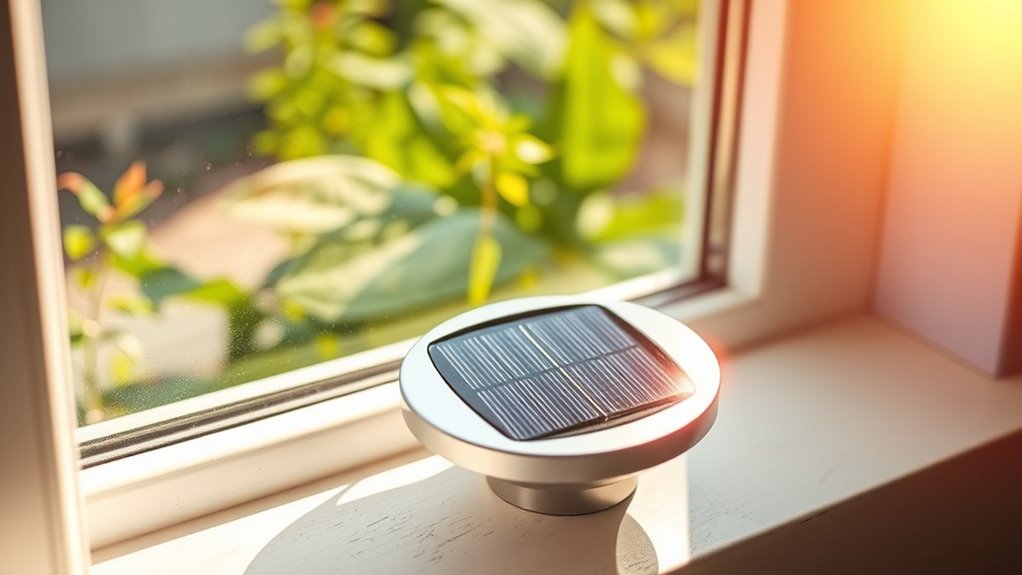
Although solar lights can seem simple, they rely on a few key components to work properly. You’ve got a solar panel, a rechargeable battery, and an LED light.
Solar lights may seem simple, but they depend on a solar panel, rechargeable battery, and LED to function properly.
When sunlight hits the solar panel, it converts that light into electricity, charging the battery. Without enough sunlight, the battery won’t store sufficient energy, and the light won’t shine brightly or last long.
This is why sunlight matters so much—it powers the whole system. You can’t expect your solar lights to work well in the dark or shade because they need that direct exposure to build up a charge during the day.
Understanding this helps you optimize where you place your solar lights and how you maintain them for the best performance. It’s all about giving them the best chance to soak up enough sun!
What Equipment You Need to Charge Solar Lights Indoors
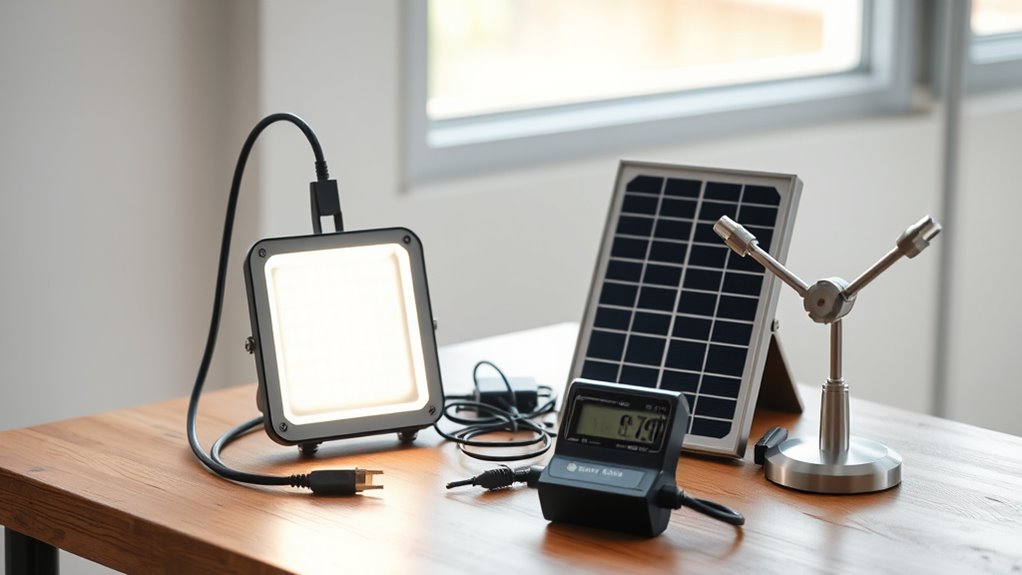
Since solar lights need sunlight to charge but you might want to power them indoors, you’ll need some specific equipment to make that happen. First, a solar light with a detachable solar panel gives you flexibility to position it near a bright window.
Next, a window with strong, direct sunlight is essential during the day. You’ll also want a clean, dust-free surface for the panel to maximize light absorption.
Additionally, a portable solar charger or power meter can help monitor the charging process. Finally, make sure your solar light’s battery is in good condition, as worn-out batteries won’t hold a charge well, even with proper equipment.
With these items, you’re set to start charging your solar lights indoors effectively.
Using Artificial Lights to Charge Solar Lights Indoors
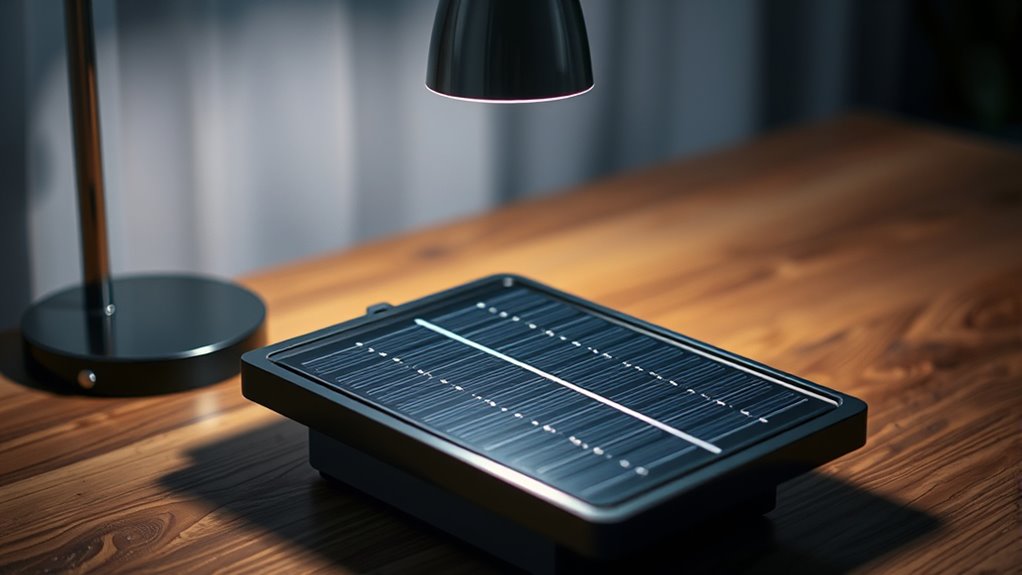
If you can’t access direct sunlight, you can still charge your solar lights indoors by using artificial lights. Position your solar lights under a bright LED or fluorescent lamp, as these emit the kind of light solar panels can convert into energy.
Make sure the light source is close enough—typically within a few inches—to deliver sufficient intensity. Avoid using incandescent bulbs since they emit less usable light for solar charging.
Keep the lights on for several hours to allow the solar panels to absorb enough energy. Remember, artificial lighting won’t charge your solar lights as quickly or efficiently as natural sunlight, so patience is key.
Regularly check your solar lights to guarantee they’re charging properly and adjust the light source if needed.
How to Charge Solar Lights Indoors Without Sunlight
If you don’t have sunlight, you can use alternative light sources like LED or fluorescent bulbs to charge your solar lights indoors. These sources usually require more time to fully charge the batteries.
Alternative Light Sources
How can you keep your solar lights charged when sunlight isn’t available? You can use alternative light sources like LED lamps, fluorescent bulbs, or even strong indoor halogen lights. Just place your solar panel close to these light sources to maximize energy absorption.
Keep in mind, though, that artificial lights usually emit less energy than the sun, so charging will take longer. For best results, choose bulbs with a color temperature similar to natural sunlight, around 5000K to 6500K.
Avoid dim or yellow-toned bulbs, as they won’t efficiently charge your solar lights. Positioning your solar panel as close as possible to the light source will also help.
Using alternative light sources is a practical way to maintain your solar lights indoors without direct sunlight. It’s a handy trick to keep them working when the sun’s just not around.
Charging Time Estimates
Although charging solar lights indoors takes longer than outdoors, understanding approximate charging times helps you plan better. Typically, under strong artificial light sources like LED or fluorescent bulbs, expect your solar lights to need around 8 to 12 hours to reach a full charge.
This timeframe varies based on the light intensity and the battery’s capacity. Lower wattage bulbs or dimmer lighting can extend charging times beyond 12 hours. To optimize charging, place your solar panel as close as possible to the light source.
Keep in mind that frequent partial charges may reduce battery life, so aim for full cycles when you can. Knowing these estimates allows you to schedule charging sessions effectively and guarantees your solar lights stay bright when you need them most.
Battery Maintenance Tips for Indoor Charging
To keep your solar light batteries in good shape, store them properly in a cool, dry place. You’ll also want to stick to a regular charging schedule to avoid deep discharge.
These simple steps help extend your battery’s lifespan when charging indoors. It’s really about making small habits that pay off in the long run.
Proper Battery Storage
When storing batteries for indoor charging, you should keep them in a cool, dry place away from direct sunlight and extreme temperatures. This helps preserve battery life and prevents damage.
Proper storage keeps your solar lights ready to use and extends battery efficiency. Here are some tips to follow:
- Store batteries separately from the solar lights if you won’t use them for a while.
- Keep batteries in their original packaging or insulated containers to avoid short circuits.
- Avoid storing batteries near metal objects or in humid environments.
- Check batteries periodically for signs of corrosion or leakage.
- Remove batteries if you expect to store solar lights for several months without use.
Following these steps guarantees your batteries stay healthy and ready for indoor charging whenever needed. It’s really simple, but it makes a huge difference!
Regular Charging Schedule
Since indoor charging lacks natural sunlight, you’ll need to establish a regular charging schedule to keep your solar light batteries healthy and ready. Charge your lights consistently, ideally every 2-3 days, to prevent deep discharge and prolong battery life.
Avoid overcharging by unplugging once fully charged. Tracking this routine helps maintain battery efficiency.
| Day of Week | Charging Time (hours) | Battery Status Check |
|---|---|---|
| Monday | 4 | Check for full charge |
| Wednesday | 4 | Inspect battery health |
| Friday | 4 | Ensure no overheating |
| Sunday | 4 | Test light performance |
Sticking to this schedule guarantees your solar lights perform reliably indoors. It makes sure they’re always ready when you need them.
Troubleshooting Common Issues When Charging Solar Lights Indoors
Why aren’t your solar lights charging properly indoors? Several common issues could be causing this problem, but you can troubleshoot them quickly.
First, check if your solar panel is clean and free of dust or smudges. Also, make sure the light is placed near a bright window or under a strong artificial light source.
If the battery is old or damaged, it might not hold a charge well. Finally, verify all connections and switches to guarantee everything is set correctly.
Here’s what to do:
- Clean the solar panel thoroughly.
- Position lights close to a light source.
- Replace old or faulty batteries.
- Confirm the solar light’s switch is on.
- Inspect wiring and connections for damage.
Following these steps should help restore proper charging indoors. Give them a try and see how it goes!
Frequently Asked Questions
Can Solar Lights Be Charged Using a Power Bank?
Yes, you can charge solar lights using a power bank if they have a USB charging port. Just connect the light to the power bank with a compatible cable, and make sure it’s switched to charging mode.
It’s pretty straightforward! Just keep an eye on the connection to ensure it’s charging properly.
How Long Do Solar Light Batteries Typically Last?
Solar light batteries typically last between 1 to 3 years, depending on usage and quality.
You’ll want to replace them when brightness fades or charging becomes inconsistent.
That way, you can keep your lights shining bright and reliable.
Are Indoor-Charged Solar Lights Safe for Children?
Indoor-charged solar lights are generally safe for children, but don’t let them chew on batteries or wires. You want fun and light, not hazards.
Can Solar Lights Be Used During Power Outages?
Yes, you can use solar lights during power outages. They provide reliable, battery-powered illumination without relying on the grid.
Do Solar Lights Work in Cold Indoor Environments?
Cold indoor environments won’t freeze your solar lights’ performance; they still work well. Just like a cozy fire keeps you warm, the lights’ batteries can function efficiently.
Though, extreme cold might reduce their charge capacity temporarily. But don’t worry, once it warms up a bit, they bounce back just fine.
Conclusion
Charging your solar lights indoors is easier than you might think. Did you know that 85% of solar light owners report effective indoor charging using LED grow lights?
By using the right equipment and maintaining your batteries well, you can keep your lights shining bright even without direct sunlight. Remember, proper care and troubleshooting make all the difference.
So, don’t let cloudy days or indoor settings dim your solar lights’ glow! With a little know-how and the right tools, charging solar lights indoors can be simple and efficient. Keep your solar lights charged indoors by using LED grow lights and following good battery care practices. This way, your lights will stay bright and reliable no matter the weather or location.