
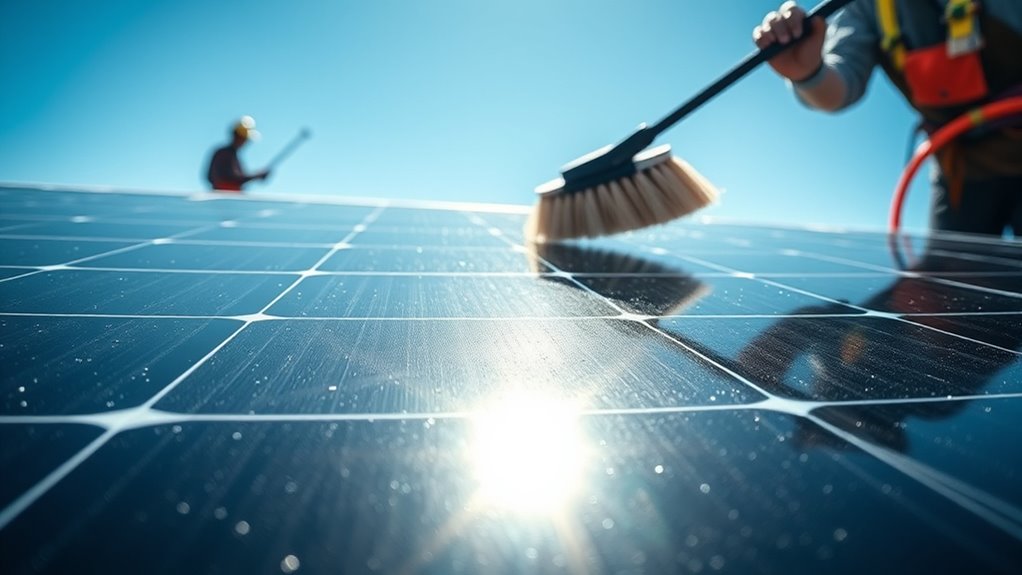
How Much to Clean Solar Panels: 3 Costs to Know
You’ll typically spend between $150 and $350 to have your solar panels professionally cleaned. The cost depends on factors like the size of your system, location, and how accessible your panels are.
If you’re comfortable climbing on your roof and want to save some money, DIY cleaning usually costs under $20. You’ll just need supplies like brushes and mild detergent.
Regular cleaning helps keep your panels efficient and prevents damage over time.
Keep exploring to understand what affects cleaning costs and which option—professional or DIY—suits your needs best. It’s worth knowing the details so you can make the best choice for your solar investment.
Key Takeaways
- Professional solar panel cleaning typically costs between $150 and $350, depending on system size and location.
- DIY cleaning supplies usually cost under $20, including soft brushes, squeegees, and mild detergents.
- Accessibility and dirt severity can increase professional cleaning costs due to added time and effort.
- Regular cleaning maintains panel efficiency and prevents output loss caused by dirt buildup.
- Professional services offer safety, thorough cleaning, and early issue detection compared to DIY methods.
Typical Solar Panel Cleaning Costs: What to Expect
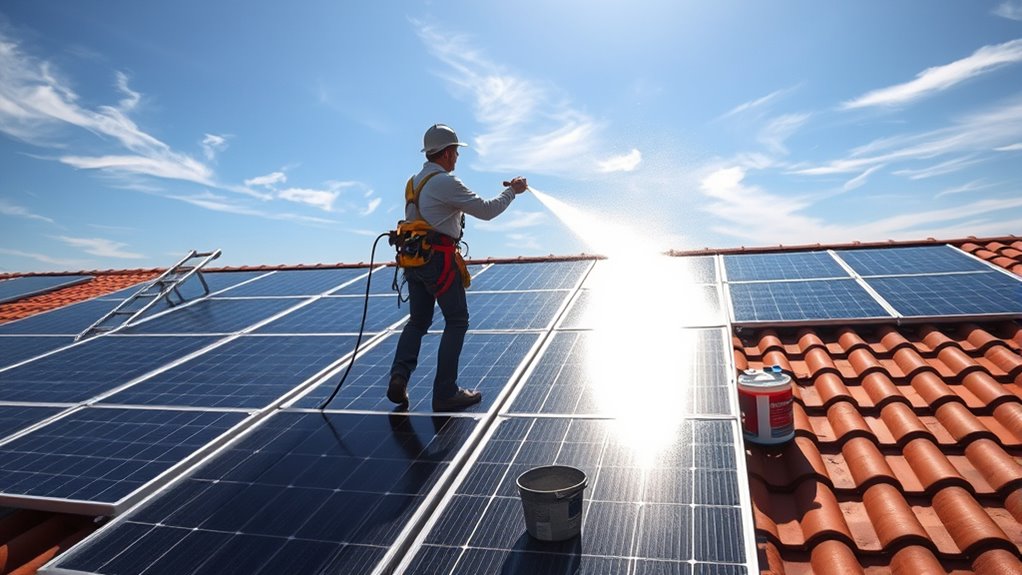
While prices can vary depending on your location and the size of your system, you can generally expect to pay between $150 and $350 for a professional solar panel cleaning. This range covers most residential setups, giving you a solid idea of what to budget.
If you decide to clean the panels yourself, costs can drop considerably since you’ll mainly need basic supplies like a soft brush, squeegee, and mild detergent. However, professional cleaning guarantees safety and better results, especially if your panels are hard to reach.
Regular cleaning helps maintain efficiency, so keeping this cost in mind is crucial. Knowing these typical costs empowers you to plan effectively and keep your solar investment performing at its best.
Factors That Affect Solar Panel Cleaning Costs
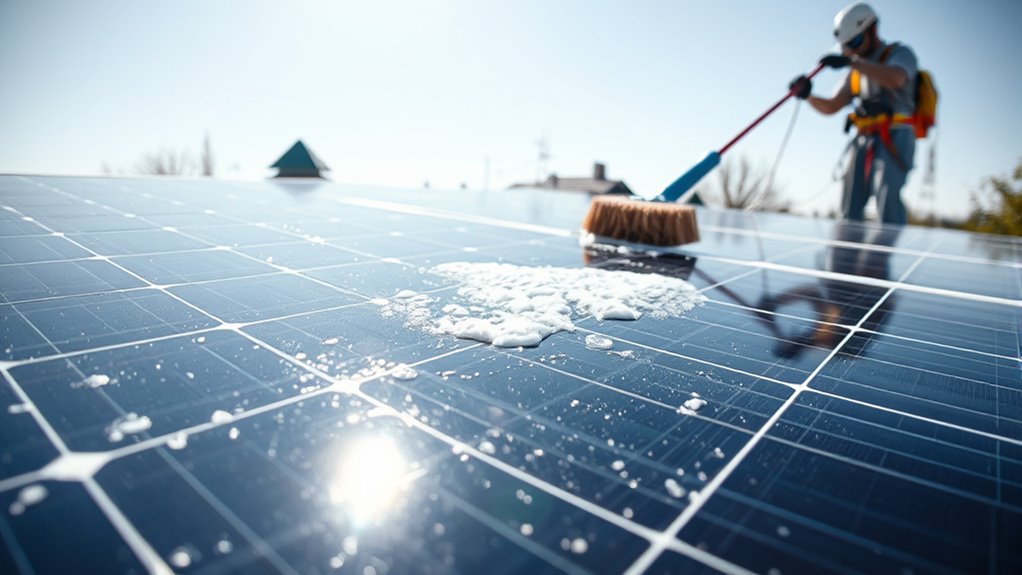
Because several factors influence the final price, understanding what affects solar panel cleaning costs can help you make smarter decisions. The size and number of panels you have directly impact the overall cost—the more panels, the higher the price.
Several factors influence solar panel cleaning costs, with panel size and quantity being key price drivers.
Accessibility plays a big role too; if your panels are hard to reach or on a steep roof, cleaning becomes more challenging and expensive. The level of dirt or grime buildup affects the time and effort needed, influencing the cost.
Weather conditions and local water quality can also impact cleaning frequency and methods, which in turn affect expenses. Ultimately, where you live matters since labor rates and service availability vary by region.
Knowing these factors helps you budget accurately and choose the best cleaning approach for your setup. It’s all about making sure you get the best value without sacrificing quality.
Professional vs. DIY Solar Panel Cleaning: Costs and Tips
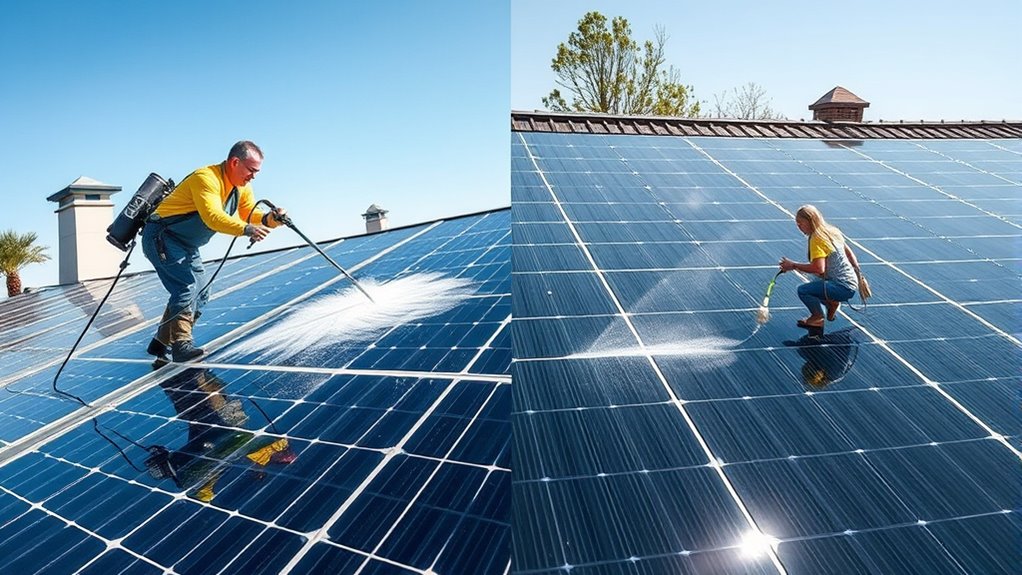
Deciding between professional and DIY solar panel cleaning comes down to weighing costs, convenience, and effectiveness. Hiring a pro typically costs $150 to $350 but guarantees thorough cleaning with proper tools and safety measures.
Professionals also spot potential issues you might miss, protecting your investment. On the other hand, DIY cleaning costs you mainly time and basic supplies like soft brushes and mild soap, usually under $20.
You’ll save money but must be cautious to avoid damaging panels or risking injury. If you choose DIY, clean panels early in the morning or late afternoon to prevent streaking and thermal shock.
Ultimately, if you’re comfortable on your roof and have the right tools, DIY works. Otherwise, hiring a professional is safer and more reliable.
Frequently Asked Questions
How Often Should Solar Panels Be Cleaned Annually?
You should clean your solar panels about once or twice a year, depending on local dust, pollen, or bird droppings. Regular cleaning helps maintain efficiency, so keep an eye on their performance and clean as needed.
If you notice a drop in energy output, it might be time to give them a quick wash. Just a little upkeep can go a long way in keeping your panels working their best!
Can Cloudy Weather Affect Solar Panel Efficiency?
Imagine you’re running your home on solar power during a gloomy week—yes, cloudy weather does reduce your solar panel efficiency by blocking sunlight.
That means you’ll generate less energy and might rely more on the grid during those days.
It’s just the nature of how solar panels work—they need sunlight to perform at their best.
But don’t worry, occasional clouds won’t completely shut down your system!
What Safety Precautions Are Needed During Cleaning?
You should turn off your solar panels before cleaning, use a sturdy ladder, wear non-slip shoes, and avoid harsh chemicals.
Always clean on a cool, cloudy day to prevent burns and damage. Safety first!
Does Cleaning Improve Solar Panel Lifespan?
You might think cleaning won’t affect lifespan, but it actually does. Regular cleaning prevents dirt buildup that can cause overheating or damage.
Are There Eco-Friendly Cleaning Solutions for Solar Panels?
Yes, you can use eco-friendly cleaning solutions like diluted vinegar, water with mild soap, or specialized biodegradable cleaners. These options clean effectively without harming the environment or your panels.
They help keep your system efficient and green. So, you’re not only maintaining your solar panels but also doing your part for the planet!
Conclusion
Now that you know typical cleaning costs, you can weigh your options wisely. You can decide whether to hire a pro for convenience, or clean yourself to save money.
Think about factors like panel size, location, and grime level to budget effectively. This way, you’re prepared for whatever your solar panels need.
You can choose the method that fits your schedule, your wallet, and your peace of mind. Cleaning your solar panels is simple when you know what to expect and how to prepare.
Remember, regular solar panel cleaning helps maintain efficiency and extend the lifespan of your system. Whether you opt for professional cleaning or a DIY approach, understanding the costs and process ensures you get the best results. Keeping your solar panels clean is an investment that pays off in better energy output and savings over time.


One Comment