
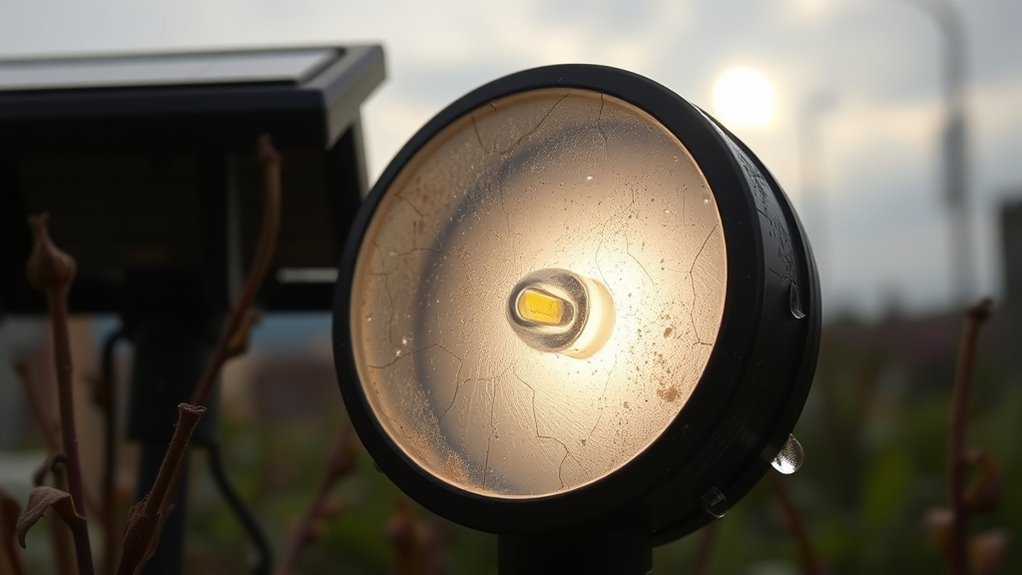
Why Do Solar Lights Stop Working Quickly?
Your solar lights stop working quickly mainly because their batteries degrade over time. This reduces how long they stay lit, which is super frustrating when you rely on them for evening lighting.
Dirty solar panels or shading block sunlight, so the batteries don’t charge fully. If the panels can’t soak up enough sun, your lights won’t last as long at night.
Harsh weather and poor placement also affect battery health and charging efficiency. For example, extreme cold or constant rain can wear down the batteries faster than usual.
Loose wiring or failing batteries can cause flickering or dimming. These issues might seem minor, but they really impact performance.
Keep your solar lights performing well by understanding these issues better. With a few simple fixes, you can extend their lifespan and enjoy brighter nights.
Key Takeaways
- Aging or poor-quality batteries lose capacity, causing shorter illumination times and quick failures. It’s pretty common for batteries to wear out faster than you expect.
- Dirty or shaded solar panels reduce sunlight absorption, limiting battery charging and light performance. If your panels aren’t getting enough sun, the lights just won’t last as long.
- Corroded or loose wiring disrupts power flow, leading to inconsistent or no light output. Sometimes, the problem is just a bad connection that’s easy to fix.
- Extreme weather conditions, like cold or heat, degrade battery efficiency and lifespan. Batteries don’t like temperature swings and can fail sooner because of that.
- Incompatible or damaged batteries cause improper voltage, resulting in rapid light malfunctions. Using the right batteries really makes a difference in how long your lights work.
How Solar Lights Charge: And Why That’s Important
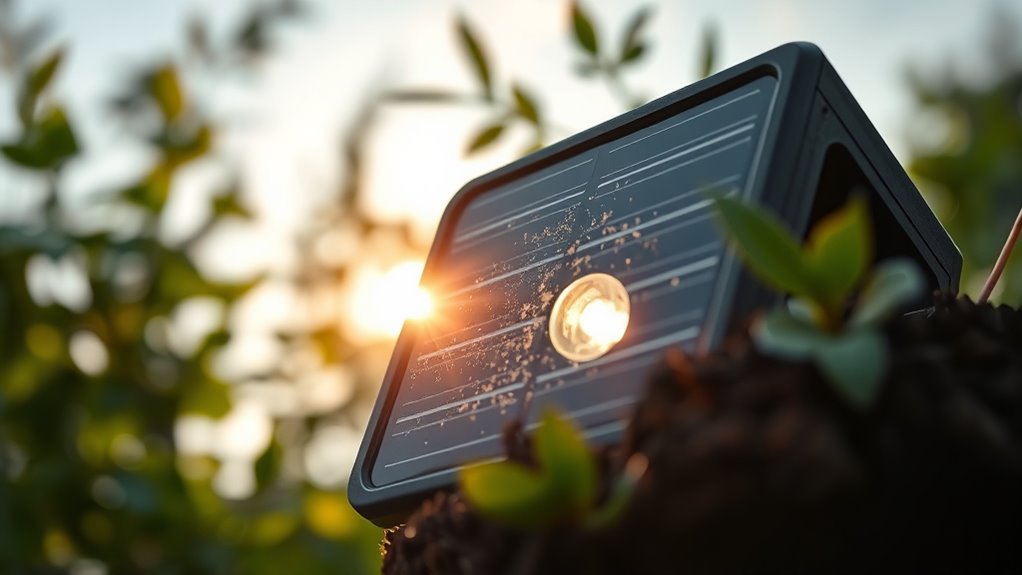
Although solar lights seem simple, how they charge plays an essential role in their performance. When you place solar lights outdoors, their small solar panels convert sunlight into electricity, storing it in rechargeable batteries.
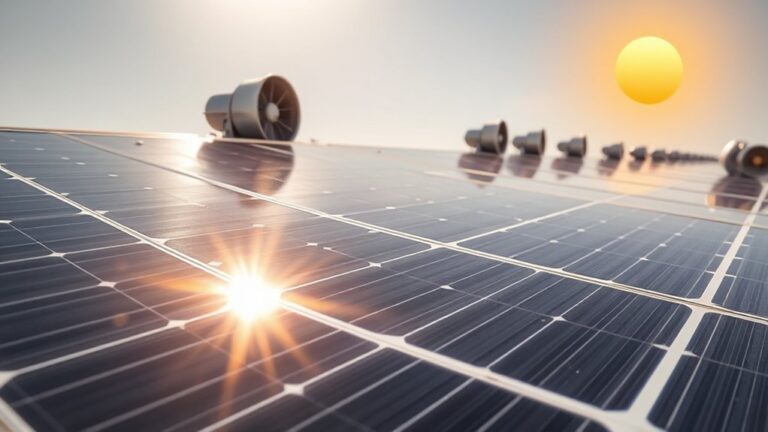
Solar lights rely on their panels to convert sunlight into stored energy for reliable outdoor illumination.
If your lights don’t get enough direct sunlight, they won’t charge fully, leading to dim or short-lived illumination. You should position your solar lights where they’ll soak up ample sunlight during the day, avoiding shaded areas.
Also, be aware that dirty panels block sunlight, so cleaning them regularly helps maintain efficient charging. The battery’s capacity and health are crucial, too—over time, rechargeable batteries lose their ability to hold charge, causing your lights to fade faster.
Understanding this charging process helps you keep your solar lights bright longer. It’s all about giving them the right conditions to do their job well!
How To Spot Early Solar Light Failures
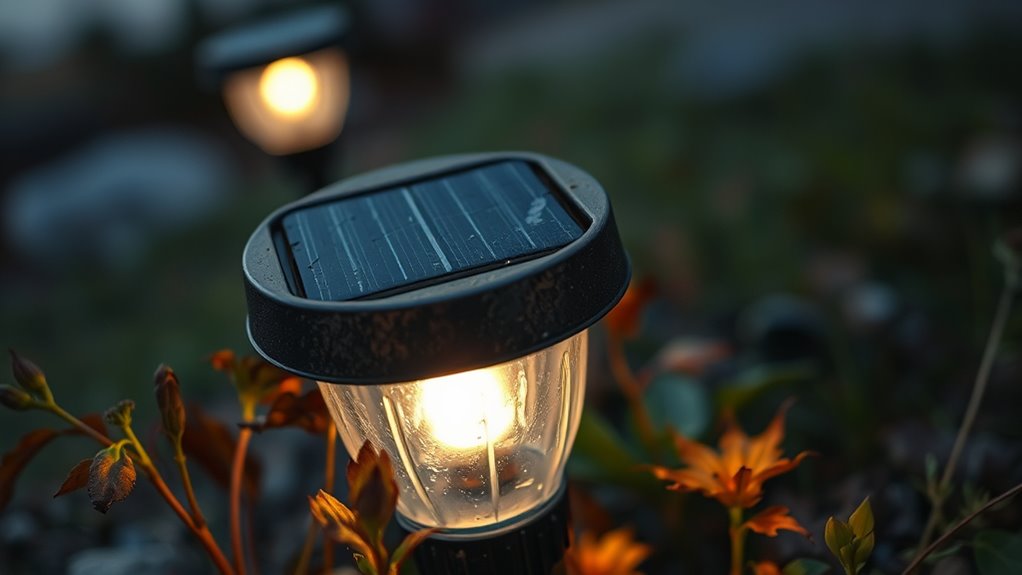
If your solar light starts flickering or seems dimmer than usual, it’s a sign something’s wrong. You might also notice it takes longer to charge or doesn’t charge at all.
Catching these issues early can save you from a complete failure later on. So, keep an eye out and don’t ignore the small signs!
Dim or Flickering Light
When your solar lights start to glow dimly or flicker, it’s a clear sign they’re struggling to perform. This usually means the batteries are weakening or the LED bulbs are wearing out.
Dust, dirt, or debris on the solar panel can also reduce the light’s power output, causing inconsistent brightness. You should check the solar panel for any buildup and clean it gently with a soft cloth.
Additionally, inspect the wiring and connections to guarantee everything is secure and corrosion-free. If the flickering continues despite cleaning and tightening connections, the rechargeable batteries might need replacement.
Catching these early signs helps you avoid complete failure and keeps your solar lights shining brightly longer. Don’t ignore dim or flickering lights—they’re signals your system needs attention.
Slow or No Charging
Because solar lights depend on sunlight to recharge, slow or no charging is one of the earliest signs that something’s wrong. If you notice your solar light isn’t staying on as long as it used to or doesn’t turn on at all, check the solar panel first.
Dirt, dust, or debris can block sunlight, reducing charging efficiency. Also, make sure the panel is positioned where it gets direct sunlight for most of the day.
If cleaning and repositioning don’t help, the rechargeable battery might be failing. These batteries wear out over time and won’t hold a charge properly.
Catching slow or no charging early lets you clean, adjust, or replace parts before your solar light stops working completely. It’s better to catch these issues early than to wait until the light quits on you.
Common Battery Issues Draining Solar Lights
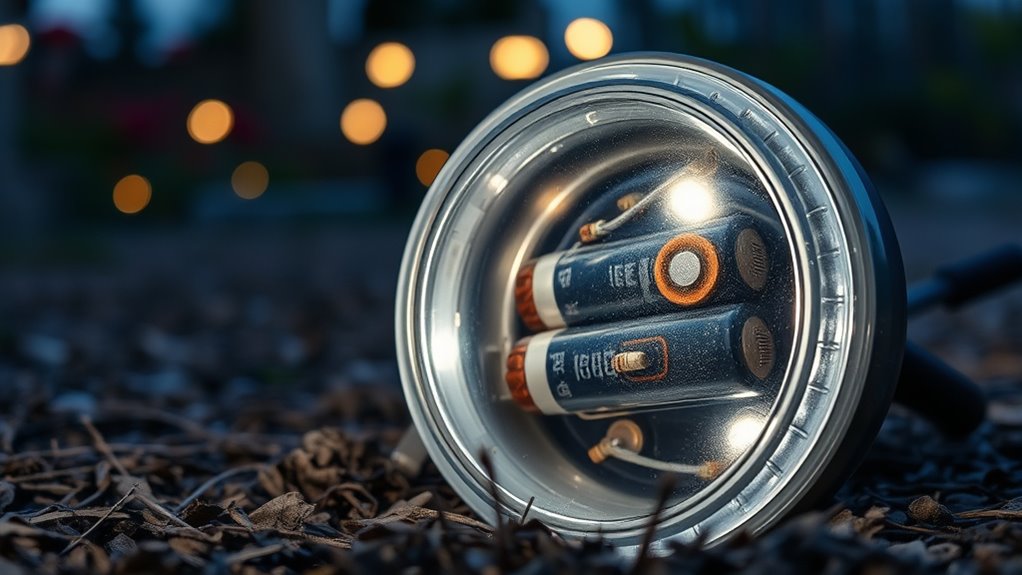
Why do solar lights often lose power so quickly? The main culprit is usually battery issues. Over time, rechargeable batteries degrade, hold less charge, or fail entirely.
If your solar light’s battery is old or faulty, it won’t store enough energy to keep the light running through the night. This means your lights might dim early or not turn on at all.
Here are common battery problems draining your solar lights:
| Issue | What Happens |
|---|---|
| Battery Aging | Capacity reduces, shorter light |
| Poor Quality | Quick failure, inconsistent power |
| Improper Battery Type | Incompatible voltage or size |
| Battery Leakage | Corrosion, damage to contacts |
Replacing or upgrading batteries regularly can keep your solar lights shining longer. It’s a simple fix that makes a big difference!
How Weather And Placement Affect Solar Light Performance
Although solar lights rely on batteries, their performance depends heavily on weather conditions and placement. If you place your solar lights in shaded areas or spots blocked by trees or buildings, they won’t get enough sunlight to charge fully.
Cloudy or rainy weather also reduces solar panel efficiency, leaving your lights dim or off. Cold temperatures can slow battery chemical reactions, decreasing power output. On the other hand, extreme heat may damage batteries over time.
To get the best performance, you need to position solar lights where they receive direct sunlight for most of the day. Avoid placing them under eaves or dense foliage. Remember, even the best batteries won’t help if your solar panels can’t soak up enough sun.
Simple Fixes To Extend Solar Light Life
To keep your solar lights shining longer, you can take a few simple steps that improve their efficiency and battery life. First, clean the solar panels regularly to remove dirt, dust, and debris that block sunlight. Use a soft cloth and mild soap with water for best results.
Next, check the batteries and replace them if they show signs of wear or reduced capacity. Make sure you use rechargeable batteries compatible with your lights.
Also, position your lights where they get maximum sunlight during the day, avoiding shaded areas. Finally, turn off the lights during extended cloudy days or when not in use to conserve battery power.
These straightforward fixes help you get the most out of your solar lights without costly replacements.
When To Replace Solar Lights
If your solar lights consistently fail to hold a charge despite regular maintenance, it’s time to contemplate replacing them. Over time, rechargeable batteries lose their ability to store energy, and solar panels can degrade from constant exposure.
Even if you clean the panels and swap out batteries, some lights just won’t perform like they used to. When you notice dim or flickering light, or the lights stop turning on altogether, it’s a clear sign.
Also, if you’ve repaired the lights multiple times and the issues persist, replacement is more cost-effective. Investing in new solar lights ensures reliable illumination and better energy efficiency.
Don’t wait until your outdoor space is left in the dark—replace worn-out solar lights promptly for consistent performance. It’s really worth it to keep your space well-lit without hassle.
Frequently Asked Questions
Can Solar Lights Work Indoors Without Sunlight?
No, solar lights won’t work well indoors because they need direct sunlight to charge their batteries. Without enough natural light, they won’t store energy.
Are Solar Lights Safe to Use Around Pets?
Yes, you can confidently use solar lights safely around curious cats and playful pups. Solar lights shine softly, sparing sparks and harmful hazards.
How Long Do Solar Light Batteries Typically Last?
You’ll find solar light batteries typically last 1 to 2 years, depending on usage and quality.
To get the most out of them, keep the panels clean and replace batteries as soon as you notice dimming or failure.
It’s pretty simple, but these little steps can really make a difference. Just a bit of regular care goes a long way!
Can Solar Lights Be Recycled After Disposal?
You can recycle solar lights, you should recycle solar lights, and you must recycle solar lights.
They contain valuable materials like batteries and metals, so take them to e-waste centers or special recycling programs near you.
It’s really worth the effort because recycling helps keep harmful stuff out of landfills and lets us reuse important resources.
Do Solar Lights Attract Insects at Night?
Yes, solar lights do attract insects at night because their light mimics natural sources that insects navigate by.
You’ll notice more bugs around brighter or warmer-colored lights, so choosing cooler LED tones can help reduce this. It’s a simple way to keep those pesky insects away while still enjoying your outdoor lighting.
Conclusion
If you’ve noticed your solar lights dimming quickly, you’re not alone—over 60% of solar light failures stem from battery issues. Understanding how they charge and spotting early signs of trouble can save you a lot of headaches.
Simple things like poor placement or weather damage often cause problems. For example, if your panels don’t get enough sunlight, the batteries won’t charge fully.
Easy fixes like cleaning the solar panels regularly and replacing old batteries can make a big difference. These simple steps help your solar lights last longer and shine brighter.
So, keep these tips in mind to avoid common issues. With proper care, your solar lighting will stay bright and reliable without needing constant replacements. Taking a little time to maintain your solar lights means better performance and longer-lasting outdoor lighting.



3 Comments