How Do Solar Panels Work at Night Step by Step
Solar panels stop producing power at night because they need sunlight to excite electrons and create electricity. Without sunlight, the panels simply can’t generate energy.
But don’t worry—your system usually has a backup plan to keep things running smoothly.
At night, your home often switches to batteries that stored extra solar energy during the day. These batteries kick in to supply power when the sun isn’t shining.
And if those batteries run low? No problem! Your system automatically draws electricity from the grid to make sure you never lose power.
Keep exploring to discover how hybrid systems and smart setups work together to maximize your solar energy around the clock. It’s pretty cool how technology keeps our homes powered even when the sun goes down!
Key Takeaways
– Solar panels stop generating electricity at night because there’s no sunlight or photons.
Photovoltaic cells need sunlight to excite electrons and create an electric current.
- The good news is that any extra energy made during the day gets stored in batteries for use at night.
- When night falls, power comes from the energy stored in those batteries.
If the batteries run out, the system switches to the utility grid to keep the lights on.
– Hybrid systems are pretty smart—they automatically switch between solar storage and grid power.
This way, you get uninterrupted electricity no matter what time it is.
How Solar Panels Generate Electricity Only in Sunlight
Although solar panels might seem like they could work anytime, they generate electricity only when sunlight hits their surfaces. When sunlight reaches the solar cells, it excites electrons, creating an electric current.
You’ll notice this happens because solar panels rely on photons from sunlight to kickstart the process. Without those photons, the electrons stay put, and no electricity flows.
The panels convert light energy directly into electrical energy through the photovoltaic effect, but this effect depends entirely on the presence of light. Even on cloudy days, panels produce less power because fewer photons reach the cells.
Why Solar Panels Stop Producing Power at Night
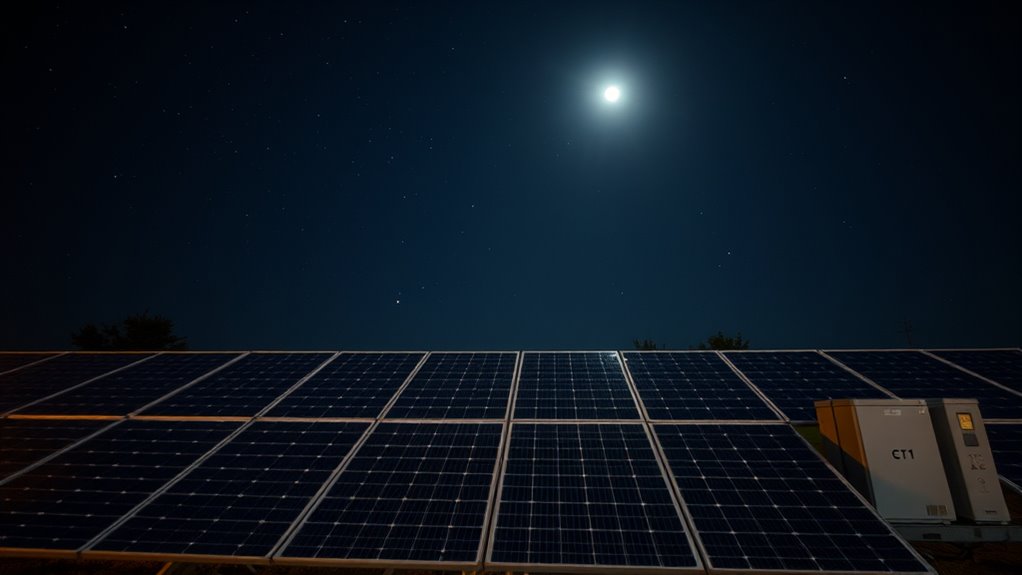
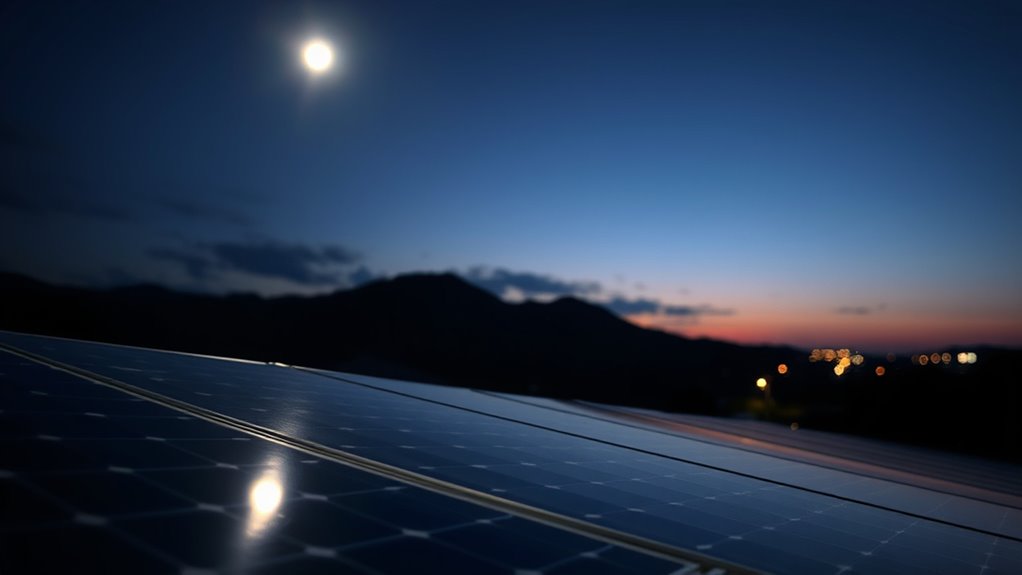
Because solar panels depend entirely on sunlight to generate electricity, they stop producing power once the sun sets. Solar panels contain photovoltaic cells that convert sunlight into electricity.
Without sunlight, these cells have no energy source to trigger the electrical flow. At night, the absence of photons means no current is generated, so the panels stop working completely.
Here’s a quick breakdown:
| Factor | Daytime Effect | Nighttime Effect |
|---|---|---|
| Sunlight | Provides photons | No photons available |
| Photovoltaic cells | Convert light to electricity | Inactive without light |
| Electricity Output | Produces power continuously | Stops producing power |
| Energy Source | Solar radiation | None |
| Power Availability | Immediate and direct | Zero |
You can see why solar panels alone can’t power your home after dark.
How Battery Storage Keeps Solar Panel Power Available After Dark
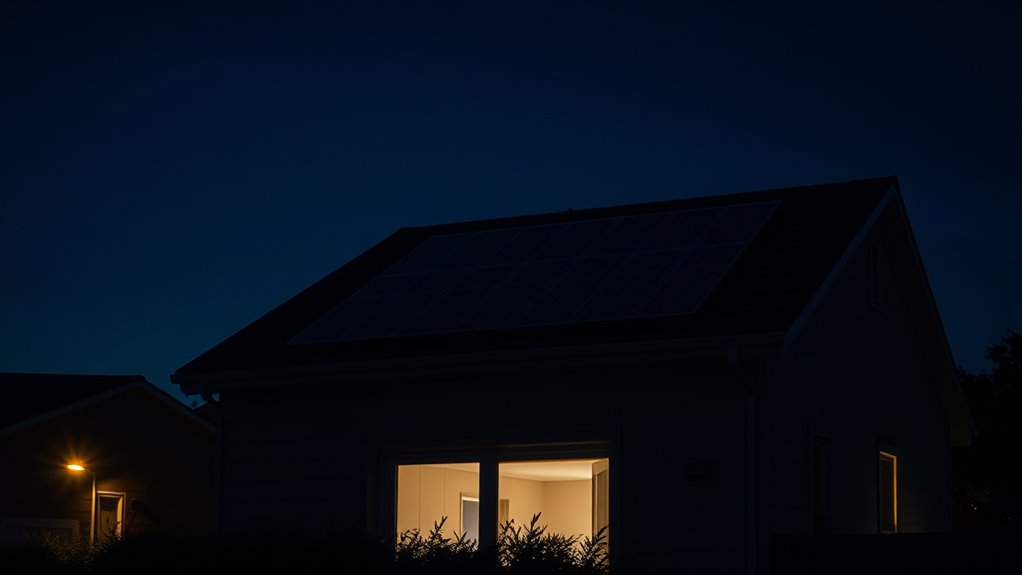
When the sun goes down, your solar panels stop producing electricity, but battery storage steps in to keep your power flowing. During the day, your solar system charges the batteries by converting excess sunlight into stored energy.
At night, these batteries release that stored power, supplying your home with electricity just like the grid would. This means you can run lights, appliances, and devices without interruption, even in complete darkness.
Battery storage fundamentally acts as your personal energy reserve, bridging the gap when solar panels aren’t active. By managing how and when energy is stored and used, the system maximizes your solar investment’s efficiency.
How Grid-Tied Solar Systems Power Your Home at Night
When the sun sets, your grid-tied solar system switches its energy source to the utility grid. This means you’re drawing power directly from the grid to keep your home running smoothly.
The grid acts as a backup, making sure you never lose electricity once your panels stop producing. So, even at night, your home stays powered without a hitch.
Energy Flow During Night
Although your solar panels don’t produce energy at night, your grid-tied system guarantees your home stays powered by drawing electricity from the utility grid.
Here’s how the energy flow works during nighttime:
- Your home’s energy demand continues even when the sun sets.
- The solar inverter detects zero solar input and switches to grid power automatically.
- Electricity flows from the utility grid through the inverter to power your appliances.
- Your meter tracks the energy you consume from the grid until solar production resumes.
This seamless changeover ensures you never experience a power interruption.
Your system efficiently balances energy use without requiring batteries, letting you enjoy solar benefits 24/7.
Role Of Utility Grid
Since solar panels stop generating power without sunlight, the utility grid steps in to keep your home running smoothly at night. When your solar panels aren’t producing electricity, your home automatically draws power from the grid, ensuring you don’t experience any interruptions.
This seamless switch happens because your system is grid-tied, meaning it’s connected to the local utility network. You don’t need batteries to store energy overnight; instead, the grid acts as a reliable backup power source.
During the day, if your panels generate excess electricity, it flows back to the grid, often earning you credits. Then at night, you use those credits or simply draw power as needed.
This setup keeps your home powered 24/7 without the hassle of managing energy storage. It’s a simple, efficient way to stay connected and energized all the time.
How Hybrid Solar Systems Combine Batteries and the Grid for Nighttime Power
If you want consistent power through the night, a hybrid solar system can be a smart solution. It combines solar panels, batteries, and the utility grid to keep your home powered seamlessly.
Here’s how it works:
- During the day, your solar panels generate electricity and charge the batteries.
- When the sun sets, your home draws power from the fully charged batteries first.
- If your battery runs low, the system automatically switches to the grid for backup power.
- This setup ensures you never run out of electricity, whether it’s a cloudy night or an extended power outage.
Tips to Maximize Your Solar Power Use After Dark
To get the most out of your solar power after dark, you’ll want to manage your energy use wisely and optimize your battery storage. Start by running high-energy appliances during the day when your panels produce power.
In the evening, switch to energy-efficient LED lights and unplug devices not in use to reduce unnecessary consumption. Make sure your battery bank is properly sized and maintained to hold enough charge for nighttime needs.
You can also consider installing smart energy management systems to monitor and adjust usage in real time. Finally, schedule heavy tasks like laundry or charging electric vehicles during daylight hours, saving your stored energy for essential nighttime functions.
These steps help you maximize your solar investment and maintain reliable power after sunset. It’s all about being smart with when and how you use your energy!
Frequently Asked Questions
Can Solar Panels Generate Electricity During Cloudy Nights?
No, solar panels can’t generate electricity during cloudy nights because they need sunlight to produce power.
However, you can store energy in batteries during the day to use at night when solar panels aren’t active. That way, you still have power even when the sun isn’t shining.
Do Solar Panels Require Maintenance to Work Effectively at Night?
You don’t need to maintain solar panels specifically for nighttime, but you do need to clean them regularly. Checking connections often is important too.
If you use storage batteries, inspecting those is a must. Doing all this keeps your system working efficiently day and night.
How Long Do Solar Batteries Typically Last in Solar Systems?
Solar batteries typically last between 5 to 15 years, depending on the type and usage. You’ll want to monitor their health regularly and replace them when their capacity substantially drops.
Keeping an eye on them helps your system stay efficient. It’s all about making sure your solar setup runs smoothly over time.
Are Solar Panels Effective in Winter Months With Shorter Daylight?
Yes, solar panels still work in winter, but their efficiency drops due to shorter daylight and weaker sunlight.
You can maximize output by keeping panels clear of snow and positioning them to capture the sun’s lower angle.
It’s all about making the most of the available light, even when days are shorter.
Can Solar Panels Charge Electric Vehicles Overnight?
Yes, you can charge your electric vehicle overnight using solar energy stored in batteries.
Don’t worry about the sun being down; your solar system saves daytime power to keep your EV charged and ready when you need it.
Conclusion
While solar panels don’t generate electricity at night, you can still enjoy their benefits after dark. Battery storage stores excess energy from the day, letting you use solar power anytime.
Grid-tied and hybrid systems also keep your home powered by switching to the grid when needed. So, don’t worry about nighttime—solar energy works around the clock with the right setup.
This proves the myth that solar panels only help you during daylight isn’t the full story. With battery storage and smart system designs, you can harness solar power 24/7. Solar panels at night rely on stored energy or the electric grid, ensuring your home stays powered no matter the time. So, understanding how solar panels work at night can help you make the most of solar energy all day long.