
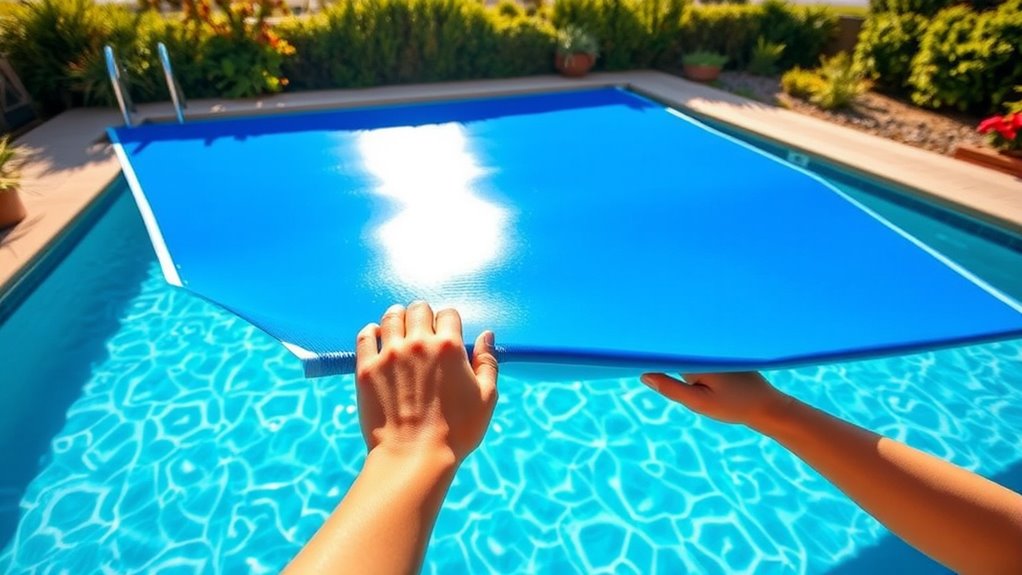
How Do You Use a Solar Pool Cover in 5 Easy Steps
To use a solar pool cover in 5 easy steps, first make sure your pool water is clean and balanced. This helps the cover work effectively to keep your pool warm and reduce evaporation.
Next, unroll the cover near the pool with the bubble side down. Spread it fully over the water without stretching and trim any excess if needed.
Keep the cover on when you’re not swimming to trap heat and save energy. This simple step also helps keep debris out of your pool.
After use, rinse and dry the cover properly before storing it to extend its lifespan.
Keep going to discover tips on choosing and maintaining your solar pool cover for the best results!
Key Takeaways
- Clean and balance the pool water before use. This helps make sure your cover works its best.
- Unroll the cover with the bubble side down. Then, spread it fully over the pool surface.
- Trim any extra cover, but leave a little overlap so it fits securely.
- Keep the cover on whenever the pool isn’t in use. This traps heat and cuts down on evaporation.
- Remove debris from the cover regularly. Rinse it, let it dry completely, and store it somewhere shaded and safe.
What Is a Solar Pool Cover and Why Use One?
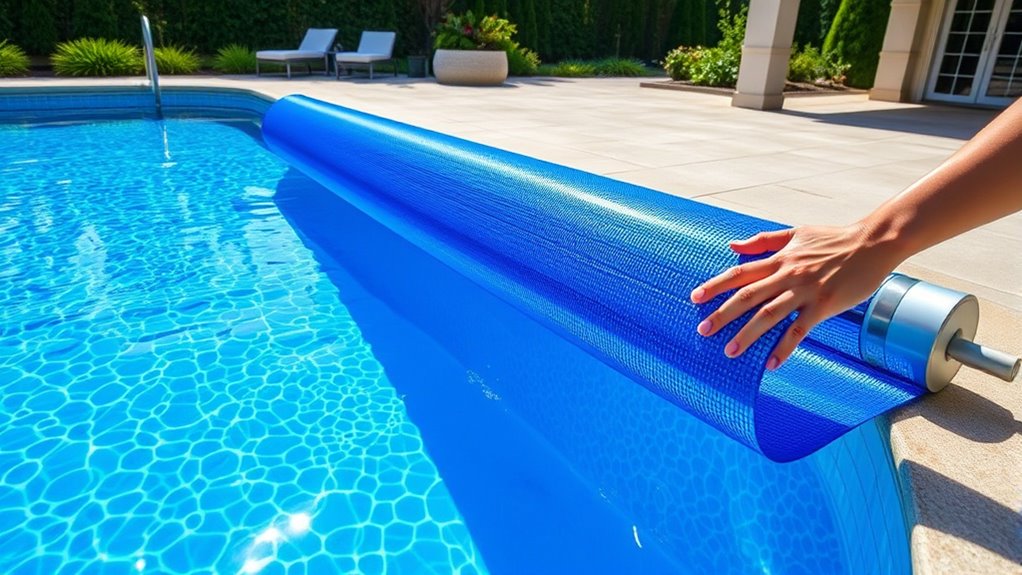
Although you might already know the basics, a solar pool cover is a specially designed sheet that floats on your pool’s surface to trap heat from the sun. When you use one, it absorbs sunlight and transfers that warmth into the water, helping to keep your pool comfortably warm.
Beyond heating, it also reduces evaporation, so you don’t lose as much water or chemicals. This saves you time and money in the long run.
You’ll find that using a solar cover can extend your swimming season by a few weeks, making your pool more enjoyable overall. Plus, it reduces energy costs if you run a pool heater.
Choose the Right Solar Pool Cover for Your Pool
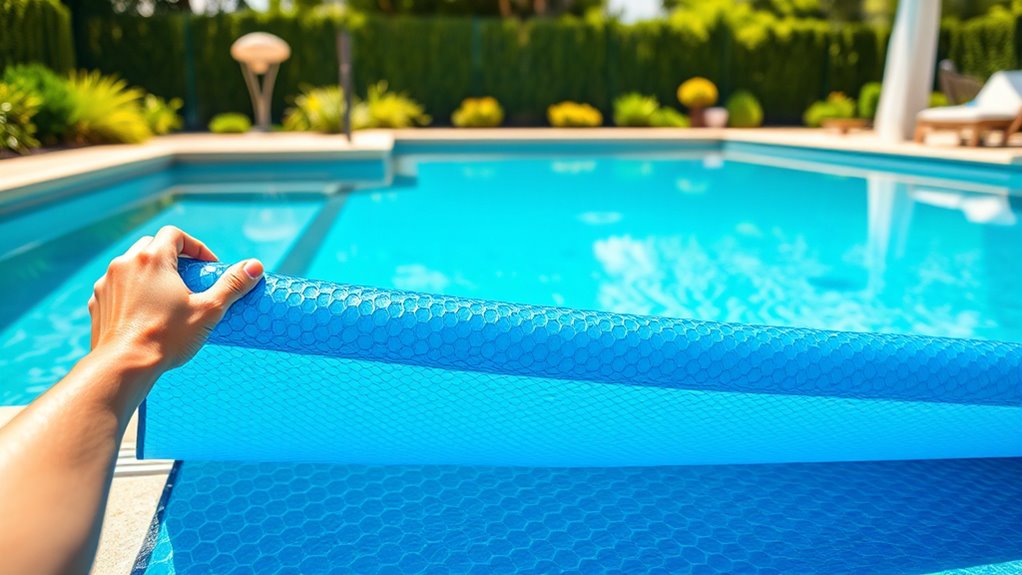
Using a solar pool cover effectively starts with picking the one that fits your pool’s size, shape, and your heating needs. Measure your pool carefully to guarantee the cover fully spans its surface without gaps that let heat escape.
Start by choosing a solar pool cover that matches your pool’s size, shape, and heating requirements precisely.
Consider your pool’s shape—rectangular covers work well for standard pools, while custom or flexible covers suit irregular shapes. Look at the cover’s thickness; thicker covers retain heat better but may be heavier to handle.
Also, check the bubble size on the cover; larger bubbles can trap more heat but might wear out faster. Finally, think about your climate and how much heating you want.
Choosing the right cover maximizes heat retention and energy savings, making your pool more comfortable and extending your swimming season.
Prepare and Install Your Solar Pool Cover
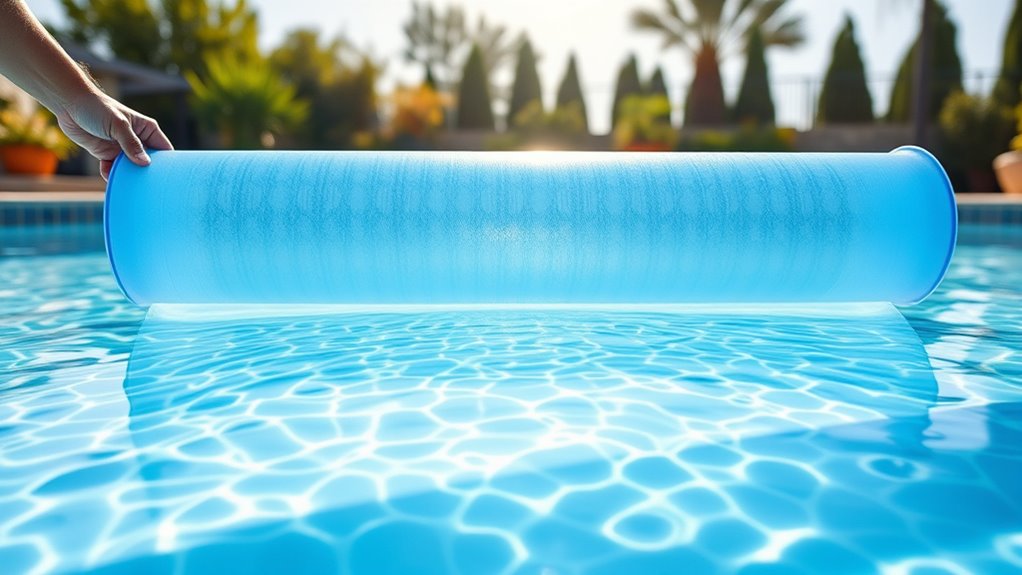
How do you get your solar pool cover ready for use? First, make sure your pool water is clean and balanced. This helps avoid trapping debris under the cover.
Then, follow these steps to prepare and install it properly:
- Unroll the solar cover on a flat surface near the pool. Doing this helps prevent any damage.
- Position the cover bubble side down. Those bubbles are great at trapping heat.
- Carefully spread the cover over the pool. Make sure it fully covers the surface without stretching or tearing.
- If you need to, trim any excess material with scissors. Just be sure to leave some overlap to keep water from escaping.
Use Your Solar Pool Cover to Maximize Heat Retention
To maximize heat retention, you’ll want to keep your solar pool cover on whenever the pool isn’t in use, especially during cooler nights. The cover acts as an insulating barrier, trapping the sun’s warmth and preventing heat from escaping.
Make sure the cover fits snugly over the pool’s surface to minimize heat loss through gaps. During the day, the cover absorbs solar energy, warming the water beneath.
Avoid removing it unnecessarily—each time you expose the water, heat escapes, and evaporation increases. If you swim during the day, put the cover back on as soon as you’re done.
Maintain and Store Your Solar Pool Cover Between Uses
Although solar pool covers are designed to withstand outdoor conditions, you should clean and dry yours thoroughly before storing it. This helps prevent mold and damage.
Proper maintenance extends your cover’s lifespan and keeps it effective.
Follow these steps to maintain and store your solar pool cover:
- Rinse off debris and chemicals with a garden hose.
- Gently scrub with mild soap and a soft brush if needed.
- Allow the cover to air dry completely to avoid mildew.
- Roll it loosely and store it in a cool, shaded area, away from sharp objects.
Doing this might take a little time, but it’s totally worth it for keeping your cover in great shape!
Frequently Asked Questions
Can a Solar Pool Cover Reduce Water Evaporation Significantly?
Yes, a solar pool cover can considerably reduce water evaporation. You’ll save water by keeping the pool surface covered, which traps heat and prevents moisture from escaping.
It helps you maintain your pool’s water level more efficiently. Plus, it’s a smart way to cut down on water waste and keep your pool ready to enjoy.
Are Solar Pool Covers Safe for Pets and Children?
Solar pool covers offer a cozy barrier but aren’t a foolproof playground.
You’ll want to supervise pets and children closely, since they might see it as an invitation rather than a safety shield.
Stay cautious and safe!
How Do Solar Pool Covers Affect Pool Chemical Levels?
Solar pool covers reduce chemical evaporation, so you’ll need fewer chemicals to maintain balance. They help keep chlorine levels steady.
But you should still test your water regularly to adjust chemicals as needed for safe swimming. It’s a good habit to make sure everything stays just right.
Can Solar Pool Covers Prevent Algae Growth?
Yes, solar pool covers can help prevent algae growth by blocking sunlight, which algae need to thrive.
You’ll still need proper chemical balance and cleaning, but the cover reduces algae risks by limiting light exposure. It’s a simple way to keep your pool cleaner for longer!
What Is the Average Lifespan of a Solar Pool Cover?
You can expect your solar pool cover to last about 3 to 5 years with proper care. Keep it clean, avoid sharp objects, and store it properly during off-seasons to extend its lifespan and efficiency.
Taking a little extra care really goes a long way. Just a bit of attention can help your cover stay effective and save you money in the long run.
Conclusion
Now that you know the secrets behind using a solar pool cover, you’re just one step away from transforming your pool experience. Imagine enjoying warmer water without extra energy costs—sounds incredible, right?
But here’s the catch: the real magic happens only when you use and maintain your cover correctly. So, are you ready to access your pool’s full potential and immerse yourself in comfort like never before?
Using a solar pool cover not only saves energy but also keeps your pool water warm and clean. The choice is yours—don’t miss out on these amazing benefits. Start using your solar pool cover properly and enjoy a more enjoyable, cost-effective swim all season long!




2 Comments