How Does a Solar Cover Work Step by Step
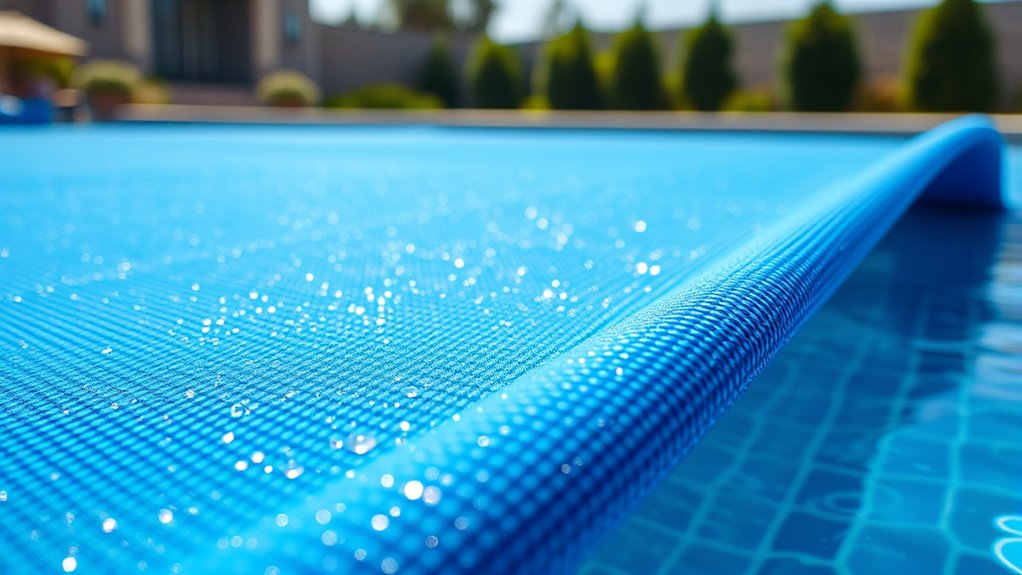
A solar cover works by trapping the sun’s heat like a greenhouse, using its bubble-filled design to let sunlight in and hold warmth. This design absorbs sunlight and then transfers that heat to your pool water through conduction, warming it efficiently.
It’s a smart way to keep your pool cozy without cranking up energy costs. Plus, the cover blocks wind and reduces evaporation, which helps keep the water temperature steady.
Not only does it warm your pool, but it also protects your pool from debris and heat loss. Want to keep your pool clean and warm with less effort? Keep exploring to discover how to pick and care for your perfect solar cover.
Key Takeaways
- The solar cover’s bubble-filled design lets sunlight pass through and traps heat like a greenhouse.
- It absorbs sunlight and turns it into thermal energy, which warms the cover’s surface.
- Then, heat moves from the cover to the pool water through conduction, which raises the water temperature.
- The cover also cuts down on heat loss by reducing evaporation and blocking the wind.
- This means it keeps the pool warm overnight and on cooler days.
- So, you get to swim longer into the season and save energy too!
Why Solar Covers Matter for Your Pool
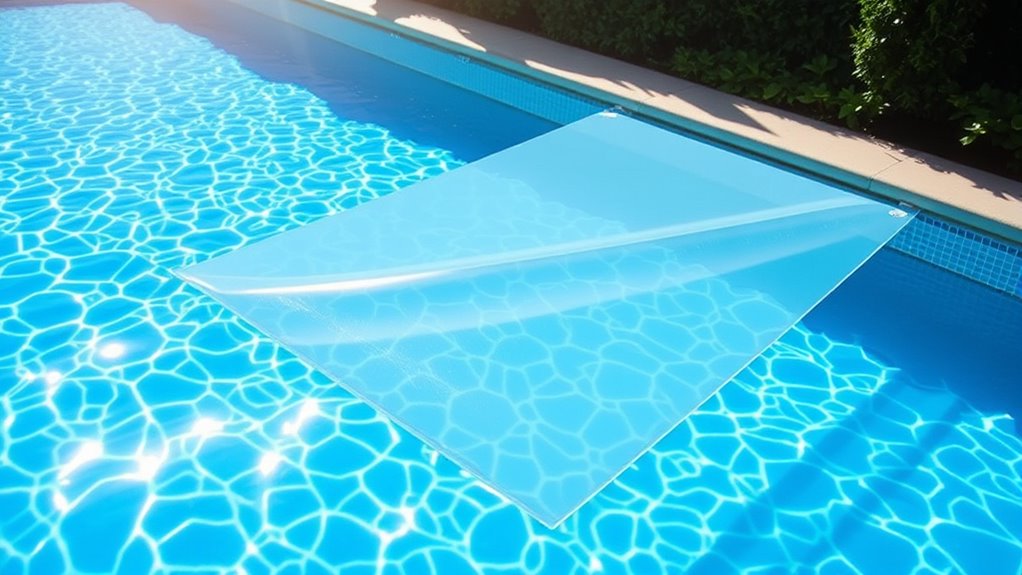
Although you might not realize it, using a solar cover can greatly improve your pool’s temperature and reduce water evaporation. When you cover your pool, you’re protecting the water from losing heat overnight and during cooler days.
This means you won’t have to constantly reheat the pool, saving energy and money. Plus, the cover acts as a barrier against dirt and debris, keeping your pool cleaner and reducing maintenance time.
You also cut down on water loss, which is especially important in dry climates or during droughts. By using a solar cover, you’re making your pool more efficient, eco-friendly, and easier to enjoy.
It’s a simple step that has a big impact on your pool’s overall performance.
How a Solar Cover Captures the Sun’s Heat
When you place a solar cover on your pool, it acts like a greenhouse, trapping the sun’s heat and transferring it directly to the water. The cover’s clear, bubble-filled design allows sunlight to pass through while reducing heat loss.
Those bubbles create a layer of insulation, capturing warmth and preventing it from escaping back into the air. As sunlight hits the cover, it converts to heat energy, which stays beneath the cover instead of dissipating.
This trapped heat raises the pool’s surface temperature efficiently. By blocking wind and minimizing evaporation, the cover helps maintain that warmth longer.
You’ll notice your pool stays warmer throughout the day, even when the sun isn’t as strong, thanks to how effectively the cover captures and holds the sun’s heat. It’s a simple way to keep your pool comfy without extra energy costs.
How Heat Transfers From the Solar Cover to Pool Water
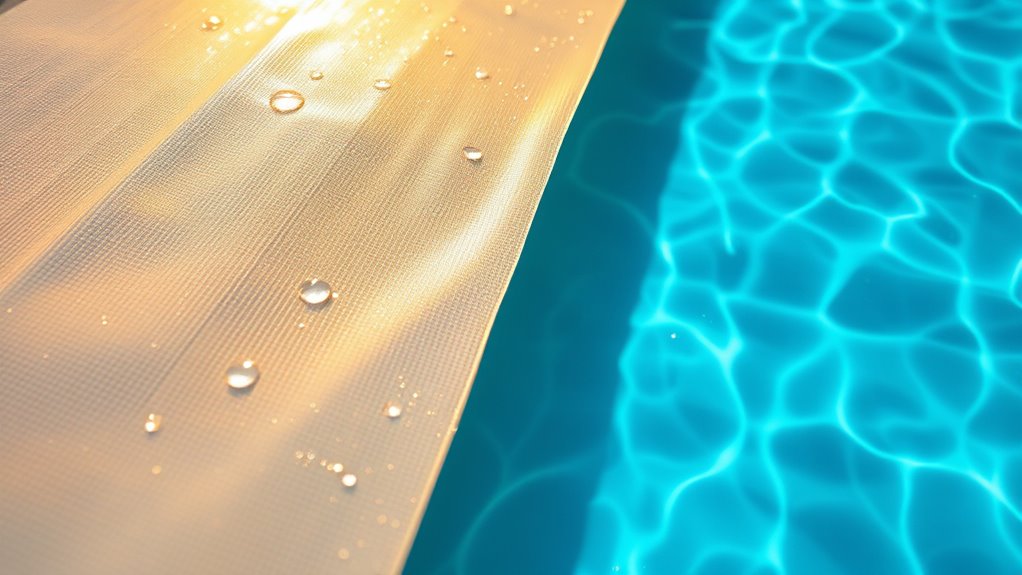
When the solar cover absorbs sunlight, it heats up and transfers that warmth directly to the pool water below. You’ll notice this happens through conduction as the cover’s surface touches the water.
Understanding this heat transfer process helps you see why the cover is so effective at warming your pool. It’s pretty cool how something so simple can make such a big difference!
Heat Absorption Mechanism
How exactly does the solar cover transfer heat to your pool water? The cover absorbs sunlight, converting it into thermal energy that warms the water beneath.
Its special material captures and holds this heat, creating a warm barrier right on your pool’s surface. This process not only heats but also reduces evaporation, keeping your pool inviting longer.
| What You Feel | Why It Matters |
|---|---|
| Warm, inviting water | Extends your swimming season |
| Reduced water loss | Saves you money and effort |
| Comfortable pool temps | Enhances your pool experience |
Heat Transfer Process
Why does the solar cover feel warm to the touch while your pool water heats up beneath it? When sunlight hits the cover, it absorbs and traps heat. This heat transfers directly to the water below through conduction, as the cover’s surface contacts the pool.
Plus, the cover reduces heat loss by limiting evaporation—a major cooling factor. The trapped heat warms the water just beneath the cover, creating a temperature gradient that naturally moves warmth downward through convection currents.
As you keep the cover on, this process continues, steadily raising your pool’s temperature. So, the solar cover doesn’t just soak up heat; it efficiently passes that warmth into your pool, making your water comfortably warm while minimizing energy waste.
How Solar Covers Cut Evaporation and Lower Energy Costs
Although you might not realize it, a solar cover substantially reduces water evaporation from your pool by creating a protective barrier on the surface. This barrier limits the exposure of water to air and wind, two main factors that speed up evaporation.
By cutting evaporation, you keep more water in your pool, which means you won’t have to refill it as often. Less water loss also means your pool stays warmer longer since evaporation carries away heat.
As a result, your heating system doesn’t have to work as hard, lowering your energy bills. Using a solar cover helps you save both water and energy efficiently, making pool maintenance easier and more cost-effective throughout the swimming season.
How to Choose the Right Solar Cover for Your Pool
Choosing the right solar cover starts with understanding the different materials available and how they perform.
You’ll also want to make sure the cover fits your pool’s size and shape perfectly to maximize efficiency.
Let’s look at what factors you should consider to get the best match for your pool.
Material Types Comparison
When selecting a solar cover for your pool, understanding the different material types can help you make the best choice for your needs. The most common material is polyethylene, known for its affordability and decent durability. It’s lightweight and effective at trapping heat but may wear out faster under intense sun exposure.
Another option is vinyl, which offers greater durability and resistance to tearing, making it ideal if you want a longer-lasting cover. However, vinyl tends to be heavier and can be pricier. Some covers combine materials, like reinforced polyethylene with a vinyl layer, enhancing strength and heat retention.
Consider your budget, climate, and how often you’ll use the cover to pick the material that balances performance and longevity for your pool. It’s all about finding what works best for you!
Size and Fit Considerations
How do you make sure your solar cover fits your pool perfectly? Start by measuring your pool’s length and width accurately. Use the widest and longest points if your pool isn’t a perfect rectangle.
Remember, a cover that’s too small won’t trap heat effectively, while one that’s too large can be difficult to handle and may tear. For irregular shapes, consider custom covers tailored to your pool’s exact dimensions.
Also, think about the type of pool edges—some covers fit better on rounded edges than sharp corners. When choosing, factor in slight overlap for better coverage.
Using and Maintaining Your Solar Cover for Best Results
Although a solar cover requires minimal effort, using and maintaining it properly guarantees you get the most heat retention and energy savings for your pool. Always cover your pool right after use or in the evening to trap heat and reduce evaporation.
Make sure to remove debris regularly to prevent damage and keep the cover effective. When not in use, store your cover in a cool, shaded area to avoid UV deterioration.
Clean it monthly with mild soap and water to remove dirt and algae buildup. Avoid harsh chemicals or abrasive tools—they can harm the cover.
Inspect for tears or holes and repair them promptly to maintain insulation. By following these simple steps, you’ll extend your solar cover’s lifespan and maximize your pool’s warmth efficiently.
Frequently Asked Questions
Can Solar Covers Prevent Algae Growth in Pools?
Yes, solar covers help prevent algae growth by blocking sunlight, which algae need to thrive. You’ll reduce algae buildup, keep your pool cleaner, and save on chemicals.
Just remember to remove and clean the cover regularly. It’s a simple step that makes a big difference!
Are Solar Covers Safe for Pool Pets and Wildlife?
Solar covers are like gentle blankets, generally safe for pool pets and wildlife if you monitor them closely.
You’ll want to prevent pets from getting trapped underneath and avoid covering large areas where animals swim freely.
Just keep an eye on things, and your furry or feathered friends should stay safe around the pool.
How Long Do Solar Covers Typically Last?
Solar covers typically last 3 to 5 years, but it depends on how well you maintain them and the quality you choose.
Keeping them clean and storing them properly extends their lifespan considerably. So, a little care goes a long way!
Can Solar Covers Be Used in All Weather Conditions?
You can use solar covers in most weather conditions, but they work best in sunny, calm weather.
It’s a good idea to avoid heavy winds or snow, as these can damage the cover or reduce its effectiveness.
Also, make sure to remove it during storms to keep everything safe.
Do Solar Covers Affect Pool Chemical Balance?
Of course, solar covers don’t magically fix your pool’s chemistry, but they do help by reducing evaporation and limiting debris.
Conclusion
Using a solar cover is like wrapping your pool in a warm, protective blanket woven from sunlight itself. It captures and transfers the sun’s energy, gently heating your water while shielding it from evaporation’s thirsty grasp.
By choosing and caring for your cover wisely, you’re not just saving energy—you’re nurturing your pool’s significance. Think of it as a simple embrace that holds warmth and life together, season after season.
A solar cover works by absorbing sunlight during the day and trapping heat in your pool water, reducing heat loss overnight. This process keeps your pool warmer for longer while conserving water by preventing evaporation.
So, using a solar cover is an easy and effective way to extend your swimming season, cut down on heating costs, and maintain cleaner water. It’s truly a smart investment for anyone who loves their pool and wants to enjoy it year-round.