10 Reasons Solar Panels Are Worth It in Massachusetts
You’ll save money by generating your own electricity and cutting utility bills, thanks to Massachusetts’ generous incentives, rebates, and net metering policies. Solar panels are a smart investment here because they perform well even on cloudy days, which is great for our New England weather.
They need little maintenance over 25+ years, so once they’re installed, you can mostly sit back and enjoy the benefits.
Plus, solar panels boost your home’s value, making it a win-win if you ever decide to sell.
You’ll also protect yourself against rising energy costs and support local jobs in the clean energy sector.
And the best part? You’re helping reduce your carbon footprint. Keep exploring to discover how solar truly benefits you!
Key Takeaways
- Solar panels reduce or even eliminate your electricity bills, which means long-term savings for you. Plus, they can boost your home’s value here in Massachusetts.
- There are great state and federal incentives like tax credits and rebates that really help bring down the cost of installing solar.
- Even on cloudy days, solar systems still work efficiently. And with net metering, you can make the most of your energy savings all year round.
- Installing solar panels isn’t just good for you—it also supports local clean energy jobs and helps grow our regional economy.
- Solar energy cuts down your carbon footprint. It also protects you from rising utility rates by locking in lower energy costs.
Why Solar Panels Are a Smart Investment in Massachusetts
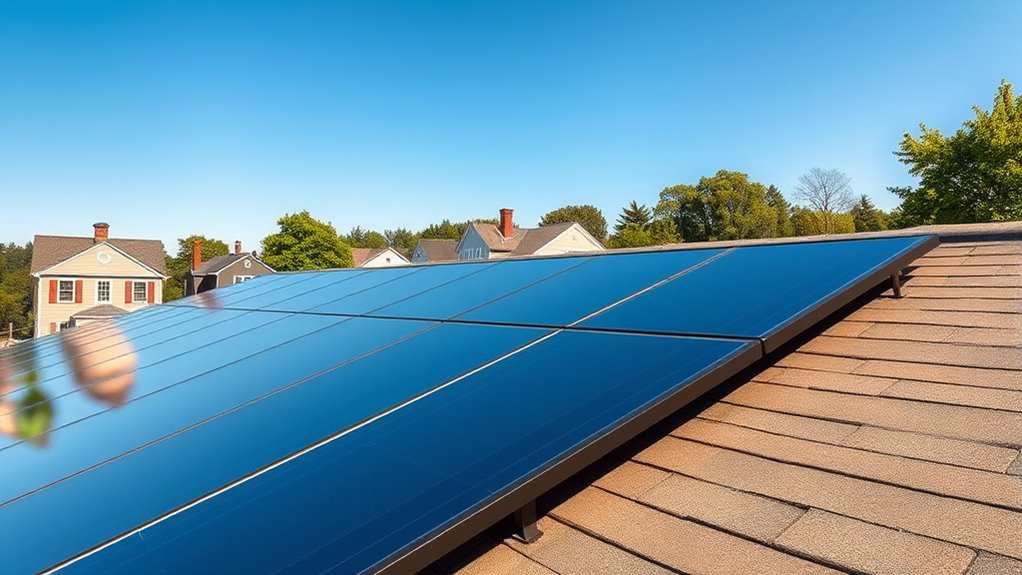
Because Massachusetts receives ample sunlight year-round, investing in solar panels makes financial sense. You’ll generate your own electricity, reducing or even eliminating your monthly utility bills.
Over time, the savings add up, helping you recoup your initial investment. Plus, solar panels increase your property value, making your home more attractive to potential buyers.
You’ll also gain energy independence, protecting yourself from rising electricity rates. And with minimal maintenance, solar panels offer long-term reliability and durability.
How Massachusetts’ Solar Incentives Lower Your Costs
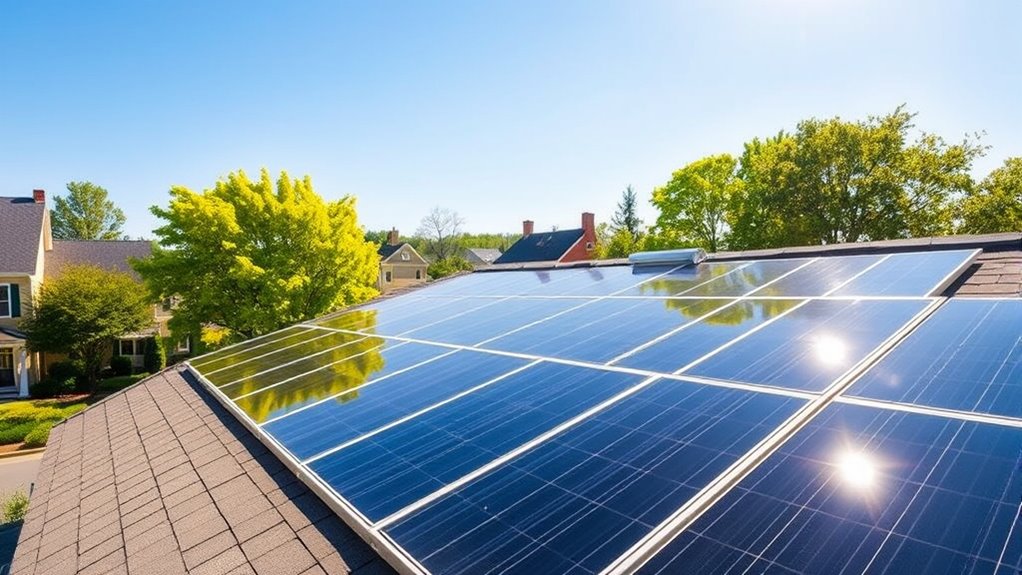
How can you make solar panels even more affordable in Massachusetts? The state offers several incentives that greatly cut your upfront and long-term costs.
You can take advantage of the Massachusetts Solar Renewable Energy Certificates (SRECs), which let you earn money for every megawatt-hour your system produces. Plus, there’s a state tax credit that reduces your income tax bill based on your solar installation expenses.
On top of that, many local utilities offer rebates and net metering programs, allowing you to sell excess power back to the grid and lower your monthly bills. These incentives stack up, making your investment more manageable and speeding up your system’s payback period.
Why Solar Panels Save You Money Even on Cloudy Days
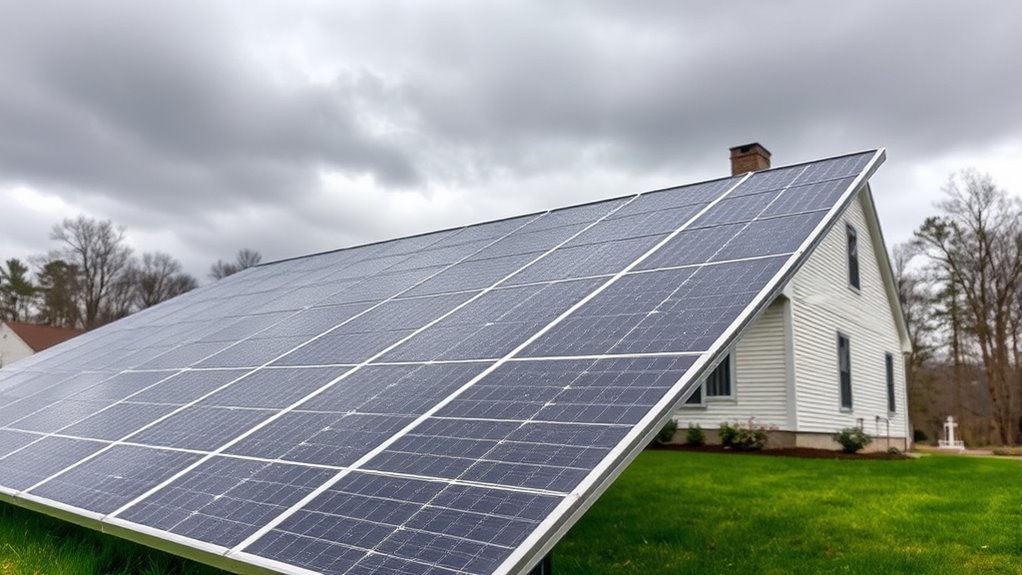
You might think cloudy days mean no savings, but your solar panels still generate power even without direct sunlight.
Thanks to net metering, any extra energy your system produces gets credited to your account, lowering your bills.
Let’s explore how this keeps your savings steady all year round.
Solar Efficiency On Cloudy
Even on cloudy days, solar panels continue to generate electricity, helping you save money. While their output drops compared to sunny days, modern solar panels remain efficient under diffused light.
This means you’re still producing energy even when the sky is gray. Massachusetts experiences plenty of cloudy weather, but that doesn’t stop your panels from working hard for you.
Advances in panel technology allow them to capture a broader spectrum of light, boosting performance in less-than-ideal conditions. By generating power consistently, you reduce reliance on the grid daily, lowering your electric bills.
Net Metering Benefits
Three key benefits of net metering help you maximize your savings with solar panels, especially on cloudy days. First, you get credited for the excess electricity your panels produce when the sun is shining. This credit offsets the energy you use at night or during overcast periods.
Second, this system lets you draw power from the grid without extra charges when your panels aren’t generating enough. So, you’re never left in the dark.
Third, net metering effectively lowers your overall energy bill by balancing your electricity consumption and production over time. In Massachusetts, this means even if your panels produce less on cloudy days, you still save money. The credits from sunnier days cover the shortfall, ensuring consistent savings year-round.
How Rising Electricity Prices Make Solar Panels More Affordable
As electricity prices keep climbing in Massachusetts, you’ll see your monthly bills rise too. Installing solar panels lets you lock in lower energy costs and protect yourself from future increases.
That means the higher electricity rates go, the more you save with solar power. It’s a smart way to keep your energy budget in check while helping the planet.
Electricity Costs Climbing
Why are electricity bills rising so quickly in Massachusetts? Several factors drive these increases, including higher demand, aging infrastructure, and the costs of integrating renewable energy sources.
As prices climb, relying solely on the grid becomes more expensive for you. Installing solar panels offers a smart solution since they generate your own electricity, reducing your dependence on fluctuating utility rates.
The more electricity costs go up, the more you save by producing your own power. Plus, solar systems shield you from unpredictable price spikes, helping you manage your budget better.
In a state like Massachusetts, where energy prices tend to rise steadily, switching to solar isn’t just environmentally responsible—it’s financially sensible. It gives you long-term control over your electricity expenses.
Solar Savings Increase
Although electricity prices keep climbing, you can turn this trend into an advantage by investing in solar panels. As rates rise, the amount you save on your electric bill grows, making solar panels more affordable and valuable over time.
By generating your own electricity, you shield yourself from unpredictable utility hikes.
Here’s a quick look at how rising prices impact your savings:
| Year | Avg. Electricity Price (¢/kWh) | Estimated Annual Savings ($) |
|---|---|---|
| 2022 | 22 | 900 |
| 2023 | 24 | 980 |
| 2024 | 26 | 1,060 |
| 2025 | 28 | 1,140 |
As prices increase, your solar investment pays off faster. It really boosts your long-term savings.
Why Massachusetts’ Net Metering Policy Benefits Solar Users
How does Massachusetts’ net metering policy make solar energy more attractive for you? It lets you send excess electricity your solar panels generate back to the grid, earning credits on your utility bill.
When your system produces more power than you use during sunny days, those credits offset the energy you draw from the grid at night or on cloudy days. This setup means you pay less overall, maximizing your savings.
Plus, the policy guarantees you get fair compensation for your surplus energy, making your investment in solar panels more financially rewarding.
How Solar Panels Increase Your Home’s Value in Massachusetts
Beyond lowering your energy bills through net metering, installing solar panels can also boost your home’s market value in Massachusetts. Buyers recognize the long-term savings on electricity bills, making solar-equipped homes more attractive.
Studies show homes with solar systems often sell faster and at higher prices compared to similar non-solar properties. In Massachusetts, where energy costs tend to be high, solar panels add tangible financial appeal.
Plus, solar installations signal that you’ve invested in sustainable, modern upgrades, which can enhance your home’s overall desirability. If you decide to sell, you can confidently highlight these benefits to potential buyers, increasing your home’s competitive edge in the market.
How Solar Panels Help Fight Climate Change Locally
When you install solar panels in Massachusetts, you actively reduce your carbon footprint by relying less on fossil fuels. Solar energy produces no greenhouse gas emissions during operation, so every kilowatt-hour you generate cuts down on carbon dioxide released into the atmosphere.
This local shift to clean energy helps improve air quality and slows climate change effects that impact your community. Plus, by decreasing demand on Massachusetts’ power grid, you lessen the need for fossil fuel power plants to run at full capacity.
This collective reduction in pollution benefits everyone nearby, protecting ecosystems and public health. Choosing solar panels means you’re part of a local solution, directly combating climate change while supporting a cleaner, healthier environment for yourself and future generations.
Why Solar Panels Require Low Maintenance and Last for Years
Although solar panels work hard to capture the sun’s energy, they require surprisingly little upkeep from you. You won’t need to worry about frequent repairs or complicated maintenance routines.
Most solar panels come with durable materials, designed to withstand harsh weather conditions common in Massachusetts, like snow, rain, and wind. Occasionally, you might want to clean the panels to remove dust or debris, but even that isn’t necessary very often.
Plus, your system’s inverter and wiring generally have long lifespans and rarely cause issues. With proper installation, your solar panels can efficiently produce energy for 25 years or more.
This means you can enjoy reliable, clean power without constant attention, making your investment both smart and hassle-free.
How Solar Panel Installation Supports Local Jobs in Massachusetts
Maintaining your solar panels is simple, but the benefits of going solar in Massachusetts extend well beyond ease of upkeep. When you decide to install solar panels, you’re directly supporting local jobs.
Massachusetts has a growing clean energy workforce, including installers, electricians, and sales professionals who rely on solar projects for steady employment. By choosing a local company, you help keep money within your community, boosting the regional economy.
Plus, increased demand for solar installations drives training programs and apprenticeships, creating career opportunities for residents. Supporting these jobs not only strengthens the local economy but also helps Massachusetts progress toward its clean energy goals.
How to Finance Solar Panels in Massachusetts
Wondering how to afford solar panels in Massachusetts without breaking the bank? You’ve got options. Start by exploring state and federal incentives like the Massachusetts Solar Massachusetts Renewable Target (SMART) program and the federal Investment Tax Credit (ITC), which can markedly reduce upfront costs.
You can also consider solar loans, offering low-interest rates and flexible terms to fit your budget. If you prefer no upfront investment, solar leases or power purchase agreements (PPAs) let you pay monthly for the solar energy your panels produce.
Additionally, some local utilities offer rebates that lower your costs further. By combining these financing methods, you can make solar panels more affordable and start saving on energy bills sooner than you think.
Frequently Asked Questions
What Types of Solar Panels Are Best Suited for Massachusetts Weather?
You’ll want monocrystalline solar panels since they perform well in cloudy, cold Massachusetts weather. They’re efficient, durable, and handle partial shading better.
This means you’ll get the most energy even during less sunny days or snow. They really are a solid choice for the local climate.
How Long Does the Solar Panel Installation Process Take in Massachusetts?
You might think solar installation drags on forever, but in Massachusetts, it usually takes just a few weeks. From permits to final setup, expect around 3 to 6 weeks before your system powers up and saves you money.
It’s not as long as you might imagine. Plus, once it’s done, you’ll start seeing the benefits right away!
Are There Any Restrictions on Solar Panel Placement in Historic Massachusetts Neighborhoods?
Yes, you’ll face restrictions in historic Massachusetts neighborhoods. Local historic commissions often require approvals to guarantee solar panels don’t alter the building’s character or visibility.
You’ll need to check specific guidelines before installation. It’s a good idea to reach out early so you know what’s allowed and what’s not.
Can Solar Panels Be Installed on All Roof Types in Massachusetts?
You might think not all roofs work for solar panels, but you’d be surprised.
Most roof types in Massachusetts—like asphalt, metal, and tile—can support solar installations, though some might need special mounting solutions.
It’s pretty flexible, really. So, don’t rule out your roof just yet!
What Happens to Solar Panels During Heavy Snow or Storms in Massachusetts?
During heavy snow or storms, your solar panels might get temporarily covered or experience reduced output, but they’re built to withstand harsh conditions. Snow usually slides off, and panels resume generating power once clear.
It’s pretty common for snow to block sunlight for a bit, but don’t worry—it doesn’t harm the panels. Once the snow melts or slides away, your system gets back to work, producing energy like usual.
Conclusion
Choosing solar panels in Massachusetts is like planting a seed that grows into a mighty oak—steady, strong, and full of life. With local incentives, rising energy costs, and net metering, you’re not just saving money; you’re investing in a greener future.
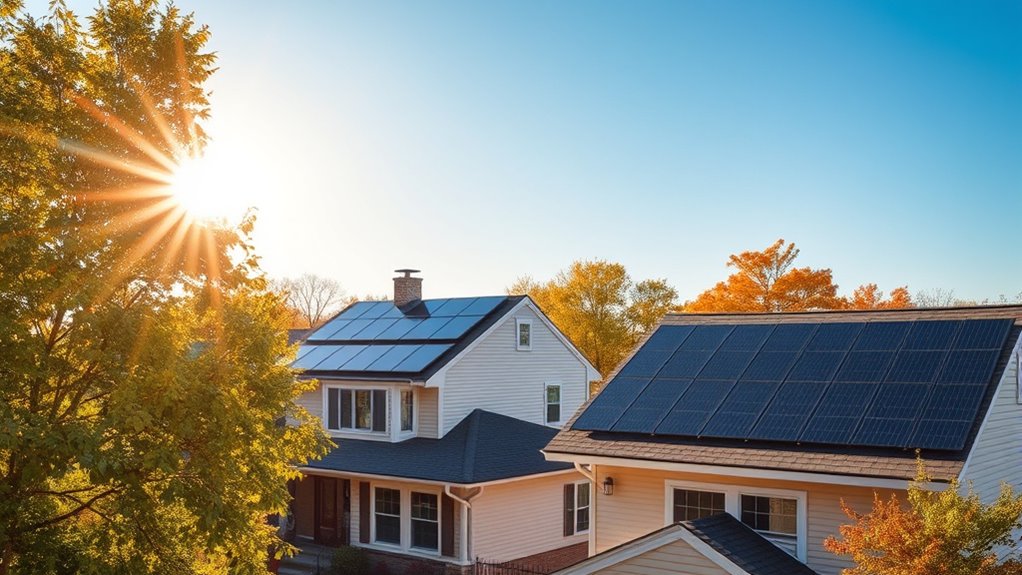
Even on cloudy days, your panels work quietly, supporting your community and the planet. So, why wait? Let your roof become a beacon of change, powering your home and hope for years to come.
Solar panels in Massachusetts are worth it because they help you cut energy bills, increase your home’s value, and reduce your carbon footprint. Plus, with state incentives and net metering, the savings add up faster than you might think. It’s a smart, sustainable choice that benefits your wallet and the environment alike. Switching to solar means you’re joining a growing movement toward clean, renewable energy right here in Massachusetts. So go ahead—make the switch and watch your home become a source of clean power and positive change.