How to Invest in Solar Energy Step by Step
To invest in solar energy, start by calculating your home’s energy needs. Use past bills and solar estimates to get a clear idea of potential savings. This step helps you understand how much energy you actually use and what kind of solar setup will work best.
Next, choose efficient panels that balance cost and durability. You want panels that last and give you good value over time. Don’t forget to explore financing options like loans or leases, which can make the investment easier on your wallet.
Also, check for tax credits and incentives that can significantly reduce your upfront costs.
Then, research and compare trusted local installers. Picking the right installer is key to making sure the job is done right and your system performs well.
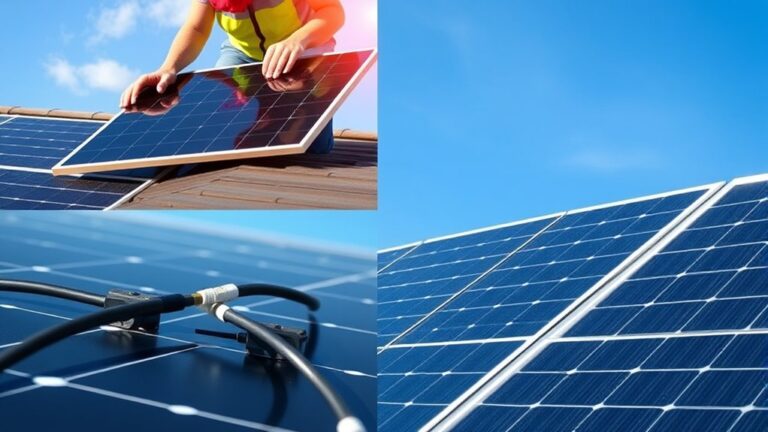
Finally, plan your installation carefully and set up ongoing maintenance. This will help you maximize the performance and lifespan of your solar energy system.
Keep going to uncover tips that help you get the most from your solar investment. It’s a smart move that can save you money and help the environment in the long run.
Key Takeaways
- Calculate your average energy consumption and potential solar savings using past bills and online solar calculators. This will help you set a realistic budget.
- Compare solar panel efficiency, costs, warranties, and lifespan. Choose equipment that balances performance with investment value.
- Explore financing options and check out available federal, state, and local incentives. These can really help reduce your upfront costs and make everything more affordable.
- Research and vet local licensed solar installers. Look at their certifications, reviews, quotes, and warranty offerings to ensure reliable service.
- Coordinate installation logistics, obtain necessary permits, and prepare your property. Also, plan for ongoing maintenance to keep your system running at its best.
Calculate Your Solar Energy Needs and Potential Savings
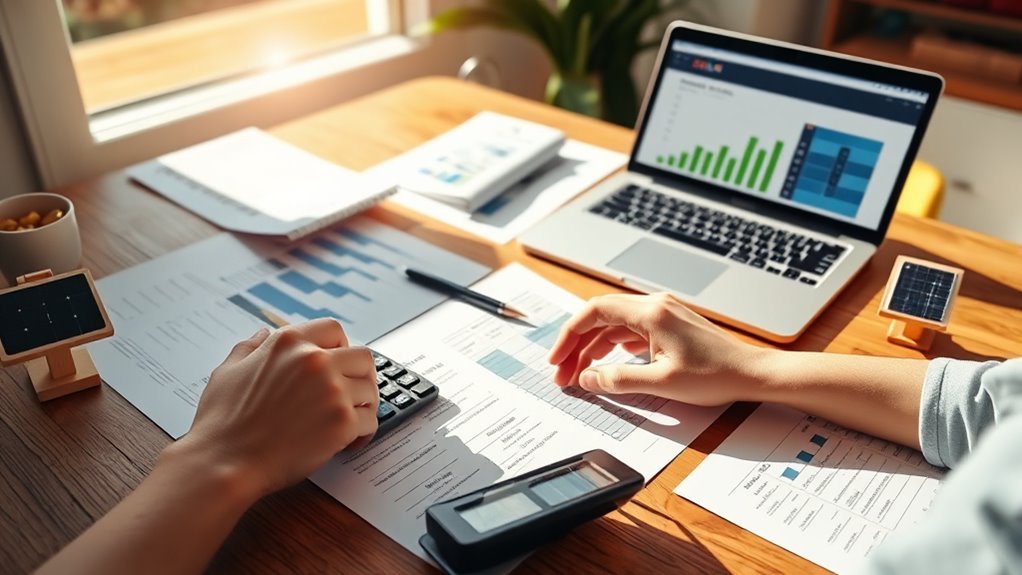
Before investing in solar energy, you’ll want to calculate your energy needs and potential savings accurately. Start by reviewing your past electricity bills to determine your average monthly consumption in kilowatt-hours (kWh). This helps you understand how much energy your solar system must generate.
Next, consider your location’s sunlight exposure since it directly affects your system’s performance. Use online solar calculators or tools to estimate how much solar power your home can produce.
Then, factor in your current electricity rates and any available incentives or tax credits to estimate your potential savings. Knowing these numbers upfront allows you to make informed decisions and set realistic expectations.
Taking the time to calculate energy needs and savings guarantees your solar investment aligns with your budget and sustainability goals. It’s definitely worth the effort!
Select Solar Equipment Based on Cost and Efficiency
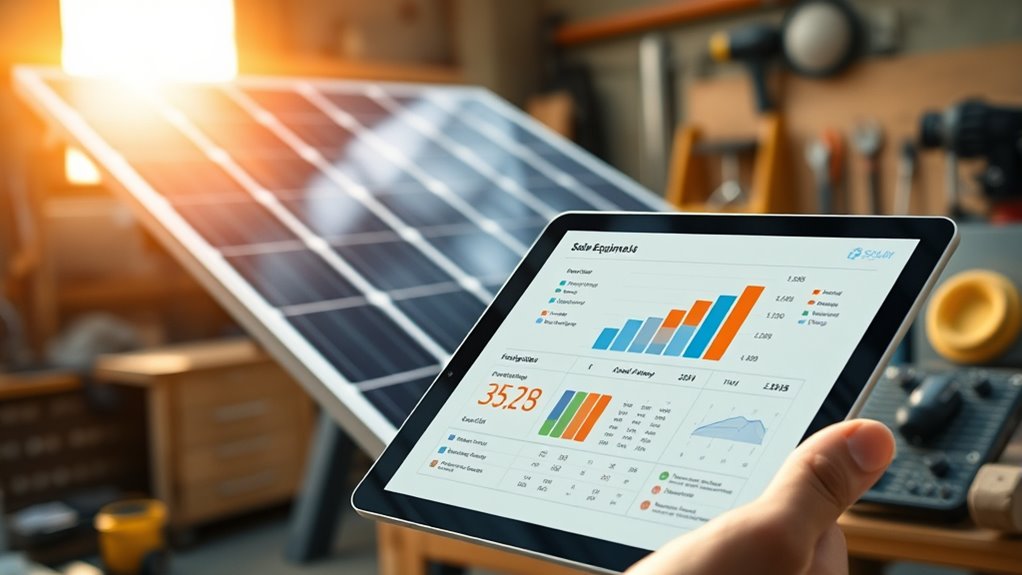
When selecting solar equipment, you’ll want to compare panel efficiency ratings to get the most energy from your investment. Consider cost factors beyond the upfront price, like installation and maintenance expenses.
Finding the right balance between price and performance guarantees you get value without sacrificing quality. It’s all about making sure your choice works best for your needs and budget.
Compare Panel Efficiency Ratings
How do you determine which solar panels deliver the best value? Start by comparing their efficiency ratings, which indicate how well panels convert sunlight into electricity. Higher efficiency means more power from less space—ideal if your roof area is limited.
Look for panels with efficiency ratings between 15% and 22%. While higher efficiency panels often cost more upfront, they produce more energy over time, boosting your return on investment.
Don’t just focus on efficiency alone; consider your specific site conditions and energy needs. Check manufacturer datasheets for standardized testing results, and prioritize panels with proven performance and durability.
Analyze Equipment Cost Factors
Understanding panel efficiency gives you a clearer picture of potential energy output, but you’ll also need to weigh the costs involved to find the best overall value. Start by comparing prices of solar panels, inverters, and mounting hardware.
Don’t overlook installation expenses and any additional components like wiring or monitoring systems. Higher-efficiency panels may cost more upfront but might reduce the number of panels you need.
Consider warranty terms and product lifespan, as longer warranties often indicate better quality and can save you money in the long run. Keep in mind that cheaper equipment might mean lower durability or performance.
Balance Price With Performance
Although high-efficiency solar panels often come with a higher price tag, you’ll want to weigh their long-term savings against upfront costs carefully. Panels that convert sunlight more efficiently can generate more energy in limited space, reducing your need for extra units.
However, if your roof has plenty of space, moderately priced panels with decent efficiency might offer better value. Don’t overlook the balance between cost per watt and panel lifespan—sometimes paying more upfront means fewer replacements and repairs later.
Also, consider inverter efficiency and warranty coverage when choosing equipment. By comparing price alongside performance metrics, you’ll select solar gear that fits your budget without compromising energy output.
This way, you maximize your investment’s return over time.
Explore Financing Options and Solar Incentives
When you decide to invest in solar energy, exploring financing options and available incentives can considerably reduce your upfront costs. You can choose from loans, leases, or power purchase agreements (PPAs), each offering different benefits depending on your budget and goals.
Loans let you own the system while spreading payments. Leases require little upfront but mean you don’t own the panels. And PPAs allow you to buy power at a fixed rate without ownership.
Additionally, federal tax credits, state rebates, and local incentives can lower your investment. Make sure to check the Solar Investment Tax Credit (ITC), which offers a significant federal tax credit.
Find and Compare Trusted Solar Installers
Since your solar investment depends heavily on quality installation, finding and comparing trusted solar installers is essential. Start by researching local companies with strong reputations and verified certifications.
Check reviews on trusted platforms and ask for references from past clients to gauge satisfaction and reliability. It’s a good way to see who really delivers.
Review trusted sources and seek client references to truly assess satisfaction and reliability.
Compare multiple installers not just on price but also on experience, warranty offerings, and post-installation support. Don’t hesitate to request detailed quotes that break down costs and system components.
Make sure the installer is licensed, insured, and knowledgeable about local regulations and incentives. By carefully vetting your options, you’ll avoid costly mistakes and ensure your solar system performs efficiently for years, maximizing your return on investment.
Plan Your Solar Installation Process
How do you guarantee a smooth solar installation from start to finish? Begin by confirming your chosen installer’s schedule and getting a clear timeline.
Prepare your property by trimming trees and ensuring roof access is safe and unobstructed. Review all necessary permits and approvals with your installer to avoid delays.
On installation day, stay available for any questions and make sure the team follows safety protocols. Keep communication open to address unexpected issues quickly.
After installation, verify that the panels are correctly positioned and all connections are secure. Planning each step carefully minimizes surprises and helps your solar investment start delivering benefits sooner.
Taking these proactive steps ensures your solar installation proceeds efficiently and effectively.
Set Up System Monitoring and Maximize Maintenance
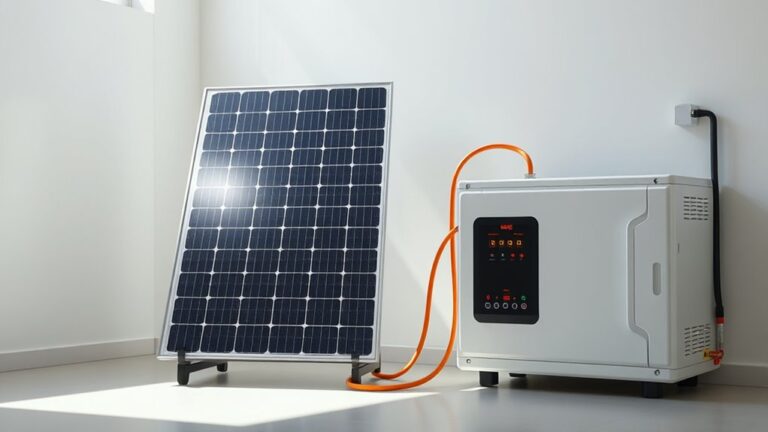
Once your solar panels are installed and running smoothly, you’ll want to set up system monitoring to track their performance in real time. Many solar systems come with monitoring apps or platforms that show energy production, system health, and potential issues.
By regularly checking this data, you can quickly spot drops in output or malfunctions. It’s a simple way to stay on top of how well your system is working.
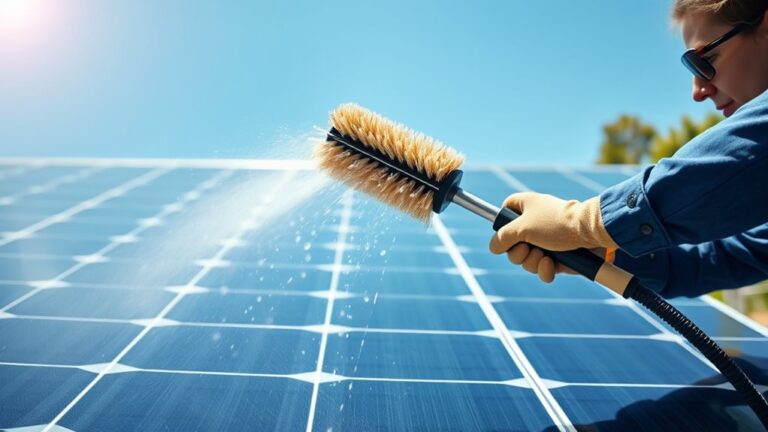
Next, maximize maintenance by scheduling routine inspections and cleaning to keep panels free of dirt, debris, or shading that reduce efficiency. You don’t need to do this often—twice a year is usually enough—but staying proactive prevents costly repairs.
Also, make sure your inverter and wiring are checked. With proper monitoring and maintenance, your solar investment will perform at its best and last for decades.
Frequently Asked Questions
How Does Solar Energy Impact Local Wildlife?
Solar energy can disrupt local wildlife habitats and migration patterns. But you can minimize impacts by choosing careful site locations and using wildlife-friendly designs.
You’ll help balance clean energy benefits with protecting nature’s creatures. It’s all about making smart choices that work for both energy and the environment.
Can Solar Panels Be Recycled After Their Lifespan?
Solar panels can be recycled, but it’s not a walk in the park. You’ll need specialized facilities to reclaim valuable materials like silicon and metals.
This process helps reduce waste and supports a greener planet. So, while it’s doable, it takes some effort and the right setup.
What Are the Environmental Benefits of Solar Energy?
You reduce greenhouse gas emissions, cut air pollution, and conserve water by using solar energy. It’s renewable, sustainable, and lowers your carbon footprint.
That helps protect the environment and combat climate change effectively. Using solar power is a smart way to make a positive impact on the planet.
How Do Weather Changes Affect Solar Panel Performance?
You’ll see solar panels perform best in sunny, mild weather. Cloudy or rainy days reduce their efficiency, while extreme heat can also lower output.
Still, they generate power even in less-than-perfect conditions. So, even when the weather isn’t ideal, your panels are probably still working for you.
Are There Any Health Risks Associated With Solar Panel Installation?
You won’t face significant health risks from solar panel installation if proper safety measures are followed. Just be cautious of electrical hazards and use protective gear to avoid cuts or falls during the installation process.
It’s really about staying alert and taking your time. If you do that, the process should go smoothly without any major issues.
Conclusion
Investing in solar energy might seem like a big step, but once you break it down, it’s a piece of cake. By calculating your needs and choosing the right equipment, you’ll be off to a great start. Exploring financing options and working with trusted installers helps ensure everything goes smoothly.
Keep an eye on system performance and stay on top of maintenance to get the most out of your investment. Remember, the key to successful solar energy investing is taking it step by step. With the right approach, your solar energy system will save you money and reduce your carbon footprint.
Every bright idea shines brightest when you follow through, so stay committed to your solar energy goals. Investing in solar energy not only benefits your wallet but also contributes to a cleaner, greener future.