Do Solar Panels Produce Radiation?
You don’t need to worry about harmful radiation from solar panels. These panels produce only very low levels of non-ionizing electromagnetic fields. It’s similar to what your microwave or Wi-Fi router emits.
These levels are far below safety limits and don’t pose any health risks. Solar panels don’t release dangerous ionizing radiation like X-rays or gamma rays. So, there’s really no cause for concern here.
If you keep exploring, you’ll discover how these panels stay safe. You’ll also debunk common myths about solar panel radiation along the way. It’s all about understanding the facts behind the technology.
Key Takeaways
- Solar panels emit very low levels of non-ionizing electromagnetic radiation. This is similar to what you get from household appliances like microwaves and Wi-Fi routers.
- They don’t produce harmful ionizing radiation such as X-rays, gamma rays, or ultraviolet rays.
- The radiation levels from solar panels are minimal and well below any health safety limits. So, there’s really no health risk involved.
- The EMFs they emit are low-frequency and comparable to those from cellphones and Wi-Fi devices. These are generally considered safe.
- Plus, safety standards and regulations make sure solar panels operate without emitting harmful radiation throughout their entire lifespan.
How Do Solar Panels Convert Sunlight Into Electricity?
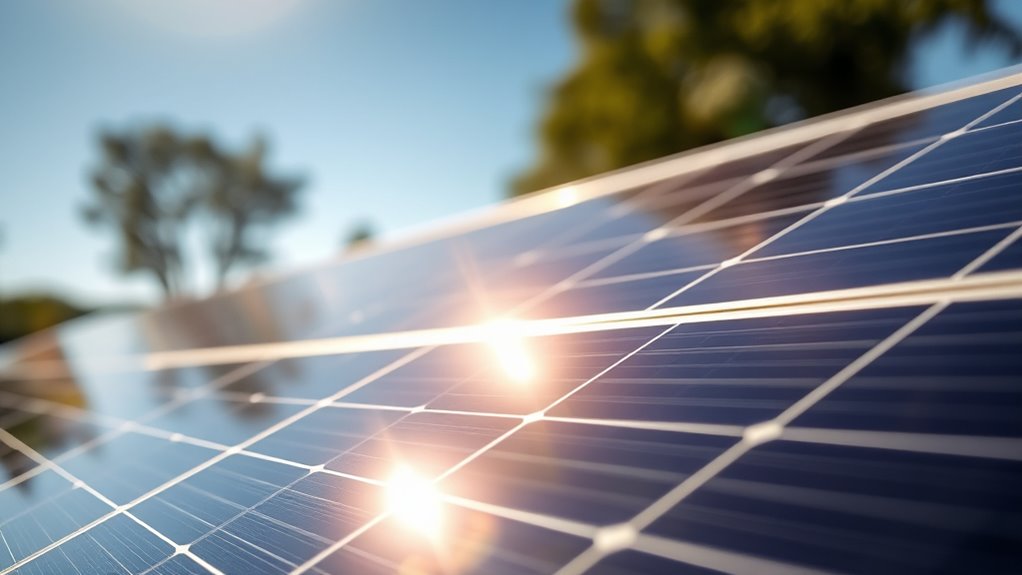
Although solar panels might seem complex, they convert sunlight into electricity through a straightforward process called the photovoltaic effect. When sunlight hits the solar cells in the panel, it energizes electrons, causing them to move.
You’ll find these cells made from semiconductor materials, usually silicon, which are specially designed to absorb light. This movement of electrons generates direct current (DC) electricity.
The solar panel then sends this electricity to an inverter, which changes it into alternating current (AC) that your home or grid can use. You don’t have to worry about any complicated mechanics—solar panels rely on this clean, silent way to create power from sunlight.
Do Solar Panels Emit Harmful Radiation?
You might wonder if solar panels emit any harmful radiation while producing energy.
Let’s explore the types of radiation they produce, how it affects your health, and the safety standards they follow.
This will help you understand whether solar panels pose any risks.
Types Of Radiation Emitted
How much radiation do solar panels actually emit, and is it harmful to you? Solar panels primarily emit very low levels of non-ionizing radiation, mostly in the form of electromagnetic fields (EMFs). These EMFs come from the electrical wiring and inverters that convert sunlight into usable energy.
The radiation levels are comparable to those from household appliances, like your microwave or Wi-Fi router. Solar panels themselves do not emit ionizing radiation, which is the type that can damage cells or DNA.
You might also encounter some infrared radiation when the panels heat up under the sun, but this is natural and harmless. Overall, the types of radiation emitted by solar panels are minimal and far below any harmful thresholds for human health.
Health Impact Assessment
Since solar panels emit only very low levels of non-ionizing radiation, they don’t pose a health risk to you. The type of radiation they produce is similar to what your cellphone or Wi-Fi router emits daily, which experts widely consider safe.
You won’t experience harmful effects from the electromagnetic fields generated by solar panels because their intensity is far below limits set by health authorities. Studies show no link between solar panel radiation and any adverse health outcomes.
If you’re concerned about radiation exposure, you can rest assured that living near or using solar panels won’t increase your risk of illness. Overall, the health impact from solar panel radiation is negligible, so you can confidently embrace solar energy without worrying about radiation-related health problems.
Safety Standards Compliance
Understanding the health impact of solar panel radiation naturally leads to questions about safety regulations. You’ll be glad to know solar panels must meet strict safety standards limiting any harmful emissions.
Regulatory bodies like the International Electrotechnical Commission (IEC) set these guidelines to protect users and the environment. Here’s a quick overview of key safety standards and their focus areas:
| Standard | Emission Limit | Purpose |
|---|---|---|
| IEC 61215 | Minimal RF/EMF | Solar panel durability |
| IEC 61730 | Safe electrical insulation | Prevent electrical hazards |
| FCC Part 15 | Limits on RF radiation | Control radio frequency emissions |
What Radiation, If Any, Do Solar Panels Produce?
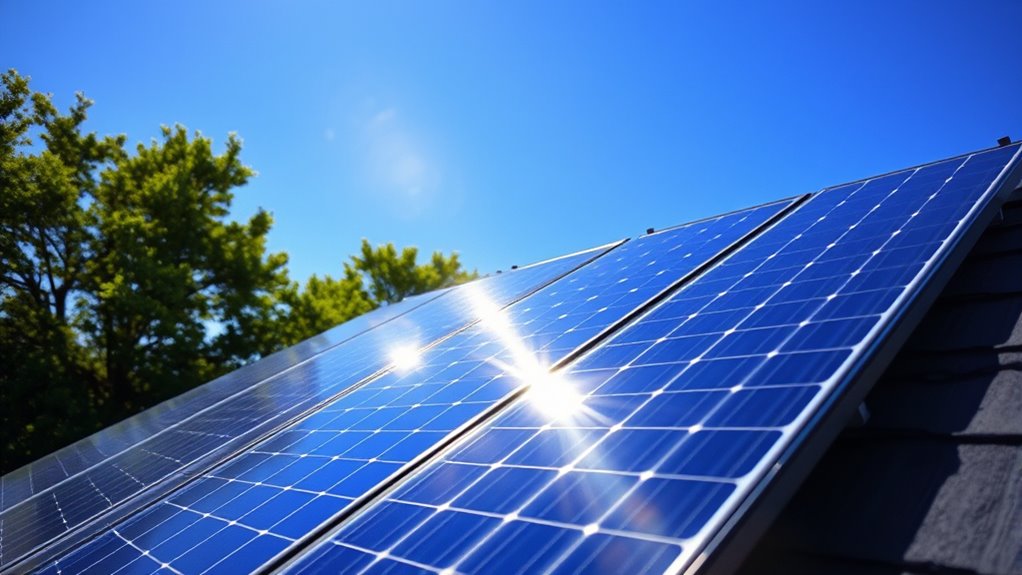
You might wonder what types of radiation solar panels actually produce, if any at all.
It’s important to understand both the kinds of radiation involved and how much they emit.
Let’s explore these factors to clear up any concerns you have.
Types Of Radiation
Although solar panels harness sunlight to generate electricity, they themselves don’t emit harmful radiation like X-rays or gamma rays. Instead, the main type of radiation involved is visible light and infrared radiation from the sun, which solar panels absorb to produce energy.
Once installed, solar panels may emit very low levels of non-ionizing electromagnetic radiation, similar to common household electronics, but nothing dangerous. This includes weak radiofrequency (RF) and extremely low frequency (ELF) fields generated by the electrical components and wiring.
You won’t find any ionizing radiation like ultraviolet, X-rays, or gamma rays coming from the panels themselves. So, while solar panels interact with sunlight’s radiation, they don’t create or release harmful radiation that could affect your health.
Radiation Emission Levels
Solar panels absorb sunlight to generate electricity, but they release only minimal radiation themselves. The type of radiation they might emit is extremely low-level electromagnetic radiation, far below harmful limits.
You won’t be exposed to any dangerous radiation just by being near solar panels. It’s really safe to be around them.
Here’s a quick comparison to help you understand their emissions:
| Radiation Type | Emission Level from Solar Panels |
|---|---|
| Electromagnetic (EMF) | Very low, comparable to household electronics |
| Ionizing Radiation | None |
| Radiofrequency (RF) | Negligible, not a health concern |
Can Solar Panels’ Radiation Affect Electronics or Wi-Fi?
Even though solar panels generate electricity from sunlight, they don’t emit the kind of radiation that can interfere with your electronics or Wi-Fi signals. The radiation they produce is minimal and non-ionizing, meaning it won’t disrupt your devices’ normal operation.
Your phone, laptop, or wireless router won’t experience any interference just because you have solar panels on your roof. Solar panels convert sunlight into direct current electricity without generating electromagnetic noise strong enough to affect other electronics nearby.
What Safety Standards Keep Solar Panels Radiation-Free?
Because manufacturers follow strict safety standards, you can trust that solar panels remain radiation-free and safe for your home. These regulations guarantee panels don’t emit harmful radiation during operation or installation.
You’re protected by rigorous testing and quality control measures designed to keep everything safe and efficient.
Key safety standards include:
- IEC 61215 & IEC 61730: These international standards test panel durability and electrical safety, preventing radiation leaks.
- UL 1703 / UL 61730: U.S. safety certifications that evaluate fire resistance and electrical insulation to keep panels secure.
- RoHS Directive: Limits hazardous substances in panel components, ensuring no harmful materials cause radiation hazards.
With these standards, solar panels meet strict guidelines to keep your family and electronics safe from any radiation concerns.
Debunking Common Radiation Myths About Solar Panels
Although some people worry about radiation from solar panels, these concerns are largely based on misunderstandings and misinformation. You might hear that solar panels emit harmful radiation, but that’s simply not true.
Solar panels generate electricity by converting sunlight, not by producing radiation. They don’t release ionizing radiation like X-rays or gamma rays, which can be dangerous.
Instead, they operate using safe, low-frequency electromagnetic fields similar to those from household appliances. Another myth is that solar panels cause cancer or other health problems; extensive research shows no evidence supporting this claim.
Frequently Asked Questions
How Long Do Solar Panels Typically Last?
You can expect solar panels to last around 25 to 30 years. They’ll keep producing energy efficiently, but their performance might slowly decline over time.
Regular maintenance helps you get the most out of them. It’s a good idea to keep an eye on how they’re doing now and then.
What Maintenance Do Solar Panels Require?
You’ll need to clean your solar panels regularly to remove dirt and debris. It’s also important to inspect them for any damage or shading issues.
Don’t forget to check the electrical connections too. Scheduling a professional inspection every few years really helps keep them efficient and safe.
Are Solar Panels Recyclable After Use?
You might be surprised, but yes, solar panels are recyclable after use.
You’ll want to take them to specialized facilities that recover valuable materials like silicon and metals. This helps you reduce waste and support a greener planet.
How Much Energy Can Solar Panels Generate Annually?
You can expect solar panels to generate between 250 to 400 kilowatt-hours per year per installed kilowatt, depending on location and efficiency.
Your annual energy production varies with sunlight exposure and system quality. So, where you live really makes a difference. Plus, how good your system is will also affect the output.
Can Solar Panels Work During Cloudy or Rainy Days?
Wondering if solar panels work on cloudy or rainy days? They do! While their efficiency drops, they still generate electricity by capturing diffused sunlight.
Conclusion
You don’t have to worry about solar panels producing harmful radiation. In fact, they don’t emit any dangerous radiation at all—they simply convert sunlight into electricity.
Did you know that over 95% of U.S. homes with solar panels report no interference with electronics or Wi-Fi? So, installing solar panels is not only safe but also a smart way to reduce your energy bills and carbon footprint without any radiation risks.
In short, solar panels are a safe and effective technology. They harness the sun’s energy without creating harmful radiation, making them an excellent choice for your home. Choosing solar panels helps you save money while supporting a cleaner environment, all without any radiation concerns.