What Noise Do Solar Panels Make?
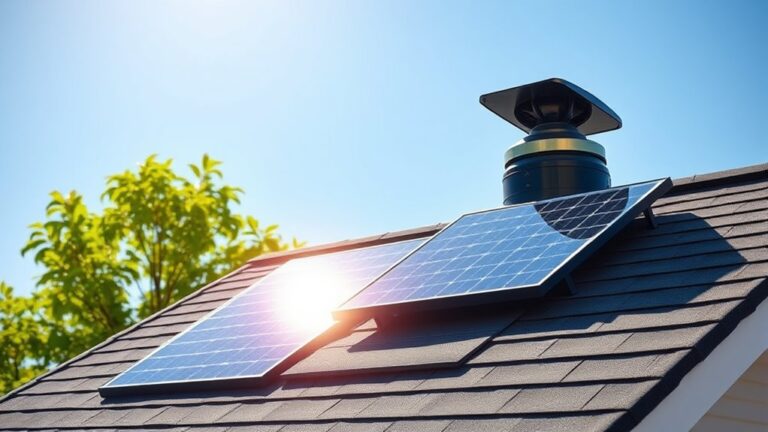
You won’t hear your solar panels themselves since they don’t have moving parts and are completely silent. Solar panels are designed to convert sunlight into electricity without making any noise, which is one of the great benefits of using solar energy.
However, the equipment that powers them, like inverters and cooling fans, can produce low humming, buzzing, or whirring sounds. These noises are usually quiet, similar to a soft conversation, and can sometimes be influenced by wind or loose fittings.
If you want to understand what causes these sounds and how to reduce them, there’s more to explore about solar panel noise. It’s helpful to know what to expect and when a sound might signal a problem.
Key Takeaways
- Solar panels themselves produce no noise since they have no moving parts.
- The noise mainly comes from inverters that convert DC to AC, which causes a low humming or buzzing sound.
- Cooling fans in inverters or batteries can create faint whirring sounds when they’re running.
- Environmental factors like wind might cause vibrations or rustling noises on the panel mounts.
- With proper mounting and quiet inverters, noise can be minimized.
- Usually, the sound stays below the level of a typical conversation.
Do Solar Panels Make Noise?
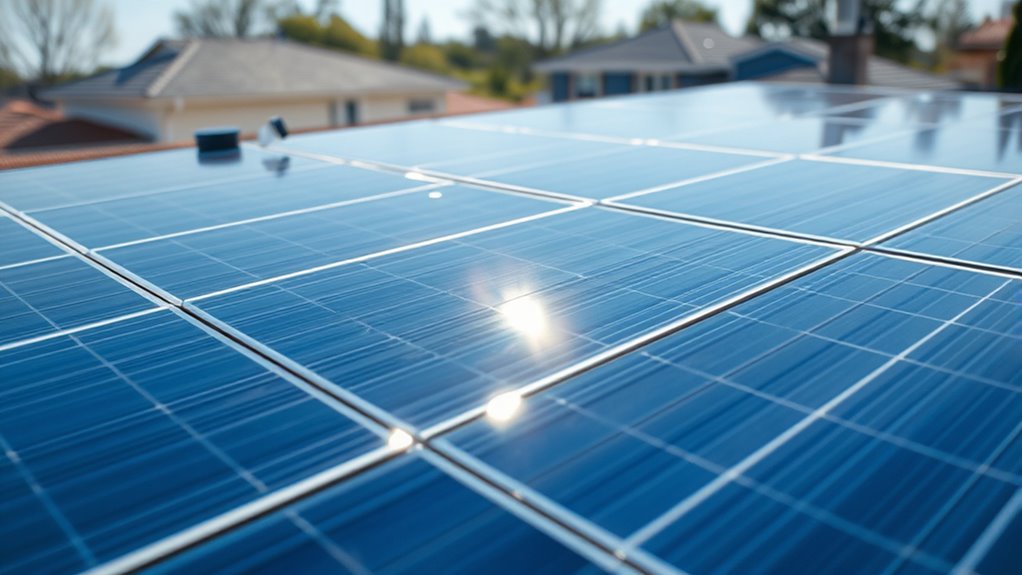
Although solar panels themselves don’t produce sound, you might hear noises from the equipment connected to them, like inverters or cooling fans. When you’re near solar panels, the panels stay silent because they convert sunlight into electricity without moving parts.
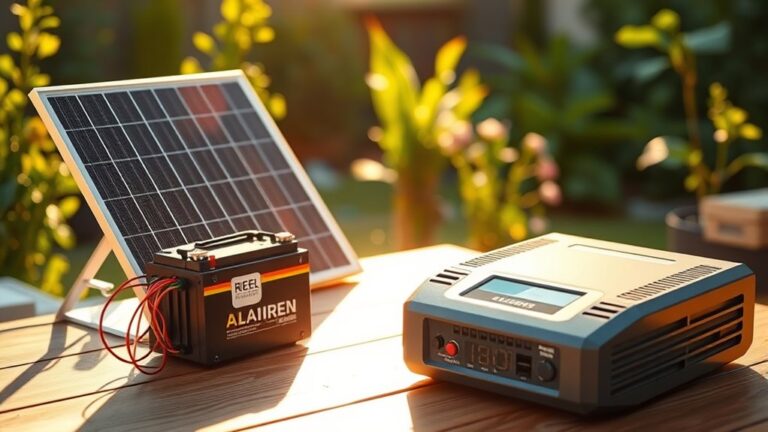
However, the inverter, which changes direct current (DC) into alternating current (AC), can emit a low humming sound. You might also notice a slight whirring or buzzing if your system includes cooling fans to prevent overheating.
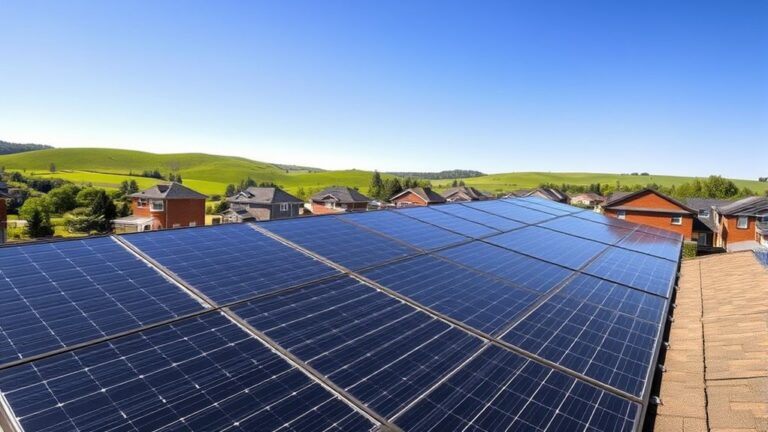
If your solar panels are mounted on a roof, the mounting hardware won’t cause any noise either. So, when you’re wondering if solar panels make noise, remember that any sound you hear likely comes from the related equipment, not the panels themselves.
What Causes Solar Panel Noise? (Including Equipment and Environment)
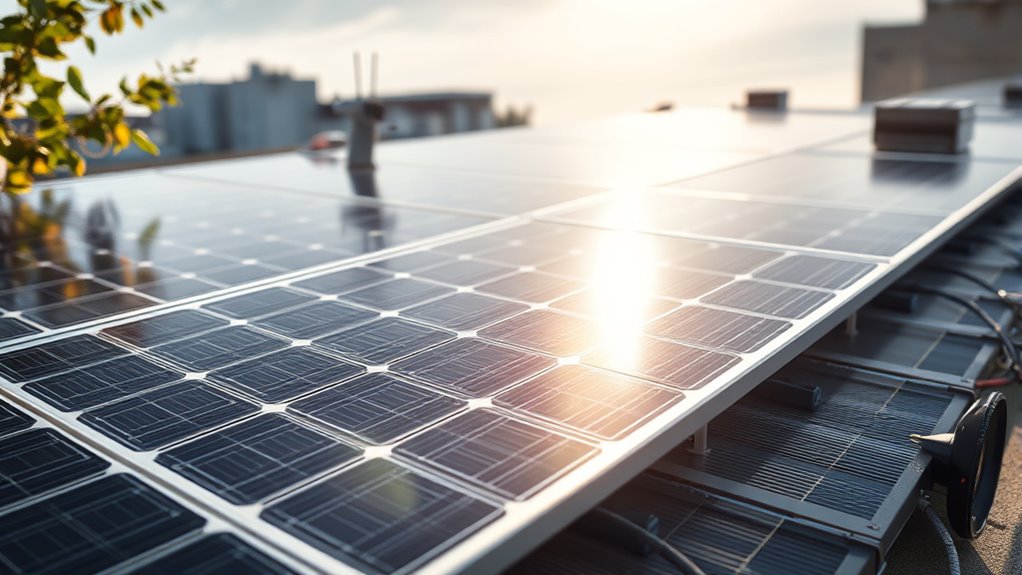
You’ll often hear noise from the inverter, which converts solar power into usable electricity.
Besides equipment sounds, environmental factors like wind or nearby traffic can add to the noise you notice.
Let’s explore how these sources contribute to what you hear around your solar panels.
Inverter Sound Emissions
When solar panels convert sunlight into electricity, the inverter plays a crucial role and often produces a noticeable humming or buzzing sound. This noise comes from the inverter’s internal components, like transformers and capacitors, working to convert the direct current (DC) generated by your panels into the alternating current (AC) your home uses.
The sound level depends on the inverter’s size, quality, and design. Some inverters use fans for cooling, which can add a faint whirring noise.
While the humming is usually constant during sunlight hours, it’s generally low enough not to be intrusive. But if you notice unusually loud or irregular noises, it might indicate a malfunction.
In that case, checking your system or consulting a technician can help guarantee everything runs smoothly. It’s always better to be safe and keep your system in top shape!
Environmental Noise Factors
What factors contribute to the noise you might hear from solar panels? It’s not just the panels themselves but also the equipment and environment around them. You’ll notice sounds mainly from mechanical and environmental sources.
- Inverter operation – This converts DC to AC and often emits a humming noise.
- Cooling fans – Some inverters or batteries have fans to keep things cool and prevent overheating.
- Wind – It can cause the panels to vibrate or produce a rustling sound.
- Mounting and framing – Expansion, contraction, or loose fittings might create clicking or creaking noises.
Understanding these factors helps you anticipate what sounds are normal and which might need maintenance. Solar panels usually produce minimal noise, but environmental conditions and how the equipment is set up can affect what you hear.
How Do Inverters and Equipment Affect Solar Panel Noise?
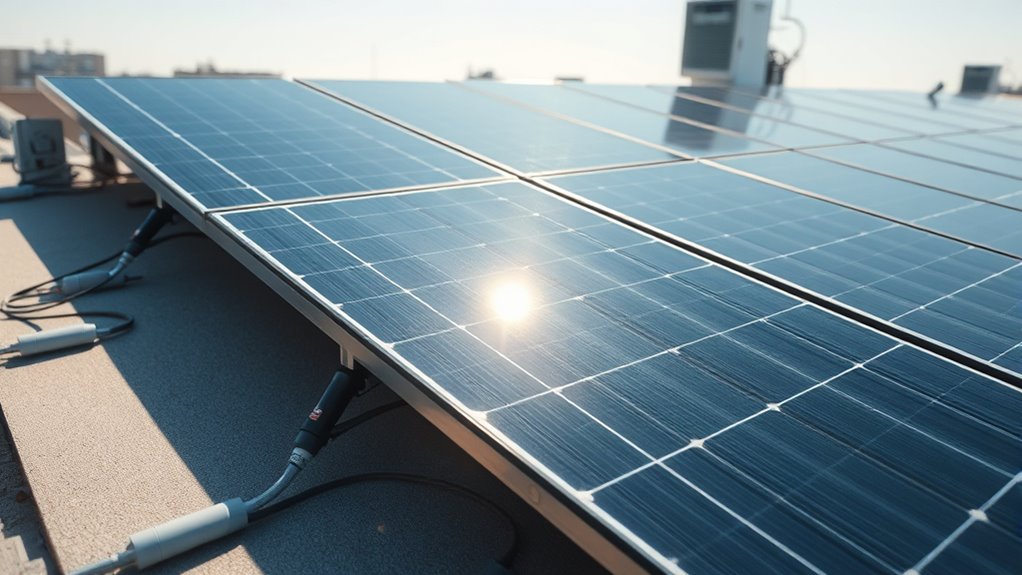
Although solar panels themselves are silent, the inverters and other equipment in your system can produce noticeable sounds. Inverters convert the DC electricity your panels generate into usable AC power. During this process, you might hear a low humming or buzzing noise.
This sound comes from electrical components like transformers and cooling fans working to keep everything running smoothly. Additionally, other equipment such as optimizers or junction boxes may emit faint clicks or electrical noises. The intensity of these sounds varies depending on the brand, model, and age of your system.
Proper installation and maintenance can help minimize any distracting noises. This way, your solar setup stays as quiet as possible while efficiently powering your home.
What Noise Levels Do Solar Panels Produce?
Since solar panels themselves don’t generate sound, the noise levels you’ll notice come primarily from the associated equipment like inverters and cooling systems. You can expect these sounds to be quite minimal, often blending into everyday background noise.
Here’s what you should know about typical noise levels:
- Inverters produce a low hum, usually around 40-50 decibels—comparable to a quiet office.
- Cooling fans, if present, add a gentle whirring sound, rarely exceeding 50 decibels.
- Electrical components might emit a faint buzzing, often unnoticed unless you’re close by.
- Overall, combined noise levels remain below 60 decibels, similar to normal conversation volume.
How Can Environmental Factors Make Solar Panels Noisy?
Even if your solar panels themselves stay silent, environmental factors can introduce unexpected noise that might catch your attention. Wind, for example, can cause panels to vibrate or create a rustling sound if leaves or debris get trapped underneath.
Heavy rain or hail hitting the surface can also produce noticeable tapping noises. Temperature changes can cause the metal frames to expand or contract, sometimes resulting in faint creaking sounds.
Additionally, nearby trees might brush against the panels during windy conditions, adding extra noise. If you live in a dusty or sandy area, particles blowing across the panels can create subtle scraping sounds.
All these environmental influences can make your solar panel system noisier, even though the panels themselves remain silent.
How to Minimize Noise From Your Solar Panel System
Environmental factors can make your solar panels noisier than you might expect, but there are practical steps you can take to reduce these sounds. First, ensure your panels and mounting hardware are tightly secured to prevent rattling in the wind.
Next, install vibration-dampening mounts or pads to absorb mechanical noise. Also, trimming nearby trees can help minimize wind turbulence around the panels, which often causes rustling or whistling.
On top of that, choose inverters known for quiet operation and install them in well-ventilated, sound-insulated enclosures to cut down on electrical humming. By following these steps, you can substantially minimize any noise from your solar panel system.
This way, it’ll operate quietly and efficiently without disturbing your peace at home.
Frequently Asked Questions
Are Solar Panel Noises Harmful to Pets or Wildlife?
No, solar panel noises aren’t harmful to pets or wildlife. You’ll find the sounds are usually very faint or mechanical hums, which don’t disturb animals.
Do Solar Panels Make Noise at Night?
No, solar panels don’t make noise at night since they don’t produce electricity without sunlight.
However, nearby inverters or cooling fans might hum during the day.
But at night, your solar setup stays silent and peaceful.
Can Solar Panel Noise Affect Home Resale Value?
You won’t find solar panel noise affecting your home’s resale value since they’re typically silent.
Potential buyers usually focus on energy savings, not sound, so don’t worry about noise impacting your sale.
Is Solar Panel Noise Covered by Homeowner’s Insurance?
No, solar panel noise itself isn’t typically covered by homeowner’s insurance since it’s not considered damage or loss.
But if the equipment causes damage, like a fire, your policy might cover that—check with your insurer to be sure.
Do Different Solar Panel Brands Vary in Noise Levels?
Of course, some solar panels throw wild parties while others whisper lullabies—just kidding!
Actually, noise differences between brands are minimal.
You won’t hear much, so don’t stress about which one hums the quietest.
Conclusion
So, do solar panels make noise? While the panels themselves are silent, the equipment like inverters and fans can hum softly. Think of it as a gentle background whisper rather than a loud shout.
Environmental factors might add a bit of rustle or creak, but it’s usually nothing to worry about. With simple maintenance and smart placement, you can keep your solar system quiet.
Because who wants noise when you’re soaking up the sun’s peaceful energy? Solar panels mainly produce clean, silent power. Any noise usually comes from related equipment, not the panels themselves.
By choosing quality components and positioning your system thoughtfully, you’ll enjoy the benefits of solar energy without unwanted sounds. So, if you’re considering solar panels, rest assured they’re mostly noise-free and designed to blend into your peaceful environment.