How Long Does It Take to Install Solar Panels Step by Step
You’ll spend about 1 to 2 hours on a site assessment to check your roof and energy needs before installing solar panels. This step is crucial because it helps determine the best setup for your home and how much energy you can generate.
Then, getting permits and approvals can take anywhere from a few days to several weeks, depending on your area. This part might feel like a waiting game, but it’s necessary to make sure everything is up to code and safe.
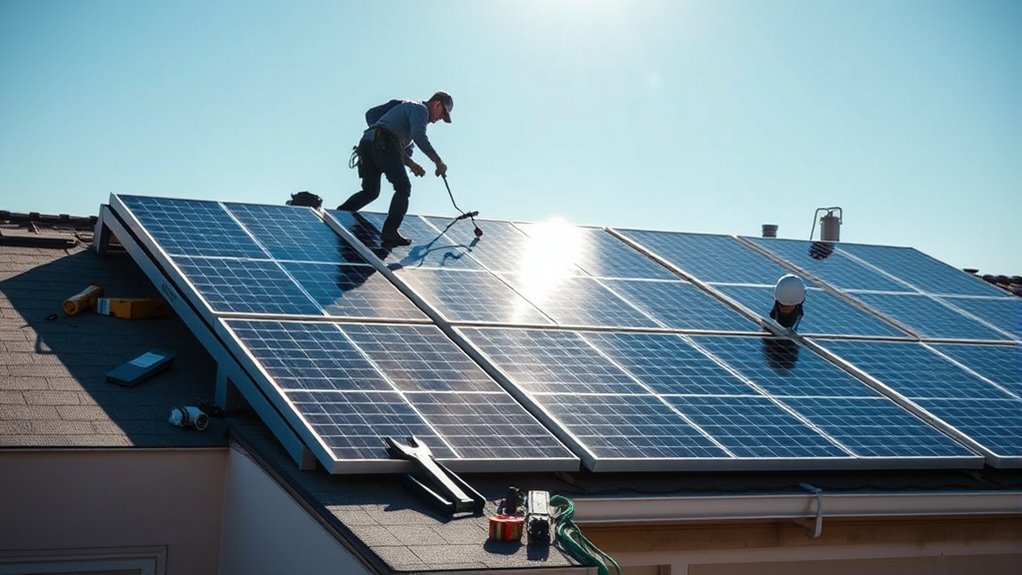
Once approved, installation usually takes 1 to 3 days. During this time, the crew mounts the hardware, places the panels, handles wiring, and runs final testing. Sometimes, weather or paperwork might cause delays, so it’s good to be prepared for that.
After installation, an inspection happens within 1-2 weeks before activation. This ensures everything is working correctly and safely.
Keep going if you want the full step-by-step process.
Key Takeaways
- Site assessment typically takes 1 to 2 hours to evaluate roof and electrical conditions for system design.
- Permits and approvals can take from a few days up to several weeks depending on local regulations.
- Solar panel installation usually spans 1 to 3 days, including mounting, wiring, and system testing.
- Weather, roof complexity, and system size can affect installation duration and cause delays.
- Final inspection occurs 1 to 2 weeks post-installation, with activation following within a few days after approval.
How Long Does Solar Panel Installation Take Overall?
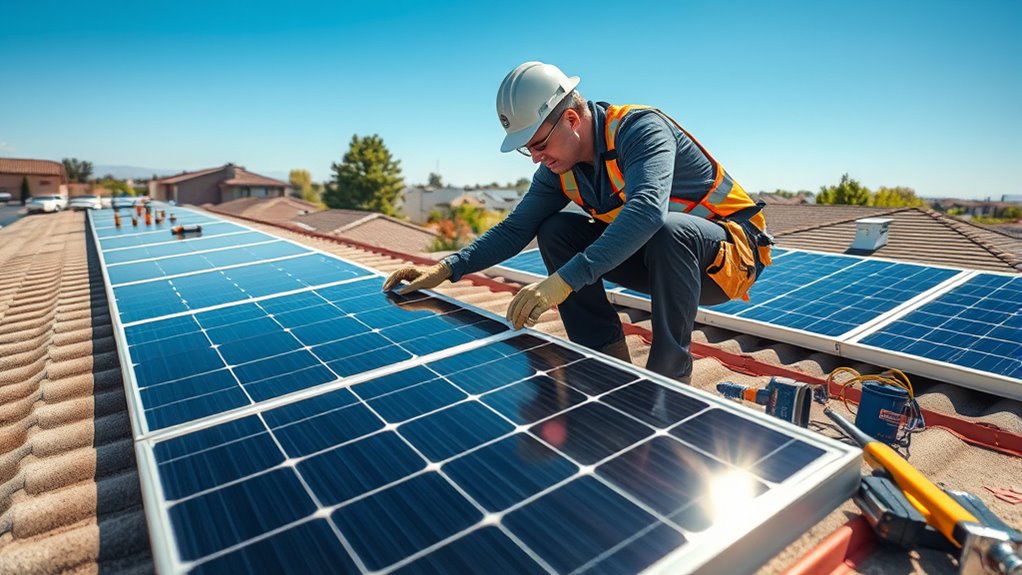
Although the exact timeline can vary, installing solar panels typically takes between one to three days once all preparations are complete. When you schedule the installation, the crew arrives ready to work efficiently.
They’ll first mount the panels on your roof or property, then connect the wiring, and finally set up the inverter system. You won’t need to be home the entire time, but it helps to be available for any questions or decisions.
Weather can impact the schedule, so if it’s stormy or extremely windy, expect delays. After installation, your system usually needs an inspection and approval before it’s fully operational.
How Long Is the Solar Panel Site Assessment?
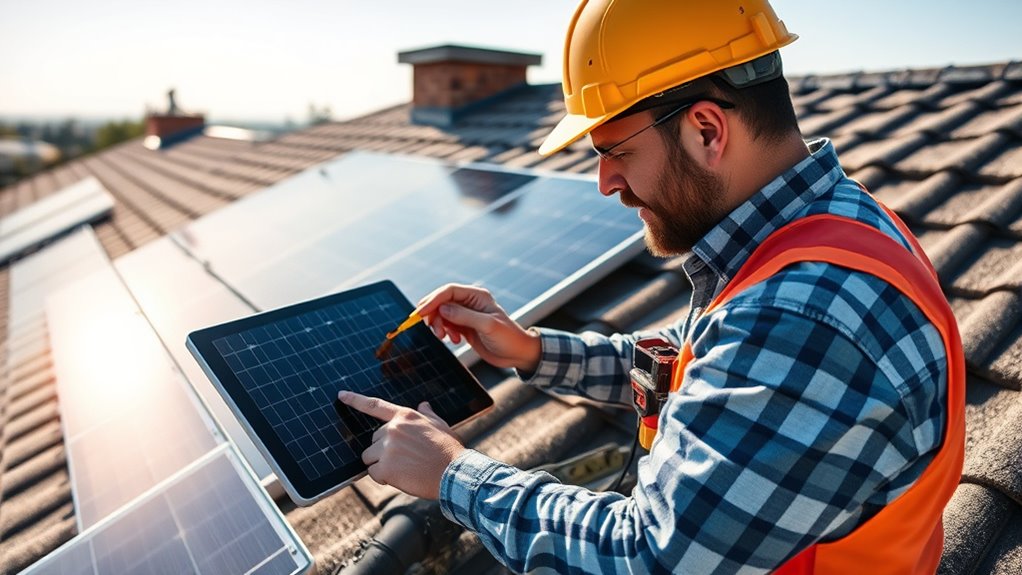
How long does a solar panel site assessment usually take? Typically, it lasts about one to two hours. During this time, a technician visits your property to evaluate your roof’s condition, orientation, and shading.
They’ll measure available space, check your electrical system, and identify potential obstacles that could affect panel placement or efficiency. You’ll also discuss your energy needs and goals, helping to tailor the system to your home.
This step is vital because it guarantees the solar setup will perform effectively. While the assessment itself is quick, scheduling it might take a few days depending on the installer’s availability.
What’s Involved in Getting Permits and Approvals for Solar?
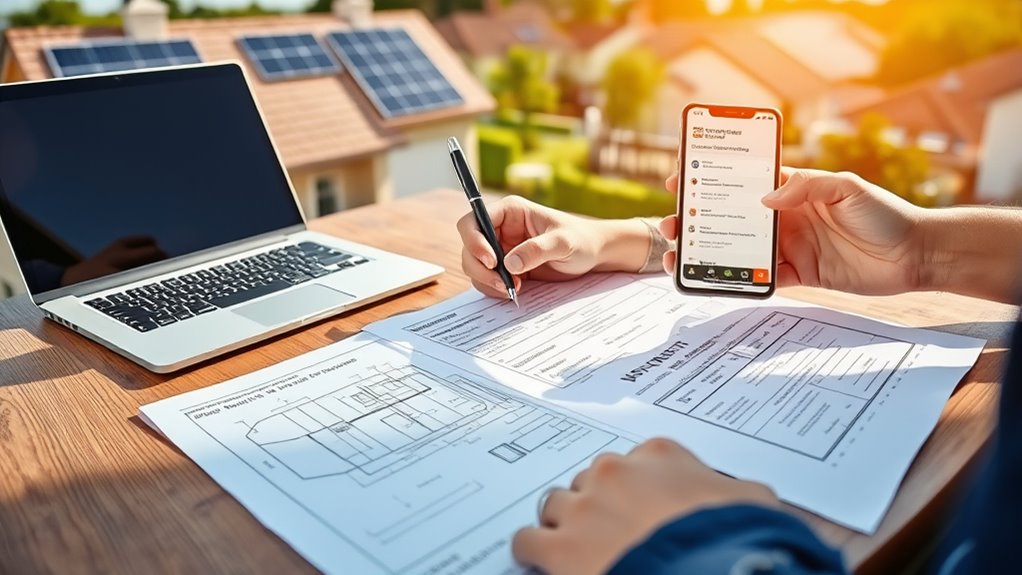
Before your solar panels can be installed, you’ll need to obtain the necessary permits and approvals from local authorities. This process guarantees your system meets safety and building standards.
Typically, you’ll work with your installer to handle the paperwork, but knowing what’s involved helps you stay informed.
Here’s what you can expect:
- Submit electrical and building permit applications to your city or county.
- Provide system design plans, including panel layout and wiring diagrams.
- Wait for inspections to verify compliance with codes and regulations.
- Obtain final approval before starting installation.
This step can take anywhere from a few days to several weeks, depending on your local jurisdiction. Being proactive and organized speeds up the process and helps you avoid costly delays.
How Long Does Solar Panel Installation Take?
You’ll usually find that installing solar panels takes one to three days. However, the exact timeline depends on factors like your roof size, weather, and crew availability.
Let’s look at what affects how long the process will take.
Installation Timeline Overview
Although the exact time can vary depending on your location and system size, installing solar panels typically takes between one to three days. The process is straightforward and well-organized, so you can see progress quickly.
Here’s a quick overview of what the installation timeline looks like:
- Day 1: Preparation and mounting hardware installation on your roof
- Day 2: Solar panel placement and electrical wiring setup
- Day 3: System testing, inspection, and final adjustments
Factors Affecting Duration
Since every installation site is unique, several factors can influence how long your solar panel setup takes. The size of your system plays a big role—larger systems naturally require more time to install.
Your roof type matters too; a simple, flat roof is quicker to work on than a steep or complex one. Weather conditions can either speed up or delay the process, so installations during clear, mild days go faster.
Permitting and inspections also affect your timeline; some areas have quicker approval processes than others. Finally, the experience of your installation team impacts efficiency.
What Common Delays Affect Solar Panel Installation?
Delays in solar panel installation often stem from factors beyond your control. Understanding these common hold-ups can help you plan better and stay patient throughout the process.
Delays in solar installation are often unavoidable, but knowing the reasons helps you stay patient and prepared.
Here are four typical delays you might encounter:
- Permitting and paperwork: Waiting for local government approvals can take weeks.
- Weather conditions: Rain, snow, or extreme heat can halt installation work.
- Supply chain issues: Delays in receiving panels or equipment can push back schedules.
- Scheduling conflicts: Coordinating between electricians, inspectors, and installers isn’t always seamless.
When Can You Expect the Final Inspection and Activation?
Once your solar panels are installed, the next key step is scheduling the final inspection and activation. Typically, this inspection happens within one to two weeks after installation, depending on your local permitting office’s schedule.
The inspector will verify that the system meets safety and code requirements. Once it passes, the utility company will activate your system, allowing you to start generating power. Activation timing varies but usually occurs within a few days after inspection approval.
To avoid delays, stay in close contact with your installer and local authorities. They can help guarantee all paperwork is submitted promptly and the inspection is scheduled quickly. Being proactive helps you enjoy your solar investment sooner without unexpected hold-ups.
Frequently Asked Questions
How Much Do Solar Panels Cost on Average?
You’ll typically spend between $15,000 and $25,000 for a complete solar panel system before incentives. Costs vary by size, brand, and location, but you can save substantially with tax credits and rebates.
It might seem like a lot upfront, but those savings really add up. Plus, going solar is a smart move for the environment and your wallet in the long run.
What Maintenance Do Solar Panels Require?
You’ll need to clean your solar panels a few times a year and check for debris or shading.
Also, inspect wiring and inverters annually to guarantee everything’s working efficiently.
But overall, maintenance is minimal and straightforward.
Can Solar Panels Work During a Power Outage?
You’d think solar panels keep your lights on during outages, but nope—they usually shut off for safety.
Unless you’ve got a battery backup or special setup, your solar system won’t save you when power’s out. It’s kind of a bummer, but that’s just how it works.
How Long Do Solar Panels Typically Last?
Solar panels typically last 25 to 30 years, but you can expect them to keep producing electricity beyond that.
With proper maintenance, you’ll get reliable energy for decades. So, they’re a long-term investment you can trust.
Are There Financing Options for Solar Panel Installation?
Yes, you’ve got several financing options like loans, leases, and power purchase agreements. These let you spread out costs or pay less upfront, making solar panels more affordable and accessible for your home or business.
It’s pretty convenient because you don’t have to pay the full amount right away. This way, going solar becomes a lot easier on your budget!
Conclusion
Installing solar panels might seem like a big step, but it’s a journey worth taking—and faster than you think. From site assessment to final activation, each phase moves you closer to clean energy independence.
Sure, delays can pop up, but don’t let that cloud your vision. After all, isn’t the promise of lower bills and a greener planet worth a little wait?
You’re not just installing panels; you’re sparking a brighter future. Embracing solar energy means reducing your carbon footprint and gaining energy freedom. So, whether it takes days or a few weeks, the benefits of solar panel installation make every moment well spent.
In the end, investing time in solar panel installation means long-term savings and a positive impact on the environment. It’s a smart, sustainable choice that pays off in more ways than one.