How to Do Solar Lights Charge on Cloudy Days?
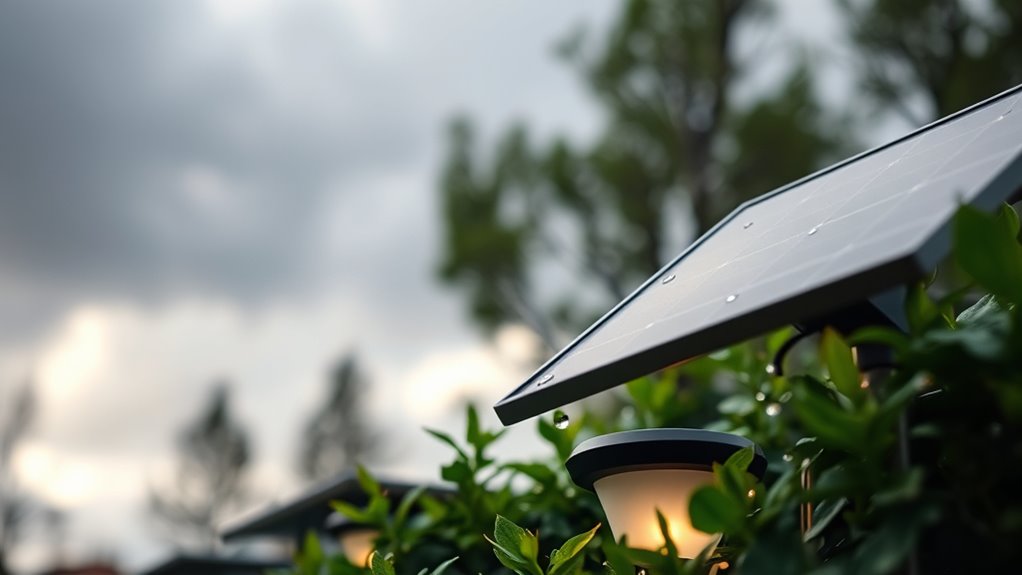
You can charge solar lights on cloudy days because their panels absorb diffused sunlight, even without direct sun.
Though charging slows and efficiency drops to about 10-25%, modern high-efficiency panels still generate power.
Keeping panels clean, angled toward the brightest part of the sky, and free from shadows helps maximize energy collection.
Using larger panels and smart controllers also boosts performance.
If you want to understand how to optimize solar lights during overcast weather, you’ll find useful tips ahead.
It’s all about making the most of whatever sunlight is available, even on those gray, cloudy days.
Key Takeaways
- Solar panels absorb diffused sunlight on cloudy days, generating electricity at reduced efficiency (10-25% of normal output). So, even when it’s overcast, they’re still working, just a bit slower.
- Low light levels are converted by solar cells, allowing slower but continuous battery charging during overcast conditions. It means your solar lights can still keep going, just give them some extra time.
- Proper panel placement, angle adjustment, and avoiding shadows maximize light capture even with limited sunlight. A little tweak here and there can really help boost the charging.
- Keeping panels clean from dirt and debris ensures optimal absorption of diffuse solar energy on cloudy days. Clean panels catch more light, so don’t forget to wipe them down.
- Stored energy flows to rechargeable batteries controlled by charge controllers to prevent overcharging and maintain consistent power. This way, your solar lights stay safe and reliable no matter the weather.
How Do Solar Lights Charge Without Direct Sunlight?
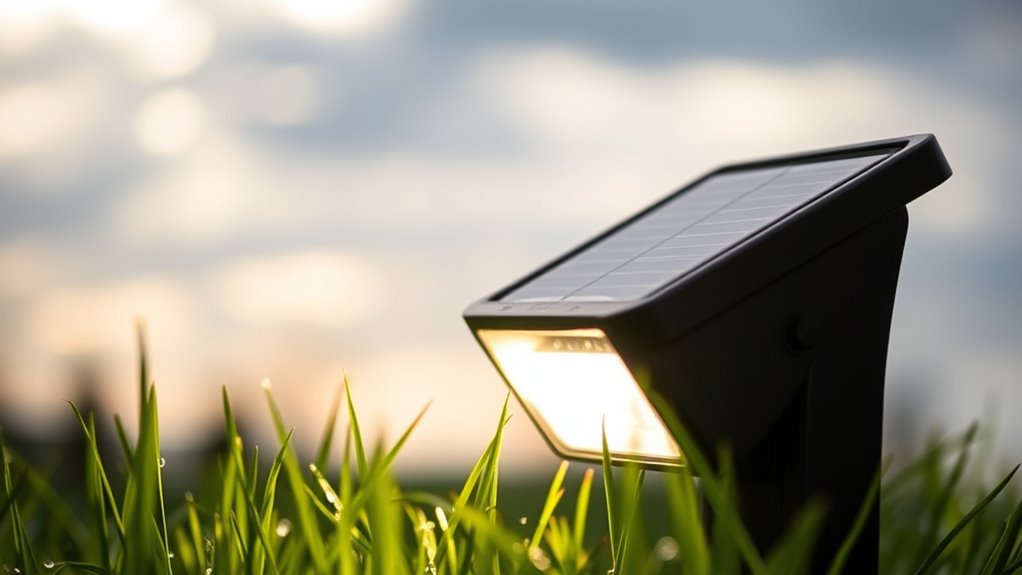
Although solar lights rely on sunlight to charge, they can still gather energy on cloudy days. You might wonder how this works without direct sunlight.
The key is that solar panels absorb not only direct sunlight but also diffused light scattered by clouds. Even when the sun is hidden, enough ambient light reaches the panels to generate some electricity.
You won’t get a full charge like on a bright, sunny day, but the solar cells are sensitive enough to convert low light levels into usable energy. So, your solar lights will keep charging, just at a slower rate.
This ability helps guarantee they function during overcast weather, making them reliable for outdoor use regardless of the sky’s condition.
What Happens Inside Solar Lights on Cloudy Days?
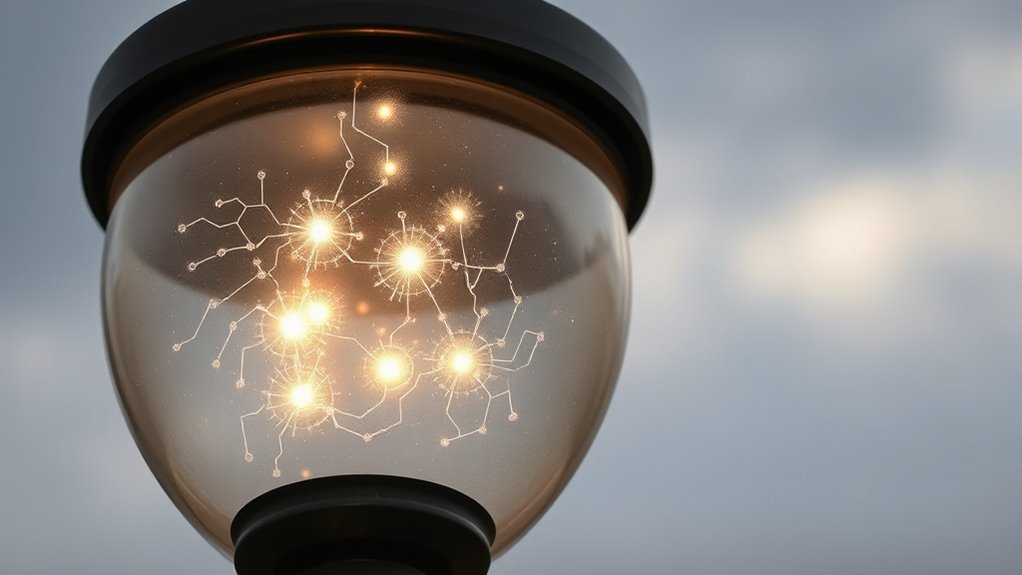
Even on cloudy days, solar lights keep gathering and converting ambient light into energy. But what exactly happens inside the device during this process?
The solar panel captures diffused sunlight, generating electricity at a reduced rate. This energy flows to the rechargeable battery, which stores power for nighttime use. Meanwhile, a controller manages the charge to prevent overcharging or damage.
| Component | Function | Effect on Cloudy Days |
|---|---|---|
| Solar Panel | Converts light to electricity | Works with diffused light |
| Rechargeable Battery | Stores electricity | Charges slower but steadily |
| Charge Controller | Regulates battery charging | Prevents overcharging |
| LED Light | Emits light at night | Uses stored energy efficiently |
| Light Sensor | Detects ambient light level | Activates light after dark |
This process guarantees your solar lights stay operational, even without direct sunlight. Pretty cool, right?
How Much Energy Do Solar Lights Collect in Overcast Weather?
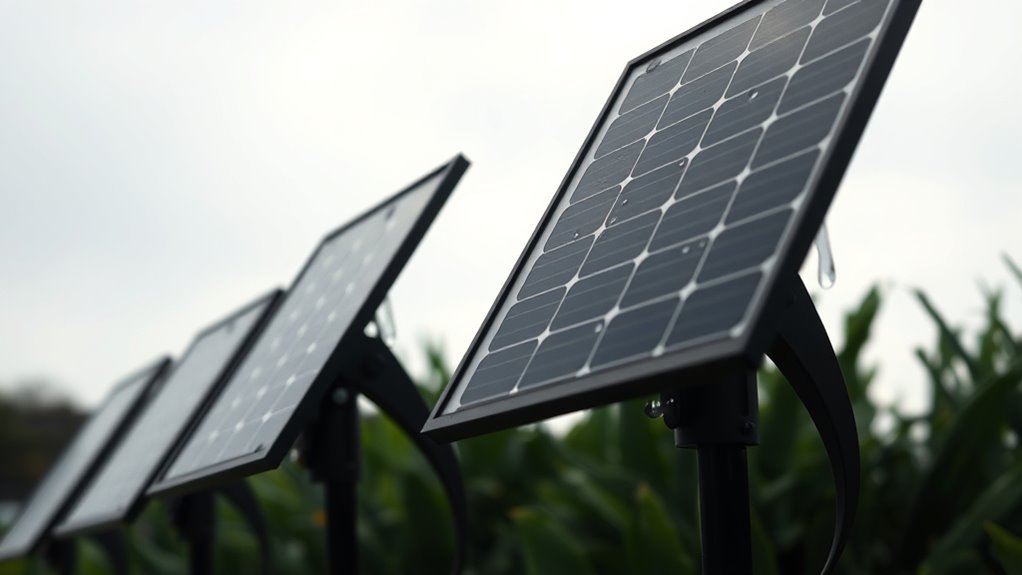
You might wonder how much energy your solar lights actually collect when the sky is gray. Even on overcast days, solar panels can absorb a surprising amount of sunlight.
That said, their efficiency drops depending on cloud thickness. It’s good to understand how cloud cover impacts energy absorption.
This way, you can set realistic expectations for your solar lights’ performance. It’s not all or nothing, but the weather does play a role!
Energy Absorption Efficiency
How much energy can solar lights actually gather on cloudy days? While clouds do reduce sunlight intensity, solar panels still absorb a significant amount of diffuse light.
You’ll find that modern solar cells, especially monocrystalline types, maintain about 10-25% efficiency in overcast conditions. This means your solar lights continue charging, just at a slower rate compared to bright, sunny days.
The design of the solar panel also matters—larger surface areas can capture more light, boosting energy absorption even when the sun’s rays are scattered. So, although you won’t get the same output as on a clear day, your solar lights are still pulling in enough energy to keep functioning.
Understanding this efficiency helps you set realistic expectations for cloudy weather performance. It’s good to know what to expect so you’re not caught off guard when the sun isn’t shining as bright!
Impact of Cloud Cover
What happens to solar lights when thick clouds block direct sunlight? They still collect energy, but at a reduced rate.
Overcast skies diffuse sunlight, so solar panels get less intense light, cutting their charging efficiency. You won’t get the same bright glow as on sunny days, but your solar lights won’t go completely dark.
Here’s what you should know about cloud cover’s impact:
- Solar lights can charge with 10-25% efficiency under heavy clouds
- Prolonged cloudy days can drain stored power faster than it recharges
- Quality panels and batteries hold a charge better during overcast weather
- Positioning your solar lights strategically can maximize indirect light absorption
Understanding this helps you set realistic expectations and keep your outdoor space illuminated, even when the sky’s gray.
Which Features Help Solar Lights Charge Better When It’s Cloudy?
To get better charging on cloudy days, you’ll want solar lights with high-efficiency panels that capture more energy from limited sunlight. Pair that with advanced battery storage to hold onto power longer when the sun isn’t shining bright.
These features work together to keep your lights glowing even in overcast weather. So, even when it’s gloomy outside, your solar lights won’t be left in the dark.
High-Efficiency Solar Panels
Although cloudy days reduce sunlight intensity, high-efficiency solar panels can still capture enough energy to keep your solar lights charged. These panels use advanced materials and designs to maximize light absorption, even in low-light conditions.
When you choose solar lights with high-efficiency panels, you’ll notice they perform better and last longer through overcast weather. It’s pretty impressive how well they work, even when the sun isn’t shining bright.
Look for these features to boost charging on cloudy days:
- Monocrystalline cells for superior light capture
- Anti-reflective coatings to minimize energy loss
- Larger surface area to gather more diffuse sunlight
- Enhanced thin-film technology for flexibility and efficiency
Advanced Battery Storage
Several advanced battery features can help your solar lights store more energy even when sunlight is limited on cloudy days. Look for batteries with higher capacity, like lithium-ion, which hold more charge and last longer than traditional NiMH or lead-acid types.
Smart charge controllers prevent overcharging and optimize energy use, making sure your battery stores power efficiently without any damage. Low self-discharge rates also matter—they keep your battery charged longer when sunlight is scarce.
Plus, temperature-resistant batteries maintain performance in different weather conditions. This means your lights won’t lose power quickly on cold or hot cloudy days.
How Can You Maximize Solar Light Charging on Cloudy Days?
Even when the sun hides behind clouds, you can still boost your solar lights’ charging efficiency by positioning them strategically and keeping their panels clean. Make sure your solar panels face the brightest part of the sky, avoiding shadows from trees or buildings.
Regularly wipe off dirt and debris to allow maximum light absorption. You can also reduce energy use by adjusting the brightness or timer settings on your lights.
Try these tips to get the most from your solar lights on dull days:
- Place panels at a slight angle for better light capture
- Clean panels weekly to remove grime and dust
- Use lights with energy-efficient LEDs
- Turn off unnecessary lights during overcast periods
These simple steps keep your solar lights shining longer, even on cloudy days. Give them a try and see the difference!
When Is It Time to Switch From Solar Lights to Alternatives?
If your solar lights consistently fail to hold a charge or provide adequate brightness despite proper maintenance, it might be time to think about alternatives. Especially in areas with prolonged cloudy weather, relying solely on solar lights can become frustrating.
You’ll want to consider other options when your lighting needs aren’t met or when safety is a concern.
| Signs to Switch | Alternative Options |
|---|---|
| Frequent dimming or outages | LED wired lights |
| Poor charging on cloudy days | Battery-powered lanterns |
| High maintenance demands | Motion-sensor electric lights |
Evaluate your environment and lighting needs carefully. Switching doesn’t mean abandoning sustainability but ensuring consistent, reliable lighting.
Frequently Asked Questions
Can Solar Lights Store Energy for Multiple Cloudy Days?
Yes, your solar lights can store energy for multiple cloudy days if they have high-capacity batteries. Just make sure they get enough sunlight on clear days to fully recharge.
That way, they can power through those cloudy periods effectively without running out of juice. It’s all about balancing good sunlight and the battery size.
Do Solar Lights Work During Rainy Weather?
Of course, solar lights love rainy weather—they just soak up the dark clouds instead of sunlight!
Actually, they do work during rain but charge less efficiently, so expect dimmer light until the sun comes back to help.
How Long Do Solar Lights Typically Last on a Full Charge?
Solar lights typically last 6 to 12 hours on a full charge. You’ll find they work best after a sunny day, but even cloudy days provide enough energy to keep them shining through the night.
Pretty handy, right? So, whether it’s bright or overcast, your solar lights should still do their job and brighten up your space until morning.
Are There Specific Brands Better Suited for Cloudy Climates?
Like a marathon runner pacing through rain, you’ll find brands like Sunforce and LITOM excel in cloudy climates. They use efficient panels and batteries, ensuring your solar lights keep shining even when sunlight’s weak or scarce.
These brands really get it—they design their products to perform well without constant sun. So, if you live somewhere with lots of clouds, they’re definitely worth checking out.
Can Solar Lights Be Used Indoors Near Windows?
Yes, you can use solar lights indoors near windows, but they need direct sunlight to charge efficiently.
Make sure to place them where sunlight hits the panel for several hours daily. That way, they stay powered and bright.
Conclusion
Think of your solar lights like a sponge soaking up water—it still absorbs moisture even in a drizzle. On cloudy days, they collect less energy but keep charging, thanks to advanced panels designed for low light.
By positioning your lights wisely and keeping panels clean, you help them sip that energy efficiently. It’s all about making the most of whatever sunlight is available.
Remember, just like a plant thrives with some shade, your solar lights can brighten your nights even when the sun’s hiding. So, on cloudy days, your solar lights still charge, just at a slower pace.
Keeping solar panels clean and placing them in the best spots ensures better absorption of sunlight. This way, your solar lights stay powered and ready to shine, no matter the weather. Solar lights charging on cloudy days is totally doable with a little care and smart setup!