How to Position Solar Lights and Do They Need Direct Sunlight
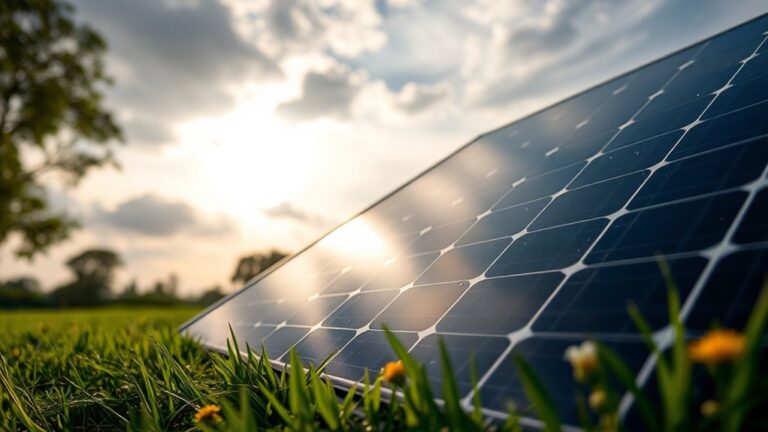
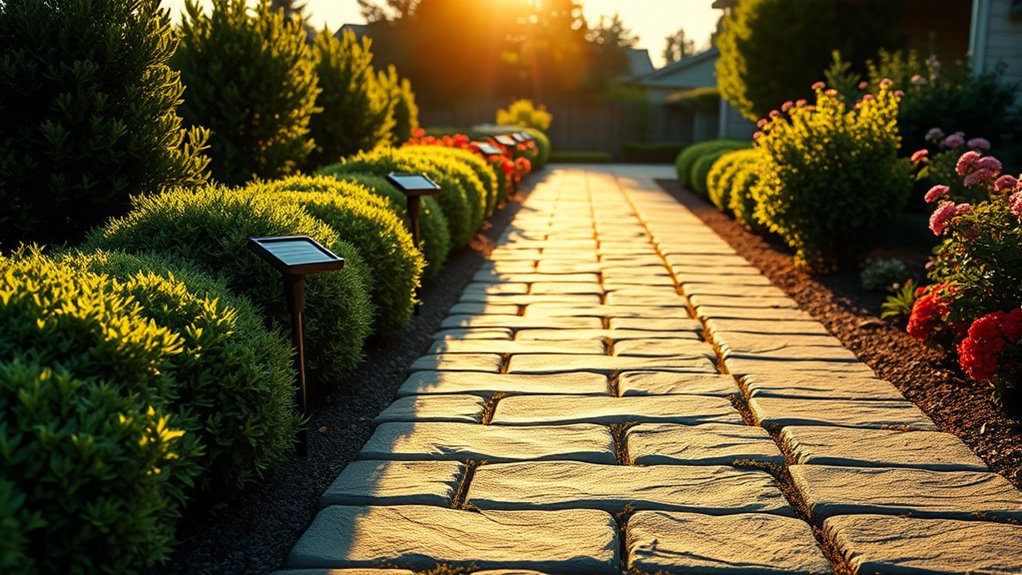
You should position your solar lights where they get at least six hours of direct sunlight daily to charge fully and shine brightly at night. Solar lights need direct sunlight to work efficiently, so finding the right spot is key. Avoid placing them near trees, walls, or furniture that cast shadows.
Also, keep the panels clean from dirt and debris to maximize sunlight absorption. It’s a good idea to adjust the placement seasonally as the sun’s angle changes, so your lights keep charging strongly throughout the year.
Following these simple tips guarantees your lights perform well. And if you explore more, you can optimize their brightness and lifespan even further.
Solar lighting doesn’t have to be complicated—it’s all about finding the perfect sunny spot!
Key Takeaways
- Solar lights charge best in direct sunlight but can still charge in indirect sunlight with reduced efficiency.
- Position lights where they receive at least 6 hours of direct sun daily for optimal brightness and duration.
- Avoid placing lights near trees, walls, fences, or furniture that create shadows and block sunlight.
- Regularly clean panels and remove debris or foliage that may obstruct sunlight exposure.
- Adjust light placement seasonally to account for changing sun angles and maintain consistent charging.
Do Solar Lights Need Direct Sunlight to Charge Efficiently?
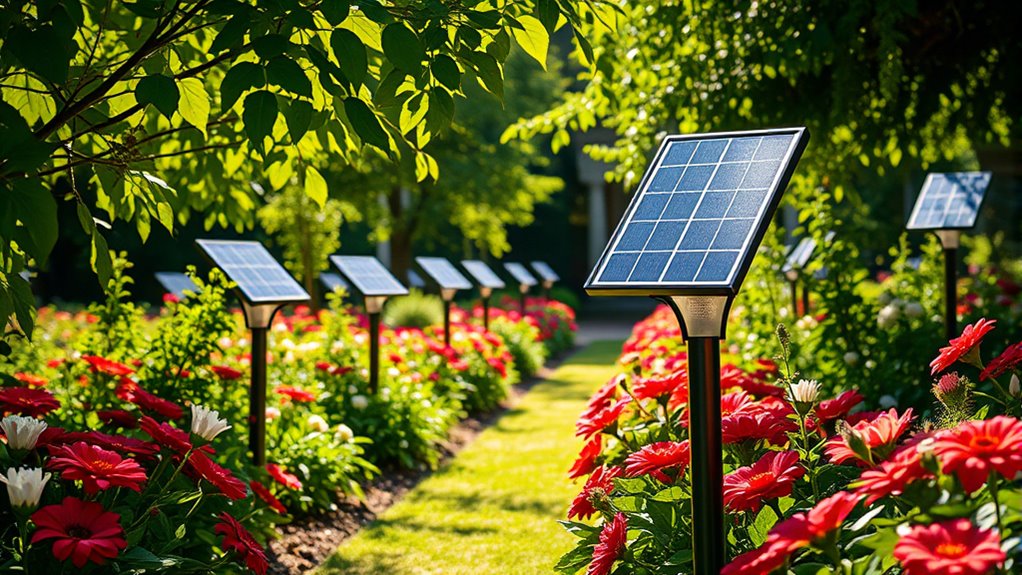
Although solar lights can charge in indirect sunlight, they need direct sunlight to charge most effectively. When you place your solar lights where they’re exposed to full sun, you maximize their energy intake. This ensures they shine brighter and last longer at night.
If you rely solely on shaded or cloudy spots, your solar lights won’t store enough power. That leads to dimmer illumination or shorter lighting periods. But don’t worry about intense heat harming your solar panels—they’re designed to handle it.
Obstacles That Block Solar Light Charging and How to Avoid Them
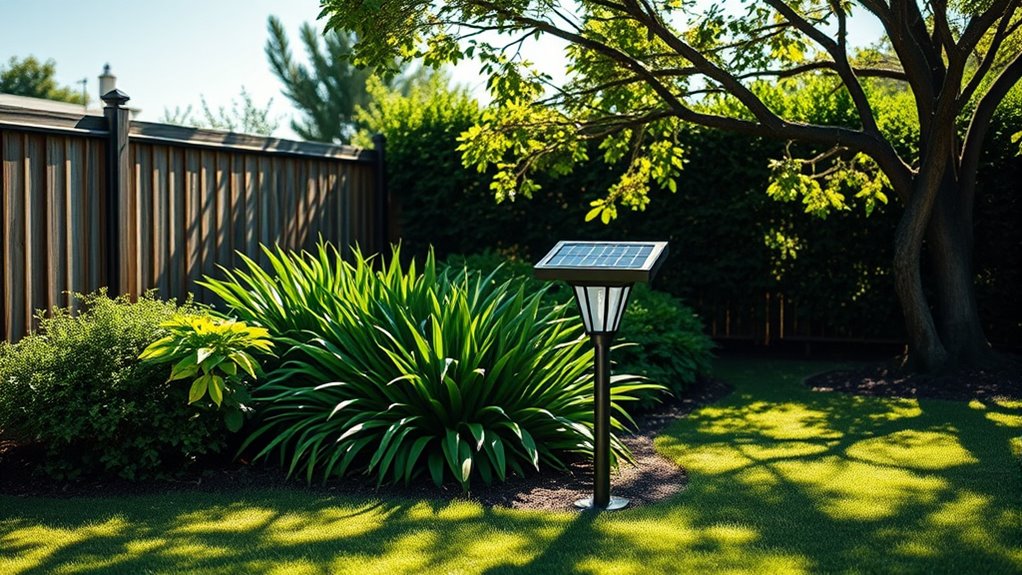
You’ll want to watch out for common obstacles like trees, walls, or furniture that can block sunlight and reduce charging efficiency. Placing your solar lights strategically where sunlight hits most during the day is key.
Also, keep in mind how seasonal changes affect sunlight angles to avoid unexpected shading. It’s all about finding that sweet spot so your lights get the sun they need to shine bright!
Common Charging Blockers
When solar lights don’t charge properly, it’s often because something is blocking their access to sunlight. Common charging blockers include shade from trees, buildings, or fences, which reduces the light’s ability to absorb energy.
Dirt, dust, and debris on the solar panel can also prevent efficient charging, so make sure to clean the panels regularly. Snow and leaves covering the panels during certain seasons are other obstacles to watch for.
Even placing the lights too close to other objects that cast shadows can hinder charging. To avoid these issues, keep panels clear of obstructions and maintain their cleanliness.
Strategic Light Placement
Since solar lights depend entirely on sunlight to charge, placing them strategically is essential to maximize their efficiency. You need to identify and avoid obstacles like trees, walls, or garden structures that cast shadows on your lights during peak sunlight hours.
Position your solar lights where they receive at least 6 hours of direct sun daily. Also, consider the sun’s path throughout the day — it really makes a difference.
Here’s a quick guide to common obstacles and how to avoid them:
| Obstacle | How to Avoid |
|---|---|
| Trees | Place lights away from dense foliage |
| Walls/Fences | Install on the sunny side |
| Outdoor Furniture | Move lights around or elevate them |
| Garden Plants | Trim plants regularly |
Following these tips will help you get the most out of your solar lights. Pretty simple, right?
Seasonal Sunlight Variations
While placing your solar lights away from obvious obstacles like trees and walls sets a strong foundation, seasonal sunlight changes can create new challenges. As the seasons shift, the sun’s angle moves, causing shadows to fall differently.
A spot that received full sun in summer might be shaded in winter by nearby branches or buildings. To prevent this, monitor your light placements throughout the year and adjust as needed.
Trim back any overgrown foliage that blocks sunlight during critical charging hours. If possible, reposition solar panels to face the sun’s lower winter path.
How to Choose the Best Spots for Solar Lights Based on Sunlight and Coverage
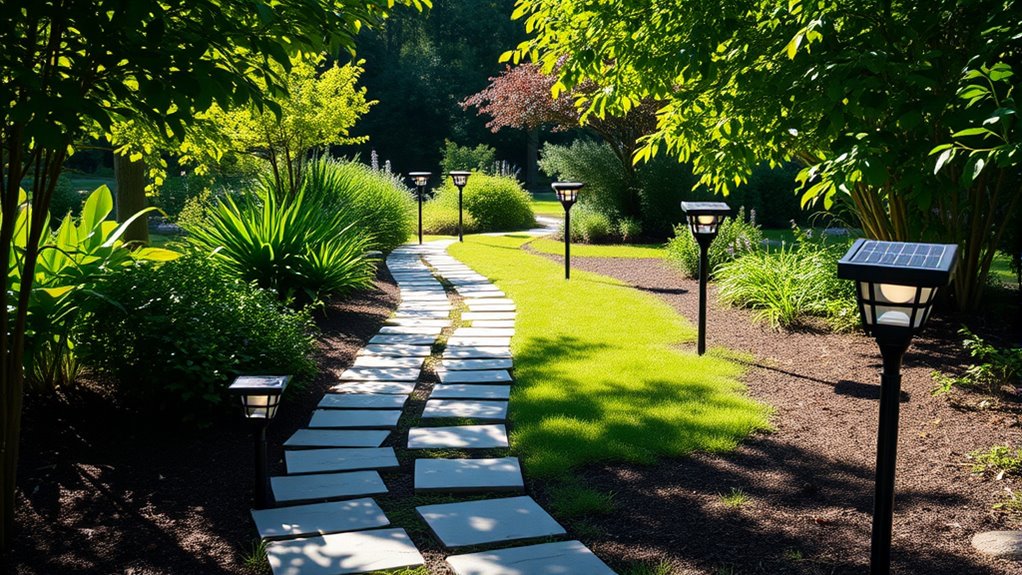
To get the most out of your solar lights, you’ll need to place them where they can soak up plenty of direct sunlight during the day. Look for spots free from shade caused by trees, buildings, or other structures.
South-facing areas usually get the most sun, especially in the northern hemisphere. Also, consider the coverage you want—position lights where their glow benefits pathways, garden beds, or seating areas.
Avoid clustering them too closely; instead, space them to maximize both sunlight absorption and light distribution. Check your chosen spots throughout the day to guarantee consistent sun exposure.
How to Position Solar Lights for Maximum Brightness and Coverage
Once you’ve chosen sunny spots that cover key areas, focus on positioning your solar lights to maximize brightness and spread. Place lights at a height that allows the light to cover the widest area without obstacles blocking the beam.
Angle them slightly downward to avoid wasting light in the sky. Space your lights evenly to prevent dark spots, but close enough to create overlapping coverage for consistent brightness.
If your light has adjustable panels, tilt them toward the area you want illuminated most. Avoid placing lights too close to walls or tall plants that can cause shadows.
How to Adjust Your Solar Lights for Different Seasons and Weather
Because sunlight angles and weather conditions change throughout the year, you’ll need to modify your solar lights to maintain the best performance. In winter, the sun sits lower, so reposition your panels to face more toward the south and tilt them steeper to capture maximum sunlight.
During summer, when the sun is higher, a flatter angle works better. Also, keep an eye on seasonal shading from growing trees or new structures and move your lights if they become shaded.
On cloudy or rainy days, your lights might not charge fully, so consider temporarily relocating panels to sunnier spots or adding extra solar lights in key areas. Adjusting your solar lights seasonally ensures they stay bright and reliable, no matter the weather.
How to Maintain Solar Lights to Keep Them Shining Longer
Although solar lights are designed to be low-maintenance, regular care is essential to keep them shining brightly and lasting longer. You’ll want to clean the solar panels often to remove dust and debris that block sunlight.
Check batteries annually and replace them when their performance drops. Also, inspect the lights for damage and verify they’re positioned to get adequate sunlight.
Here’s a quick maintenance checklist to help you:
| Task | Frequency |
|---|---|
| Clean solar panels | Monthly |
| Check batteries | Annually |
| Inspect for damage | Quarterly |
| Adjust positioning | Seasonally |
| Remove debris | As needed |
Following this routine will keep your solar lights efficient and bright year-round. Just a little attention goes a long way!
Frequently Asked Questions
Can Solar Lights Work Indoors Without Sunlight?
Solar lights won’t work well indoors without sunlight because they rely on solar panels to charge. You’d need a strong artificial light source to keep them powered, but even then, performance drops considerably.
Basically, they’re designed to soak up the sun’s energy, so without that, they just don’t shine as bright or last as long. So, if you’re thinking about using them inside, it’s a bit tricky unless you have really intense lighting.
How Long Do Solar Lights Typically Last?
Solar lights typically last 2 to 5 years, like a candle flickering steadily in the night.
You’ll want to replace batteries every 1 to 2 years to keep them shining bright and reliable.
Are Solar Lights Waterproof for Outdoor Use?
Yes, most solar lights are waterproof for outdoor use, but you should check their IP rating.
Higher ratings like IP65 mean they handle rain and splashes well, so you can confidently place them outside.
Can Solar Lights Be Painted or Customized?
Painting solar lights is like dressing a lantern in colorful armor—you can customize them, but avoid covering solar panels or LEDs.
Use light, non-toxic paint to keep them shining brightly without blocking sunlight or light output.
It’s all about adding your personal touch without getting in the way of their main job—catching the sun and lighting up your space.
Do Solar Lights Attract Insects at Night?
Yes, solar lights can attract insects at night because their light draws bugs in.
If you don’t want insects around, try using warmer-colored bulbs or position lights away from doorways and seating areas. This can help minimize bugs nearby.
Conclusion
To get the most from your solar lights, position them where they’ll soak up at least 6-8 hours of direct sunlight daily. Did you know that solar lights can lose up to 50% of their efficiency if shaded? Avoid obstacles like trees or buildings that block the sun.
Regular adjustments and maintenance will keep your lights shining bright through all seasons. It’s a simple step that makes a big difference in performance.
With the right care, your solar lights can brighten your space reliably and eco-friendly! Remember, placing solar lights in direct sunlight is key to maximizing their energy capture and overall brightness. So, for the best results, choose sunny spots and keep those solar panels clean. This way, your solar lights will provide sustainable, efficient lighting that’s great for your home and the environment.