How Do Solar Panels Provide Electricity During a Blackout?
You can keep your home powered during a blackout by pairing your solar panels with a battery backup system that isolates your energy supply from the grid. This setup is key to ensuring your solar panels provide electricity even when the main power is out.
Normally, solar panels shut off during outages to prevent backfeeding and protect utility workers. But with the right equipment, your solar system can still work for you.
With dedicated circuits, batteries, and backup inverters, your system can safely deliver power to essential devices. These components work together to create a reliable backup power source.
Setting this up properly guarantees continuous electricity when the grid fails. It’s a smart way to stay comfortable and secure during unexpected outages.
Learn how these parts connect to keep your home running smoothly.
Key Takeaways
- Standard solar panels shut off during blackouts to prevent dangerous backfeeding into the grid.
- To provide power during outages, you need a system that’s isolated from the grid, with dedicated circuits for essential loads.
- Backup batteries come into play here. They store extra solar energy so you can use it when sunlight isn’t available during a blackout.
- Specialized inverters and automatic switchovers make sure you get a safe and reliable power supply that’s independent of the grid.
- Just keep in mind, proper pre-installation and professional setup are key for your solar panels to keep the lights on during outages.
How Do Solar Panels Work With the Grid?
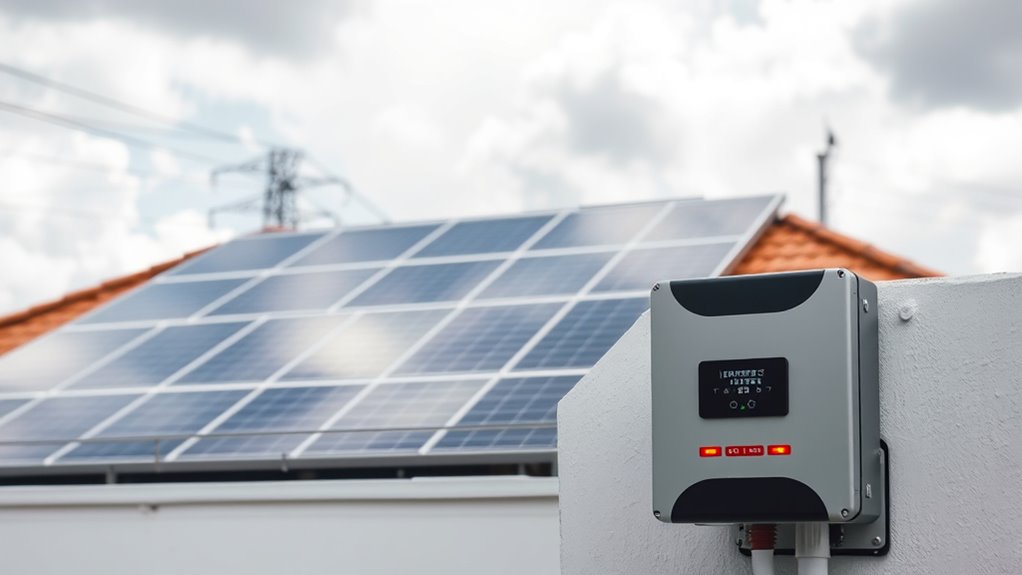
How exactly do solar panels work with the grid to power your home? When sunlight hits your solar panels, they generate direct current (DC) electricity. Your inverter then converts this DC into alternating current (AC), which your home uses.
If your panels produce more electricity than you need, the excess flows back into the grid, earning you credits through net metering. On cloudy days or at night, when your panels don’t generate power, your home pulls electricity from the grid to keep running smoothly.
This seamless interaction means you can rely on the grid as a backup while maximizing clean energy use. Your system constantly balances between solar production and grid supply to ensure consistent power without interruption.
Why Do Solar Panels Shut Off During Blackouts?
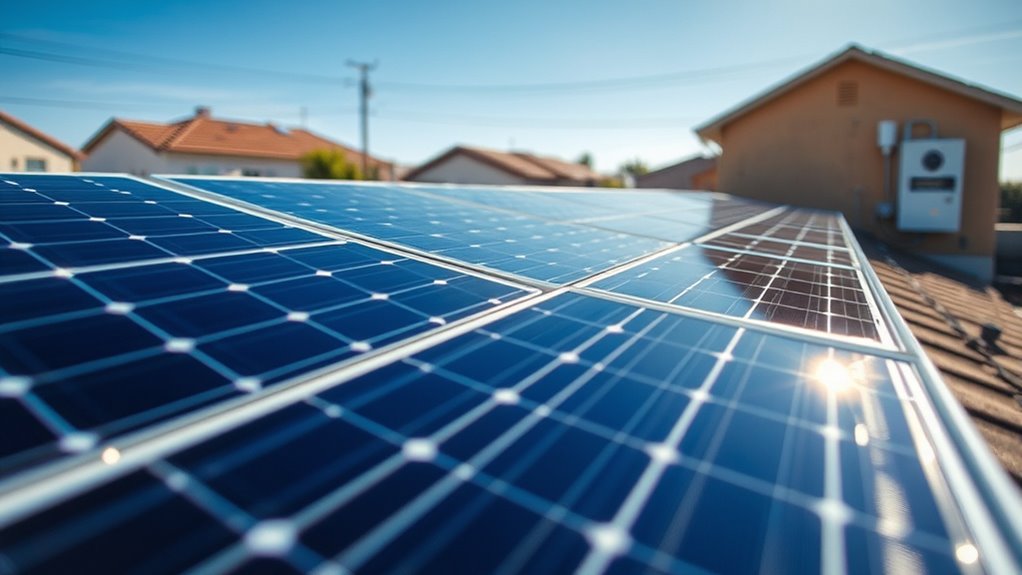
Although your solar panels generate electricity from sunlight, they automatically shut off during blackouts to protect utility workers and prevent backfeeding electricity into the grid. When the power goes out, your solar system’s inverter detects the outage and immediately stops sending power.
This safety feature, called anti-islanding, guarantees the grid remains safe for repair crews working on power lines. If your panels continued to feed electricity into the grid during a blackout, it could cause dangerous situations for workers fixing the outage and damage equipment.
How Can Solar Panels Provide Power During a Blackout?
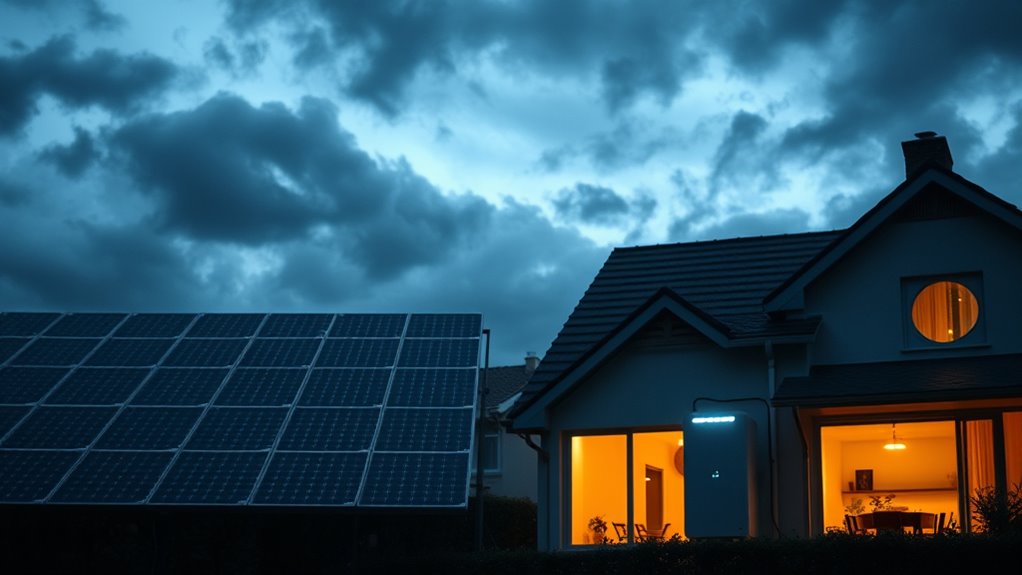
Even though your solar panels shut off during a blackout for safety reasons, you can still use them to power your home if you have the right setup. It all comes down to preparing in advance and making certain your system can operate independently of the grid.
Solar panels shut off during blackouts, but with the right setup, they can power your home independently.
Here’s how you can do it:
- Isolate Your Home from the Grid: You need a way to disconnect your home from the utility grid to avoid backfeeding, which is dangerous for workers.
- Have a Dedicated Circuit: Setting up circuits that run essential appliances ensures you stay comfortable and safe during outages.
- Use a Power Management System: This helps prioritize which devices get power, so your limited energy goes where you need it most.
With these steps, your solar panels can truly become your lifeline during blackouts. It’s all about being prepared and having the right equipment in place.
Backup Equipment for Solar Power: Batteries and Inverters
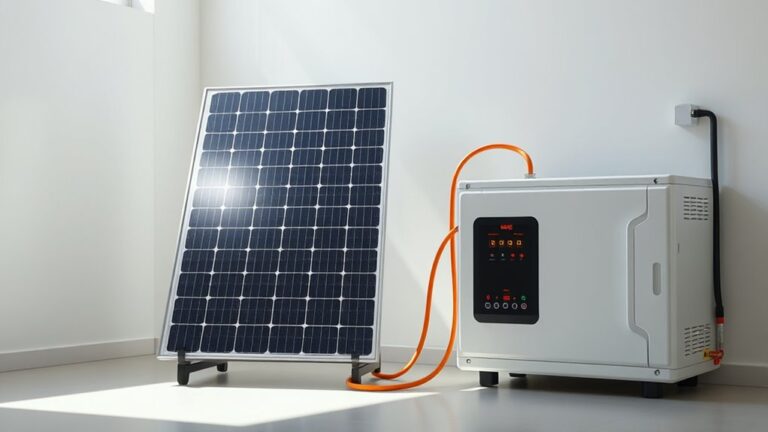
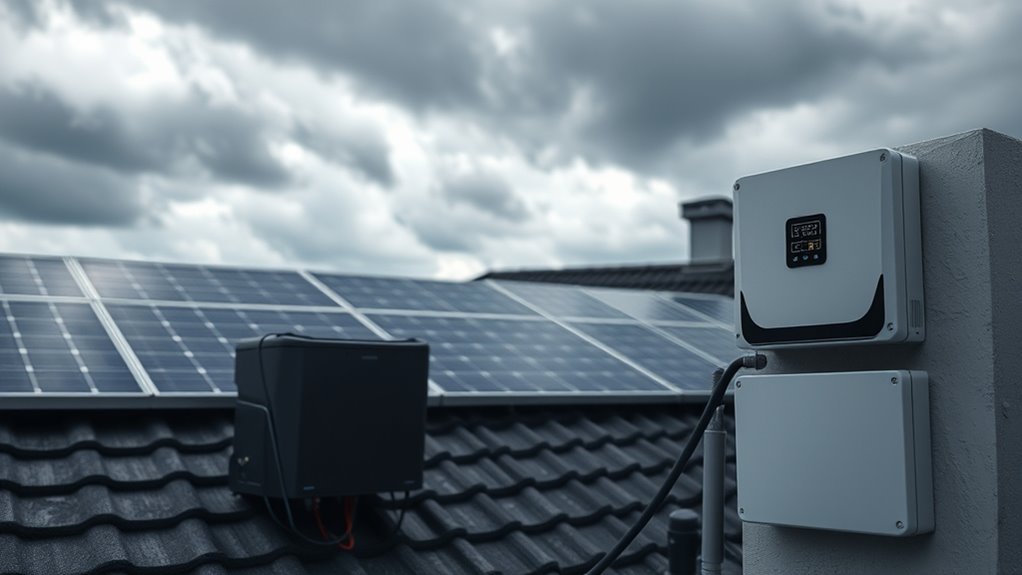
When the grid goes down, your solar panels alone won’t keep the lights on without backup equipment like batteries and inverters. Batteries store the excess energy your panels generate during the day. This stored energy becomes available when the sun isn’t shining or during outages.
Inverters play a vital role too—they convert the direct current (DC) electricity from your panels and batteries into alternating current (AC), which powers your home’s appliances. Without an inverter designed for backup power, your system won’t safely supply electricity during a blackout.
Some inverters also manage the switch between grid power and your backup system automatically. This ensures a smooth changeover without you having to lift a finger.
Together, these components enable your solar setup to function independently when the grid fails. That way, you get reliable energy right when you need it most.
How Battery Storage Keeps Your Home Powered When the Grid Fails
Since the grid can fail unexpectedly, having a battery storage system guarantees your home stays powered without interruption. When the grid goes down, your solar panels pause sending electricity out, but the battery immediately kicks in, supplying stored energy to your home.
This seamless switch keeps your lights on and devices running without you even noticing.
Here’s why battery storage is essential during blackouts:
- Peace of Mind: You won’t worry about losing power during storms or outages.
- Safety: Essential appliances like refrigerators and medical devices stay operational.
- Comfort: You maintain heating, cooling, and lighting, keeping your home livable.
With battery storage, you’re not just relying on the sun; you’re securing your home’s energy no matter what happens to the grid.
Tips to Set Up Your Solar System for Reliable Backup Power
To guarantee your solar system reliably powers your home during outages, you need to plan its setup carefully. First, ensure you have a quality battery backup that matches your energy needs.
Next, install an automatic transfer switch to safely disconnect from the grid during blackouts. Don’t forget to size your solar array adequately to charge batteries efficiently.
Lastly, work with a certified installer who understands local regulations and safety standards. They’ll make sure everything is up to code and runs smoothly.
| Step | Why It Matters |
|---|---|
| Battery Backup | Keeps power flowing when grid fails |
| Transfer Switch | Prevents backfeed, ensures safety |
| Proper Sizing | Maximizes energy storage and use |
| Professional Install | Guarantees compliance and reliability |
Frequently Asked Questions
Can Solar Panels Work During Cloudy or Rainy Days?
Yes, your solar panels still work on cloudy or rainy days, but they produce less electricity because they get less sunlight.
You’ll rely more on stored energy or backup sources during those times. It’s pretty normal, and your system is designed to handle it.
How Long Do Solar Batteries Typically Last?
You’ll find solar batteries typically last around 10 to 15 years.
In fact, some lithium-ion batteries retain about 80% capacity after 10 years, so you won’t need to replace them too often.
Not bad, right? It means you can enjoy your solar setup without much hassle for quite a while.
Are There Government Incentives for Installing Solar Backup Systems?
Yes, you can take advantage of government incentives like tax credits and rebates when installing solar backup systems. These programs help lower your upfront costs and make going solar more affordable and rewarding for you.
It’s a great way to save money while investing in clean energy. Plus, the process is often simpler than you might think!
Can Solar Power Systems Increase My Home’s Resale Value?
Imagine your home shining brighter on the market—solar power systems can boost your resale value by attracting eco-conscious buyers and cutting energy costs.
You’ll enjoy a faster sale and higher offers thanks to that green appeal.
What Maintenance Is Required for Solar Backup Systems?
You’ll need to regularly clean the panels, check battery health, and inspect wiring for damage.
Also, make sure your inverter and backup system firmware stay updated to keep everything running efficiently and ready when you need power.
Conclusion
When the grid goes down, your solar panels alone can’t keep the lights on—they shut off like a safety switch. This is to protect utility workers and prevent backfeeding electricity into the grid. So, without backup equipment, your solar system won’t provide power during a blackout.
But here’s the good news: with the right backup gear, like batteries and special inverters, your system can store energy and supply power when the grid is out. Think of it like having a flashlight ready in a dark room; it’s all about being prepared.
By setting up your solar system wisely with battery storage and proper inverters, you can keep your home powered no matter what happens outside. Solar panels combined with backup solutions ensure you have reliable electricity during blackouts and help you stay comfortable and safe.