10 Steps to Clean Snow Off Solar Panels Safely
To safely clean snow off your solar panels, start by checking how much snow has accumulated and how much of the panel is covered. Make sure you’re wearing insulated boots, gloves, and goggles to stay warm and protected.
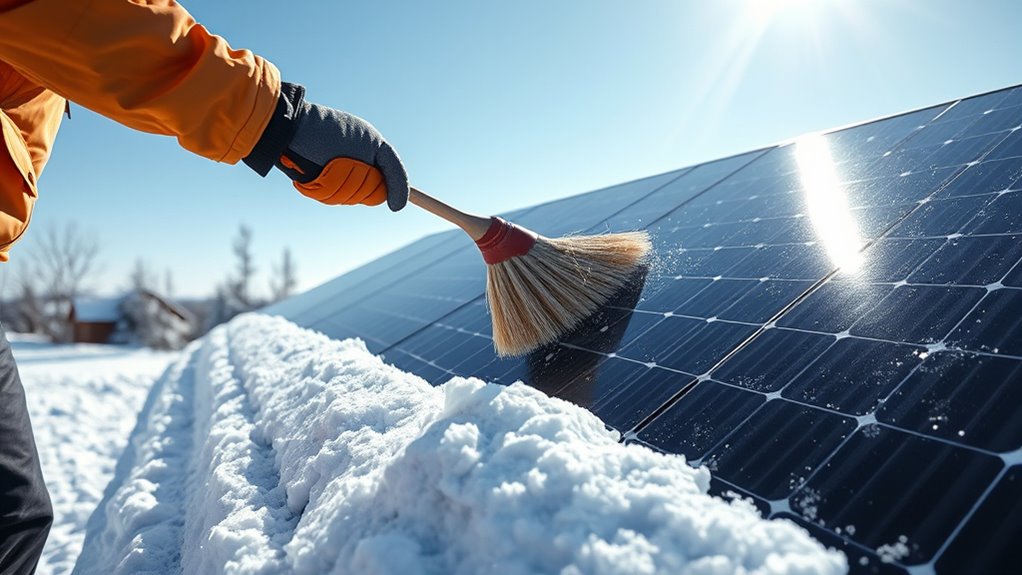
Before you begin, always turn off your solar system for safety. Use soft-bristled brushes or microfiber cloths to gently clear the snow, working from the top down. Avoid metal tools or hot water—they can damage the panels.
After cleaning, check your system’s output to catch any potential issues early.
For long-term care, angle your panels steeply to help snow slide off naturally. You might also want to explore snow-melting options to keep your panels clear during winter.
Keep reading to discover more detailed tips and learn how to avoid common mistakes when cleaning snow off your solar panels.
Key Takeaways
- Wear insulated boots, gloves, and safety goggles to protect yourself while working on icy or snowy surfaces near solar panels.
- Turn off the solar inverter and DC disconnect switch before starting snow removal. This helps ensure electrical safety.
- Use soft-bristled brushes or microfiber cloths to gently remove snow. Avoid metal tools or excessive pressure to prevent damage.
- Clear snow gradually from the top down in thin layers. Focus on panel edges and frame corners to avoid buildup and efficiency loss.
- After cleaning, monitor solar output using performance apps or power meters. This helps confirm panels operate efficiently and no snow remains.
How To Check Snow Depth And Panel Coverage
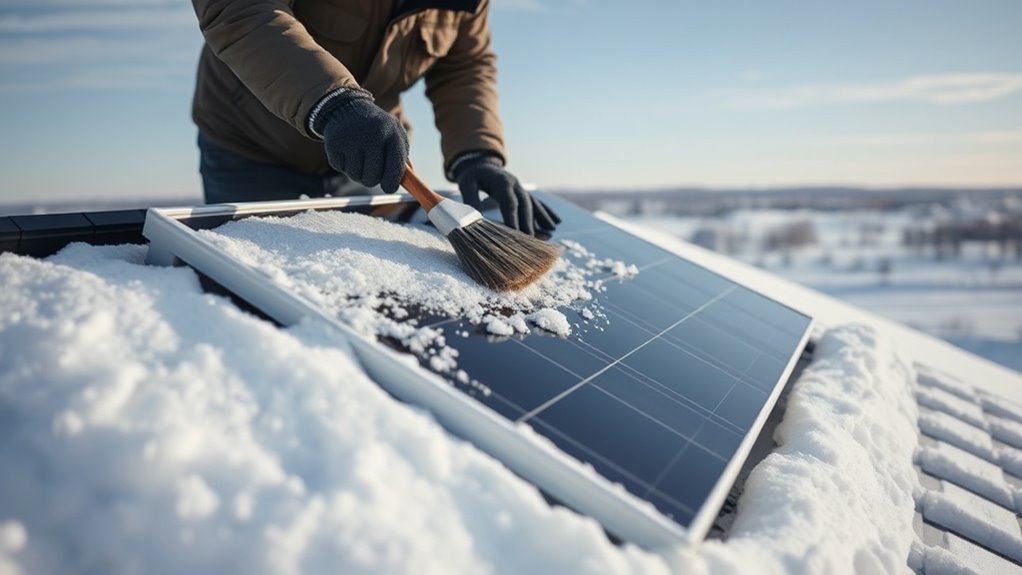
Before you begin clearing snow, you need to accurately assess how much snow has accumulated and how much of your solar panels it covers. Start by looking at your panels from the ground or a safe vantage point to estimate the snow depth.
Begin by safely estimating how much snow has accumulated on your solar panels before clearing.
If the snow is light and covers less than half the panel surface, you might not need to clear it immediately. For thicker snow or full coverage, you’ll have to plan your cleaning carefully.
Use a measuring stick or a ruler to check the exact snow depth if possible. Also, note if the snow is wet and heavy or light and powdery, as this affects how you’ll remove it.
Understanding the coverage helps you decide the best cleaning method and timing. It’s all about making sure your panels can work efficiently without risking damage.
Wear Safety Gear Before You Start
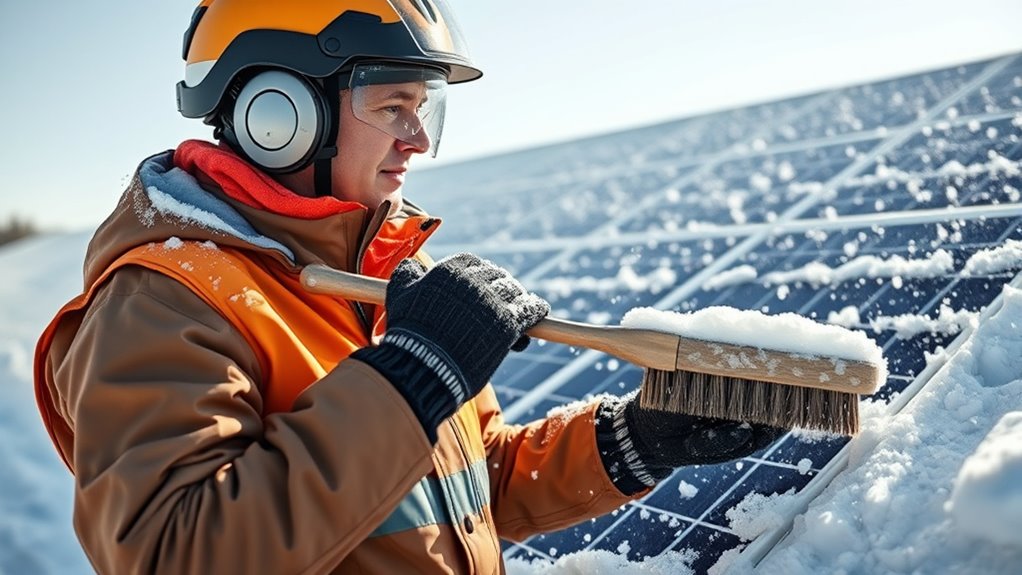
Once you’ve assessed the snow depth and panel coverage, it’s time to prioritize your safety. Before you start, put on appropriate safety gear to protect yourself from slips, falls, and cold exposure.
Wear insulated, non-slip boots to keep steady footing on icy surfaces. Gloves are a must—not just to keep your hands warm but also to help you get a good grip on your tools.
If you’re working on or near a roof, don a helmet to protect your head from injuries. You might also want to wear safety goggles to shield your eyes from snow and debris.
Dress in layered, weather-resistant clothing that lets you move freely. By gearing up properly, you’ll reduce the risk of accidents and stay comfortable throughout the snow-clearing process.
This way, you can get the job done safely and more efficiently.
Choosing The Right Tools To Clear Snow From Solar Panels
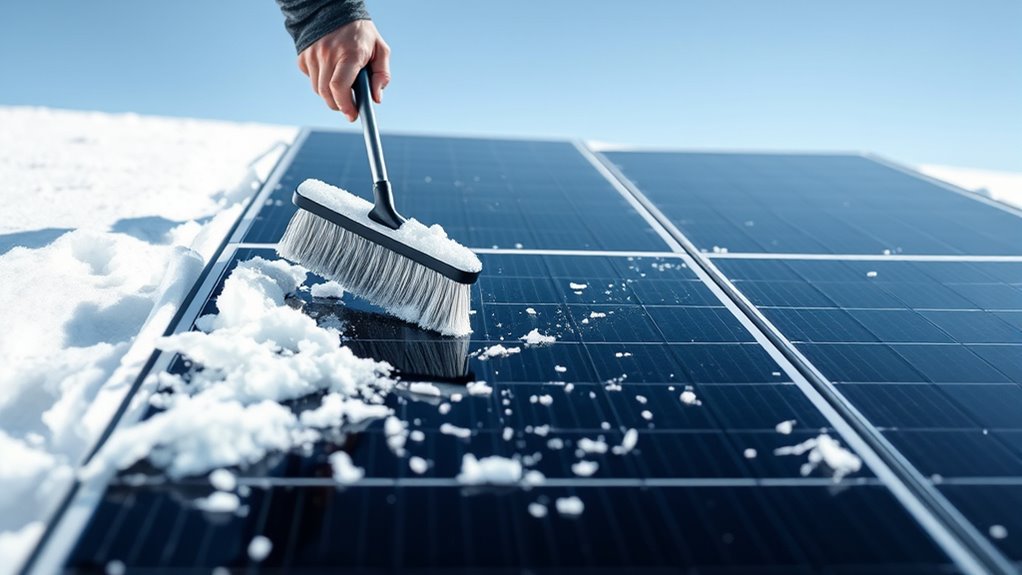
When clearing snow from your solar panels, choosing the right tools can make the job safer and more effective. You want tools that protect your panels and make snow removal easier.
Here’s what you should consider:
- Soft-bristled broom – Gently brush off snow without scratching the glass.
- Plastic snow rake – Use a lightweight, non-metal rake with a telescoping handle to reach panels safely from the ground.
- Roof rake with foam blade – Helps clear snow without damaging the panel surface.
- Microfiber cloth – For wiping away any leftover moisture or light snow.
Avoid metal tools and sharp objects that can harm your panels. Using the right tools keeps your solar investment safe while making snow removal straightforward.
How To Turn Off Your Solar Panels Before Cleaning
Before you start clearing snow, find your solar inverter—this is where you’ll control the power. Make sure to safely disconnect the system to prevent any electrical hazards while cleaning.
Taking this step protects both you and your equipment. It’s a simple precaution that makes the whole process safer and easier.
Locate Your Solar Inverter
Although it might seem straightforward, locating your solar inverter is essential to safely turning off your solar panels before cleaning. The inverter is the device that converts your solar panels’ DC electricity into usable AC power.
Here’s how to find it: Look near your main electrical panel or breaker box—most inverters are installed close by. Check for a rectangular box with a digital display or indicator lights.
You’ll want to identify labels such as “solar inverter,” “PV inverter,” or the brand name like Enphase or SolarEdge. If you can’t spot it, don’t worry—just consult your solar system’s manual or ask your installer for its exact location.
Knowing where your inverter is helps you manage your solar system safely before clearing snow. It’s a simple step, but super important!
Disconnect Power Safely
Two simple steps will help you disconnect your solar panels safely before you start cleaning snow. First, locate the main switch on your solar inverter, which you’ve already identified. Flip this switch to the “off” position to stop the flow of electricity from your panels to your home’s electrical system.
Next, find the DC disconnect switch, usually near the inverter or on your solar panel junction box. Turn this switch off to completely cut power from the panels themselves.
By disconnecting both AC and DC power sources, you guarantee there’s no electrical current running through the panels while you work. This prevents electrical shock and protects both you and your equipment during cleaning.
Always double-check that all switches are off before proceeding. It’s better to be safe than sorry!
Best Techniques To Remove Snow Without Damage
When removing snow from your solar panels, you’ll want to use techniques that protect their delicate surface while ensuring efficient clearing. Here’s how to do it safely:
Use a soft-bristle brush or a foam squeegee to gently sweep away snow, avoiding scratches. It’s important to be gentle so you don’t damage the panels.
Opt for a roof rake with a padded blade to reach panels without putting pressure directly on them. This helps you clear snow without risking harm.
Work from the top down, clearing snow in thin layers to prevent buildup and reduce weight stress. Taking it slow can save your panels in the long run.
Avoid using metal tools or sharp objects, which can damage the panel glass or sealing. Stick to softer tools to keep everything intact.
Removing Snow From Panel Edges And Frames
Start by carefully inspecting the edges of your solar panels for any snow buildup. Make certain to clear the corners of the frames where snow tends to accumulate and cause ice formation.
Taking these steps helps prevent damage and ensures your panels stay efficient. It’s a simple way to keep things running smoothly during the winter months.
Inspect Panel Edges
Although the main surface of your solar panels captures most of the snow, you shouldn’t overlook the edges and frames. Snow can build up there, blocking sunlight and trapping moisture, which may damage your panels or reduce efficiency.
When inspecting panel edges, follow these steps:
- Use a soft brush or broom to gently sweep snow away from the edges.
- Check for ice buildup along the frame that could cause stress or cracks.
- Look for debris like leaves or dirt stuck in gaps where snow melts.
- Wipe the edges carefully with a damp cloth if you notice stubborn residue.
Clear Frame Corners
Since snow tends to accumulate heavily in the frame corners, you’ll want to clear these areas carefully to prevent buildup that can block sunlight or cause damage. Use a soft brush or a plastic scraper to gently remove snow from the edges without scratching the panels or bending the frames.
Avoid applying too much pressure, as the corners can be more fragile than the panel surface. Check for ice patches and carefully chip them away if needed, but never use metal tools.
After clearing the corners, inspect the seals and joints to confirm they’re intact and not compromised by the cold or moisture. Keeping frame corners clear helps maintain your panels’ efficiency and prevents long-term damage from trapped snow or ice.
Using Warm Water To Remove Snow Safely
When you use warm water to clear snow from your solar panels, you reduce the risk of scratching or damaging the surface compared to scraping.
To do this safely, follow these steps:
To clear snow safely from your solar panels, follow these gentle and effective steps.
- Fill a soft spray bottle or watering can with lukewarm water—not hot, to avoid thermal shock.
- Gently pour or spray the water over the snow-covered panels, letting it melt the snow gradually.
- Use a soft-bristled brush or microfiber cloth to remove any loosened snow without applying pressure.
- Repeat the process if needed, making sure no ice remains that could cause damage later.
This method helps you clear snow efficiently while protecting your panels from harm. It’s a simple way to keep your panels safe and working well through winter.
Avoid These Mistakes To Protect Your Panels
Using warm water to clear snow can protect your solar panels, but some common mistakes can still cause damage if you’re not careful. Don’t pour hot water directly on cold panels, as the sudden temperature change may crack the glass.
Also, avoid using abrasive tools like metal scrapers or stiff brushes that can scratch the surface. And never stand on the panels or apply excessive pressure; they aren’t designed to support weight.
Plus, steer clear of harsh chemical cleaners that can degrade the panel’s coating. Instead, use a soft brush or a squeegee with warm water applied gently.
Being patient and gentle helps maintain your panels’ efficiency and longevity. This way, they’ll continue to perform well through winter without unnecessary wear or damage.
How To Check Solar Panel Output After Snow Removal
Once you’ve removed the snow, check your power meter to see if your panels are generating energy again. Compare today’s output with previous days to spot any issues.
You can also use performance apps to track and analyze your solar panel efficiency easily. These tools make it simple to keep an eye on how well your system is working.
Monitor Power Meter
Before you finish, check your power meter to guarantee your solar panels are producing energy effectively after clearing the snow. This quick step confirms your efforts were successful.
Follow these four steps:
- Locate your power meter, usually near your electrical panel or solar inverter.
- Turn it on and observe the current energy output readings.
- Compare the readings to typical levels on a sunny day without snow.
- Note any unusual drops or irregularities that might indicate remaining snow or system issues.
If the output is near normal, your panels are back to working efficiently. If it’s notably lower, inspect the panels again or consult a professional.
Monitoring your power meter ensures your solar investment keeps performing at its best post-snow removal.
Compare Daily Output
Although you’ve monitored your power meter immediately after clearing snow, comparing your solar panel’s daily output over several days gives a clearer picture of their performance.
Tracking daily output helps you spot any lingering issues like partial shading or dirt after snow removal.
Create a simple log to note the date, energy produced (kWh), and weather conditions. This comparison can reveal trends and verify your panels are working efficiently.
| Date | Energy Produced (kWh) | Weather Condition |
|---|---|---|
| Feb 15 | 25 | Sunny |
| Feb 16 | 20 | Partly Cloudy |
| Feb 17 | 24 | Clear, Cold Morning |
Use Performance Apps
Even if you’ve logged your solar panel output manually, using performance apps can provide real-time data and detailed insights after snow removal. These apps help you quickly confirm that your efforts restored your system’s efficiency.
To use them effectively, connect your app to your solar inverter or monitoring system for live data. Then, check the current power output to see if panels are performing at their best.
You can also review historical performance trends to spot any lingering issues. Plus, set alerts for any sudden drops in output, which might indicate potential snow or debris buildup.
Long-Term Tips To Keep Snow Off Your Solar Panels
Since snow buildup can reduce your solar panels’ efficiency, taking proactive steps to minimize accumulation will save you time and effort during winter. First, install panels at a steep angle to encourage snow to slide off naturally.
You might also consider heated cables or mats designed for solar panels to melt snow safely. Regularly trimming nearby trees helps reduce shade and prevents additional snow from piling up on your panels.
Using anti-reflective and hydrophobic coatings can make snow and ice less likely to stick. Finally, guarantee your roof’s structure supports easy access for maintenance without risking damage.
Frequently Asked Questions
Can Snow Damage Solar Panel Wiring or Connections?
Yes, snow can damage solar panel wiring or connections if it melts and refreezes. This process can cause ice buildup or water infiltration.
You should regularly check and gently clear snow to prevent potential damage. Doing this helps guarantee your panels function properly.
How Does Heavy Snow Affect Solar Panel Efficiency Long-Term?
Heavy snow can reduce your solar panels’ efficiency temporarily by blocking sunlight, but long-term damage is rare if snow is removed promptly.
Prolonged coverage might cause moisture issues, so staying proactive helps maintain performance. It’s really all about keeping an eye on things and clearing the snow when you can. That way, your panels keep working great through the winter!
Are There Specific Solar Panels Better for Snowy Climates?
You want solar panels that perform well in snow, yet also handle sun efficiently. Look for monocrystalline panels with a smooth surface; they shed snow faster and maintain better efficiency in snowy climates compared to others.
They’re pretty great at balancing both, don’t you think? Plus, the smooth surface really helps with snow sliding off, so you get more sunshine and less buildup.
Can Solar Panels Melt Snow Faster Naturally?
Yes, solar panels can melt snow faster naturally because they absorb sunlight and convert it to heat.
You’ll notice panels with darker surfaces and higher efficiency produce more warmth, helping snow slide off quicker.
It’s pretty neat how that works, right? The heat generated isn’t just for power—it also helps clear the snow naturally.
Is It Safe to Clean Solar Panels During Snowfall?
It’s generally not safe to clean solar panels during snowfall because slippery surfaces and cold conditions increase your risk of injury.
It’s better to wait until the snow stops. That way, the panels are easier and safer to access for cleaning.
Conclusion
Now that you know how to check snow depth, wear safety gear, and choose the right tools, you’re ready to clear your panels safely. Remember to turn off your system before starting the cleaning process to avoid any accidents.
Remove snow gently to prevent damaging your solar panels. Avoid common mistakes like using sharp tools or applying too much pressure.
Use warm water carefully if needed, but don’t pour hot water directly as it can crack the glass. Keep an eye on your panel output during and after cleaning to ensure everything is working properly.
Apply long-term tips like installing snow guards or tilting panels to help keep snow at bay. By following these steps, you’ll protect your investment, maintain efficiency, and enjoy reliable solar power all winter long. Safe and effective snow removal is key to maximizing your solar panels’ performance throughout the snowy season.