Will Solar Panels Damage My Roof and How to Install Them Safely
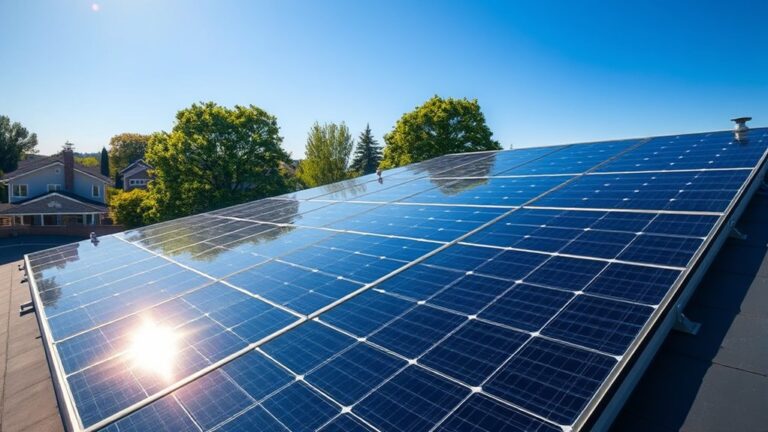
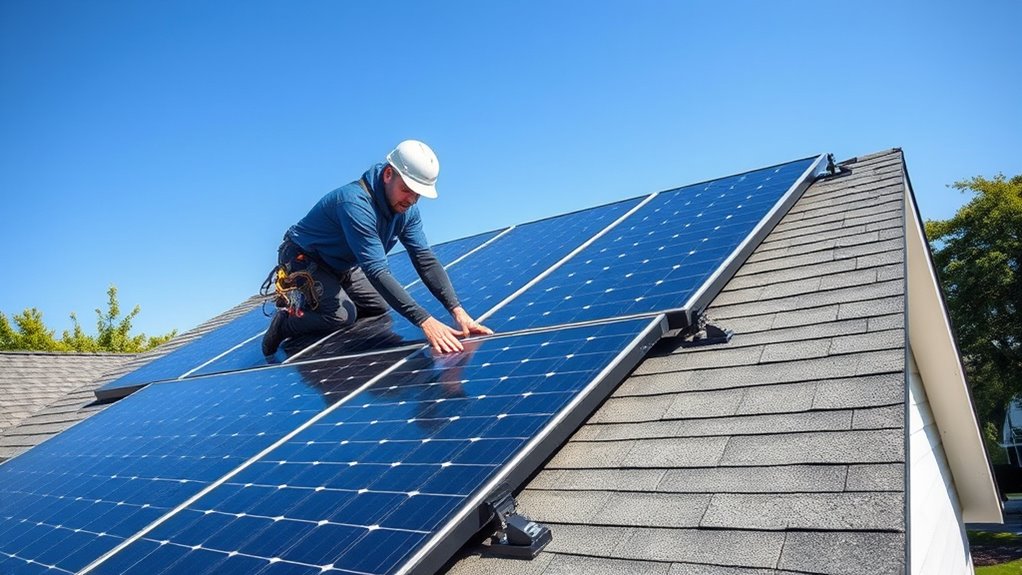
Solar panels won’t damage your roof if they’re installed properly. In fact, they can actually protect your roof by shielding it from rain and harmful UV rays, which helps reduce wear over time. This makes solar panels a smart choice not just for clean energy but also for preserving your roof’s lifespan.
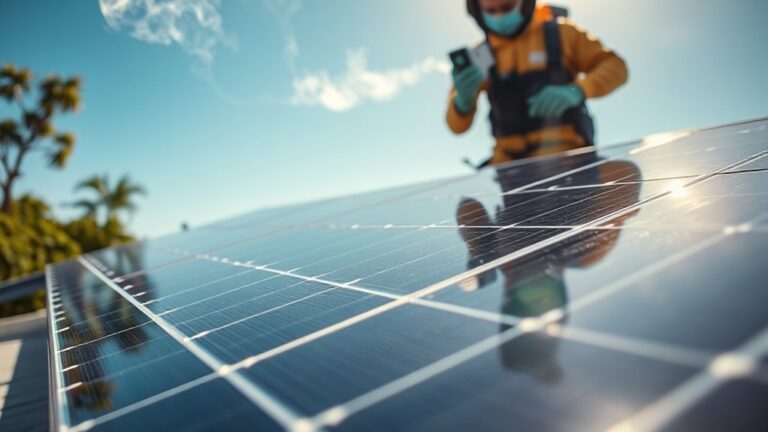
To keep your roof safe during installation, it’s important to have professionals inspect and repair it first. Using the correct mounts and carefully waterproofing around fasteners are key steps to prevent any leaks or cracks.
Don’t rush the installation process—taking your time helps avoid mistakes that could cause damage later.
Regular maintenance is also essential. Checking both your roof and solar panels ensures they stay secure and work efficiently for years to come. If you want to understand the best steps for safe installation and upkeep, keep exploring!
Key Takeaways
- Properly installed solar panels actually protect your roof by shielding it from harsh weather and reducing temperature swings. This can often help extend the lifespan of your roof.
- But if the installation is done by someone inexperienced, or if the sealing is not done right, it can lead to roof damage, leaks, and weaken the roofing materials.
- Before you install solar panels, make sure to inspect your roof carefully and repair any damage. This way, you’ll have a solid, clean surface ready for mounting the panels.
- It’s important to use waterproof flashing, sealants, and secure mounts attached to strong framing. This helps prevent leaks both during and after the installation process.
- Don’t forget to regularly check the mounts and seals once the panels are installed. If you spot any issues, address them promptly to keep your roof in good shape and your solar panels working efficiently.
Will Solar Panels Damage Your Roof?
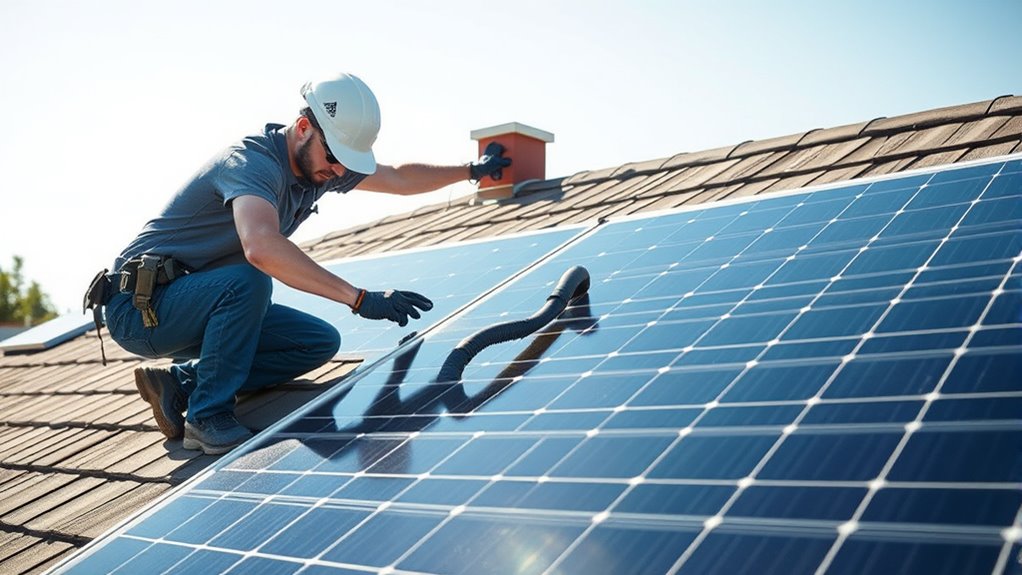
Although many worry that installing solar panels might harm their roof, the truth is that properly installed systems usually protect your roof rather than damage it. When panels are set up correctly, they shield your roof from harsh weather elements like rain, hail, and UV rays, potentially extending its lifespan.
You’ll also avoid issues like water pooling around panels, which can happen when installers pay close attention to proper placement and sealing. Plus, solar panels can reduce temperature fluctuations on your roof, lessening wear over time.
Of course, choosing experienced professionals ensures your roof stays safe during installation. So, if you’re concerned about damage, rest assured that proper installation actually benefits your roof’s durability and performance.
What Causes Roof Damage During Solar Panel Installation?
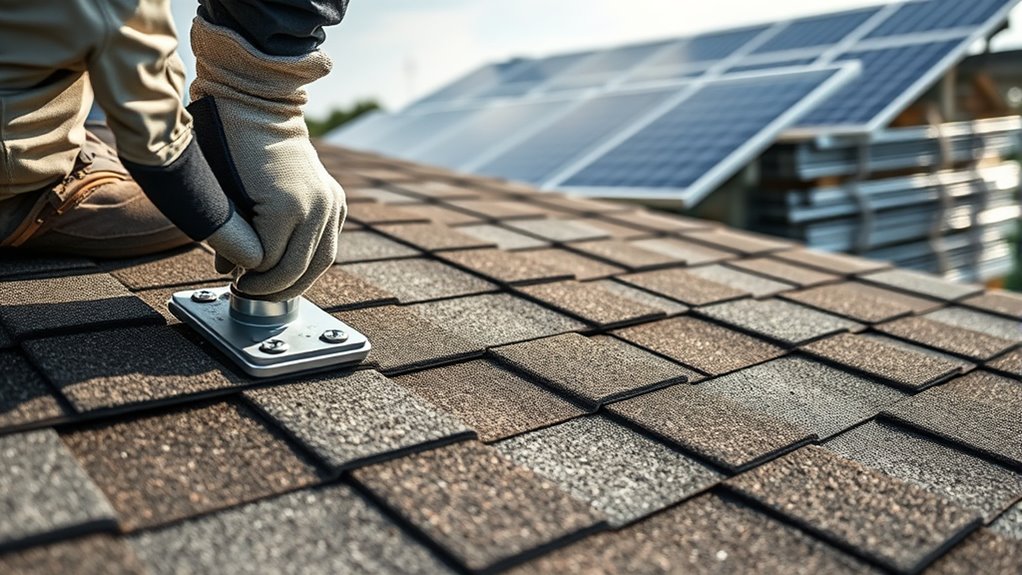
When installers rush or lack experience, they can cause roof damage during solar panel installation. You might notice broken shingles or cracked tiles if they walk carelessly or drop tools.
Improper sealing around mounting points can lead to leaks, letting water seep under your roof. If installers fail to align mounts correctly, it puts unnecessary stress on your roofing materials, causing cracks or warping.
Leaks from poor sealing and misaligned mounts can stress and damage your roofing materials.
Also, cutting into your roof without proper care can damage the waterproof membrane beneath, compromising your roof’s integrity. Using the wrong fasteners or over-tightening bolts can create weak spots that worsen over time.
To avoid these issues, you want to guarantee your installation team handles every step carefully and uses the right materials tailored to your roof type. It really makes a difference in keeping your roof safe and sound.
How to Prepare Your Roof Before Installing Solar Panels
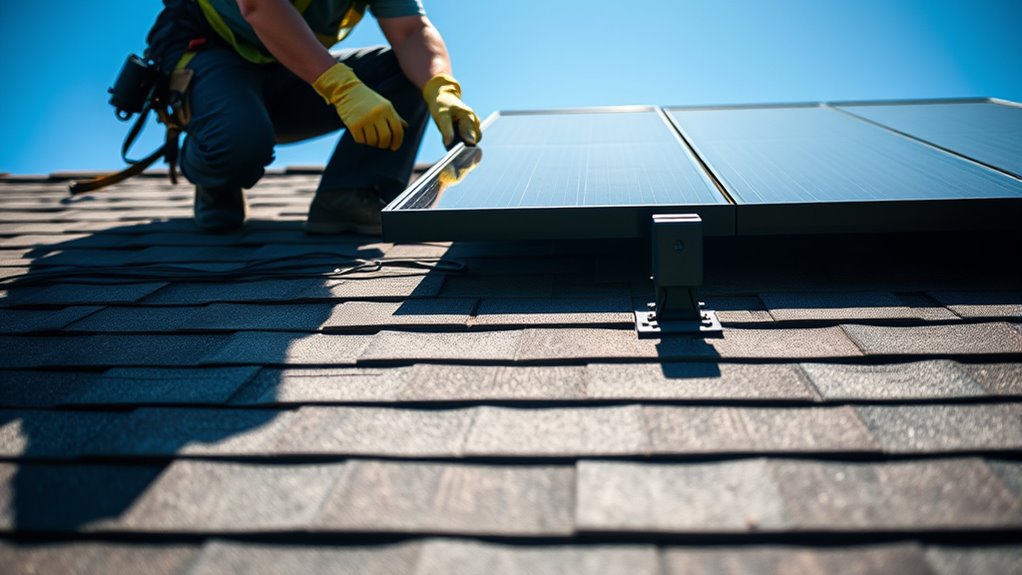
Before installing solar panels, you should thoroughly inspect your roof to guarantee it’s in good condition and can support the additional weight. Check for damaged or missing shingles, cracks, and signs of water damage.
If your roof is older or needs repairs, address those issues first to avoid costly problems later. Clean debris and moss to ensure a smooth surface for mounting.
Measure your roof’s dimensions and note the direction it faces to maximize solar efficiency. Consulting a professional to assess your roof’s structural integrity and load-bearing capacity is a smart move.
Preparing your roof properly not only extends its lifespan but also assures a safe, secure solar panel installation. Taking these steps helps you avoid future repairs and protects your investment.
Installing Solar Panels Without Causing Leaks
When you install solar panels, sealing roof penetrations correctly is essential to prevent leaks. You’ll need to use effective waterproofing methods that create a tight barrier around mounts and fasteners.
Proper Roof Penetration Techniques
How can you guarantee your roof stays watertight while installing solar panels? Start by choosing the right penetration spots, ideally on strong framing members like rafters or trusses. Drill pilot holes carefully to avoid overcutting.
Use flashing boots specifically designed for solar mounts to cover each penetration, ensuring a tight seal around the bolts. Secure mounting brackets firmly but don’t overtighten, which could damage the roof material.
Always keep the angle and placement consistent to maintain roof integrity. Before sealing, check for any gaps or debris that might compromise the seal.
Proper alignment and careful handling during installation prevent unnecessary stress and leaks. Following these techniques helps you install solar panels safely without risking water damage or compromising your roof’s lifespan.
Effective Waterproofing Methods
Why does waterproofing matter so much during solar panel installation? Because any gaps or poorly sealed penetrations can lead to leaks, damaging your roof and interior.
To avoid this, you need to use high-quality flashing around mounting points. Flashing directs water away from these vulnerable spots, preventing moisture buildup.
Next, apply a durable roofing sealant to all penetrations before attaching the panels. This extra barrier keeps water out, especially during heavy rain.
Don’t forget to inspect and maintain the seals regularly, as weather can degrade them over time.
How Solar Panels Shield Your Roof From Weather Damage
Although solar panels primarily generate clean energy, they also act as a protective barrier for your roof against harsh weather conditions. When installed correctly, they shield your roof from direct exposure to heavy rain, hail, and intense sunlight.
This layer reduces wear and tear on roofing materials, extending your roof’s lifespan. Solar panels also help deflect wind, minimizing the risk of wind-driven debris damaging your shingles.
Plus, they can moderate temperature fluctuations by providing shade, which lessens thermal stress on your roof. Keep in mind, proper installation is key—panels need to be securely mounted without compromising your roof’s integrity.
Maintaining Your Roof and Solar Panels for Long-Term Safety
To keep both your roof and solar panels safe over time, you should schedule regular roof inspections and clean your panels to maintain efficiency.
Don’t forget to check the panel mounts to guarantee they stay secure and prevent damage.
Staying on top of these tasks helps you avoid costly repairs down the line.
Regular Roof Inspections
How often do you check your roof’s condition when you have solar panels installed? Regular roof inspections are vital to catch potential issues early and guarantee both your roof and panels stay in great shape.
You should inspect your roof at least twice a year and after major storms. Look for damaged shingles, loose mounts, or water stains.
| Inspection Area | What to Look For | Frequency |
|---|---|---|
| Shingles | Cracks, curling | Biannually |
| Mounting Hardware | Rust, looseness | Every 6 months |
| Flashing | Gaps, corrosion | Biannually |
| Roof Surface | Debris, discoloration | After storms |
| Panel Seals | Waterproofing intact | Every 6 months |
Regular checks help avoid costly damage and prolong your system’s life. It’s definitely worth the effort to keep everything running smoothly!
Cleaning Solar Panels
Since dirt and debris can quickly reduce your solar panels’ efficiency, you need to clean them regularly to keep both your roof and system in ideal condition. Cleaning prevents buildup that could trap moisture, leading to roof damage or panel malfunction.
Here’s how to do it safely:
- Use a soft brush or sponge with mild, non-abrasive soap to avoid scratching panels.
- Rinse with a hose using low pressure to prevent water intrusion into roof seals.
- Clean early in the morning or late afternoon to avoid thermal shock from sudden temperature changes.
- Avoid harsh chemicals and abrasive tools, which can damage panels and roofing materials.
Regular cleaning extends your panels’ lifespan and protects your roof’s integrity. It’s a simple step that ensures long-term safety and performance.
Monitoring Panel Mounts
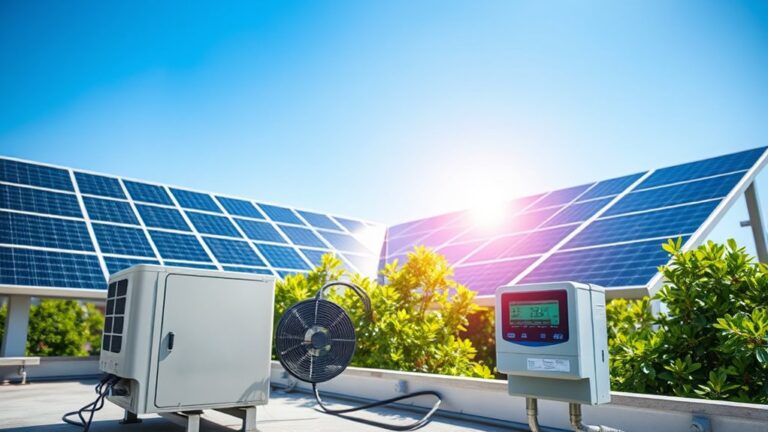
Keeping your solar panels clean helps maintain their efficiency, but the mounts that secure them to your roof also need regular attention. You should inspect these mounts at least twice a year for signs of rust, corrosion, or looseness.
Tighten any bolts or screws that have loosened over time to prevent panels from shifting or damaging your roof. Also, look for any gaps where water might seep in, and apply sealant if necessary to keep your roof watertight.
If you notice any damaged mounts, replace them promptly to avoid further issues. By actively monitoring your panel mounts, you protect both your solar investment and your roof’s integrity.
This helps ensure long-term safety and ideal energy production. Don’t wait for problems—stay proactive with your maintenance.
Frequently Asked Questions
How Do Solar Panels Affect My Home Insurance Policy?
Solar panels can increase your home insurance premium since they add value and risk. You’ll want to notify your insurer and update your policy.
Make sure the coverage includes damage, theft, or liability related to the panels. It’s better to be safe than sorry!
Can Solar Panels Increase My Property Value?
Like the sun and your home’s value rising together, solar panels can boost your property worth.
You’ll attract eco-conscious buyers and save on energy bills, making your home more appealing and valuable in today’s market.
What Is the Typical Lifespan of Solar Panels?
Solar panels typically last about 25 to 30 years. You’ll notice a gradual efficiency drop over time, but with proper maintenance, they can keep producing energy well beyond that lifespan.
It’s pretty cool because that means you can keep saving money on your energy bills for many years. Just a little upkeep goes a long way!
Are There Any Tax Incentives for Installing Solar Panels?
Yes, you can get tax incentives for installing solar panels, like the federal Investment Tax Credit (ITC) which covers a percentage of your costs.
It’s definitely worth checking local programs too, as many states and cities offer additional savings. These can really help reduce your overall expenses.
How Do Solar Panels Perform in Snowy or Shaded Areas?
Imagine snow piling up on your solar panels like a cozy blanket—ironically, they still generate some power but less efficiently.
In shaded areas, their output drops, so you’ll want to position panels where sunlight’s king.
Conclusion
Think of your roof as a shield and your solar panels as a protective armor. When installed carefully, they work together to guard your home from the elements rather than causing harm.
By preparing your roof properly and maintaining both the panels and shingles, you guarantee this partnership stays strong and leak-free. With the right care, your roof won’t just survive—it’ll thrive.
Solar panels can actually help protect your roof by shielding it from harsh weather. The key is safe installation and regular maintenance to avoid any damage.
So, if you’re wondering, “Will solar panels damage my roof?” the answer is no, as long as they’re installed correctly. Proper installation methods ensure your roof remains intact and your energy savings increase. Maintaining your roof and solar panels together keeps everything running smoothly, making your home more efficient and secure over time.