How to Pressure Wash Your Solar Panels Safely
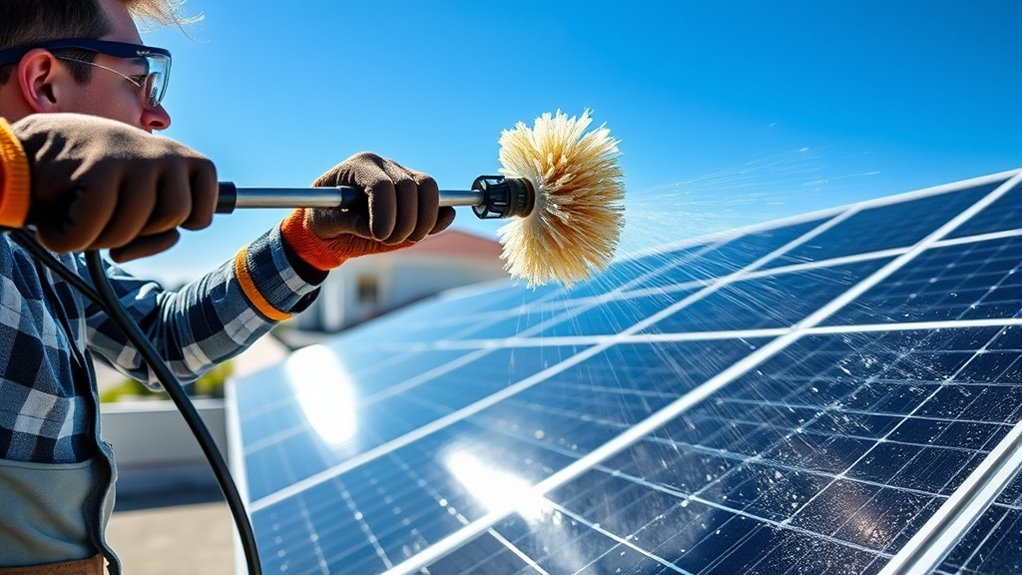
To safely pressure wash your solar panels, start by using a pressure washer with adjustable settings between 1200-1900 PSI and a wide 25-40 degree nozzle. This helps ensure you don’t damage the delicate surface of your panels. Always keep the nozzle at least 12 inches away from the panels when spraying.
Spray cold water gently and avoid harsh chemicals that could harm your panels or the environment. Instead, opt for eco-friendly cleaners like vinegar or biodegradable soap—they’re effective and safe to use.
Before you begin, take a close look at your panels for any damage or loose wiring.
Being careful around the electrical components is key to preventing accidents. Following these proper techniques not only keeps your panels in great shape but also protects your warranty.
Keep reading to discover more tips that guarantee safe, effective cleaning every time!
Key Takeaways
- Use a pressure washer with 1200-1900 PSI and a 25-40 degree nozzle. Keep at least 12 inches distance from the panels to avoid any damage.
- Before you start, inspect the panels for any damage and make sure the wiring is secure. This helps prevent any issues while you’re pressure washing.
- Apply eco-friendly cleaning solutions like diluted vinegar or biodegradable soap. Stay away from harsh chemicals such as bleach or ammonia—they can harm your panels.
- Spray water at a downward angle using gentle, sweeping motions. Be careful to avoid electrical connections and don’t spray one spot for too long.
- Double-check your warranty terms and follow the manufacturer’s guidelines. If you’re unsure, it’s always a good idea to consider professional help.
Benefits of Pressure Washing Solar Panels
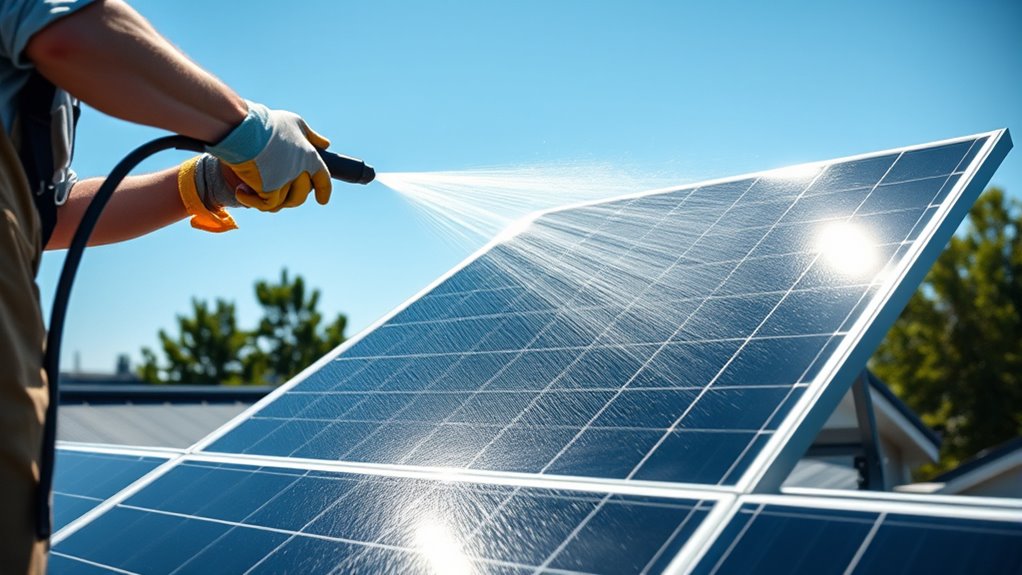
How does pressure washing boost your solar panels’ performance? When dirt, dust, bird droppings, and grime build up, they block sunlight, reducing your panels’ efficiency. By pressure washing, you quickly remove these layers, restoring maximum sunlight exposure.
This means your panels work harder and generate more electricity, saving you money on energy bills. Regular cleaning also prevents long-term damage caused by debris buildup, extending your panels’ lifespan.
Plus, a clean surface reflects sunlight better, enhancing overall output. You get a simple, cost-effective way to maintain your investment without waiting for rain or manual scrubbing.
Keeping your solar panels clean with pressure washing ensures you get the most energy, reliability, and value from your system every day. It’s an easy way to keep things running smoothly!
Pick the Best Pressure Washer and Settings
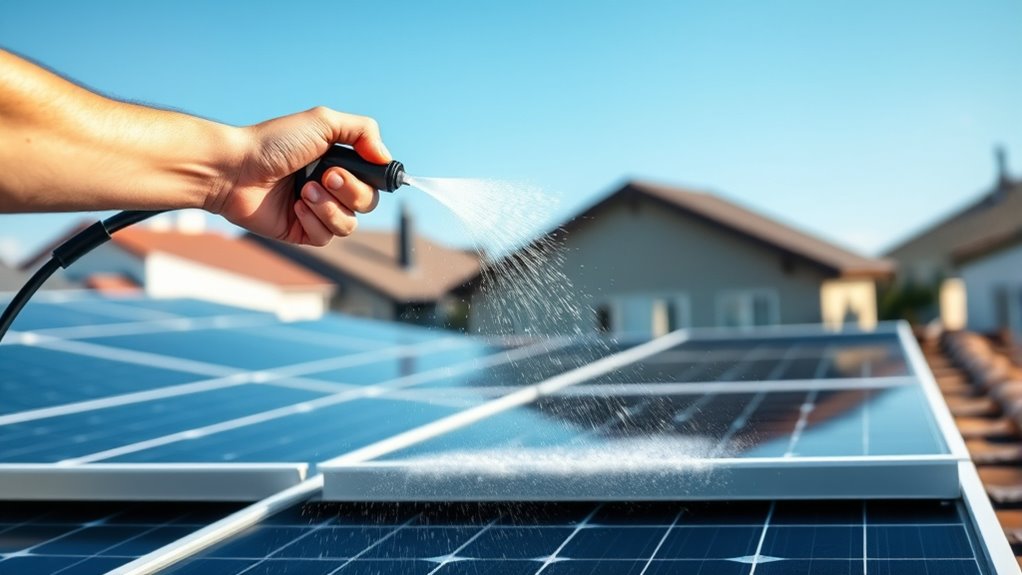
Maintaining your solar panels’ cleanliness with pressure washing is only effective if you choose the right equipment and settings. Using too much pressure or the wrong nozzle can damage your panels.
Here’s how to pick the best pressure washer and settings:
- Select a pressure washer with a PSI between 1200-1900 to avoid cracking or dislodging panels.
- Use a nozzle with a wide spray angle, ideally 25-40 degrees, to distribute water gently.
- Opt for cold water instead of hot water; hot water can harm the panel’s surface and seals.
- Avoid detergents or chemicals unless specified safe for solar panels, as they might cause damage or residue buildup.
Preparing Solar Panels for Pressure Washing
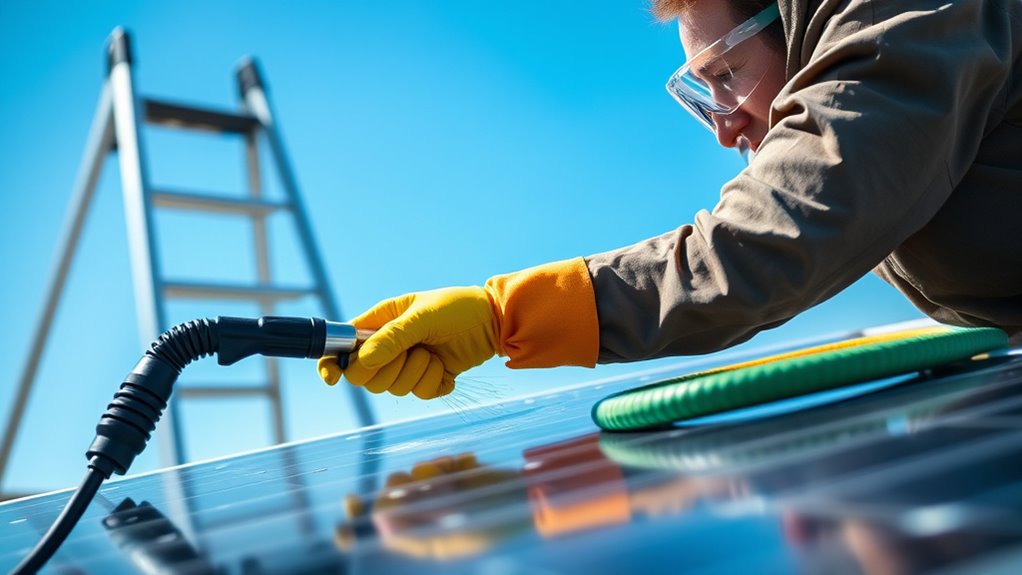
Before you start pressure washing, inspect your solar panels carefully for any cracks or damage. Make certain you have all the necessary equipment, like a soft brush and protective gear, ready to go.
Taking these steps will help protect your panels and ensure a safe cleaning process. It’s always better to be prepared than to run into problems halfway through.
Inspect Panels Thoroughly
Although pressure washing can effectively clean your solar panels, you need to inspect them thoroughly beforehand to avoid damage. Start by checking for cracks or chips on the surface, as these can worsen with high-pressure water.
Next, look for loose wiring or connections that water might penetrate, causing electrical issues. Then, examine the mounting brackets to ensure they’re secure and not rusted or weakened.
Finally, inspect for dirt buildup in corners or edges, which might require spot cleaning before pressure washing. By following these steps, you’ll protect your panels from damage and maximize cleaning effectiveness.
Taking the time to inspect carefully will save you from costly repairs later and guarantee your solar panels keep performing at their best. It’s definitely worth the effort!
Gather Necessary Equipment
Once you’ve carefully inspected your solar panels for any damage or loose parts, the next step is to gather the right equipment to clean them safely and effectively. You’ll need a pressure washer with adjustable pressure settings—choose a model that can be set to a gentle range (around 1200-1900 PSI) to avoid damaging the panels.
Equip yourself with a wide-angle spray nozzle to distribute water evenly and prevent concentrated force. Have a soft-bristle brush or sponge on hand for stubborn dirt, but avoid harsh scrubbing.
Use a safety harness and non-slip shoes if your panels are on a roof. Finally, prepare a bucket of mild, non-abrasive soap mixed with water. Having all these ready will make your cleaning process safe and efficient.
Safe Techniques for Pressure Washing Solar Panels
When you pressure wash solar panels, you need to use gentle settings and the right nozzle to avoid damaging the delicate surfaces.
Here’s how you can keep your panels safe while cleaning:
- Use a wide spray nozzle (25° or more) to reduce water pressure.
- Keep the nozzle at least 12 inches away to prevent cracks or scratches.
- Spray at a downward angle, avoiding direct hits to electrical connections.
- Move the spray evenly across the panel surface without lingering in one spot.
It’s all about being gentle and careful. That way, your panels stay in great shape and keep working efficiently!
Best Cleaning Solutions for Pressure Washing
You’ll want to choose cleaning solutions that are gentle on your panels and the environment. Avoid harsh chemicals that could damage the surface or leave harmful residues.
Let’s explore some eco-friendly options and simple homemade solutions that work well with pressure washing. They’re easy to make and safe to use, so you can keep things clean without any worries.
Eco-Friendly Cleaning Options
Although pressure washing efficiently removes dirt and grime from solar panels, selecting the right cleaning solution is crucial to protect the environment and your system’s longevity. You want products that clean well without harming nearby plants or the panels themselves.
Here are four eco-friendly options to consider:
- Vinegar and Water Mix – A natural disinfectant that breaks down dirt without toxic residues. It’s simple and effective.
- Biodegradable Soap – Gentle on the environment and effective at cutting grease. Plus, it won’t leave harmful chemicals behind.
- Baking Soda Paste – Great for stubborn spots, and it rinses away harmlessly. It’s a handy trick for those tough stains.
- Water-Only Cleaning – Sometimes, just clean water with proper pressure is enough for light dirt. No extra products needed!
Choosing these options helps keep your solar panels shining safely and sustainably. It’s a smart way to care for your system and the planet at the same time.
Avoiding Harsh Chemicals
Since harsh chemicals can damage your solar panels and harm the environment, it’s best to steer clear of them during pressure washing. Avoid bleach, ammonia, or abrasive cleaners, as they can degrade the panel’s surface and reduce efficiency.
Instead, opt for gentle, biodegradable detergents designed for delicate surfaces. These cleaners remove dirt without leaving residue or causing corrosion. Using mild solutions also protects nearby plants and wildlife from harmful runoff.
When pressure washing, dilute any cleaning agent according to the manufacturer’s instructions to prevent damage. Remember, water pressure combined with safe cleaning solutions is usually enough to keep your solar panels spotless.
Homemade Cleaning Solutions
Choosing the right cleaning solution plays a big role in protecting your solar panels during pressure washing. Instead of harsh chemicals, you can make effective homemade cleaners that are gentle yet efficient.
Here are four simple options to try:
- Mix equal parts distilled water and white vinegar for a natural degreaser.
- Combine a few drops of mild dish soap with warm water to break down dirt.
- Use a baking soda paste with water for stubborn spots, applied gently.
- Add a small amount of lemon juice to water for its natural antibacterial properties.
Always test your solution on a small panel section first. These homemade options help you clean safely without risking damage or leaving harmful residues.
Keep Your Panels Safe and Your Warranty Intact
To keep your solar panels safe and guarantee your warranty remains valid, you need to follow proper cleaning guidelines carefully. Avoid using high-pressure settings above manufacturer recommendations, harsh chemicals, or abrasive tools that can damage the panels.
Always check your warranty terms before pressure washing. If you’re unsure, just reach out to your solar provider for advice.
| Action | Impact on Warranty |
|---|---|
| Use low-pressure settings | Protects panel surface |
| Avoid harsh chemicals | Prevents coating damage |
| Don’t use abrasive tools | Maintains panel integrity |
| Check warranty terms | Ensures compliance |
| Contact provider if unsure | Clarifies safe procedures |
Frequently Asked Questions
How Often Should I Schedule Professional Maintenance for My Solar Panels?
You should schedule professional maintenance for your solar panels at least once a year. Regular check-ups help guarantee peak performance and catch potential issues early.
This way, you keep your system running efficiently for years to come. It’s a simple step that really pays off in the long run.
Can Pressure Washing Improve Solar Panel Efficiency Significantly?
Think of your solar panels as windows to the sun—pressure washing can brighten their view, boosting efficiency noticeably.
But don’t expect miracles; regular gentle cleaning and maintenance play a bigger role in keeping them shining bright.
Are There Specific Times of Day Best for Pressure Washing?
You should pressure wash your solar panels early in the morning or late afternoon when they’re cooler. Avoid midday heat to prevent thermal shock and water spots.
This way, you clean safely without damaging the panels or reducing efficiency. It’s all about keeping them in top shape!
What Are Common Signs That Solar Panels Need Cleaning?
When your solar panels look dull and dusty next to their usual shiny glow, or you notice reduced energy output despite sunny days, you’ll know it’s time to clean.
Dirt and grime often hide these signs. So, it might not be obvious at first, but keeping an eye out helps a lot.
Can Pressure Washing Remove Hard Water Stains From Solar Panels?
Pressure washing can help remove hard water stains, but you have to be very careful. Using too much pressure might damage your panels.
Instead, opt for low pressure and a gentle cleaning solution to protect your solar panels. It’s all about being gentle while still getting the job done right.
Conclusion
Pressure washing your solar panels might sound risky, but with the right tools and techniques, it’s surprisingly safe and effective. While you’re protecting your investment, you’re also boosting energy efficiency—two wins that seem worlds apart.
Don’t let dirt dull your panels or worry about voiding your warranty. By choosing the right pressure washer, preparing properly, and using gentle cleaning solutions, you keep your panels sparkling and your energy flowing effortlessly.
Keeping your solar panels clean is key to maximizing their performance. Pressure washing, when done carefully and safely, can remove stubborn grime without damaging the surface. So, go ahead and give your panels a gentle wash to maintain their efficiency and extend their lifespan. Safe pressure washing is the smart way to protect your solar investment while ensuring your energy production stays strong.