Are Solar Panels Hail Proof?
You shouldn’t expect solar panels to be completely hail proof, but they’re built tough with tempered glass and tested to handle most hail impacts. Solar panels usually resist hail up to 1 inch in diameter, which helps protect your investment during typical storms.
That said, larger hail or extreme impacts might cause damage. Panels often outlast roof shingles when it comes to hail, but they still need care and occasional checks.
If you want to know how to boost their durability and spot damage early, keep exploring. It’s worth keeping an eye on your panels after storms to make sure they’re doing their job and staying safe.
Key Takeaways
- Most solar panels use tempered glass and durable frames designed to withstand hail impacts up to about 1 inch in diameter. They’re built tough to handle typical hailstorms without much trouble.
- Panels undergo strict hail impact tests that simulate natural hailstorms to make sure they resist cracking and breakage. This testing helps ensure your panels stay intact during bad weather.
- Large hailstones over 1.5 inches can cause damage, though. When that happens, it might reduce the panel’s efficiency or mean you’ll need repairs.
- Using protective shields and having regular inspections can boost your panel’s resilience. Plus, these steps help catch any damage early, so you can get it fixed promptly.
- Solar panels generally resist hail better than roof shingles. But keep in mind, if they do get damaged, the repair costs for panels tend to be higher.
What Makes Solar Panels Tough Against Hail?
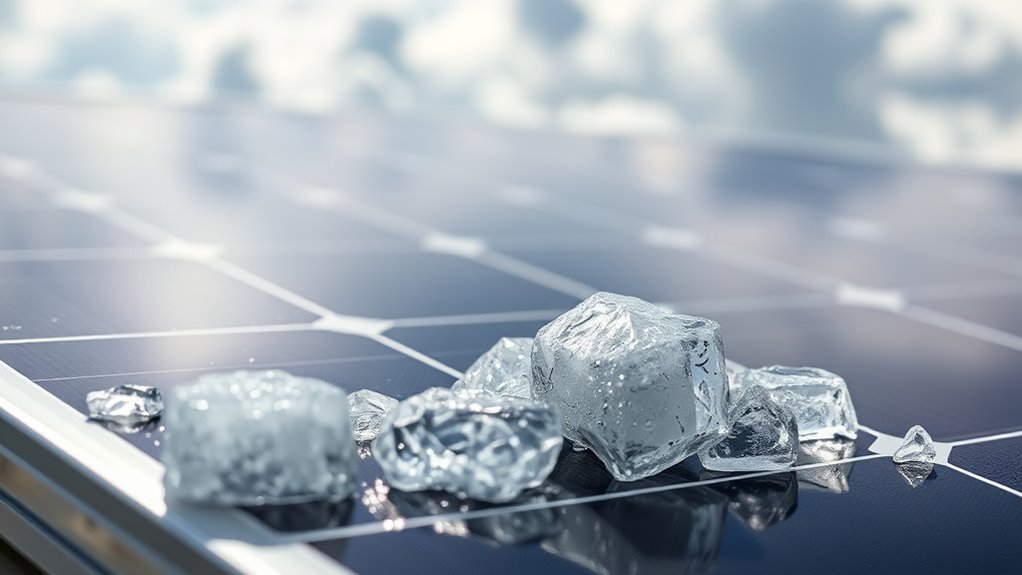
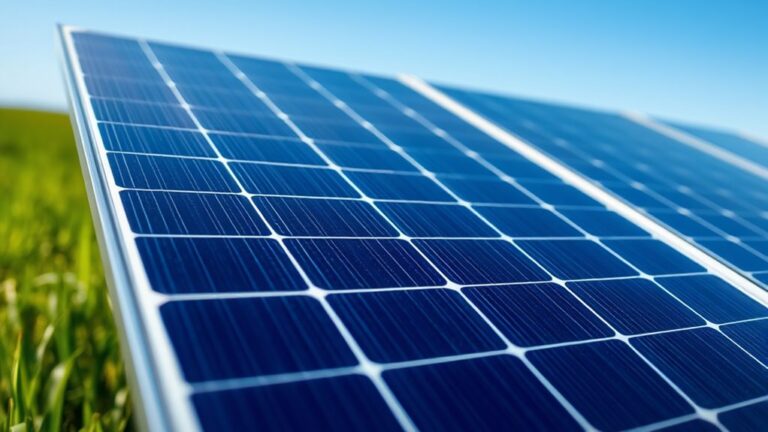
Although hailstorms can be harsh, solar panels are designed to withstand their impact. You’ll find that high-quality panels use tempered glass, which is much stronger than regular glass and resists cracking.
High-quality solar panels use tempered glass to resist cracking and endure even harsh hailstorms.
The glass layer is thick but transparent, letting sunlight through while protecting the delicate cells beneath. You’ll also notice a durable frame, often aluminum, that holds everything tightly and prevents damage from jolts.
Plus, manufacturers test panels rigorously, simulating hail impacts to guarantee they can handle real storms. The encapsulant materials inside protect the solar cells from moisture and shocks, adding another layer of defense.
When you install solar panels built with these features, you’re investing in a system ready to face hail without breaking down easily. It’s pretty impressive how much thought goes into making them tough!
What Hail Sizes Can Solar Panels Withstand?
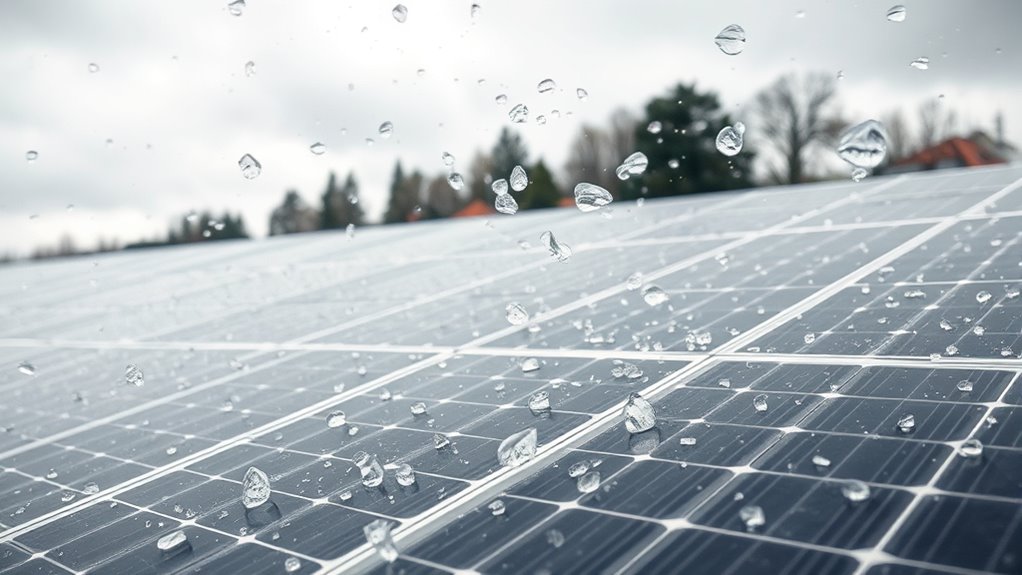
You might wonder how large hail can get before it damages your solar panels. Industry tests usually simulate impacts with hail up to one inch or more in diameter to guarantee durability.
Understanding these common hail sizes helps you know what your panels can realistically withstand. So, it’s good to get a sense of what’s typical out there.
Common Hail Size Impact
When hail strikes solar panels, the size of the hailstones plays a crucial role in determining the extent of potential damage. You need to know what sizes your panels can typically handle to assess risk accurately.
Here’s a quick breakdown of common hail sizes and their impact:
- Small hail (less than 1 inch): Usually harmless for most solar panels; they can easily withstand these without damage.
- Medium hail (1 to 2 inches): May cause minor dents or surface scratches but rarely leads to functional issues.
- Large hail (over 2 inches): Poses a serious threat; it can crack or shatter panels if they’re not specifically designed to resist such impacts.
Understanding this helps you protect your investment and plan maintenance if needed. So, it’s smart to keep an eye on hail forecasts in your area!
Industry Testing Standards
How tough are solar panels against hail by industry standards? The industry uses the UL 1703 and IEC 61215 tests to guarantee panels can withstand hail impact. These tests simulate hailstones up to 1 inch (25 mm) in diameter, dropped at speeds mimicking natural hailstorms.
If a panel passes, it means it can resist typical hail without cracking or losing efficiency. You should know that most solar panels are designed to endure hailstones up to 1 inch, which covers the majority of hail events.
However, exceptionally large hail—over 1.5 inches—might cause damage. Manufacturers often provide hail impact ratings, so check these specs before buying. Understanding these standards helps you pick panels built to last in your local weather conditions.
Which Tests Prove Solar Panels Can Handle Hail?
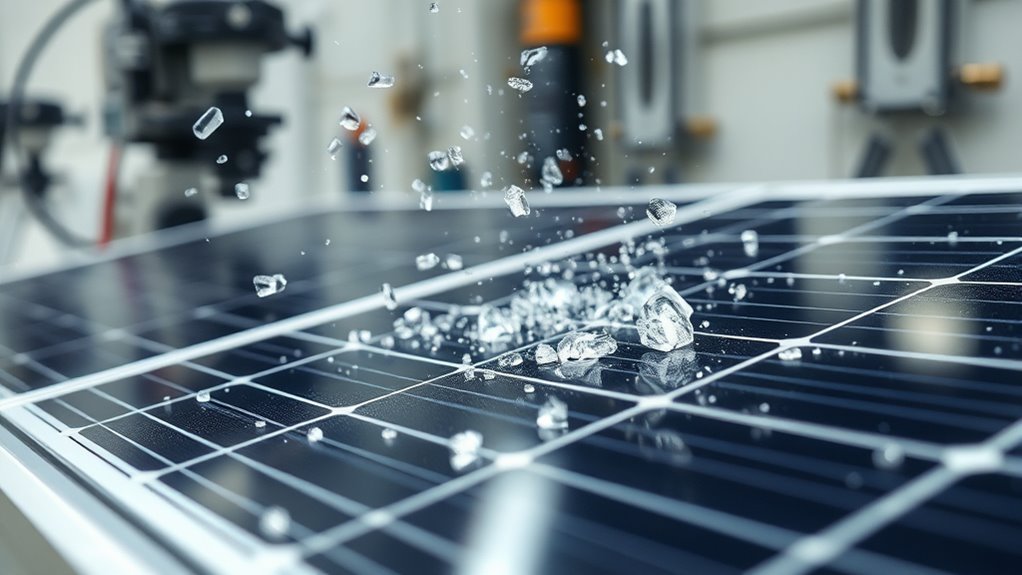
Although hailstorms can be unpredictable, manufacturers don’t leave the durability of solar panels to chance. They rely on rigorous testing to guarantee your panels can survive hail impacts.
Hailstorms are unpredictable, but solar panel durability is ensured through rigorous testing.
Here are three key tests that prove their resilience:
- Hail Impact Test (IEC 61215) – This test simulates hailstones hitting panels at high speeds using ice balls. It checks for cracks or breakage to make sure the panels hold up.
- Mechanical Load Test – This one measures how well panels withstand pressure and impacts from hail combined with wind or snow loads. It’s all about making sure they don’t buckle under stress.
- Thermal Cycling Test – This test checks if repeated temperature changes, which often happen after hailstorms, cause damage over time. It’s important because panels need to handle lots of weather changes without failing.
Can Severe Hailstorms Still Damage Solar Panels?
Even the toughest solar panels can suffer damage if severe hailstorms hit with enough force. While most panels undergo rigorous testing to withstand common hail sizes, extremely large hailstones or high-impact speeds can cause cracks, punctures, or shattered glass.
You should remember that no panel is completely impervious to nature’s worst. If a severe hailstorm strikes your area, checking your panels for visible damage is essential. Small cracks might reduce efficiency, while major damage could require repairs or replacement.
Additionally, hail damage might affect the electrical components beneath the glass. To protect your investment, consider insurance coverage that includes hail damage.
Ultimately, while solar panels are designed to endure hail, extreme weather can still pose risks you need to monitor closely.
How Do Solar Panels Compare to Roof Shingles in Hail Damage?
When hail strikes your home, both solar panels and roof shingles face tough conditions, but they respond differently to damage. Here’s how they compare:
- Durability: Solar panels are designed with tempered glass that withstands impacts better than asphalt shingles. Shingles, on the other hand, can crack or tear more easily.
- Damage Visibility: Shingles often show visible dents or granule loss. Solar panel damage might be less obvious and sometimes requires a professional inspection.
- Repair and Replacement: Damaged shingles are easier and cheaper to replace individually. Solar panel repairs, however, can be more complex and costly.
Understanding these differences helps you assess risks and maintenance needs. While both can suffer hail damage, solar panels generally offer stronger resistance but might involve higher repair expenses if damaged.
How to Protect Solar Panels From Hail Damage
You can protect your solar panels from hail damage by choosing durable materials designed to withstand impact. Installing protective shields adds an extra layer of defense during storms.
Regular maintenance also helps catch and fix minor issues before they become serious. It’s a smart way to keep your panels in great shape for the long haul.
Durable Materials Selection
Although hailstorms can strike unexpectedly, choosing the right materials can substantially reduce the risk of damage to your solar panels. You want materials that balance durability with efficiency.
Here are three key components to focus on:
- Tempered Glass – This is much stronger than regular glass and resists impact better. It helps protect the delicate cells beneath.
- EVA (Ethylene Vinyl Acetate) Encapsulation – It cushions the solar cells, absorbing shocks from hail without cracking the panel.
- Aluminum Frame – A sturdy frame keeps the panel rigid and prevents bending or warping during hail strikes.
Protective Shield Installation
How can you add an extra layer of defense to your solar panels against hail damage? Installing a protective shield is a smart move.
You can use clear polycarbonate covers or tempered glass shields designed to absorb impact without blocking sunlight. These shields act like armor, reducing the risk of cracks or shattered panels during hailstorms.
Make certain the materials you choose are UV-resistant and tailored for your panel size. Professional installation is key; it ensures the shield fits securely without compromising your system’s efficiency.
You’ll want to confirm that the shield doesn’t interfere with heat dissipation, which could reduce panel performance. By adding this barrier, you greatly boost your solar panels’ resilience, giving you peace of mind during unpredictable weather.
Regular Maintenance Tips
Adding a protective shield is a solid step, but keeping your solar panels in top shape requires ongoing attention. Regular maintenance helps you spot potential damage early and prevents costly repairs.
Here’s what you should do:
- Inspect After Storms – Right after hail or heavy weather, check your panels for cracks, dents, or loose mounts. Early detection saves you from bigger problems.
- Clean Gently – Dirt and debris can hide damage. Use a soft cloth and mild soap to clean your panels, avoiding abrasive materials that could scratch the surface.
- Schedule Professional Checkups – Have a solar technician inspect your system annually. They can identify issues you might miss and ensure everything’s secure.
Frequently Asked Questions
How Often Do Solar Panels Need Inspection After Hailstorms?
You should inspect your solar panels right after any hailstorm. Then, check them again every 6 to 12 months.
Regular checks help catch damage early. This way, your system stays efficient and safe over time.
Do Solar Panel Warranties Cover Hail Damage?
Don’t let hailstorms rain on your parade—your solar panel warranty often covers hail damage, but you’ll want to check the fine print.
Some warranties protect against hail, while others might leave you out in the cold. It really pays to know what your specific policy says before the storm hits.
Can Hail Damage Affect Solar Panel Efficiency?
Yes, hail damage can reduce your solar panel’s efficiency by cracking or denting the surface, which blocks sunlight. You should inspect panels after storms to catch issues early and maintain maximum energy production.
It’s a good idea to keep an eye on your panels, especially after bad weather. That way, you can spot any problems before they get worse and keep your system running smoothly.
Are Certain Solar Panel Brands More Hail-Resistant?
Oh sure, some solar panel brands are “hailproof”—but you’ll still want to pick ones with thicker tempered glass and strong frames.
You can’t dodge nature, but you can definitely choose panels that stand a better chance against hailstorms.
Does Hail Impact Solar Panel Installation Costs?
Yes, hail can increase your solar panel installation costs. You’ll likely pay more for reinforced materials and protective features to withstand hail damage.
Plus, higher insurance premiums come into play, which all add up during your installation process. It’s something to keep in mind if you live in an area prone to hailstorms.
Conclusion
Think of your solar panels as a knight’s armor, crafted tough to shield against hail’s icy arrows. While small to medium hail usually bounces off like harmless pebbles, severe storms can still find a chink in the defense.
Just like a knight wouldn’t ride into battle without a shield, you shouldn’t leave your panels unprotected. Adding extra safeguards helps keep your energy champion shining bright through any storm.
So, are solar panels hail proof? Not entirely, but they are designed to be highly resistant to hail damage. Investing in protective measures like hail guards or impact-resistant panels can make a big difference. This way, your solar setup stays efficient and durable, making sure you get the most out of your clean energy even when the weather gets rough.