How Do You Prevent Roof Damage From Solar Panels?
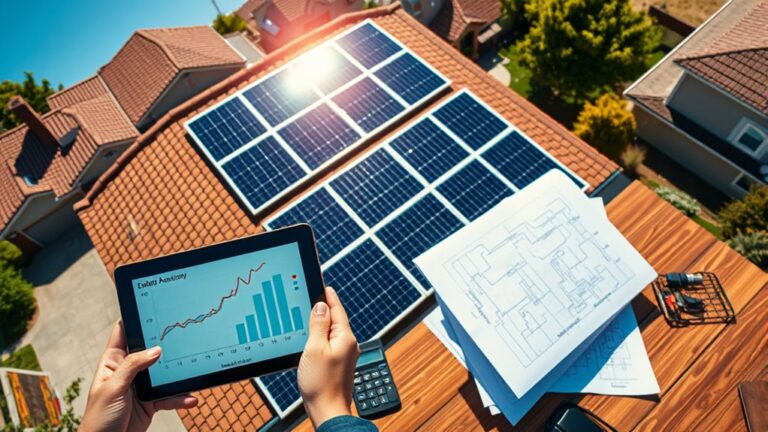
To prevent roof damage from solar panels, it’s important to start by inspecting your roof’s condition.
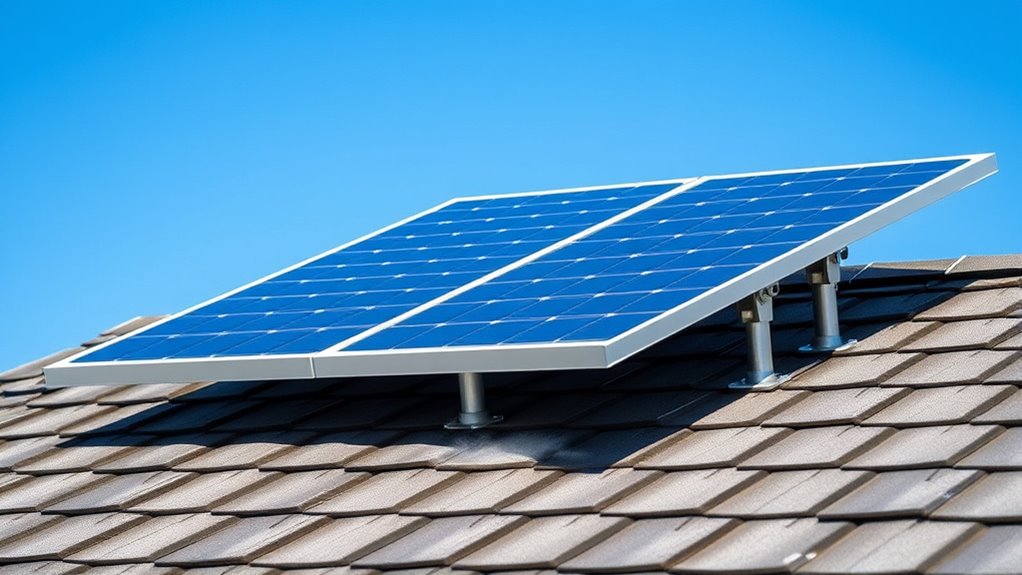
Choose mounts that fit your roof type and pitch to ensure a good fit. This helps avoid unnecessary stress on your roof structure.
Make sure all mounting points are sealed tightly to stop leaks from forming. Using corrosion-resistant materials is key to keeping everything durable over time.
Hiring professional installers is a smart move—they guarantee secure, waterproof attachment and minimize the number of roof penetrations.
Don’t forget regular maintenance for both your roof and solar panels. Check often for loose seals or debris that could cause problems down the line.
Keep following along to discover how the right choices and care protect both your roof and your solar investment.
Key Takeaways
- Inspect the roof beforehand to make sure it can support the weight of the solar panels and that there’s no severe damage. You want to catch any issues early on.
- Use corrosion-resistant, adjustable mounts along with proper flashing. This helps prevent water leaks around where the panels are installed.
- It’s a good idea to hire professional installers. They’ll ensure the panels are securely mounted, properly sealed, and that there are minimal roof penetrations.
- Make sure to regularly inspect and maintain the mounts, seals, and the roof areas around the panels. Catching problems early can save you a lot of trouble down the line.
- Don’t forget to clean the panels and remove any debris from the roof and gutters. This helps avoid moisture buildup and any related damage.
How Solar Panels Can Damage Your Roof: And How to Prevent It
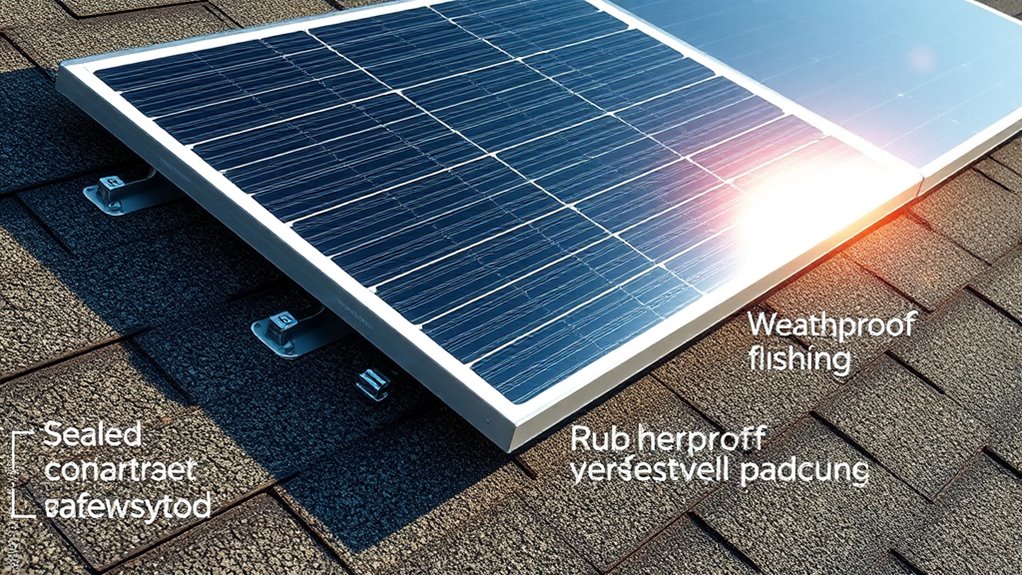
Although solar panels offer great energy savings, they can sometimes cause roof damage if not installed or maintained properly. You need to be aware that improper installation can lead to leaks, especially if the mounting points aren’t sealed tightly.
Water can seep through gaps, damaging the roofing material and underlying structure. Additionally, if panels are too heavy or poorly placed, they might stress your roof, causing cracks or warping over time.
To prevent this, make certain your roof is inspected before installation to confirm it can handle the load. Regularly check for loose mounts, damaged flashing, or debris buildup around panels that might trap moisture.
How to Choose the Right Mounting System for Your Roof
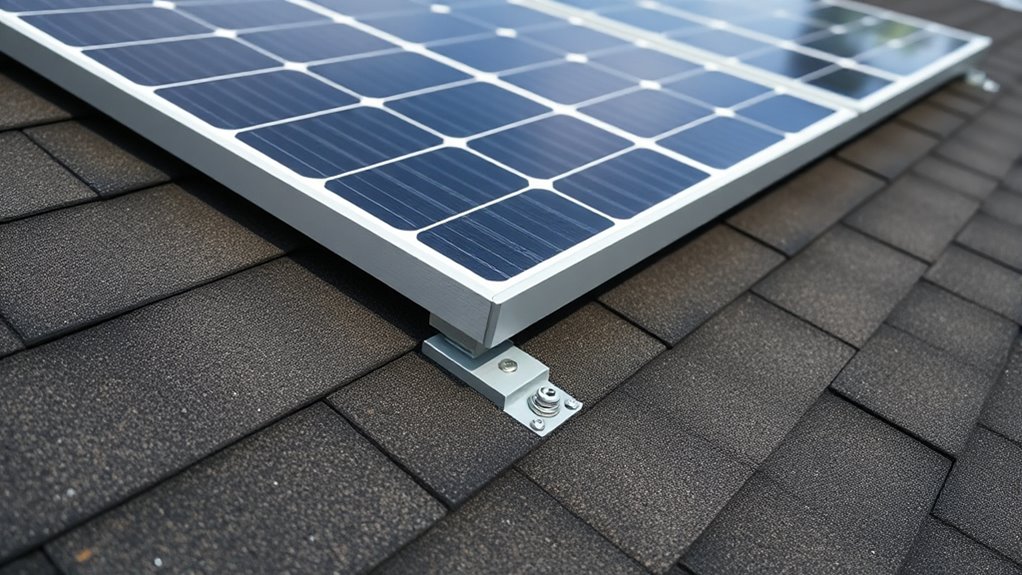
Preventing roof damage starts with selecting the right mounting system for your solar panels. You’ll want a system that fits your roof’s material and pitch while providing a secure, weather-tight seal.
Opt for mounts specifically designed for your roof type to avoid leaks or structural strain. Look for corrosion-resistant materials like aluminum or stainless steel to guarantee long-term durability.
Consider mounts with adjustable features to accommodate roof angles and simplify installation. Flashing is vital—it prevents water from seeping in around the mounts, so choose one that integrates well with your roofing.
Finally, work with a professional installer who understands your roof’s needs and can properly secure the system. This careful approach minimizes risks and keeps your roof safe beneath your solar setup.
Which Roof Types Are Best for Solar Panels?
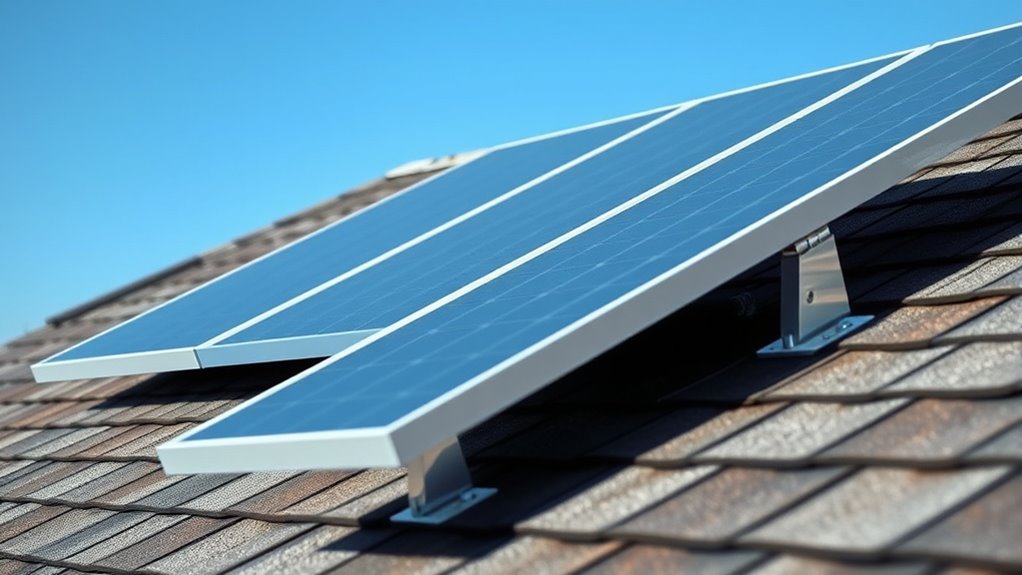
When planning your solar installation, understanding which roof types work best can save you time and money. Asphalt shingle roofs are ideal because they’re common, durable, and easy to attach mounting systems to without causing damage.
Metal roofs also work well, offering longevity and strong support for solar panels. Tile roofs, while visually appealing, can be trickier. You’ll need special mounts to prevent cracking tiles and guarantee a secure fit.
Flat roofs provide flexibility in panel placement but require angled mounts to maximize sun exposure. Avoid installing solar panels on roofs with severe damage or those near the end of their lifespan. This can lead to costly repairs later.
Choosing the right roof type helps protect your investment and guarantees your solar panels perform efficiently. So, picking the right roof isn’t just about looks—it’s about making sure your solar setup lasts and works great.
Why Professional Installation Protects Your Roof
Choosing the right roof type sets a strong foundation, but how your solar panels are installed plays an even bigger role in protecting your roof’s integrity.
When you hire professionals, they guarantee proper sealing and secure mounting to prevent leaks. They also avoid unnecessary roof penetrations that can weaken your structure over time.
Here’s why trusting experts matters:
- They use specialized tools and techniques to maintain your roof’s waterproof barrier.
- They spot potential issues early, saving you costly repairs down the road.
- Their experience ensures panels are positioned without causing undue stress on your roof materials.
How to Maintain Your Roof and Solar Panels Over Time
You should set up a regular inspection schedule to catch any issues early on your roof and solar panels.
Keep the panels clean and remove debris to maintain their efficiency and prevent damage.
Staying proactive with maintenance helps protect your investment over time.
Regular Inspection Schedule
How often should you inspect your roof and solar panels to keep them in top shape? Regular inspections every six months let you catch small issues before they turn costly.
You don’t want a minor leak or loose panel causing major damage down the line. During your checks, focus on these key areas:
- Panel mounts and seals: Ensure they’re tight and undamaged to prevent water intrusion.
- Roof shingles around panels: Look for cracks or lifting that could let moisture seep in.
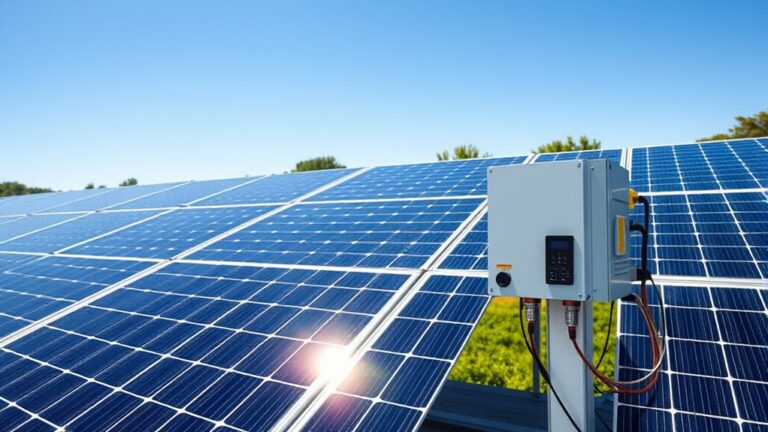
- Wiring and connections: Check for wear or exposure that might cause electrical problems.
Sticking to a schedule gives you peace of mind, protects your investment, and extends the life of both your roof and solar system. Don’t wait for visible damage—be proactive and stay ahead.
Cleaning and Debris Removal
When was the last time you cleared leaves, dirt, or other debris from your roof and solar panels? Keeping your roof and panels clean is essential for maintaining their efficiency and preventing damage.
Debris can trap moisture, leading to mold or rot on your roof. It can also block sunlight, reducing your solar panels’ output.
Use a soft brush or a leaf blower to gently remove debris without scratching the panels. Avoid harsh chemicals or pressure washers that could damage the surface.
Regularly clearing gutters and downspouts helps prevent water buildup that might seep under panels or shingles.
How to Spot and Fix Early Roof Damage From Solar Panels
Although solar panels offer numerous benefits, they can sometimes cause early roof damage if not properly monitored. You need to keep an eye out for signs like loose flashing, cracked shingles, or water stains on your ceiling.
Catching these issues early prevents costly repairs and protects your home’s integrity. Here’s what you should watch for:
- Unusual moisture or mold spots around panel mounts
- Warped or deteriorating shingles near installation areas
- Visible gaps or cracks where panels attach to your roof
If you spot any of these signs, act fast. Tighten loose mounts, replace damaged shingles, and seal gaps with waterproof materials.
Regular inspections and prompt fixes will keep your roof—and your solar investment—in great shape. Don’t wait until small problems turn into big headaches!
Frequently Asked Questions
What Is the Average Lifespan of Solar Panels on a Roof?
You can expect solar panels on your roof to last about 25 to 30 years.
With proper maintenance and care, they often perform efficiently beyond that. It means you can enjoy long-term energy savings and reliability for many years.
Can Solar Panels Increase My Home’s Resale Value?
Yes, solar panels can boost your home’s resale value by lowering energy costs and appealing to eco-conscious buyers.
You’ll attract more offers and potentially sell faster, thanks to increased energy efficiency and modern upgrades.
How Do Weather Conditions Affect Solar Panel Efficiency?
You’ll notice solar panels perform best under gentle skies; harsh weather like heavy clouds or snow can gently dim their output.
Luckily, modern panels adapt well, so you won’t often lose much efficiency despite nature’s moods.
Are Solar Panels Covered by Homeowners Insurance?
Yes, your homeowners insurance usually covers solar panels, but you should check your policy specifics.
Sometimes, you might need to add a rider or endorsement to guarantee full protection against damage or theft. It’s a good idea to double-check so you’re fully covered.
What Incentives or Rebates Are Available for Solar Panel Installation?
You can take advantage of federal tax credits, state rebates, and local incentives to reduce solar panel costs.
Many utilities offer additional rebates, so be sure to check programs available in your area before installing your system. It’s definitely worth doing a little research to save some money!
Conclusion
Think of your roof like a sturdy ship—solar panels are the sails that catch the sun. But without proper care, they can cause leaks and damage.
Just like a captain chooses the best rigging, you need the right mounting system and a pro installer to protect your roof. It’s important to use quality materials and follow manufacturer guidelines.
Remember, regular maintenance is your anchor. Checking for loose panels, debris buildup, or sealant wear helps prevent problems before they start.
By staying vigilant with maintenance and choosing expert installation, you’ll keep your roof—and your solar investment—strong and secure for years to come. Preventing roof damage from solar panels means protecting your home and maximizing your system’s efficiency through ongoing care and smart choices.